
Two numbers govern the small end of commercial trucking, and operators mix them up constantly. One is 26,001 pounds. The other is 10,001 pounds. They are not the same line, they do not trigger the same obligations, and treating the first as though it governed insurance is how straight-truck and recovery operators end up with a policy that does not match the filing their operation actually needs.
This is the walkthrough for anyone whose equipment sits near the threshold — the operator who specced a straight truck to stay under the license line on purpose, the recovery shop whose light-duty units are non-CDL while the heavy wrecker is not, the new authority deciding what to buy first.
Two federal lines, not one
The first line is the commercial motor vehicle definition. 49 CFR 390.5 defines a commercial motor vehicle as a self-propelled or towed vehicle used on a highway in interstate commerce to transport passengers or property when it has a gross vehicle weight rating or gross combination weight rating — or an actual gross weight — of 10,001 pounds or more, whichever is greater. The definition also reaches vehicles carrying enough passengers to meet the passenger tests, and vehicles transporting placarded hazardous materials at any weight.
The second line is the license line. 49 CFR 383.91 sets the commercial driver’s license groups. Group B, the Heavy Straight Vehicle group, is any single vehicle with a gross vehicle weight rating of 26,001 pounds or more, or such a vehicle towing a unit rated at 10,000 pounds or less. Group A, the Combination Vehicle group, is any combination with a gross combination weight rating of 26,001 pounds or more, provided the rating of what is being towed exceeds 10,000 pounds. Group C is the remainder — vehicles meeting neither definition that still carry placarded hazardous materials or enough passengers.
The gap between those two numbers is where much of vocational trucking operates. Any vehicle rated at or above 10,001 pounds but below 26,001 requires no commercial driver’s license on weight grounds and is still a commercial motor vehicle under the federal safety definition when it runs interstate for hire. That is not a loophole or an edge case — it is the arithmetic of two thresholds that were set for different purposes.
What the ratings actually mean
Both thresholds are stated in ratings, not scale tickets. 49 CFR 383.5 defines gross vehicle weight rating as the value specified by the manufacturer as the loaded weight of a single vehicle. Gross combination weight rating is the greater of the manufacturer value on the certification label or the sum of the ratings of the power unit and the towed units that produces the highest value.
That distinction has a practical consequence underwriters see regularly. Running empty does not move you below a threshold, and neither does under-loading. The rating on the door jamb is the number that governs, which is why a spec decision made at purchase determines a compliance posture for the life of the unit. It is also why the vehicle schedule on an application is worth reading line by line before the filing is made — the ratings, not the descriptions, decide what the operation is.
What 26,001 pounds changes
Crossing the license line changes the driver, not the vehicle’s regulatory status. Above it, the operator needs a commercial driver’s license in the correct group, obtained through the knowledge and skills testing the same part specifies. Below it, that requirement does not attach on weight grounds.
One detail worth naming because it catches recovery and straight-truck fleets in particular: the air brake restriction. Under 49 CFR 383.95, an applicant who fails the air brake component of the knowledge test, or who takes the skills test in a vehicle not equipped with air brakes, gets a license restricted from operating a commercial motor vehicle equipped with any type of air brake. A separate restriction applies to an applicant who tests in a vehicle with air over hydraulic brakes. A fleet that runs mixed equipment can therefore hold correctly licensed drivers who are not lawful in every unit on the yard, and that is a driver-schedule problem before it is anything else.
What 26,001 pounds does not change
This is the part that costs money. The license line is not the insurance line.
49 CFR 387.3 applies the financial-responsibility subpart to for-hire motor carriers transporting property in interstate or foreign commerce, and separately to carriers transporting hazardous materials in interstate, foreign, or intrastate commerce. Its exception paragraph excludes a motor vehicle with a gross vehicle weight rating of less than 10,001 pounds, with carve-outs that pull certain hazardous-materials operations back in at any weight.
Read those together and the answer is unambiguous. A for-hire operation running a straight truck rated above 10,001 pounds but below the license threshold, across state lines, is inside the federal financial-responsibility rules and needs the filing — even though nobody in the operation holds or needs a commercial driver’s license. 49 CFR 387.9 sets the minimum for for-hire carriage of nonhazardous property at 750,000 dollars combined single limit, with higher minimums for the listed hazardous commodity classes.
The operator who reasons “no CDL, so no federal insurance requirement” has skipped a line that begins 16,000 pounds earlier — the difference between the two thresholds above.
Where box trucks sit
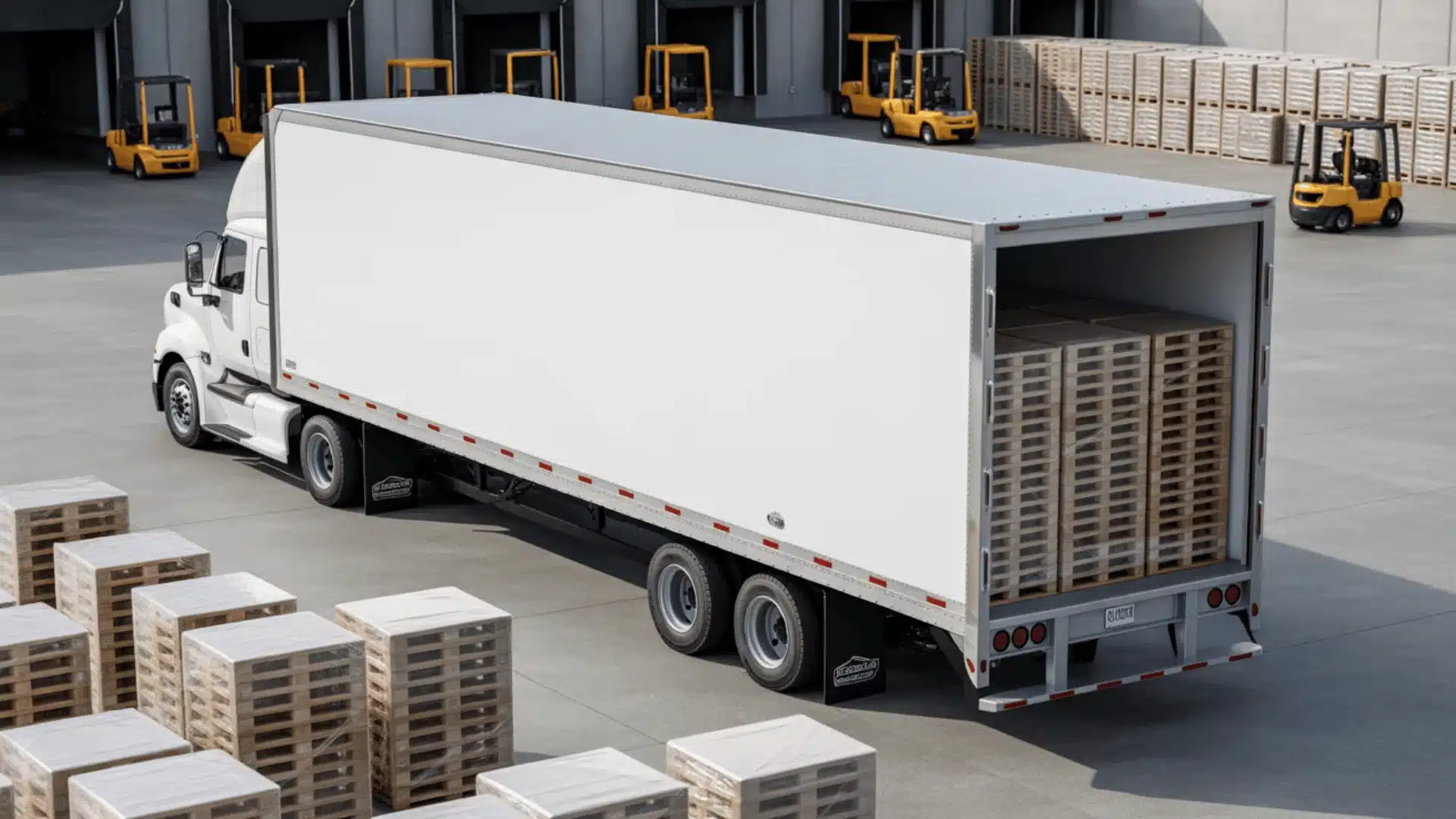
The straight truck is the clearest case. Box truck operations are frequently specced deliberately below the license threshold so the operation can hire from a wider driver pool without a commercial driver’s license requirement. That is a legitimate business decision, and it is the reason this threshold gets attention at all.
What it does not do is move the operation outside federal regulation. If the unit is rated above 10,001 pounds and runs for hire across state lines, it is a commercial motor vehicle, the safety regulations apply, and the financial-responsibility filing obligation attaches. The underwriting conversation for that operation looks different from a tractor-trailer submission — different radius, different loading and unloading exposure, different driver pool, frequently a delivery model with many stops per day — but it is a motor carrier submission, not a personal or light commercial auto submission.
The failure mode is buying the wrong product. A straight truck placed on a commercial auto policy written for contractors, without the motor carrier endorsements and without the filing, will look adequate right up until an authority check or a claim tests it.
Where tow and recovery units sit
Recovery is the other class living on this threshold, and it lives on both sides of it at once. A light-duty wrecker or a rollback carrier is frequently rated below the license line. A heavy wrecker is not. Fleets running tow and recovery work therefore routinely operate a roster that straddles the threshold, with the licensing answer changing unit by unit.
That split has an insurance consequence beyond the filing question. Recovery operations carry exposures a freight submission does not contemplate at all — the vehicle in tow, the vehicle in storage, work performed on the roadside in live traffic, and the legal position the operator occupies while holding somebody else’s property. Those are distinct coverage parts, and none of them is answered by the weight rating. The threshold tells you about the driver’s license and the filing. It tells you nothing about whether the on-hook and storage exposures are covered.
The one place the answer changes at the state line
Operators reasonably ask whether any of this varies where they run. On the license threshold, the evidence is clear that it does not. 49 CFR 383.3 applies the commercial driver’s license rules to every person operating a commercial motor vehicle in interstate, foreign, or intrastate commerce, to all employers of such persons, and to all States. Intrastate operation is inside the rule, not outside it.
The discretion States hold is a closed list in that same section: farm vehicle operators meeting four stated conditions including a 150-mile radius from the farm, firefighters and emergency responders, and local-government drivers removing snow or ice. A military exemption is mandatory rather than discretionary, and a restricted license provision exists for drivers operating exclusively on certain unconnected Alaska roads. A commercial straight-truck or recovery operation is not on that list.
Where state law genuinely governs is financial responsibility for intrastate operation. Because the federal subpart is scoped to interstate or foreign commerce for for-hire property carriage, an operator running non-hazardous freight entirely inside one state is looking at that state’s own requirement rather than the federal table. That is a real question to ask, and it is the question, rather than the license threshold, that changes when you cross a border.
What changes about the policy on each side
The practical differences an underwriter actually prices:
Filing. Above 10,001 pounds, for hire, interstate: the filing obligation attaches and the policy has to support it. Below that rating, it does not. The license threshold is irrelevant to this question.
Driver pool and rating. Below 26,001 pounds the hiring pool is wider and typically less experienced in commercial operation. Underwriters read that in the driver schedule and the motor vehicle records, not in the weight rating.
Radius and stop density. Sub-threshold straight trucks frequently run short radius with many stops. That profile carries different frequency characteristics from long-haul, and it is priced accordingly.
Equipment values and attached equipment. A recovery unit carries the value of the boom, winch, and body, which is a different physical damage conversation from a dry van. The schedule should reflect what is actually mounted.
Highway use tax. A separate federal threshold sits above both: the Form 2290 instructions apply the heavy highway vehicle use tax to vehicles with a taxable gross weight of 55,000 pounds or more. That figure sits well above the license line, so it is a third number to check against the equipment rather than one to assume from either of the first two.
What to ask at quote time
Read the weight ratings off the vehicles before anything else, and get the gross combination rating where a unit tows. Establish whether the operation is for hire and whether it crosses state lines, because those two answers together decide the filing question independently of anyone’s license. Confirm the license groups and any air brake restrictions against the actual equipment roster. For recovery work, treat on-hook and storage as their own conversation rather than assuming a motor carrier form reaches them.
The takeaway
The 26,001-pound line is real, federal, and uniform, and it governs one thing: whether the driver needs a commercial driver’s license. The line that governs whether the vehicle is regulated at all, and whether a federal financial-responsibility filing attaches, sits at 10,001 pounds. Operators who conflate them buy the wrong product on the light side of the threshold and discover it at the worst possible moment. Reading the rating first, and the commerce second, gets the structure right before the premium is ever discussed.