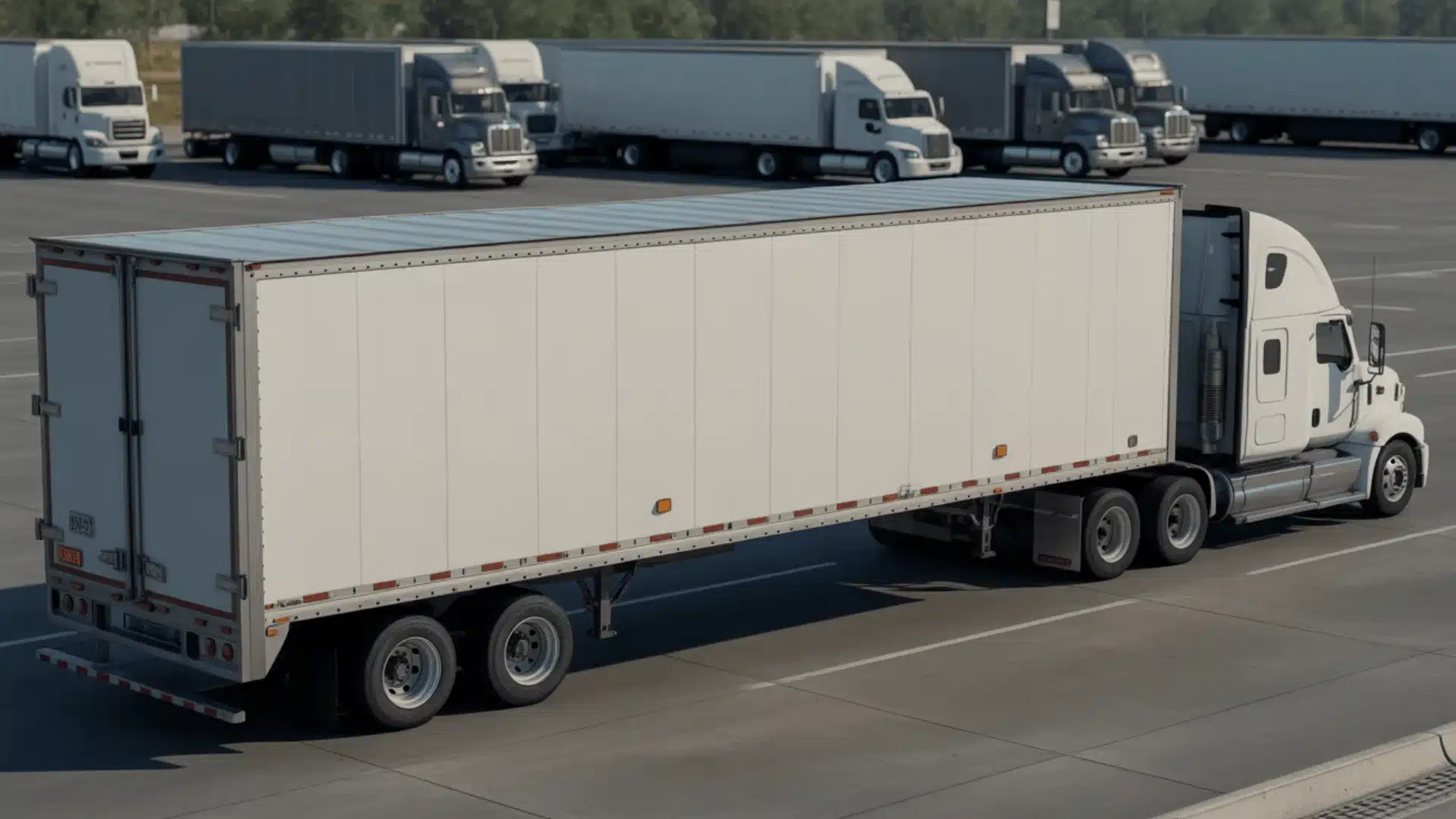
General freight trucking — General Freight Trucking Insurance from Truck Guard Insurance

Services we write

General Freight Trucking Insurance for dry van, LTL, and mixed commodity haulers

General freight is the largest sub-class in the motor carrier insurance market — dry vans on broker boards, LTL operators on consolidated lanes, mixed commodity haulers under direct-shipper contracts. We place the core stack every working day.

General freight is the broadest underwriting class in trucking insurance — and the most competitive. Dry van operators on broker boards, less-than-truckload haulers running consolidated lanes, and mixed commodity carriers under direct shipper contracts all fall inside it. By count of motor carriers and by total miles driven, general freight is larger than every specialized class combined.

The breadth is the opportunity and the trap. Because general freight is the largest class, the largest pool of specialty trucking underwriters quotes it — which means a competently marketed account gets multiple quotes back, and pricing is responsive to good loss-run history. It also means a poorly marketed account drifts toward the more expensive markets by default, because the broad pool of underwriters has not been worked.

The other defining feature of general freight is broker dependency. Most general freight motor carriers under fifty units source the majority of their loads from broker boards, third-party logistics companies, and freight brokers operating under FMCSA broker authority. That means the insurance certificate is not a one-time bind document — it is a recurring operational artifact issued dozens of times per month, with broker-specific limits, additional insured language, and certificate-holder formatting that has to match the broker compliance system at the other end.

This page is the working reference for what general freight motor carrier insurance covers, how broker contract compliance interacts with the policy structure, what underwriters watch on the application, and how our agency places general freight coverage across the 48 states we are licensed in.

  • 48 stateslicensed coast to coast
  • 16+ carriersspecialty trucking panel
  • General freight focusdry van, LTL, mixed commodity
  • Broker compliancecertificates issued day-of

Running general freight and your renewal is up? Send the loss runs, equipment list, and the broker certificate requirements you keep getting asked for — we will re-market the account against the full panel.

What makes general freight trucking insurance different

The defining underwriting feature of general freight is exposure breadth at modest severity. A general freight motor carrier hauling dry van on standard lanes faces the full claim mix every motor carrier faces — rear-end collisions, underride, multi-vehicle pileups, cargo damage, trailer damage on interchange — without the concentrated severity spikes of specialized classes like hazmat, tank, or oversize-overweight. The result is a pricing model that responds well to clean loss runs and lane density discipline, and punishes claim frequency more than it punishes single-event severity.

The second defining feature is broker-contract overhead. A general freight operator running off load boards may have certificate relationships with thirty, fifty, or a hundred brokers in a given year. Each broker has its own minimum limits, additional insured language, and certificate-holder structure. The agency that places the policy should also be the agency that issues those certificates — the alternative is a recurring operational drag that compounds over the policy term.

The third defining feature is competitive pricing pressure on freight rates that flows into the insurance budget. General freight rates are set by load board market dynamics more than by long-term contracts, and operators running primarily spot-market freight experience meaningful revenue volatility. Insurance is one of the few fixed costs in the P&L, and a renewal that prices up by even a moderate percentage can erode margin in a soft freight market. Limit selection and layering decisions made at bind time matter more for general freight than for any other class.

The fourth defining feature is the trailer interchange question. General freight operators who pull broker-owned, shipper-owned, or interchanged trailers on drop-and-hook freight need trailer interchange coverage in force or face an uninsured loss on the first damage claim. Underwriters increasingly ask about interchange exposure as part of the standard application, and the answer drives both pricing and the form selection on the policy.

State and regulatory considerations

General freight motor carriers operate under federal regulation administered by the Federal Motor Carrier Safety Administration and the Federal Highway Administration, with overlay regulation from individual state Departments of Transportation and state insurance regulators. The federal layer sets the financial responsibility floor at 49 CFR § 387.9, defines the BMC-91X filing mechanics, and establishes the hours of service, driver qualification, drug and alcohol testing, and vehicle maintenance regulations under 49 CFR Parts 391, 392, 395, 396, and 382.

The state layer adds workers compensation jurisdiction, intrastate operating authority for motor carriers running purely within a state, IRP and IFTA registration, and state-level oversize-overweight permitting for general freight operators who occasionally take a permitted load. The American Trucking Associations tracks the state regulatory variation that matters most for general freight — particularly hours of service overlays, weight enforcement, and broker-shipper liability rules.

Workers compensation is the most state-variable insurance line on a general freight motor carrier policy. Rates are set by state insurance regulators or rating bureaus, carrier appetite varies by state, and the workers compensation state is not always the same as the IRP base state. Operators whose drivers cross state lines need a workers compensation policy that covers the multi-state exposure under the applicable state act, and underwriters will ask for the driver count by state on the application.

State broker-shipper liability rules are an emerging issue for general freight. Several states have considered or passed legislation that affects when a broker can be held liable for losses caused by the motor carrier the broker hires, which in turn affects the contractual indemnity language brokers push into their carrier contracts. The downstream effect on general freight insurance is more aggressive additional insured language, more aggressive waiver of subrogation requests, and tighter primary-and- non-contributory wording on certificates. The policy form has to support what the broker contract demands.

Coverage breakdown for general freight

The general freight motor carrier policy is built from the full motor carrier coverage stack. The lines below are the ones we structure on most general freight accounts.

Trucking auto liability is the federally-mandated public liability policy on the tractor, filed with FMCSA via BMC-91 or BMC-91X. Limit selection on general freight is driven by broker contract requirements — most modern broker boards require limits well above the federal floor, and the layered-limits architecture (primary plus excess or umbrella) is how operators reach the contracted number affordably.

Physical damage covers the tractor and trailer against collision and comprehensive perils. Lenders require it on financed equipment, and a total loss on a financed tractor without physical damage coverage will end the business. General freight underwriters watch the equipment list for fleet mix, model year distribution, and the ratio of owned to leased equipment.

Motor truck cargo covers the freight in transit. Most broker contracts require a minimum cargo limit and a cargo certificate naming the broker. The commodity exclusions on the cargo policy matter as much as the limit — a general freight policy with an exclusion for refrigerated freight will not respond when an operator takes a one-off reefer load, and the same is true for household goods, automobiles, and hazardous materials.

Trailer interchange covers non-owned trailers pulled under written interchange agreements. Drop-and-hook freight almost always involves trailer interchange, and an operator pulling broker-owned or shipper-owned trailers without interchange coverage faces an uninsured loss on the first damage claim. The limit on the interchange policy should match the value of the most expensive trailer the operator regularly pulls.

General liability covers premises and operations liability away from the truck — terminal yards, customer docks, forklift operation, and any non-driving exposure. Most broker and shipper contracts require a general liability certificate even when the operator does not own premises, and the additional insured language on the GL is one of the most-requested certificate edits a general freight operator will encounter.

Workers compensation covers driver and yard-employee injuries. Statutory in every state except Texas, rate- regulated by state insurance departments, and class-coded specifically for trucking payrolls. Interstate operators need a policy that covers the multi-state exposure under the applicable state act for each driver.

Non-trucking (bobtail) auto liability covers the tractor when it is off-dispatch. Owner-operators leased to a motor carrier almost always need both the primary auto liability policy and the non-trucking policy, and the gap between them is one of the most common general freight coverage failures.

Pollution liability addresses cargo-related pollution events and upset-and-overturn spills that standard auto liability excludes. A general freight operator hauling non-hazardous freight may not see the pollution exposure on day one, but a tractor overturn that releases diesel fuel from the saddle tanks is a pollution event in most jurisdictions, and the auto liability policy will not respond.
Quoting your general freight policy this cycle? Send the equipment list, the loss runs, and the broker certificate template that keeps coming back — we will pull the panel and quote.

Start a quote

What general freight trucking insurance costs

We do not publish premium ranges on this page. Per our numeric discipline, the cost discussion here is about the drivers, not the dollars — verified figures live on the quote itself, not on a marketing page that would be stale the week after it published.

The cost drivers that move general freight premium the most:

  • Loss-run history. The single most weighted variable on a general freight renewal. Three to five years of clean loss runs prices very differently than two years of mixed history with an at-fault liability claim or two cargo claims.
  • Driver MVR and PSP profile. Underwriters pull MVRs on every covered driver and pull PSP reports at the carrier level. Recent convictions, at-fault accidents within the last three years, and out-of-service inspection violations all weigh against the application.
  • Equipment age, type, and fleet size. Tractor model year distribution, sleeper-versus-day-cab mix, trailer types, and the count of power units all affect pricing. Newer fleets generally price more favorably on physical damage; older equipment can price favorably on auto liability if the loss runs support it.
  • Radius and lane density. Regional operators in dense lanes within a five-hundred-mile radius price differently than coast-to-coast OTR operators. Long- haul exposure increases both frequency and severity assumptions.
  • Freight mix and broker concentration. Dry van TL on dedicated lanes prices differently than LTL on broker boards. A general freight operator running primarily spot-market freight off load boards is a different placement than one running dedicated lanes under a master shipper contract.
  • Liability limit and layered structure. The federal floor under 49 CFR § 387.9 is the minimum; the actual limit is driven by broker contract requirements. The jump from the federal floor to broker-standard limits is meaningful, and the layered-limits structure is how most operators reach the contracted number.

Claims scenarios general freight operators face

The claim categories that drive the most general freight severity — described qualitatively per our numeric discipline, no settlement figures:

  • Rear-end collision at highway speed. The kinematics of an eighty-thousand-pound combination vehicle striking a passenger car at highway speed produce serious bodily injury with regularity. Comparative-fault arguments help but rarely resolve the case below contracted broker limits.
  • Cargo damage on a multi-stop LTL load. A consolidated LTL shipment sustains damage at one of the intermediate stops, and the cargo claim involves multiple shippers, multiple consignees, and a broker who wants the loss closed before the next load posts. The cargo coverage responds; the broker relationship sometimes does not survive the dispute.
  • Trailer damage on a drop-and-hook interchange. A general freight operator pulls a broker-owned trailer for a quick interchange, and the trailer sustains damage in transit. Without trailer interchange coverage, the damage becomes an out-of-pocket loss; with it, the claim posts to the loss runs and affects renewal pricing.
  • Underride collision involving a passenger vehicle. A passenger car traveling under the trailer in a rear-end or side-impact event produces catastrophic outcomes. Plaintiff bars target underride cases aggressively, and the question that decides the outcome is whether the liability limit is adequate.

Underwriting realities for general freight

Specialty trucking underwriters evaluate general freight submissions on a short list of variables that carry disproportionate weight in the pricing decision:

  • Loss runs. Three to five years preferred. Cleaner is better, and severity matters more than frequency in most pricing models.
  • MVR and PSP. Pulled on every covered driver and at the carrier level. CSA BASIC scores are visible and influence appetite.
  • Equipment list with year, make, model, GVWR. The equipment schedule is the foundation of the physical damage rating and a meaningful input into auto liability rating as well.
  • Commodity schedule. Underwriters quote against the planned commodity mix and reserve the right to non-renew if the actual mix drifts outside it. A general freight operator who quietly starts hauling hazmat or household goods is operating outside the policy commodity schedule and risks denial on a related claim.
  • Radius of operation. Regional, intermediate, and long-haul radius tiers are priced differently. The application question is precise on this — generic answers price worse than specific ones.
  • Driver pool stability. High turnover is a frequency indicator and an appetite issue. Stable driver rosters with long average tenure price more favorably.
  • Broker certificate requirements. The broker contracts an operator holds drive the limit selection. Underwriters increasingly ask for representative broker contract examples on larger accounts.

What gets declined: undisclosed loss history, commodity types outside the carrier appetite, unverified driver rosters, and operators with prior insurance cancellations for non-payment or for material misrepresentation on a prior application.

Why Truck Guard Insurance

General freight is the largest single class on our quote desk. It is not a class we inherit and process — it is the conversation we have most often with motor carriers shopping a renewal, comparing limit structures, or trying to figure out why their current agency has a single quote back when the panel should have produced three.

We are an independent agency, which matters more in general freight than in any other class. The broad pool of specialty trucking underwriters that quotes general freight means an account marketed against the full panel almost always produces a competitive response. An account marketed against one or two carriers does not, even when the loss runs are clean.

We handle BMC-91 and BMC-91X filings end-to-end, issue broker certificates day-of the request with the exact additional insured language and certificate-holder structure each broker compliance system demands, and walk through trailer interchange, MCS-90 mechanics, and limit layering on the quote call so the policy you bind matches what the operation actually needs. When the renewal cycle comes, we re-market the account against the panel — every term, not just when something has gone wrong.

Frequently asked questions about general freight trucking insurance

What counts as general freight in trucking insurance?

General freight is the underwriting category for motor carriers hauling non-specialized, non-hazardous commodities on standard equipment. The typical general freight motor carrier runs dry vans, occasionally pulls less-than-truckload mixed loads, and operates under standard FMCSA authority. The category excludes hazardous materials, household goods, automobiles, livestock, oversize and overweight loads, refrigerated freight as a primary commodity, and tank operations — each of which has its own underwriting class with different appetite and pricing. General freight is the broadest and most competitive class in the motor carrier insurance market.

What primary insurance does a general freight motor carrier need?

The core stack is primary auto liability filed with FMCSA via BMC-91 or BMC-91X, physical damage on the tractor and trailer, motor truck cargo on the freight in transit, and trailer interchange on non-owned trailers pulled under written agreements. General liability covers premises and operations away from the truck, workers compensation covers driver injuries, and non-trucking liability fills the off-dispatch gap. Pollution liability addresses cargo-related and upset-and-overturn pollution events that standard auto liability excludes.

Why do brokers and shippers require higher liability limits than the FMCSA floor?

Modern broker contracts and large-shipper master agreements routinely specify primary auto liability limits well above the FMCSA financial responsibility floor under 49 CFR § 387.9. A serious bodily-injury or fatality claim against a motor carrier can exceed the federal floor by orders of magnitude, and brokers and shippers want assurance the motor carrier will not exhaust limits and leave the loss with the broker or shipper to defend. A general freight motor carrier at only the federal floor is locked out of most mainstream broker boards and direct-shipper contracts.

How does the load board model affect general freight insurance?

Load board freight introduces variable broker relationships, variable trailer interchange arrangements, and a constantly shifting certificate requirement landscape. Each broker on the board has its own minimum limits, additional insured language, and certificate-holder structure. A general freight motor carrier running primarily off load boards is a different placement than one running dedicated lanes under a master shipper contract, and underwriters ask which model applies. The certificate-issuance workload also differs sharply — a load-board operator may need dozens of certificates per month, where a dedicated-lane operator may need two.

What is the difference between truckload and less-than-truckload general freight?

Truckload (TL) freight is a single shipment that fills the trailer for a single shipper to a single consignee. Less-than-truckload (LTL) freight involves multiple shipments from multiple shippers consolidated on one trailer, with multiple pickup and delivery stops. LTL operations carry higher cargo exposure because of the multi-handling, multi-consignee structure, and the cargo policy may be priced differently — some carriers will not write LTL on the same cargo limit they offer TL operators. The trade-off is freight rate density: LTL freight generally pays better per cube but carries more operational complexity.

How does lane density affect general freight insurance pricing?

Lane density — the geographic concentration of where a motor carrier actually operates — is one of the most underweighted underwriting variables in general freight. A regional operator running dense lanes within a five-hundred-mile radius has a different loss profile than a coast-to-coast OTR operator running sparse lanes. Underwriters with rating models that account for lane density price the regional operator more competitively; underwriters with simpler models do not. The lane mix is a question worth answering precisely on the application, not generically.

What happens to general freight pricing after one at-fault loss year?

A single at-fault auto liability loss in a renewal year typically produces a renewal premium increase even when the loss falls within policy limits. The magnitude depends on the severity, the operator history, and the carrier — but most general freight motor carriers should expect a meaningful renewal increase after a year with one significant at-fault loss, and a more substantial increase or non-renewal after a year with multiple losses or one large severity event. Re-marketing the account at renewal through an agency with panel depth is what keeps a one-loss year from becoming a two-year pricing penalty.

Do I need a separate cargo policy if I only haul general freight?

Yes. Primary auto liability covers bodily injury and property damage to third parties; it does not cover the freight inside the trailer. The freight is covered by a motor truck cargo policy, which is its own line with its own limits, deductibles, and commodity exclusions. Most broker contracts require a minimum cargo limit and a cargo certificate, and most shippers will not load a trailer without seeing one. Even motor carriers hauling exclusively general freight need a cargo policy with a limit appropriate to the average and maximum cargo value they will be hauling.

Get a general freight trucking insurance quote

Send the basics on your equipment, loss runs, driver roster, commodity mix, lane density, and the broker contract requirements that drive your limits. We pull the panel of specialty trucking markets quoting general freight today, structure the layered limits to broker compliance, handle the BMC-91X filing, and issue certificates the day each broker asks.