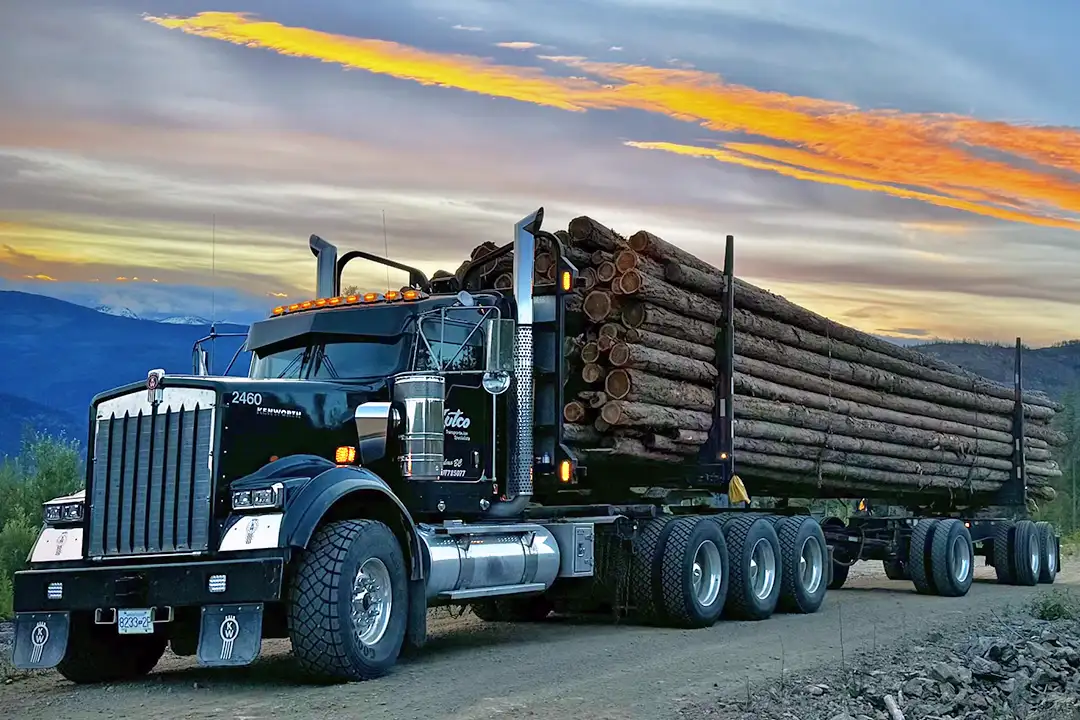
A log hauling motor carrier policy is a package of coverage lines. Each one covers a specific
exposure; missing any one of them leaves the operation exposed in a way insurance cannot fix
after the loss.
Trucking auto liability is the
federally-required primary liability coverage on the tractor. The federal financial
responsibility floor at 49 CFR § 387.9 is the regulatory minimum; mill receivers and landowner
road-use agreements often require limits well above the floor, and the loaded combination weight
of a log truck drives the limit conversation higher on its own. The
primary auto liability policy is the policy your
BMC-91 or BMC-91X FMCSA filing proves.
Physical damage covers the tractor,
self-loader knuckleboom (where applicable), and pole or bunked trailer against collision,
overturn, fire, theft, and other insured perils. Off-road operating exposure makes physical
damage rating and form selection class-specific — a generic commercial auto physical damage form
may not respond cleanly to off-road damage. Valuation needs to reflect actual replacement cost in
the used log-truck market, which moves differently than the general truck market.
Motor truck cargo covers the logs in
transit against loss or damage. The cargo limit needs to match the actual per-load value at
delivery — sawlog grade, pulp grade, and specialty grade loads value differently, and a
purpose-written log hauling cargo form contemplates that. Securement-failure language matters as
much as the limit itself.
Workers compensation handles
driver injury claims for the over-the-road exposure, the loading and unloading exposure at woods
landings and mill yards, and the knuckleboom-operation exposure for self-loader drivers. The
class code matters; a logging-trucking class code is the right placement, not a generic long-
haul truck code.
Non-trucking (bobtail)
liability fills the gap when the tractor is off-dispatch. For owner-operators
leased to a larger forest-products motor carrier, both primary auto liability and non-trucking
coverage need to be in force at the same time.
General liability handles the mill-
yard premises and operations exposure that the auto liability form was never designed to cover
— third-party property damage to mill equipment, pedestrian-injury exposures away from the
truck, and the contractual liability some mill receivers and landowner agreements impose.