Motor carriers we insure

Dump Trucking Insurance for aggregate, demolition, and construction haulers

Single-axle through tri-axle dumps, end-dump, side-dump, and belly-dump trailers — overturned-load exposure, jobsite general liability, and the intrastate-vs-interstate authority question that frames the whole conversation.

Dump trucking is one of the most varied classes inside the motor carrier insurance market. A single-truck operator running residential aggregate deliveries inside a single county looks almost nothing like a small fleet of tri-axle dumps running interstate demolition debris between urban projects, which looks almost nothing like a side-dump operation spreading road-construction aggregate on a state DOT paving contract. The underwriting frame has to read the operation, not just the truck count.

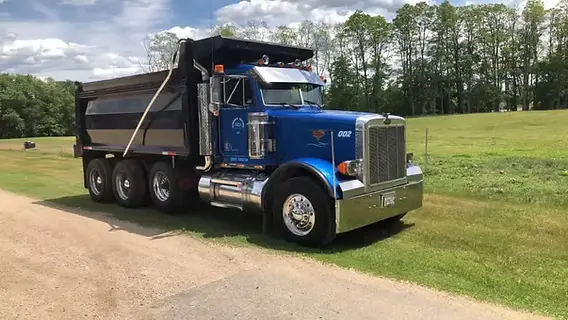
The equipment varies as widely as the operations. Single-axle dumps for short-haul residential and light construction; tandem-axle dumps for higher-capacity aggregate; tri-axle dumps for heavy aggregate and demolition; end-dump, side-dump, and belly-dump trailers towed behind tractors for the higher-volume routes. Each configuration has its own physical damage profile, its own overturn risk profile, and its own operating-environment exposure. The policy needs to list the equipment correctly and price the configuration appropriately.

The authority question shapes everything. Dump truck operators working entirely within a single state are generally regulated by the state DOT rather than by FMCSA — no federal authority, no BMC-91 or BMC-91X filing, but state-specific operating authority and state-specific financial responsibility limits to manage. Operators crossing state lines are FMCSA-regulated and carry the same primary auto liability filing requirements as any other interstate motor carrier. The first question on the quote call is which side of that line the operation runs on.

This page walks through what makes the dump trucking class different from the dry-van or flatbed motor carrier market, how the intrastate-vs-interstate authority question shapes policy structure, how each coverage line plays in a jobsite-heavy operation, what claims actually look like for aggregate and demolition haulers, the underwriting realities the specialty market cares about, and how the day-to-day reality of working between quarries, jobsites, and landfills shapes the policy conversation.

48
States licensed
16+
Specialty trucking markets
1–2 hr
Quote turnaround
Jobsite GL
Aggregate and demolition focus

Quote a dump trucking motor carrier policy

Equipment list (configuration and capacity), driver MVRs, loss runs, and the intrastate vs interstate operating pattern get a quoted submission across the specialty market.

Start a quote

What makes dump trucking insurance different

A generic commercial auto program or a general-freight motor carrier program fails for dump trucking in four specific ways, and each one shows up either at bind or on the first jobsite incident.

Authority structure is a first-order question, not a paperwork detail. Many dump truck operations run entirely intrastate and never touch the FMCSA framework — they operate under state DOT authority and state-specific financial responsibility rules. Other operations cross state lines and need full FMCSA authority with the BMC-91 or BMC-91X filing and the federal financial responsibility floor at 49 CFR § 387.9. The policy has to be built for the actual operating footprint, with the right filings (or no filings) and the right limit structure for the contracts the operation actually serves.

Jobsite general liability is daily-operations exposure. Most over-the-road motor carrier classes spend the vast majority of operating time on roads, with brief loading and unloading exposure at terminals. Dump trucking spends a substantial part of every working day on third-party jobsites — quarries, demolition sites, construction sites, landfills. Pedestrian interactions with site workers, interactions with site equipment, and incidents involving damage to existing site infrastructure are routine exposures, not edge cases. A policy without general liability structured for the jobsite reality leaves a daily-operations gap.

The overturn risk profile is configuration-specific. Dump trucks raise the body to discharge, and a raised body changes the center of gravity in a way that drives an overturn risk profile most other motor carrier classes do not carry. Side-dump trailers are particularly exposed to overturn during the discharge cycle if the ground is soft or uneven. End-dump and belly-dump configurations are more stable but still produce overturn losses under specific conditions. Underwriting reads the configuration mix carefully.

The cargo question is operation-specific, not class-specific. Aggregate, demolition debris, and construction materials each move under different contractual loss- allocation structures than general freight. Whether a standalone motor truck cargo policy is appropriate or whether the cargo exposure is properly handled through the liability lines depends on the contract structures the operation runs under. The cargo question is answered on the quote call, not assumed from the truck count.

State and regulatory considerations

Dump trucking sits at the intersection of three regulatory frameworks: federal motor carrier rules for the interstate portion of the market, state DOT rules for the intrastate majority, and construction-site safety rules that govern the jobsite portion of every working day.

Federal Motor Carrier Safety Administration regulates interstate dump trucking — operators crossing state lines for aggregate, demolition, or construction work. The FMCSA framework includes motor carrier authority, financial responsibility filings (BMC-91 or BMC-91X), hours of service, CSA scoring, ELD mandates, and the federal weight standard. Operators running entirely intrastate generally do not interact with FMCSA — but the framework applies the moment the truck crosses a state line for a job.

State DOT authority for intrastate operations is the dominant regulatory layer for the majority of dump trucking. Most states require state-specific operating authority for intrastate motor carrier work, with state-specific financial responsibility limits that may differ from the federal floor. Some states require a state-issued certificate of insurance filing parallel to the FMCSA BMC-91 structure; others require less formal proof. The state-by-state framework is real but varies.

Federal Highway Administration weight and dimension rules set the baseline for vehicle weight on the Interstate Highway System and on the National Network. The FHWA framework defines the federal limits; state DOTs administer enforcement on state highways and may issue special-allowance permits for specific commodities or routes. Aggregate hauling permits on designated state routes are common in many markets.

OSHA construction-industry safety standards govern the jobsite portion of dump trucking. The OSHA construction framework applies to construction sites the truck operates on; the construction-site general contractor is the responsible party for site safety, but motor-carrier conduct on site is part of the regulatory frame. Site-specific safety requirements often appear in the additional-insured language on construction contracts.

State weight enforcement on dump loads is the routine regulatory exposure. State DOT scales on aggregate routes, portable scales at jobsite entrances, and load-ticket documentation requirements vary by state and by commodity. Repeat overweight tickets feed into CSA scoring and can affect market access at renewal independent of any actual loss history.

Coverage breakdown

A dump trucking motor carrier policy is built from a smaller set of coverage lines than a long-haul interstate motor carrier policy — but the lines that are present need to be sized and structured for the daily-operations realities of the class.

Trucking auto liability is the primary liability coverage on the truck. For interstate operators it is federally-required and proved through the BMC-91 or BMC-91X FMCSA filing. For intrastate operators it is required by state DOT authority rules and proved through state-specific certificate filings. The limit conversation is driven by general-contractor contract requirements at construction sites, which routinely exceed the federal financial responsibility floor, and by the loaded weight of the equipment.

Physical damage covers the truck and trailer against collision, overturn, fire, theft, and other insured perils. The overturn exposure on a dump configuration makes physical damage rating and form selection important; valuation needs to reflect the actual used-equipment market for the configuration in question. Equipment used in demolition work picks up additional wear-and-tear that the form should contemplate.

General liability is the line that most distinguishes a dump trucking policy from a general-freight motor carrier policy. It covers third-party premises and operations exposures away from the truck itself — jobsite incidents involving site workers and site equipment, damage to existing structures during demolition staging, slip-and-fall on dumped material, and the daily-operations exposures that accumulate when a substantial portion of every working day is spent on third-party property. General-contractor contracts routinely require specific general liability limits and additional-insured endorsements.

Workers compensation handles driver injury claims. Dump truck driver injury patterns include over-the-road exposure, the loading exposure at quarries and demolition sites, the unloading exposure at jobsites and landfills, and the equipment-operation exposure (raising and lowering the body, securing the tailgate). Class-code placement matters; a dump trucking class is the right placement, not a generic long-haul code.

Non-trucking (bobtail) liability applies when the tractor is off-dispatch. For owner-operators leased to a larger dump truck motor carrier, both primary auto liability and non-trucking coverage need to be in force simultaneously.

Talk through the GL piece

General liability is the line dump trucking buyers most often see priced and structured generically. We walk through what the policy actually says before the renewal.

Request a review

What dump trucking insurance costs

Pricing on a dump trucking motor carrier policy moves along several axes. Without quoting a specific authority and equipment list, the framework below is what underwriters look at.

  • Intrastate vs interstate operating pattern. Intrastate-only single-state operations rate against state-specific financial responsibility rules and a narrower limit conversation. Interstate operations rate against the federal framework with BMC-91 or BMC-91X filings and contract-driven limit requirements. The operating footprint shapes the base rate before equipment count enters.
  • Equipment count and configuration. A single tri-axle dump operation reads differently from a small fleet running a mix of tandem and tri-axle dumps; both read differently from a tractor-trailer operation running end-dump, side-dump, or belly-dump trailers. The configuration mix drives the auto liability rate, the physical damage rate, and the overturn-exposure rating.
  • Commodity and work-type mix. Aggregate hauling (sand, gravel, stone) reads differently from demolition debris hauling, which reads differently from construction-materials hauling. The work-type mix affects the general liability rating, the physical damage wear pattern, and the contract-requirement profile.
  • Jobsite vs over-the-road split. Operations heavy on jobsite time (paving crews, demolition projects, large construction-site work) carry more general liability exposure; operations heavy on over-the-road time (long-haul aggregate, terminal-to-terminal material delivery) carry more auto liability exposure. The split shapes the policy structure.
  • Driver experience and loss history. Verifiable dump trucking experience on driver MVRs is a meaningful underwriting signal. Three to five years of clean loss runs broaden market access; recent overturn losses or recent jobsite GL losses narrow it.
  • Contract and additional-insured profile. Operations working primarily under general-contractor master agreements with consistent additional-insured language are in-appetite across the market. Spot-haul operations with shifting contract language carry more underwriting friction.

Specific premium ranges are not published here. Loss runs, equipment list, driver MVRs, and the work pattern produce the actual quote on the call.

Claims scenarios

Dump trucking claims cluster into a handful of recurring categories. Each one has its own documentation pattern, its own coverage analysis, and its own settlement conversation.

  • Overturn during discharge. The class-signature scenario. A loaded dump body raised at the discharge point, soft or uneven ground under one set of wheels, and the truck overturns. Physical damage on the tractor and trailer, auto liability if a third party is injured or struck, and general liability if jobsite equipment is damaged or a site worker is injured. Investigation focuses on ground conditions, the discharge location selection, and the operator’s assessment at the point of decision.
  • Pedestrian or site-worker incident on a jobsite. A site worker walks into the path of a maneuvering truck, or is struck by material during a discharge sequence. Auto liability attaches if the truck is in motion; general liability attaches if the incident is fundamentally a premises-and-operations exposure away from a moving truck. Sometimes both lines respond. Site safety records, the general contractor’s site rules, and the operator’s training records all become evidence.
  • Damage to existing structures during demolition or delivery. A demolition truck staging on a site and damaging an adjacent structure; a residential aggregate delivery damaging a curb, driveway, or landscaping. General liability is the primary response line, with documentation centered on the pre-existing condition of the property and the operational sequence at the time of damage.
  • Over-the-road collision. A loaded dump truck involved in a collision on an over-the-road segment of the work. Auto liability responds to the third-party bodily injury and property damage; physical damage responds to the truck and trailer. Standard motor carrier claim mechanics apply, though loaded combination weight on a dump configuration drives the severity conversation.
  • Tailgate or hydraulic-system failure. A tailgate releasing unexpectedly during transit, or a hydraulic failure during the discharge sequence. Physical damage on the equipment, possible auto liability if the failure produces a third-party loss (released material striking another vehicle, for example), and possible workers compensation if the operator is injured. Maintenance records and the manufacturer’s service history become central evidence.

Carrier-specific claim handling practices are not detailed here. The active panel of specialty markets writing dump trucking business changes; the Truck Guard Insurance homepage lists the panel quoting today.

Underwriting realities

Specialty markets writing dump trucking business read a recognizable set of underwriting signals. The items below drive most of the appetite calls.

  • Authority status and filing posture. Active state DOT authority for intrastate operations, or active FMCSA authority with clean BMC filings for interstate operations, is baseline. Lapsed authority, pending revocations, or filing irregularities close market access quickly.
  • Equipment list specificity and condition. Trucks and trailers from recognized manufacturers in documented condition quote across the market. Heavily modified equipment, undocumented equipment, or equipment significantly outside the typical age range for the configuration tightens the market.
  • Loss history. Three to five years of clean loss runs broadens the market; recent overturn losses, recent severe jobsite GL losses, or a pattern of weight-enforcement tickets narrow it. CSA scoring posture matters as much as the loss run itself.
  • General-contractor and general-aggregate-customer profile. Operations working consistently with reputable general contractors and established aggregate customers produce documented additional-insured histories the market reads positively. Spot-haul-heavy operations with shifting contract language carry more underwriting friction.
  • Driver retention and experience profile. Verifiable dump trucking experience on driver MVRs, low driver turnover, and a documented training framework for new hires are positive signals. High turnover or new drivers without verifiable class experience narrows the market.
  • Operating-territory consistency. Operations with a consistent operating radius and a documented work pattern are easier to underwrite than operations that pursue opportunistic work across shifting geographies. Both can be quoted, but the consistent profile clears appetite faster.

The fastest way to get a clean answer on whether a dump trucking risk is in appetite today is to send a complete submission — equipment list, driver list, MVRs, loss runs, and a one-page operational summary that names the typical work and the typical customers. Most submissions clear the appetite question within a day.

Why Truck Guard Insurance

We are a specialty trucking insurance agency. Dump trucking is not a side line for us — the intrastate-vs-interstate authority question, the overturned-load exposure that drives physical damage and liability conversations on side-dump configurations, the jobsite general liability piece that a generic motor carrier program often misses, and the contract-driven additional-insured structures that show up on every general-contractor master agreement are conversations we have on the quote call.

We work the specialty dump trucking and construction-haul panel rather than the generic commercial auto market, because the appetite, the rating, and the form structure are different. We handle BMC-91 and BMC-91X FMCSA filings for interstate operators and state DOT certificate filings for intrastate operators, issue certificates for general contractors and aggregate customers, and walk through the GL line structure on the quote call so the policy you bind matches the policy you thought you were binding.

When you have a new general-contractor master agreement that needs an additional-insured endorsement before the first load goes out, an intrastate-to-interstate operating-pattern change that needs new filings, a recent overturn that has the renewal market tightening, or a CSA score that needs a conversation with the carrier — that is what we do and how we work.

Frequently asked questions about dump trucking insurance

Do dump truck operators need federal motor carrier authority?

It depends on whether the operation crosses state lines. A dump truck operator working entirely within a single state hauling intrastate aggregate, demolition debris, or construction materials generally does not need federal interstate motor carrier authority through FMCSA — the operation is regulated by the state DOT. Operators crossing state lines (interstate aggregate, multi-state construction projects, equipment moves across state lines) do need FMCSA authority and the BMC-91 or BMC-91X filing that proves primary liability coverage. The intrastate vs interstate question is the first question on the quote call.

What is the overturned-load exposure on a dump truck?

Dump trucks have a higher center of gravity than most commercial vehicles, especially when the body is raised at the discharge point. Side-dump trailers — designed to dump laterally — are particularly exposed to overturn during the discharge cycle if the ground is soft or uneven. End-dump and belly-dump configurations are more stable but still overturn under specific conditions. An overturned dump truck typically triggers a physical damage claim on the truck and trailer, an auto liability claim if a third party is injured or third-party property is damaged, and a general liability claim if the overturn occurs on a jobsite and damages site equipment or injures site workers.

How does jobsite operation affect a dump truck insurance policy?

Dump truck operations spend a substantial part of every working day on jobsites — quarries, demolition sites, construction sites, landfills. Jobsite work is not the same as over-the-road operation, and the exposure profile includes pedestrian interactions with site workers, interactions with site equipment (loaders, excavators, graders), and the structural element of dumping loads against existing infrastructure. Both auto liability (truck-related incidents) and general liability (premises and operations away from the truck) need to be structured for the jobsite reality.

What is the difference between single-axle, tandem, tri-axle, end-dump, side-dump, and belly-dump?

Single-axle and tandem-axle dumps are smaller straight trucks common for short-haul aggregate, residential demolition, and light construction hauling. Tri-axle dumps add weight capacity for heavier aggregate and demolition work. End-dump trailers tow behind a tractor and discharge by tilting the body rearward. Side-dump trailers discharge laterally and are favored for windrow placement on road construction. Belly-dump trailers discharge through gates in the trailer floor and are favored for spreading aggregate along a paving operation. Each configuration has its own physical damage profile, overturn risk profile, and operating environment, and the policy needs to list the equipment correctly.

Are weight enforcement violations an insurance issue?

State DOT weight enforcement on dump trucks is a regulatory matter, not a coverage matter — a weight ticket goes to the operator and the carrier, not the insurance policy. But repeat weight violations can affect CSA scoring, and a CSA score climbing into intervention territory can affect both market access at renewal and broker or general-contractor confidence in the carrier. The insurance policy responds to losses; the weight discipline at the scales affects whether the policy can be renewed in appetite next year.

How is the cargo (the aggregate or debris itself) covered?

Cargo coverage on a dump truck operation is a different conversation than cargo coverage on a general-freight motor carrier. Aggregate (sand, gravel, stone) typically moves under bill-of-lading or material-ticket structures that put loss exposure on the receiving party once the load is dumped; demolition debris moves under disposal-contract structures with their own loss allocation. Whether a standalone motor truck cargo policy is appropriate or whether the cargo exposure is handled through the auto liability and general liability lines is operation-specific. We work through the cargo question on the quote call.

How does general liability factor into a dump trucking operation?

General liability is a more important line for dump trucking than it is for most over-the-road motor carrier classes, because so much of the operation happens on third-party jobsites. Damage to existing structures during demolition staging, slip-and-fall on dumped material at a construction site, damage to a curb or driveway during a residential delivery, and pedestrian incidents at a jobsite all sit primarily in the general liability line rather than the auto liability line. A policy structured without general liability leaves a daily-operations gap that surfaces on the first jobsite incident.

How quickly can a dump trucking submission get quoted?

Most dump trucking submissions can be quoted across the specialty market in one to two business days once the application is complete with equipment list (configuration, year, capacity), driver list and MVRs, three to five years of loss runs, and the work pattern (intrastate vs interstate, aggregate vs demolition vs construction mix, jobsite vs over-the-road split). Intrastate-only single-truck operations can sometimes be quoted same-day; interstate operations with multiple equipment configurations take a longer underwriting workup.

Related motor carrier classes and resources

Related motor carrier classes we write:

Primary regulatory sources:

Get a dump trucking insurance quote

Send the basics on your authority, equipment configuration, driver MVRs, loss runs, and the work-type and territory pattern. We pull the panel of specialty dump trucking markets quoting your class today and walk you through filing structure, jobsite GL sizing, and the additional-insured language general contractors require before you bind.