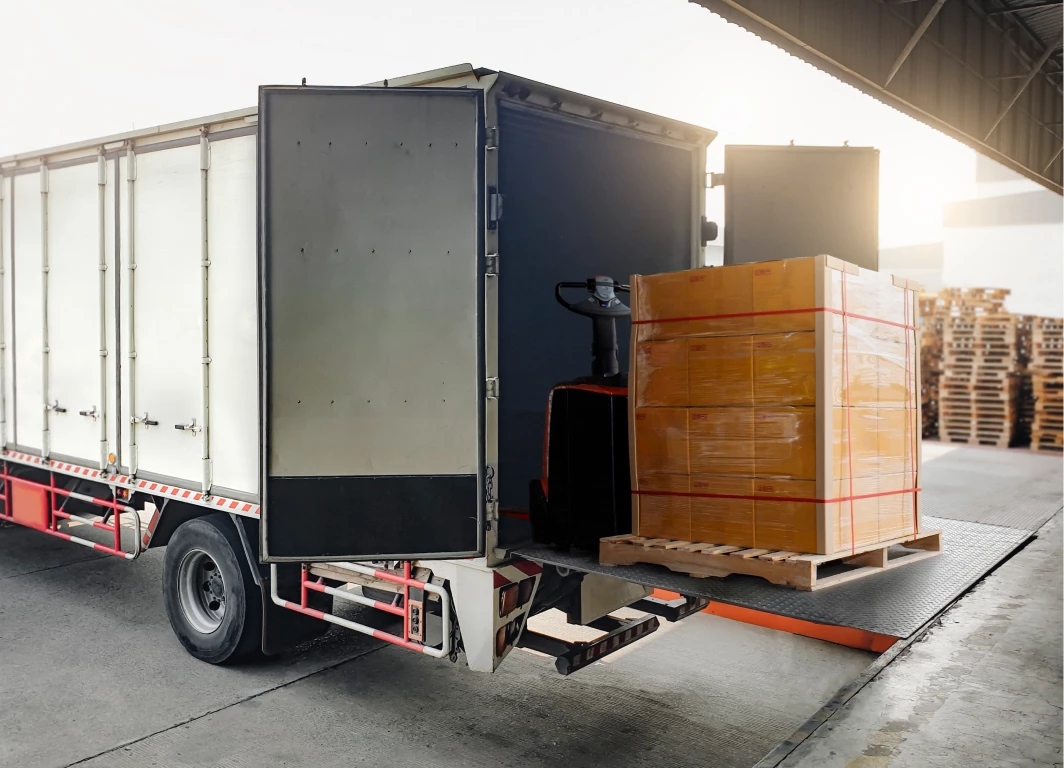
General freight trucking — Ohio trucking operations

States we serve · Ohio

Ohio trucking insurance

Ohio sits at the crossroads of the eastern freight system — Columbus distribution, Cincinnati tri-state gateway, Cleveland industrial corridor, and the I-70 / I-71 / I-75 convergence that defines mid-eastern interstate trucking. The state-monopoly workers compensation fund makes Ohio one of the most distinctive insurance jurisdictions in the country.

What Trucking Insurance Costs in Ohio

We do not publish premium ranges for Ohio trucking policies on this page. Per our numeric discipline, the cost discussion here is about the drivers, not the dollars — verified figures live on the quote itself, not on a marketing page that would be stale the week after it published.

The cost drivers that move Ohio motor carrier premium the most:

  • The Ohio Bureau of Workers Compensation state-monopoly fund. This is the single most distinctive Ohio cost driver. Ohio is one of four monopolistic-fund states, which means an Ohio-domiciled motor carrier pays its workers compensation premium directly to the BWC rather than to a private insurance carrier. Multi-state interstate motor carriers also need a separate stop-gap employers liability policy from a private carrier to cover drivers domiciled outside Ohio, and that second policy is rate-regulated by the Ohio Department of Insurance.
  • Operating territory across the Ohio crossroads. A motor carrier running high mileage through the I-71 / I-74 / I-75 Cincinnati cluster — which sits in the 2026 ATRI Top 100 truck bottleneck rankings — carries a different exposure profile than a regional operator running the Akron-Canton corridor or the Mahoning Valley. Underwriters ask for percent-of-miles by corridor on larger accounts.
  • Loss-run history over three to five years. The single most weighted variable on any Ohio motor carrier renewal. Clean loss runs through the urban corridors price meaningfully differently than mixed history with an at-fault liability claim or multiple cargo claims in the most recent term.
  • Driver MVR and PSP profile. Underwriters pull motor vehicle records on every covered driver and pull PSP reports at the carrier level. Ohio commercial enforcement density along I-70, I-71, I-75, I-77, I-80, and I-90 is high, and out-of-service violations from Ohio inspections do show up on PSP.
  • Owner-operator versus small-fleet structure. A single-truck owner-operator leased to a motor carrier prices and structures differently than a five-truck independent authority. The non-trucking liability gap and the BWC versus occupational accident question both turn on the structure question, and the Ohio- specific monopoly fund treatment changes the answer materially.
  • Commodity mix and lane density. Dry van general freight on broker boards out of Columbus is the most-quoted Ohio class and prices the most competitively. Hazmat freight along the I-75 chemical corridor, refrigerated freight on Cleveland and Toledo lanes, and heavy-haul out of the steel belt all price distinctly and route to a narrower panel of carriers with appetite for the class.
  • Liability limit selection and layered structure. The federal floor under 49 CFR § 387.9 is the minimum; Columbus, Cincinnati, and Cleveland broker contracts routinely specify limits well above the floor. The jump from the federal minimum to broker-standard limits is meaningful, and the layered architecture above primary is how Ohio operators reach the contracted number while keeping the BMC-91X filing aggregated cleanly.

Ohio Trucking Regulatory Framework

Ohio motor carriers operate under a layered federal-and-state regulatory framework with one nationally distinctive feature — the state-monopoly workers compensation fund. The pieces matter, and they do not always talk to each other.

The Ohio Department of Transportation, ODOT, administers the state highway system, manages oversize and overweight permitting through its hauling-permits portal, and coordinates the inspection and enforcement work that ODOT performs jointly with the Ohio State Highway Patrol commercial enforcement division. The ODOT website documents the permit portal, the seasonal route restrictions, and the pilot-car requirements that scale with load size. ODOT does not handle motor carrier operating authority itself — intrastate authority routes through the PUCO Transportation Department.

The Public Utilities Commission of Ohio, PUCO, Transportation Department handles intrastate motor carrier authority — the filing required for motor carriers running freight purely within Ohio state lines. Intrastate authority is separate from FMCSA interstate authority and carries its own insurance and reporting requirements. The PUCO website documents the intrastate filing process, the hazardous-materials enforcement program within Ohio, and the annual reporting requirements that follow.

The Ohio Department of Insurance, ODI, regulates the private carriers writing commercial auto, motor truck cargo, physical damage, general liability, and the adjacent lines on Ohio-domiciled motor carriers, oversees rate and form filings, and handles consumer complaints. The ODI website lists the licensed and surplus-lines-eligible carriers and the procedural rules for rate and form filings. Workers compensation is the exception line — that one is regulated by the BWC.

The Ohio Bureau of Workers Compensation, BWC, is the state-monopoly fund administering workers compensation in Ohio. Private carriers cannot write standard workers compensation in Ohio. Ohio-domiciled motor carriers pay their workers compensation premium directly to the BWC, and the BWC website documents the rate structure, the classification system, and the reporting requirements that follow. The stop-gap employers liability policy that interstate motor carriers need for non-Ohio drivers is written by private carriers under ODI regulation, sitting alongside the BWC policy.

The federal layer — FMCSA financial responsibility under 49 CFR § 387, the BMC-91 and BMC-91X filing forms, hours of service, driver qualification, drug and alcohol testing, and vehicle maintenance — applies on top of the Ohio state framework. The Federal Motor Carrier Safety Administration publishes the financial responsibility regulations and the BMC filing forms that every interstate Ohio motor carrier holds.
Common Trucking Risks in Ohio

The Ohio motor carrier risk profile is shaped by congestion, climate, industrial legacy, and the state’s distinctive workers compensation structure. The risk categories that show up most often on Ohio quotes:

  • Cincinnati corridor congestion. The I-71 / I-74 / I-75 convergence sits in the 2026 ATRI Top 100 truck bottleneck rankings, and the area is a tri-state gateway involving Kentucky and Indiana freight. The combination of congestion-driven rear-end frequency and multi-state plaintiff venues drives the layered-limits conversation on every Cincinnati-domiciled motor carrier.
  • Lake-effect snow off Lake Erie. The northern Ohio corridor — from Toledo through Cleveland to Erie, Pennsylvania — takes lake-effect snow events that produce reduced visibility, black ice, and multi-vehicle pileups on I-90 and the connecting interstate spurs. Single-event severity in a winter pileup can exhaust primary limits quickly.
  • The Ohio BWC monopoly fund navigation. Multi-state motor carriers with Ohio-domiciled drivers and out-of-Ohio drivers need both the BWC policy and a stop-gap employers liability policy from a private carrier. Misalignment between the two — a driver classified incorrectly, a missing extraterritorial endorsement, an unmatched payroll allocation — is one of the most common Ohio insurance failures, and it surfaces at claim time when the answer matters most.
  • Columbus and Rickenbacker distribution-belt rear-end frequency. The I-70 / I-71 / I-270 outer-belt convergence with the Rickenbacker Logistics megaplex produces dense distribution traffic, and the rear-end frequency on the outer-belt loops is a meaningful underwriting concern.
  • Mahoning Valley and Lima industrial-chemical exposure. The Mahoning Valley steel and metal-fabrication corridor and the Lima refining and chemical corridor both carry industrial freight with heavier severity profiles than general dry-van freight. Hazmat classification, pollution-liability exposure, and commodity-schedule discipline all matter more in these submarkets.
  • Cargo theft along the I-70 and I-75 corridors. Ohio carries elevated cargo theft frequency on parked trailers at truck stops along I-70 and I-75, particularly in the southwest Ohio segment between Dayton and the Indiana border. The cargo policy form has to address theft exposure cleanly, and the protective-safeguards warranty inside that form is the contractual hinge a denied theft claim will turn on.
  • Toledo and Detroit cross-border interchange. The Toledo Lake Erie corridor sits inside a daily cross-border interchange pattern with Michigan and the Detroit-Windsor automotive supplier base. The cross-state mileage profile, the IRP base-state question, and the multi-state workers compensation footprint all flow from that interchange and need to land cleanly on the application.

Common Ohio Trucking Claims We See

The claim categories that drive the most Ohio trucking severity — described qualitatively per our numeric discipline, no settlement figures:

  • Rear-end collision on the Cincinnati tri-state bottleneck. Stop- and-go traffic at the I-71 / I-74 / I-75 convergence — an ATRI Top 100 bottleneck in 2026 — produces rear-end events where the tractor strikes a passenger vehicle. Bodily injury severity is regularly high, and the tri-state plaintiff venue question complicates the defense.
  • Multi-vehicle pileup in a Lake Erie lake-effect snow event. A reduced-visibility snow event on I-90, I-80, or the connecting interstates produces a chain-reaction collision involving the tractor and multiple passenger vehicles. The combination of multiple plaintiffs and concentrated severity drives the MCS-90 conversation and the layered-excess question simultaneously.
  • Ohio driver injury claim against the BWC. A driver injury claim filed against the BWC monopoly fund for an Ohio-domiciled driver, with a separate stop-gap employers liability question on a related lawsuit. The structural interaction between BWC coverage and the private stop-gap policy is the issue that surfaces most often on Ohio injury claims.
  • Cargo theft from a parked trailer in southwest Ohio. A motor carrier stages a loaded trailer at a truck stop along the I-70 or I-75 corridor overnight, and the trailer or its contents are taken. The cargo coverage responds subject to the protective-safeguards warranty; the broker relationship and the shipper claim handling do not always survive the dispute.

Why Ohio Trucking Owner-Operators Choose Truck Guard Insurance

Ohio is one of the highest-volume states on our quote desk. The Columbus distribution belt, the Cincinnati tri-state gateway, the Cleveland industrial corridor, and the Toledo Lake Erie freight gateway all route to us on a regular basis — and we have the panel depth to quote every freight class the state runs.

We are an independent agency licensed in 48 states with a 16-carrier specialty trucking panel. For Ohio owner-operators that matters more than it does in most states — the state-monopoly BWC fund means an Ohio-domiciled motor carrier with multi-state operations needs both the BWC policy and a stop-gap employers liability policy from a private carrier, and the structural coordination between the two is exactly the kind of conversation our quote desk handles every working day.

We handle BMC-91 and BMC-91X filings end-to-end, issue broker certificates day-of the request with the exact additional-insured language each broker compliance system demands, structure the stop-gap employers liability policy against the BWC classifications, and walk through MCS-90 mechanics on the quote call so the policy you bind in Ohio matches what the operation actually runs. When the renewal cycle comes, we re-market the account against the panel — every term, not just when something has gone wrong.

Major Ohio Trucking Markets

The Ohio freight system runs across several distinct submarkets, each with its own underwriting profile. The corridors and metros where we place the most Ohio motor carrier coverage:

  • Cleveland. The I-77 / I-90 / I-71 convergence plus the Port of Cleveland on Lake Erie plus a steel-industry legacy base produce a northeast Ohio freight profile shaped by heavy industrial loadout, lake-effect snow corridors off Erie, and dock-and-terminal premises exposure. Auto liability frequency through the lake-snow corridor and trailer interchange on rail-to-truck transfers shape the underwriting questions.
  • Columbus. The I-70 / I-71 / I-270 outer-belt convergence with the Rickenbacker Logistics megaplex and Honda and Stellantis production plants drives the densest distribution submarket in central Ohio. The Rickenbacker air-cargo and intermodal volume adds drayage exposure on top of the standard distribution-belt rear-end frequency, and underwriters watch the outer-belt percent-of-miles closely on quotes.
  • Cincinnati. The I-71 / I-74 / I-75 convergence with the Northern Kentucky CVG-DHL Americas Hub and Ohio River barge interchange produces a tri-state freight gateway, and the area sits in the 2026 ATRI Top 100 truck bottleneck rankings. The cross-state corridor with Kentucky and Indiana drives multi-state workers compensation footprint questions on every quote of a Cincinnati-domiciled motor carrier.
  • Toledo. The I-75 / I-80 / I-90 interchange cluster plus the Port of Toledo on Lake Erie plus an automotive-supplier base concentrated around Jeep production produces a northwest Ohio corridor with both heavy-haul and just-in-time automotive freight. The lake-effect snow corridor and the Michigan border crossing both push the rating questions on a Toledo-based motor carrier.
  • Akron-Canton. The rubber-industry legacy — anchored by Goodyear headquarters and a deep supplier base — plus the I-77 / I-76 interchange produces a manufacturing freight profile distinct from the distribution-belt patterns elsewhere. The commodity mix shifts toward industrial inputs and finished tires and rubber goods, and the rating distinction matters at quote.
  • Dayton. The I-70 / I-75 convergence plus Wright-Patterson Air Force Base logistics support drives a southwest Ohio freight pattern with a heavy defense-contractor inbound component. The defense-logistics overlay raises additional-insured and certificate-holder questions on broker contracts that downstate Ohio operators do not face.
  • Youngstown. The Mahoning Valley I-76 / I-80 industrial-legacy corridor connects northeast Ohio to western Pennsylvania, with a freight mix anchored in steel, metal-fabrication, and energy-sector inbound and outbound flows. The cross-border interchange with Pennsylvania matters for the workers compensation footprint and for the IRP base-state question on multi-state operators.
  • Lima. The I-75 refining and chemical corridor through Allen County carries petroleum, lubricant, and specialty-chemical freight tied to the Lima refinery and the regional chemical-industry footprint. Hazmat motor carrier classifications and pollution-liability exposure on the tank fleet drive the rating distinction.

Related Reading

Coverage lines we structure for Ohio motor carriers:

  • Trucking Auto Liability — the federally filed primary line, BMC-91X aggregated for layered limits the Columbus and Cincinnati broker markets demand
  • Motor Truck Cargo — covers the freight, with theft language tightened for the I-70 and I-75 corridor exposure
  • Workers Compensation — the Ohio BWC monopoly fund makes this the most distinctive state-specific line, with stop-gap employers liability sitting alongside
  • Physical Damage — covers the tractor and trailer in the lake-effect snow corridor and the multi-corridor congestion zones

Motor carrier classes we write that show up most often in Ohio:

Neighboring states we are licensed in:

Ohio Trucking Insurance FAQs

Why is Ohio workers compensation different from most other states?

Ohio operates a state-monopoly workers compensation fund administered by the Ohio Bureau of Workers Compensation, the BWC. Ohio is one of four monopolistic-fund states — private carriers cannot write standard workers compensation in Ohio, and Ohio-domiciled motor carriers buy coverage directly from the BWC. The implication for interstate motor carriers is significant: an Ohio-based motor carrier with drivers domiciled in other states needs a separate stop-gap employers liability policy from a private carrier to cover the multi-state exposure, plus the BWC policy for Ohio-domiciled drivers.

What does the Ohio Department of Transportation require for motor carriers?

The Ohio Department of Transportation, ODOT, administers the state highway system, manages oversize and overweight permitting through its hauling-permits portal, and coordinates the inspection and enforcement work that ODOT performs jointly with the Ohio State Highway Patrol commercial enforcement division. ODOT does not handle motor carrier operating authority itself — intrastate Ohio authority routes through the Public Utilities Commission of Ohio, the PUCO. Interstate motor carriers operate under FMCSA authority with ODOT enforcement on Ohio roads.

How does the Public Utilities Commission of Ohio interact with intrastate trucking?

The Public Utilities Commission of Ohio, PUCO, Transportation Department handles intrastate motor carrier authority — the filing required for motor carriers running freight purely within Ohio state lines. The intrastate filing carries its own insurance and reporting requirements administered jointly by the PUCO and the Ohio Department of Insurance, and motor carriers that mix intrastate and interstate freight need to keep both authorities in good standing simultaneously. PUCO also enforces hazardous-materials transportation rules within Ohio.

How does the Ohio Department of Insurance regulate trucking policies?

The Ohio Department of Insurance, ODI, regulates the private carriers writing commercial auto, motor truck cargo, physical damage, general liability, and the adjacent lines on Ohio-domiciled motor carriers, oversees rate and form filings, and handles consumer complaints. Workers compensation is the exception — that line is handled by the Ohio Bureau of Workers Compensation under the state-monopoly fund structure. The ODI does regulate the stop-gap employers liability policies private carriers write to cover Ohio-based motor carriers operating outside Ohio.

Why is the Cincinnati corridor an underwriting concern?

The I-71 / I-74 / I-75 convergence in the Cincinnati area sits in the 2026 ATRI Top 100 truck bottleneck rankings, and the area is also a tri-state gateway involving Kentucky and Indiana freight. The combination of congestion-driven rear-end frequency, the Northern Kentucky CVG-DHL Americas Hub air-cargo drayage volume, and the multi-state operational footprint pushes both the limit-adequacy conversation and the workers compensation multi-state structure question on every Cincinnati-domiciled motor carrier quote.

Do Ohio broker contracts require limits above the FMCSA floor?

Yes. Modern broker contracts and large-shipper master agreements out of the Columbus distribution belt, the Cincinnati tri-state gateway, and the Cleveland industrial corridor routinely specify primary auto liability limits well above the FMCSA financial responsibility floor under 49 CFR § 387.9. The layered-limits architecture — primary plus excess or umbrella — is how Ohio motor carriers reach the contracted number while keeping the BMC-91X filing aggregated cleanly across multiple carriers.

How does the MCS-90 endorsement interact with Ohio-domiciled motor carriers?

The MCS-90 is the federally mandated endorsement attached to the auto liability policy. It does not insure the motor carrier — it pays an injured third party first when the underlying policy denies coverage for a covered public-liability loss, and then the insurance carrier seeks reimbursement from the motor carrier. In the high-volume Ohio corridor system, particularly the I-70 / I-71 / I-75 crossroads through Columbus and Cincinnati, an MCS-90 trigger after a denied claim is a debt that can survive bankruptcy. Treat it as a regulatory backstop for the public, not as coverage you carry.

Get an Ohio trucking insurance quote

Send the basics on your authority, equipment, commodity, lane mix, driver state domicile mix, and the broker certificate requirements that drive your limits. We pull the panel of specialty trucking markets quoting Ohio motor carriers today, structure the layered limits against the Columbus and Cincinnati broker contracts, coordinate the stop-gap employers liability against the BWC monopoly fund, handle the BMC-91X filing, and issue certificates the day each broker asks.