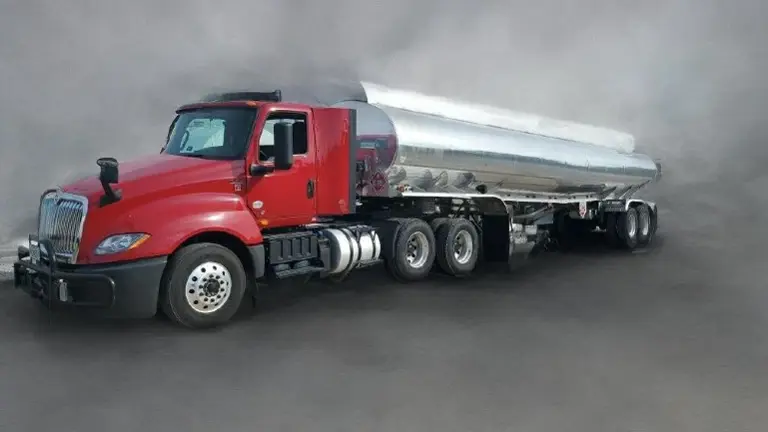
Hazmat trucking — Hazmat Trucking Insurance from Truck Guard Insurance

Services we write

HAZMAT Trucking Insurance for placarded motor carriers

Hazmat motor carriers live with three regulatory layers most freight haulers never see — FMCSA financial responsibility, PHMSA registration, and the MCS-90 endorsement getting triggered by a pollution event. We place hazmat coverage every working day.

Hazmat trucking is the regulated and permitted corner of motor carrier operation. The moment a trailer requires placards, the operation moves into a parallel federal regime administered jointly by FMCSA and PHMSA — with its own registration, its own training requirements, its own financial responsibility floors, and its own pool of underwriters willing to write the risk. The insurance question on a hazmat account is never just what limits to carry. It is which markets will even quote the placard classes in the load profile, and which coverages need to be structured separately because standard trucking forms exclude the exposure entirely.

The MCS-90 endorsement is the federal artifact most hazmat operators worry about, and they are right to worry. It pays the public first when the underlying auto liability policy denies a covered loss, then seeks reimbursement from the motor carrier — a hazmat release on the shoulder of an interstate is exactly the loss type the MCS-90 was written for, and it is exactly the loss type that can end a small motor carrier whose pollution liability coverage was not structured to respond first. The right structure puts the pollution policy in front of the MCS-90 so the regulatory backstop never gets triggered.

Beyond MCS-90, hazmat operators carry an entire stack of overlays that general freight carriers do not. PHMSA registration runs in parallel with FMCSA authority and requires its own annual filing. A Hazmat Safety Permit is required for the highest-risk classes. HM-126F training records must be current and produceable at audit. The placard classes on the load profile drive both pricing and appetite — Class 1 explosives, Class 7 radioactive, and Class 2.3 poison gases live at the narrow end of the market, and the carriers that quote them are a fraction of the carriers that quote Class 3 flammable liquids.

This page is the working reference for what hazmat trucking insurance covers, how the federal regulatory machinery layers on top of standard motor carrier coverage, the underwriting realities of placing hazmat business, and how we structure these accounts across the 48 states we are licensed in.

  • 48 stateslicensed coast to coast
  • 16+ carriersspecialty trucking panel
  • Hazmat focusplacarded freight operators
  • MCS-90 structuringhandled at bind, not after

Placarded load profile and a renewal coming due? Send the basics — placard classes, equipment, lane mix — and we will work the hazmat-willing markets on our panel.

What makes hazmat trucking insurance different

The defining feature of a hazmat motor carrier policy is the layered federal regulatory regime sitting on top of standard motor carrier rules. A general freight policy is built to satisfy FMCSA authority requirements and broker contract requirements. A hazmat policy is built to satisfy those plus PHMSA registration, plus the elevated financial responsibility floor at 49 CFR 387.9, plus the pollution and environmental restoration exposures that arise the moment the load profile crosses into a placardable category.

The second defining feature is appetite narrowness. The pool of underwriters willing to write hazmat is a small fraction of the pool that writes general freight, and the pool gets smaller as the placard classes get higher-risk. A Class 3 flammable-liquid operator has more carrier options than a Class 2.3 poison-gas operator. Within the willing underwriters, appetite further narrows by commodity within class — a Class 8 corrosive operator may find willing markets for sulfuric acid but not for hydrofluoric acid. The underwriting questions are class-and-commodity-specific, and the application paperwork reflects that specificity.

The third defining feature is the MCS-90 endorsement itself. Every motor carrier policy carries it, but on a hazmat account the endorsement does not sit dormant the way it does on a general freight account. The pollution and environmental restoration trigger is live. A diesel release from saddle tanks on a general freight tractor is one MCS-90 exposure category; a placarded load release on a hazmat tractor is a different category of exposure entirely. The pollution liability coverage written underneath the MCS-90 is what determines whether the operator stays whole after a covered release, and structuring it correctly is the central technical exercise on every hazmat placement.

The fourth defining feature is documentation discipline. HM-126F training records, PHMSA registration confirmations, Hazmat Safety Permit copies, shipping papers, and placard inventories all need to be current and produceable. Underwriters expect documentation discipline as a baseline; FMCSA audits expect it as compliance; roadside inspections expect it on demand. Operators who carry a clean documentation set price differently than operators who do not.

State and regulatory considerations

Hazmat motor carriers operate under three layers of regulation simultaneously. The federal layer is administered jointly by the Federal Motor Carrier Safety Administration hazmat program and the Pipeline and Hazardous Materials Safety Administration. FMCSA owns the operating authority, the financial responsibility filing, the driver qualification standards, and the safety auditing. PHMSA owns the registration program, the Hazmat Safety Permit for the highest-risk categories, the classification and packaging standards, and the placarding and marking rules at 49 CFR Part 172.

The environmental restoration layer is administered by the U.S. Environmental Protection Agency at the federal level and by state environmental agencies at the state level. A hazmat release on the roadside triggers a response under the National Contingency Plan, and the response agency typically pursues subrogation against the motor carrier for cleanup and restoration costs. Pollution liability coverage is what responds to the subrogation claim; the absence of that coverage is what converts a contained release into a business- ending loss.

The state layer adds intrastate hazmat permit requirements, state-specific routing restrictions (tunnel restrictions, bridge restrictions, urban-area restrictions on certain placard classes), state environmental notification requirements that differ from the federal CERCLA reporting requirements, and state-level workers compensation jurisdiction questions for drivers handling hazmat. Some states require additional hazmat-specific endorsements on the CDL beyond the federal H endorsement. Routing decisions made without state-by-state knowledge of restrictions are a leading source of preventable hazmat violations.

A consequential state-level question for any hazmat operator is the workers compensation jurisdiction for drivers who handle placarded loads. The injury exposure profile for a hazmat driver differs from a general freight driver, and some state workers compensation systems handle hazmat injury claims differently than others. Coordinate the workers compensation state with the IFTA base state and the auto liability governing state at policy structuring, not after a claim.

Coverage breakdown for a hazmat operator

A hazmat motor carrier policy is built from the standard motor carrier coverage stack with one critical addition: pollution liability is no longer optional, and the way the pollution policy interacts with the MCS-90 endorsement is the central structural question on the placement. The lines below are the core stack we structure for hazmat accounts.

Trucking auto liability is the federally-mandated public liability policy on the tractor. For hazmat operators the limit floor at 49 CFR 387.9 is higher than the general freight floor, and the carrier files BMC-91 or BMC-91X with FMCSA to prove coverage. The MCS-90 endorsement attaches to this policy, which is why pollution liability needs to sit underneath it as a separate coverage that responds first.

Pollution liability is the coverage that actually protects the hazmat motor carrier when a cargo release, an upset- and-overturn spill, or an unloading-incident release happens. Standard trucking auto liability excludes most pollution exposures arising from the cargo and the equipment. Pollution liability fills that gap. On a hazmat account this coverage is not a checkbox; it is the placement decision that determines whether the operator survives a serious release event.

Physical damage covers the tractor, the trailer, and any specialized hazmat equipment (cargo tanks, intermediate bulk containers, specialized racking) the motor carrier owns or finances. Hazmat-spec equipment costs more to replace than standard freight equipment, and underwriters watch the equipment list closely on a hazmat application.

Motor truck cargo covers the placarded freight in transit. The commodity exclusions and the per-load limit on the cargo policy matter especially on hazmat — many standard cargo forms exclude certain hazmat categories entirely, and a placarded load picked up under a cargo policy that excludes the commodity creates a coverage gap that surfaces only at the claim.

Trailer interchange covers non-owned trailers, including specialized cargo tanks pulled under written interchange agreements. A hazmat operator pulling an interchanged cargo tank inherits responsibility for both the tank and its contents while it is on dispatch, and interchange coverage is what responds to damage to the tank itself.

General liability covers premises and operations exposures away from the truck — terminal yards, loading and unloading facilities, customer docks, and non-driving operational liability. Hazmat- handling premises carry their own elevated exposure profile, and many hazmat shipper and consignee facilities require evidence of general liability before allowing placarded equipment on site.

Workers compensation applies to driver and yard-employee injury claims. Statutory in every state except Texas and rate-regulated by the state insurance department, workers compensation for a hazmat operation prices differently than for a general freight operation — the injury exposure profile is elevated, and the rate classes reflect it. Drivers who handle placarded loads and drivers who interact with cargo at loading and unloading both fall under workers compensation if injured on the job.

Non-trucking (bobtail) auto liability covers the tractor when it is off-dispatch. Owner-operators leased to a motor carrier under hazmat-specific lease structures need both the primary auto liability policy and the non-trucking policy, and the off-dispatch question for a hazmat tractor is the same question it is for any other tractor — was the tractor on motor-carrier business at the moment of the loss, or not.
Renewing a hazmat account and worried about the MCS-90 structuring? Send the current declarations and the placard-class profile — we will benchmark the stack.

Start a quote

What hazmat trucking insurance costs

We do not publish premium ranges on this page. Per our numeric discipline, the cost discussion here is about the drivers, not the dollars — verified figures live on the quote itself, not on a marketing page that would be stale the week after it published.

The cost drivers that move hazmat premium the most:

  • Placard classes on the routine load profile. The single largest variable on a hazmat application. Class 3 flammable liquids and Class 8 corrosives sit in a broader market than Class 1 explosives, Class 2.3 poison gases, or Class 7 radioactive materials. The classes the operator routinely hauls determine which markets quote and at what level.
  • Pollution liability limit and structure. The pollution policy limit relative to the realistic release scenario is the second largest variable, and the way the pollution policy interacts with the MCS-90 endorsement determines whether the structure protects the operator or only the public.
  • Driver MVR and hazmat training records. H endorsement currency on every driver, HM-126F training current and documented, and clean MVRs across the driver roster. Recent convictions, recent at-fault accidents, and out-of-service hazmat-specific inspection violations all weigh against the application.
  • Equipment age and configuration. Cargo tank specification (DOT 406, 407, 412), trailer age, tractor age, and any specialized hazmat equipment all affect physical damage pricing and underwriter appetite.
  • Radius of operation and lane density. Urban routes through high- population areas with hazmat routing restrictions price differently than rural long- haul lanes. Lane mix and the presence of tunnel and bridge restrictions on routine routes both feed the underwriting model.
  • Loss-run history and CSA scores. Hazmat operators are evaluated on FMCSA BASIC scores with extra weight on Hazardous Materials Compliance and Vehicle Maintenance categories. A CSA score climbing into intervention territory is the anxiety trigger every hazmat operator carries, and underwriters watch the same data.
  • Auto liability limit selected. The federal floor under 49 CFR 387.9 for the operator’s placard categories is the minimum; the actual limit is driven by broker contract requirements and the realistic catastrophic-loss scenario. Layered limits using a primary policy plus an excess or umbrella are the standard structure.

Claims scenarios a hazmat operator faces

The claim categories that drive the most severity on hazmat accounts — described qualitatively per our numeric discipline, no settlement figures:

  • Cargo release after an at-fault rollover. A loaded tractor rolls on an interstate exit ramp, the cargo tank ruptures, and the placarded product enters the surrounding soil and storm drainage. The auto liability policy responds to the bodily-injury and third-party-property elements, the pollution liability policy responds to the environmental restoration costs, and the MCS-90 backstops the structure if any coverage piece denies. Limit adequacy across all three layers is the question that decides the financial outcome.
  • Unloading-incident release at a consignee facility. A driver transfers product at the consignee, a hose disconnects under pressure, and the product reaches a containment area or beyond. Liability allocation between the motor carrier and the consignee facility is contested, the cleanup is in progress within the first hour, and the pollution policy responds to the motor carrier’s share. The documentation captured in the first thirty minutes shapes the subrogation outcome months later.
  • Placard-violation inspection finding during a routine roadside stop. A CVSA inspector identifies a placarding or shipping paper deficiency on a placarded load. The violation posts to the Hazardous Materials Compliance BASIC, the inspection record affects future submission pricing, and the operator absorbs the out-of-service time. No insurance claim is paid, but the underwriting consequences run for two renewal cycles.
  • Driver injury during cargo handling. A driver is injured while handling placarded cargo at a shipper or consignee. The workers compensation policy responds to the medical and indemnity claim, the injury reporting feeds the CSA crash-and-injury data, and the underwriting consequences depend on whether the injury reflects a training or procedural gap that the underwriter will need to see corrected before the next renewal.

Underwriting realities for hazmat motor carriers

Underwriters in the specialty trucking market evaluate hazmat submissions on a tight list of variables that carry disproportionate weight relative to general freight:

  • Placard class and commodity specifics. Not just the DOT hazard class but the specific commodities within class. UN numbers and proper shipping names matter — a Class 3 application with refined petroleum reads very differently than a Class 3 application with industrial solvents.
  • PHMSA registration and Hazmat Safety Permit currency. Both registrations must be current. Operators routinely lapse on PHMSA renewals because the program is separate from FMCSA biennial updates, and a lapsed registration is a roadside out-of-service trigger.
  • Driver H endorsement and HM-126F training records. Every driver handling placarded loads needs a current H endorsement on the CDL and current HM-126F training. Records must be produceable and on the three-year retraining cycle.
  • FMCSA BASIC scores. Hazardous Materials Compliance, Vehicle Maintenance, and Driver Fitness BASICs are weighted heavily. Scores in the alert or intervention range are grounds for declination at most specialty markets.
  • Equipment specification. Cargo tank type and certification (DOT 406 for flammables, DOT 407 for chemicals, DOT 412 for corrosives), trailer age, and any in-bulk vs. packaged configuration questions all narrow or open the underwriter pool.
  • Loss runs with claim narratives. Numeric loss runs alone are not enough on a hazmat account — underwriters expect claim narratives that explain root cause, corrective action, and the operational changes made after each loss.
  • Routing discipline. Documented routing procedures that respect tunnel restrictions, bridge restrictions, and urban hazmat routing restrictions. Some markets require evidence of routing software in use.

What gets declined: placard classes outside the carrier’s appetite, lapsed PHMSA registration, BASIC scores in alert or intervention territory, drivers without current H endorsements, and operators whose loss history shows a pollution event without documented corrective action.

Why Truck Guard Insurance

Hazmat motor carrier coverage is one of the narrowest insurance markets in the trucking class, and placing it well is one of the conversations we have most often on quote calls. It is not a side line for us, and it is not a class we hand off to a generic commercial auto desk. The specialty trucking carriers on our panel include the underwriters in the motor carrier market who actively quote placarded freight, and the underwriting questions on a hazmat submission are questions we have asked thousands of times.

We are an independent agency, which means we work the panel — not a single carrier with one appetite and one rate. For a hazmat operator that is the structural difference that matters. Hazmat appetite shifts faster than any other class in trucking; an operator placed through an agency with panel depth gets a second look when the first market changes appetite or non-renews after a loss.

We handle the MCS-90 mechanics on the quote call so the policy you bind matches the structure you intended. We benchmark pollution liability limits against realistic release scenarios for your placard profile, not against generic class assumptions. We coordinate the FMCSA filings and the PHMSA registration overlay so the regulatory side is current at bind. And when a broker compliance question or an authority cancellation notice arrives, the call gets answered by someone who knows the difference between a Class 3 flammable liquid and a Class 2.3 poison gas.

Frequently asked questions about hazmat trucking insurance

What counts as hazmat for motor carrier insurance purposes?

For insurance purposes, hazmat is any material classified under 49 CFR Part 172 that requires shipping papers, marking, labeling, or placards when transported. The nine DOT hazard classes range from explosives (Class 1) through radioactive (Class 7) and corrosives (Class 8). The moment a load requires placards on the trailer, the underwriting and the filing requirements shift. Many motor carriers haul some hazmat occasionally and discover at the first claim that the policy was written for general freight and excluded placarded loads — that is the most common preventable gap in this class.

What is the MCS-90 endorsement and why does it matter so much for hazmat carriers?

The MCS-90 is a federally-mandated endorsement attached to the trucking auto liability policy. It pays an injured third party first when the underlying policy denies coverage for a covered public-liability or environmental-restoration loss, then the insurance carrier seeks reimbursement from the motor carrier. For hazmat operators the MCS-90 is unusually consequential because pollution and environmental restoration exposures are real, and an MCS-90 payout becomes a debt the operator owes the insurance carrier that can survive bankruptcy. Treat it as a regulatory backstop for the public, not as protection for the operation.

What are the FMCSA financial responsibility minimums for hauling hazardous materials?

The financial responsibility floors live at 49 CFR 387.9. General freight has one floor, oil and certain petroleum products have a higher floor, and the highest-risk hazardous materials sit at a higher floor still. The exact dollar floors and the class categories are published in the regulation itself — the figures move with rulemaking, so the eCFR text is the authoritative source. Modern shipper and broker contracts routinely require limits above the federal floor, and most hazmat operators carry layered limits to satisfy both the federal filing requirement and the contract requirement.

Do I need to register with PHMSA separately from my FMCSA authority?

Yes. The Pipeline and Hazardous Materials Safety Administration administers hazmat-specific registration that runs in parallel with the FMCSA operating authority. Carriers transporting certain quantities or categories of hazmat must register with PHMSA and pay an annual fee, and motor carriers transporting the highest-risk categories must also hold a Hazmat Safety Permit. The PHMSA registration number, the FMCSA MC number, and the USDOT number are three distinct registrations — application paperwork frequently confuses them, and a missing PHMSA registration can trigger an out-of-service order at roadside.

What is the difference between HM-126F and HM-181 hazmat training requirements?

HM-126F is the general hazmat employee training requirement under 49 CFR 172 Subpart H — it applies to anyone who prepares, handles, or transports hazardous materials in commerce, and it has general awareness, function-specific, safety, and security awareness components on a three-year retraining cycle. HM-181 refers to the broader rulemaking that aligned U.S. hazmat regulations with international standards and introduced the current packaging and classification scheme, particularly relevant for poisonous gases and oxidizers. Underwriters expect training records to be current, documented, and produceable at audit.

Why is pollution liability sold as a separate coverage when MCS-90 already exists?

The MCS-90 pays the public when the underlying policy denies, then collects from the motor carrier. Pollution liability is the underlying coverage that actually protects the motor carrier when a pollution event happens. The two are not substitutes. Standard trucking auto liability excludes most pollution exposures arising from the cargo, the equipment, or upset-and-overturn events. A separate pollution liability policy fills that gap — and on a hazmat operation, the pollution exposure is the largest single uninsured loss potential if the policy is not structured correctly.

What placard classes drive the narrowest carrier appetite?

Class 1 explosives, Class 7 radioactive materials, and Class 2.3 poison gases sit at the narrow end of the hazmat market — the pool of underwriters willing to quote them is a fraction of the pool that will quote Class 3 flammable liquids or Class 8 corrosives. Class 9 miscellaneous hazardous materials sits at the broader end. The placard class on the routine load profile is one of the first questions an underwriter asks on a hazmat submission, and the answer determines which markets even open the file.

What happens to the policy if a covered hazmat release triggers an EPA response?

When a hazmat release prompts a federal or state environmental response, the response agency typically pursues subrogation against the motor carrier for cleanup and restoration costs. The pollution liability policy responds to those costs within its limit. If the response cost exceeds the pollution limit, or the policy denies for a coverage exclusion, the MCS-90 may pay the public-facing portion and then seek reimbursement from the motor carrier. The financial exposure of a single significant release can exceed the combined limits of a small motor carrier policy, which is why limit selection on hazmat accounts deserves more attention than any other underwriting variable.

Related coverage and resources

Coverage lines we structure for hazmat operators:

Other motor carrier classes we write:

Primary regulatory sources:

Get a hazmat trucking insurance quote

Send the basics on your authority, placard classes, equipment, lane mix, and driver roster. We pull the hazmat-willing markets on our specialty trucking panel, walk through MCS-90 mechanics and pollution liability structuring, benchmark limits against your realistic release scenarios, and confirm PHMSA registration currency before you bind.