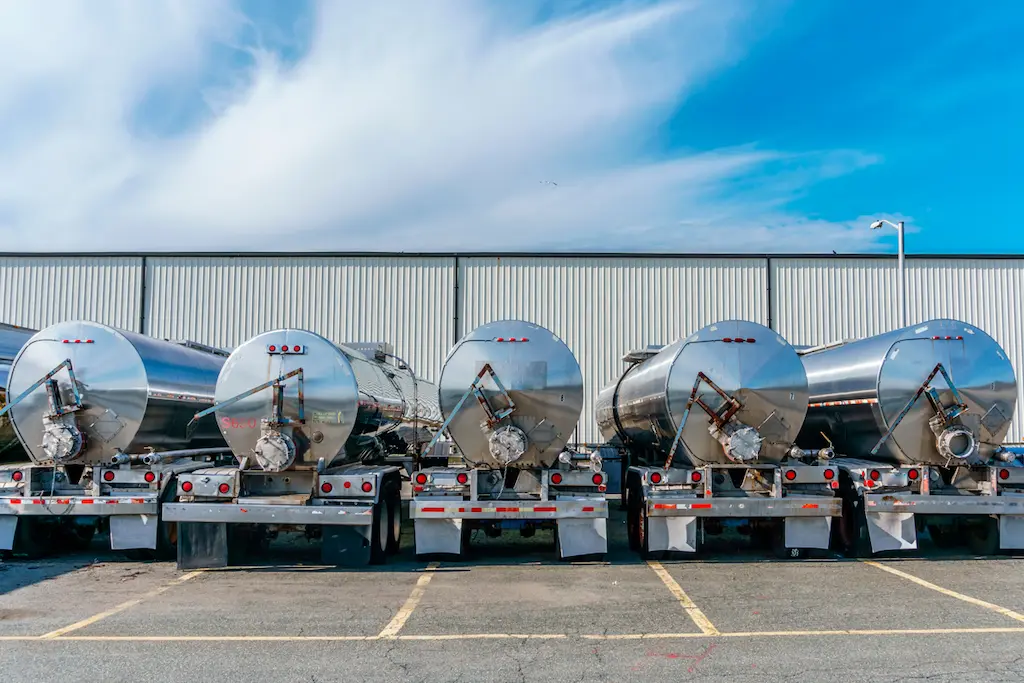
Hazmat trucking — Texas trucking operations

States we serve · Texas

Texas trucking insurance

Texas runs more interstate motor carrier authority than any other state, and the underwriting questions reflect it — Laredo cross-border drayage, Houston petroleum corridor exposure, Permian Basin oilfield work, and Gulf-coast hurricane wind all factor into how a Texas trucking program gets placed. We work the specialty motor-carrier markets that actually write each of those exposures, not the generic commercial auto market that quotes them as an afterthought.

What trucking insurance costs in Texas

Texas trucking insurance pricing is driven by a small set of underwriting variables that carry more weight than the state-of-domicile entry on the application. The biggest of them is the freight mix: a dry-van operation hauling general freight between Dallas and San Antonio prices differently from a tank-truck operation hauling refined product out of the Houston Ship Channel, and both of those price differently from a frac-sand or crude-pickup operation in the Permian Basin. The Texas Department of Insurance regulates carrier rates and forms, but rate adequacy on a specific risk runs through the specialty motor-carrier underwriter, not the regulator.

The second variable is corridor density. Houston I-45 at I-69 and I-10 at I-45 both appear on ATRI’s 2026 Top Truck Bottleneck List, which means rear-end and low-speed urban-arterial claim frequency is materially higher for fleets domiciled or running heavy miles inside the Houston metro than for fleets concentrated in the Permian Basin or the I-20 west-Texas corridor. Cross-border carriers running through Laredo and El Paso face shipper-contract limits well above the FMCSA financial responsibility floor at 49 CFR section 387.9, which pulls auto liability premium upward on the cross-border lane.

Third, claims history is the variable that does the most work on any individual renewal. One severity claim in the last three years — particularly a bodily-injury claim with reserves above the primary limit — changes the carrier appetite list materially. The right time to plan for that is before the renewal quote round, not after. Fourth, the owner-vs-driver structure: an owner-operator running a single tractor under their own authority prices differently than a small fleet with three drivers on payroll, even before workers compensation enters the picture. We work through each of these on the quote call rather than handing back a single number that hides the assumptions behind it.

Texas trucking regulatory framework

Texas trucking sits inside a four-agency regulatory framework that is wider than most states. Interstate authority runs through FMCSA at the federal level; intrastate authority runs through the Texas Department of Motor Vehicles Motor Carrier Division; insurance carriers and policy forms are regulated by the Texas Department of Insurance; and highway infrastructure, oversize-overweight permitting, and state-route operations run through the Texas Department of Transportation. Workers compensation regulation sits inside TDI rather than a separate labor department — Texas is the one state where the WC system houses inside the insurance regulator.

Federal authority — FMCSA, USDOT, and PHMSA

Interstate Texas motor carriers register with the Federal Motor Carrier Safety Administration for a USDOT number and motor-carrier authority, file BMC-91 or BMC-91X public-liability proof of insurance through their carrier, and carry the MCS-90 endorsement on the auto liability policy. Hazmat operations layer PHMSA placarding, training, and routing requirements on top of FMCSA authority — Houston petroleum lanes and Beaumont chemical lanes are the two Texas clusters where that layer matters most.

Texas Department of Transportation (TxDOT)

TxDOT maintains the state highway and interstate network — I-10, I-20, I-30, I-35 (both E and W branches through DFW), I-37, I-40, I-45, and I-69 — and administers oversize and overweight permits through its Motor Carrier Division. Heavy-haul operators running permitted loads work directly with TxDOT on routing approvals; pilot-car and escort requirements vary by load dimension and corridor.

Texas Department of Insurance (TDI) and TDI Division of Workers Compensation

TDI regulates the property and casualty carriers that write Texas trucking auto liability, motor truck cargo, physical damage, and pollution liability programs. The TDI Division of Workers Compensation administers the state WC system — and Texas is unique in allowing private employers to elect non-subscriber status, which is a decision a Texas trucking business should make with eyes open because it removes statutory immunity against direct employee suits.

Texas Department of Motor Vehicles (TxDMV) Motor Carrier Division

Intrastate-only motor carriers — freight that originates and terminates inside Texas — register through the TxDMV Motor Carrier Division rather than FMCSA. Many Texas owner-operators carry both an intrastate TxDMV registration and an interstate USDOT number because lane mix shifts over a year. Unified Carrier Registration is handled through TxDMV as well, in coordination with the multi-state UCR Plan.
Common trucking risks in Texas

The Texas risk profile splits into four distinct exposure regions that an underwriter reads off the garaging address and the lane disclosure before anything else on the application.

  • Urban-corridor congestion claims. Houston, Dallas-Fort Worth, and San Antonio run high-frequency urban interstate volume that produces rear-end, sideswipe, and low-speed merge collisions. The ATRI bottleneck ranking on Houston I-45 / I-69 is not a marketing data point — it correlates with auto liability claim frequency on filings garaged in the metro.
  • Cross-border drayage exposure. Laredo World Trade Bridge volume and the El Paso crossings expose carriers to bonded-load liability, customs-broker contract terms, and shipper certificate-of-insurance demands that often outrun the FMCSA financial responsibility floor. A broker refusing loads because of an insurance certificate issue is a typical cross-border symptom of mismatched limits or wrong additional-insured wording.
  • Oilfield off-road exposure. Permian Basin frac-sand, crude pickup, water hauling, and rig-move operations run materially more lease-road and off-highway miles than general freight, with rollover frequency and physical damage severity to match. The carriers that write oilfield trucking are a different subset of the specialty market than the carriers that write Dallas dry-van programs.
  • Hurricane and severe-weather property exposure. Beaumont-Port Arthur, Galveston, Corpus Christi, and Brownsville sit in named-storm wind zones; inland Texas faces spring and summer hail along the I-35 and I-20 corridors. Both factor into physical damage and property pricing for yards, terminals, and parked equipment.
  • Long-distance bobtail and off-dispatch exposure. Texas geography produces longer deadhead and personal-use legs than most states — an owner-operator garaged in San Antonio might bobtail to Laredo, Houston, or Midland on a single weekend. Non-trucking bobtail liability is the policy that responds when the tractor is off-dispatch, and the gap it covers is bigger in Texas than in compact states.

Common Texas trucking claims we see

The claim mix on Texas filings runs heavier on a few specific patterns than national averages would suggest. These are qualitative — no severity figures, because severity is a function of venue, jury composition, and limit adequacy that varies too widely to summarize honestly.

  • Urban rear-end and low-speed merge collisions on the Houston and DFW grids. Stop-and-go congestion in Houston around the I-45 / I-69 interchange and on the DFW high-five stack produces a steady run of low-severity property-damage claims with the occasional bodily-injury claim where soft-tissue allegations layer on. The auto liability policy responds; the question is whether the limit holds.
  • Cross-border cargo damage and shortage disputes. Loads moving through Laredo and El Paso between US shippers and Mexican consignees produce cargo claims where the carrier disputes the loss value, the place-of-loss is contested, and the customs documentation comes into play. Motor truck cargo responds — and the contract terms decide the path from there.
  • Permian Basin rollover and off-highway physical damage events. Lease-road grades, soft-shoulder events, and frac-sand load shifts produce rollover and side-strike physical damage claims at higher frequency than highway-line-haul norms. The carrier responds on the physical damage policy; deductible structure on oilfield programs matters more than on general-freight programs.
  • Coastal hurricane wind and inland hail at yards and terminals. A Beaumont yard with eight tractors parked outside during a named-storm landfall is a different exposure than the same yard in March. Pre-storm relocation plans and the wind-zone deductible structure matter when the claim files.

Specific carriers are not named here per our coverage placement policy — appetite changes faster than a website can. The Truck Guard Insurance homepage lists the active panel quoting Texas motor carrier risks today.

Why Texas trucking owner-operators choose Truck Guard Insurance

We are a specialty trucking insurance agency, and Texas is one of the states where the difference between specialty and generic motor-carrier underwriting shows up most plainly. The four exposure regions — Houston petroleum, Permian Basin oilfield, Gulf coastal wind, and Laredo cross-border — each have their own subset of carriers that want them and their own subset of carriers that decline them. Knowing which is which up front saves the application from getting bounced through markets that were never going to bind it.

We handle BMC-91 and BMC-91X filings end-to-end, issue certificates for broker compliance, and walk through MCS-90 mechanics on the quote call so the policy you bind matches the policy you thought you were binding. Cross-border certificate requests — additional-insured wording, certificate holder structure, primary-and-non-contributory language — get handled the same day they come in when the underlying program is structured correctly at bind. When the issue is that the underlying program does not actually match what the broker is requiring, we tell you that on the quote call, not after the load gets refused.

On the regulatory side, we know which Texas freight needs interstate FMCSA authority, which needs intrastate TxDMV authority, and which needs both. We have placed Texas non-subscriber and subscriber workers compensation programs and we walk through the trade-off before binding rather than assuming the prior agent got it right. And we work the 48 U.S. states we are licensed in, so a Texas-domiciled carrier running freight into Louisiana, Oklahoma, New Mexico, or Arkansas gets the same agency on the renewal whether the question is Texas or the lane.

Major Texas trucking markets

Texas trucking is regional. The metros and corridors below are the ones where we place the most motor carrier programs — each runs a distinct exposure profile that drives carrier selection.

  • Houston metro. The petroleum corridor — refineries lining the Ship Channel, the Port of Houston container complex, and the I-45 / I-69 / I-10 convergence push tank-truck, drayage, and chemical-hauling exposures into Pasadena, Pearland, and The Woodlands. Houston I-45 at I-69 and I-10 at I-45 both sit on ATRI’s 2026 Top Truck Bottleneck List, which drives rear-end collision frequency on filings.
  • Dallas-Fort Worth. BNSF’s Alliance intermodal terminal and the I-35E / I-35W / I-20 / I-30 distribution lattice make DFW a national LTL and 53-foot dry-van interchange point — meaning trailer-interchange agreements and intermodal chassis liability dominate the underwriting questions our DFW filings get.
  • San Antonio. The northern anchor of the I-35 NAFTA corridor and the home of Joint Base San Antonio military logistics — a freight mix that combines cross-border drayage running up from Laredo with sensitive-cargo and government-contract hauling, both of which raise contracted primary-limit floors well above the FMCSA minimum.
  • Austin / SH 130 corridor. The semiconductor build-out around the Samsung Taylor and Tesla Giga Texas sites, plus the I-35 / SH 130 toll-road split, has made Austin a high-value electronics and capital-equipment freight lane — cargo limits and trailer-interchange agreements run higher than typical dry-van programs because of single-load value concentration.
  • El Paso. I-10 meets Mexico at multiple Paso del Norte–Bridge of the Americas–Ysleta crossings, with BMW and the surrounding maquiladora belt feeding a steady cross-border drayage flow into a metro that also handles long-haul through-freight to California — an exposure mix that pushes us to write physical damage with cross-border endorsements rather than off-the-shelf forms.
  • Laredo / World Trade Bridge. The #1 US-Mexico truck crossing in the country — the World Trade Bridge and the Colombia Solidarity Bridge together handle the bulk of southbound and northbound commercial traffic, which means shipper certificates-of-insurance scrutiny in Laredo is uncommonly strict and a broker refusing loads because of an insurance certificate issue is the kind of phone call we field every week.
  • Permian Basin (Midland-Odessa). Oilfield trucking — frac-sand hauling, crude pickup, water hauling, and rig moves across I-20 and the state-highway grid east and west of Midland — drives a distinct underwriting profile: lower highway miles per unit, far higher off-road and lease-road exposure, and physical damage claim frequency that runs above interstate-line-haul norms.
  • Beaumont–Port Arthur. The Sabine-Neches chemical refinery corridor along I-10 carries petrochemical, asphalt, and finished-product hauling — and the Gulf coastline drops a named-storm wind exposure on every yard and parked tractor that property and physical damage underwriters want to see addressed in the application, not after a hurricane lands.

Related reading

Coverages most relevant to Texas trucking:

Motor carrier classes that show up most often in Texas:

Other Tier-1 trucking states we serve:

Primary regulatory and research sources:

Texas trucking insurance FAQs

Does Texas have its own DOT number, or do interstate carriers only need FMCSA registration?

Texas runs both. Interstate motor carriers register with FMCSA for a USDOT number and motor-carrier authority. Intrastate-only carriers — moving freight that stays inside Texas — register with the Texas Department of Motor Vehicles Motor Carrier Division for a TxDMV number and intrastate authority. Many Texas owner-operators carry both because lane mix changes over a year. The Texas Department of Insurance regulates the carriers that write the auto liability and cargo policies you file in either case.

Why does Laredo cross-border freight push insurance limits higher than interior Texas lanes?

Cross-border shippers and customs brokers at the World Trade Bridge and Colombia crossings tend to enforce certificate-of-insurance requirements aggressively, and the contracted primary auto liability floor in those contracts often runs well above the FMCSA minimum at 49 CFR section 387.9. Cargo limits also climb because manufactured-goods and electronics loads cross there. We see a broker refusing loads because of an insurance certificate issue happen most often on cross-border lanes — usually fixable in the same business day once we know what the shipper requires.

How does Texas handle workers compensation differently from other states?

Texas is the one state where private employers can elect not to carry workers compensation — non-subscriber status. For a Texas-based trucking business, that election is consequential: non-subscribers lose statutory immunity and expose themselves to direct employee lawsuits that workers compensation would otherwise channel into the state system. The Texas Department of Insurance Division of Workers Compensation sits inside TDI rather than in a separate labor department, which is unusual nationally. We walk through subscriber-vs-non-subscriber decisions before binding because the auto liability and general liability programs interact with that choice.

What FMCSA filings does a Texas motor carrier need before authority activates?

Interstate Texas motor carriers need proof of public liability on file with FMCSA before authority goes active — a BMC-91 or BMC-91X submitted by the insurance carrier. Hazmat haulers add the BMC-32 (cargo financial responsibility) where the commodity triggers it. The MCS-90 endorsement attaches to the auto liability policy and is a federally-mandated public-protection backstop, not coverage for the carrier itself. Houston petroleum lanes, Beaumont chemical lanes, and Permian Basin oilfield lanes are the three Texas exposure clusters where MCS-90 mechanics come up most often on our quote calls.

How does Texas hurricane wind exposure factor into physical damage and property underwriting?

Yards and parked equipment along the Gulf coast — Beaumont, Port Arthur, Galveston, Corpus Christi, Brownsville — sit inside named-storm wind zones, and physical damage and property carriers price that exposure into the policy. The mitigation question on the application is straightforward: where are tractors and trailers parked during a storm warning, and is there a relocation plan inland to a non-wind-rated lot. Carriers that write coastal Texas trucking risks expect a real answer there. Inland Texas — Dallas, Austin, San Antonio, Permian Basin — sees hail rather than wind as the property driver.

Are oilfield trucking and frac-sand hauling treated differently from general freight in Texas?

Yes. Permian Basin oilfield work — frac-sand, crude pickup, water hauling, rig moves — has a distinct claim profile: more off-highway and lease-road miles, more rollover frequency, and physical damage severity that runs above interstate dry-van norms. A subset of specialty trucking carriers in the motor-carrier market specifically write oilfield risks and another subset declines them, so the appetite question gets answered up front on the quote call. We place oilfield programs into the markets that want them rather than running them through general-freight underwriters.

Does Texas accept out-of-state UCR registration, or is separate filing required?

Texas participates in the Unified Carrier Registration program along with every other UCR state, so interstate motor carriers based outside Texas do not file a separate Texas UCR — the home-state UCR fee covers operation in Texas. Texas-based interstate carriers file their UCR through Texas and the fee covers nationwide operation. The Texas Department of Motor Vehicles handles UCR administration in coordination with TxDOT. Intrastate-only Texas operations are a separate licensing path through TxDMV Motor Carrier Division and do not satisfy interstate UCR.

How long does it take to get a Texas trucking insurance quote bound?

For straightforward general-freight operations with clean MVRs, two-to-three years of verifiable experience, and current FMCSA authority, we typically have quotes in hand within one to two business days and can bind the same day quotes come back if the paperwork is complete. Cross-border Laredo programs, Permian Basin oilfield risks, and hazmat tank-truck programs take longer because fewer markets write them and the underwriting questions run deeper. Renewal premium jumping after one loss year is a conversation we are happy to have at the start, not at renewal — the right time to remarket is before the bind, not after.

Get a Texas trucking insurance quote

Send the basics on your authority, equipment, commodity, and Texas lane mix. We pull the panel of specialty trucking markets quoting your class and corridor today and walk you through limit selection, MCS-90 mechanics, and broker compliance before you bind.