A fuel-hauling motor carrier policy is built from the standard motor carrier stack with
one structural change — pollution liability is not optional, and the way the pollution
policy interacts with the MCS-90 endorsement defines the structural integrity of the
placement. The lines below are the core stack we structure for tank truck accounts.
Trucking auto liability
is the federally-mandated public liability policy on the tractor. For motor carriers
hauling oil and refined petroleum, the financial responsibility floor at 49 CFR 387.9
is higher than the general freight floor. The MCS-90 endorsement attaches to this
policy. Layered limits using a primary policy plus an excess or umbrella are standard
on fuel-hauling accounts because broker and bulk-supplier contracts routinely require
limits well above the federal floor.
Pollution liability is the
coverage that responds to environmental-restoration costs after a release event.
Standard trucking auto liability excludes most pollution exposures arising from the
refined product or the equipment. Pollution liability fills that gap and is the
structural difference between a fuel-hauling policy that protects the motor carrier and
one that only protects the public via the MCS-90 backstop. Limit selection here is the
most consequential single decision on a fuel-hauling renewal.
Physical damage covers the
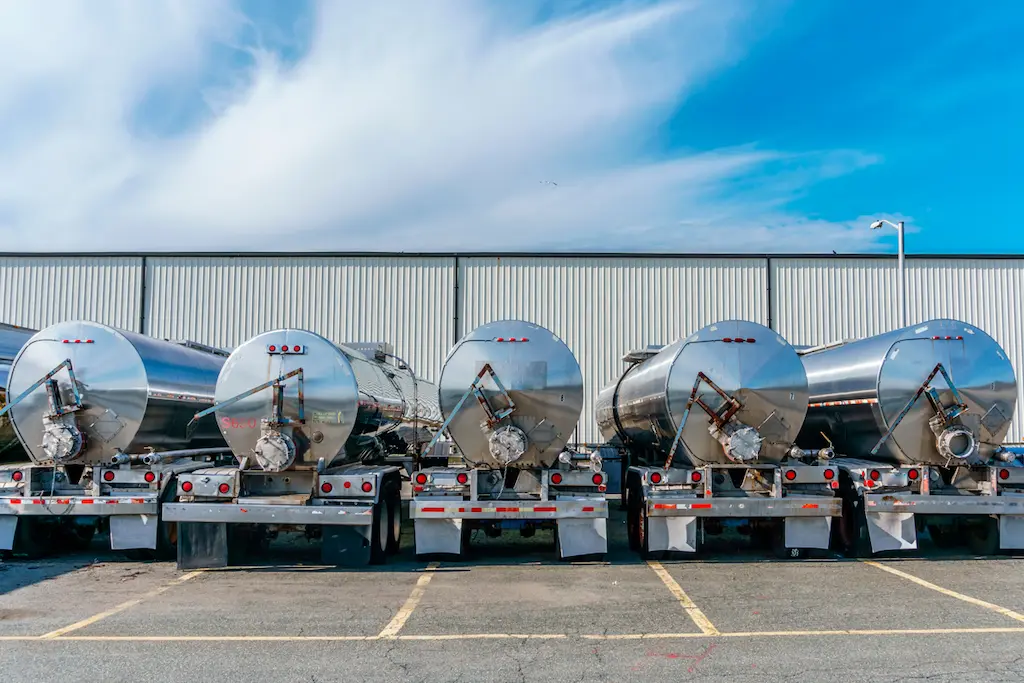
tractor, the trailer, and the cargo tank itself. DOT 406 cargo tanks built for
flammable liquids are purpose-engineered equipment, and replacement cost reflects that.
Underwriters watch the equipment list closely — cargo tank specification, year of
manufacture, gallon capacity, compartment configuration, and any modifications all
affect physical damage pricing.
Motor truck cargo covers
the petroleum cargo in transit. Most refined-petroleum cargo coverage is written on
forms specific to the commodity, with per-load limits structured to match the maximum
load value the operator will carry. The commodity exclusions on a generic cargo form
frequently exclude refined petroleum, which is why fuel-hauling cargo coverage
deserves placement on a form purpose-built for the commodity.
Trailer interchange
covers non-owned trailers — including specialized cargo tanks pulled under written
interchange agreements with another motor carrier or with a bulk supplier. The
interchange coverage responds to physical damage to the trailer-tank itself while it
is in the operator’s custody under the agreement.
General liability covers
premises and operations exposures away from the truck — terminal premises, customer
sites, and non-driving operational liability. Many bulk-supplier and retail-station
contracts require evidence of general liability before allowing a tank truck onto the
customer site, particularly at retail dispenser islands open to the public.
Workers compensation
applies to driver and yard-employee injury claims. Statutory in every state except
Texas and rate-regulated by the state insurance department. The injury exposure
profile for a fuel-hauling driver includes the loading-rack exposure at bulk
terminals, the transfer-procedure exposure at retail dispensers, and the standard
driving exposure on the highway between them. The workers compensation rate class
reflects that profile.