

Trucking services we insure

Refrigerated Hauling Insurance for temperature-controlled freight operators

Reefer operators move freight where the temperature matters — produce, meat, dairy, frozen, pharmaceutical — and the insurance has to respond when the cooling unit fails, when the shipper disputes a temperature excursion claim, and when FSMA compliance comes up in the loss conversation.

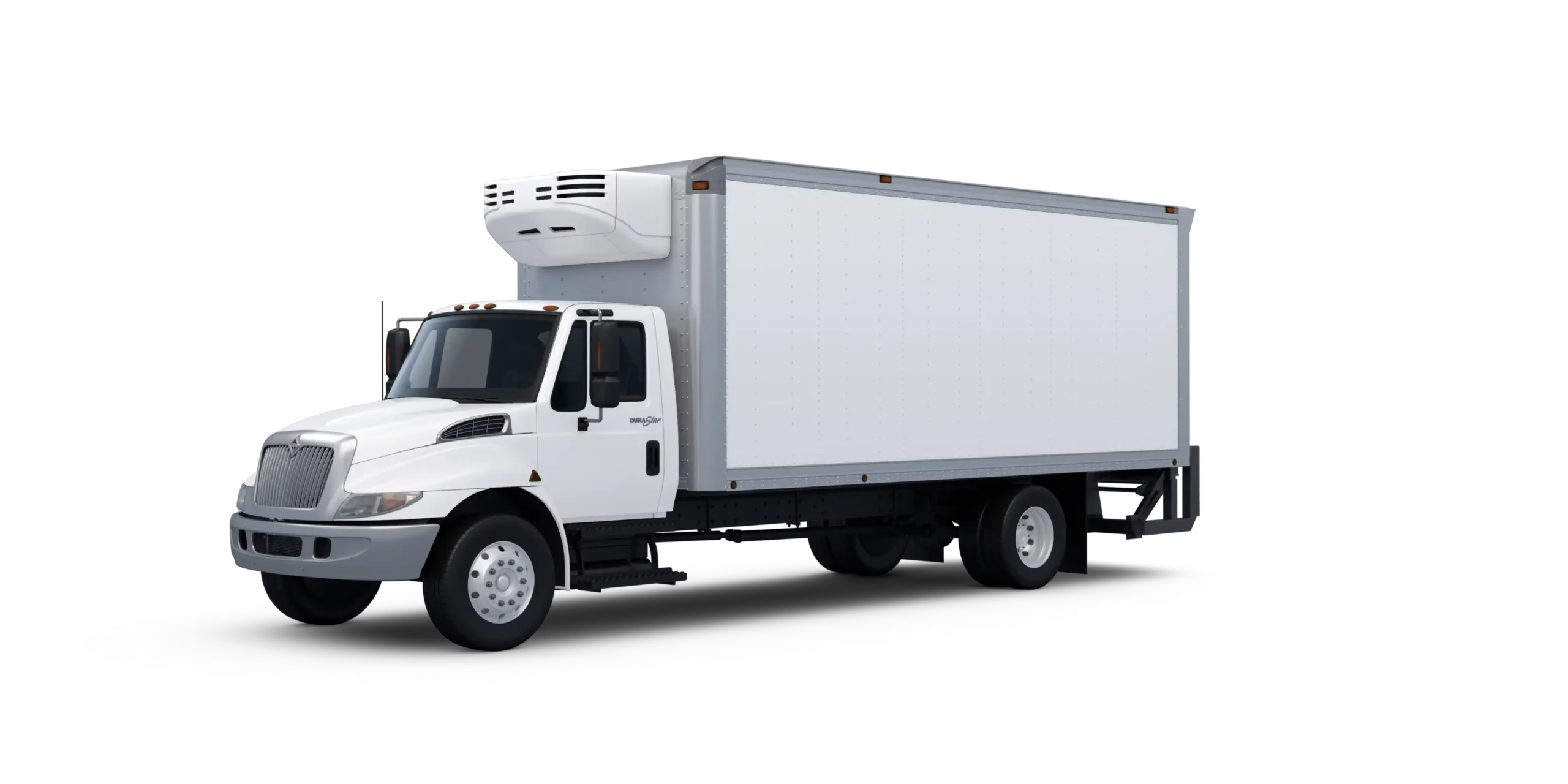
Refrigerated hauling is the temperature-controlled segment of motor carrier freight — reefer trailers carrying produce, meat, dairy, frozen products, and pharmaceutical loads where the cargo value depends on the cooling system holding the freight at a defined setpoint from pickup to delivery. The freight is high-value and time-sensitive, the shipper documentation requirements are stricter than on dry-van freight, and the cargo claim conversation after a temperature excursion is rarely simple.

The insurance profile reflects the operational stakes. The motor truck cargo form has to include a refrigeration breakdown rider to respond to the classic reefer claim — a mechanical failure of the cooling unit during transit. The physical damage schedule has to reflect the combined value of the tractor and the reefer trailer, where the reefer unit itself is a substantial portion of the trailer value. Workers compensation has to account for cold-exposure injury patterns that do not exist on dry-van trucking accounts.

The anxiety that drives most reefer insurance conversations is the cargo claim with a shipper that disputes the loss value. Reefer breakdowns are the classic disputed-valuation pattern: the shipper claims the full commercial value of the load, the carrier and the adjuster respond with temperature record questions, pre-cooling documentation questions, and salvage value questions, and the dispute runs for weeks or months. Solving for that anxiety — and structuring the policy to support the cargo claim defense — is most of what we do on a reefer quote.

This page walks through what makes refrigerated hauling insurance different from a generic motor carrier policy, the state and regulatory considerations that affect reefer operations including FSMA, the coverage lines that have to be present on the policy, the cost-driver framework, the claim categories we see most often, the underwriting realities at the carrier level, and the FAQ we work through on most quote calls.

  • 48 U.S. states licensed
  • 16 specialty trucking carriers
  • Reefer temperature-controlled focus
  • FSMA sanitary transportation aware

Get a refrigerated hauling quote

Send the reefer trailer schedule, the commodity mix, and the shipper roster. We walk through the cargo form, the refrigeration breakdown rider conditions, and physical damage structure on the call.

What makes refrigerated hauling insurance different

A generic motor truck cargo policy on a reefer account leaves the most consequential exposure uncovered. The refrigeration breakdown rider is the cargo form decision that defines whether the policy responds when the cooling unit fails — and the rider is not on the policy by default. Operators who bind a reefer policy without confirming the rider language often discover the gap only after the first breakdown claim.

The first operational reality is the cold chain itself. Reefer freight moves under a defined temperature regime from origin to destination — the shipper specifies the setpoint, the carrier holds the setpoint through transit, and the consignee verifies the temperature on delivery. A temperature excursion — the freight warming above or cooling below the setpoint — can occur for many reasons (mechanical failure of the unit, fuel exhaustion, door-open events, ambient temperature spikes, loading errors) and the cause-of-loss conversation drives the claim outcome.

The second reality is the FSMA regulatory layer. The FDA Food Safety Modernization Act Sanitary Transportation rule places specific obligations on motor carriers hauling food products. Pre-cooling protocols, temperature record retention, sanitary transport practices, and response to shipper instructions are all FSMA-relevant — and FSMA non-compliance is increasingly cited in cargo claim valuations.

The third reality is the temperature record evidence. Pulp temperature versus ambient temperature, shipper-supplied recorders versus onboard reefer unit recorders, the timestamp on the recorder versus the timestamp on the bill of lading — all of it becomes evidence in a disputed cargo claim. Carriers with documented temperature records and documented pre-cooling protocols have a meaningfully stronger position than carriers without.

The fourth reality is the cold-exposure injury exposure on the workers compensation line. Drivers locked inside reefer trailers, drivers slipping on icy trailer floors, drivers exposed to extended cold during loading at frozen storage facilities — the workers compensation claim profile on a reefer account differs from a dry-van account, and the state class code structure reflects the difference.

State and regulatory considerations

Refrigerated operators are regulated at multiple federal levels — by the Federal Motor Carrier Safety Administration for motor carrier authority and financial responsibility, by the FDA for FSMA sanitary transportation compliance on food loads, by the U.S. Department of Agriculture for certain meat and poultry transport rules, and by state agencies for the workers compensation line and the state-level food safety overlay.

FSMA compliance is the most consequential federal layer on top of standard motor carrier regulation. The rule applies to motor carriers hauling food intended for human or animal consumption, and it codifies expectations around pre-cooling, temperature control during transit, sanitary trailer condition, and response to shipper instructions. FSMA non-compliance is a regulatory exposure, and FSMA documentation gaps increasingly support shipper positions in cargo claim disputes.

State agricultural inspection requirements layer onto FSMA in certain states. California, Florida, Texas, and several other agricultural states run state-level produce inspection programs that affect carriers hauling regulated commodities into or out of those states. The state-level rules are not insurance issues directly but they affect the operational picture in which cargo claims and shipper disputes arise.

Pharmaceutical loads carry their own regulatory layer. Carriers hauling temperature-sensitive pharmaceutical products under shipper good-distribution-practice contracts face stricter temperature documentation requirements, stricter recorder protocols, and stricter chain-of-custody expectations than carriers hauling general food freight. We do not place pharmaceutical-only accounts as a specialty, but we do place mixed-commodity reefer operations that occasionally run pharmaceutical loads.

State workers compensation rules drive the workers compensation premium picture. The state class code for refrigerated trucking is typically rated above the dry-van class code because of the cold-exposure injury patterns. Operators with payroll in multiple states face multi-state workers compensation considerations that are worth working through at quote.

Coverage breakdown for reefer operators

The coverage lines that have to be present on a reefer motor carrier policy:

  • Trucking auto liability. Primary public-liability coverage on the tractor while operating under dispatch, with the FMCSA BMC-91 or BMC-91X filing. Limit selection on reefer accounts often runs higher than the federal floor because of the high-value commercial freight and the high-mileage operating profile.
  • Physical damage. Collision and comprehensive coverage on the tractor and on the reefer trailer schedule. The reefer trailer value includes the cooling unit itself, which is a substantial portion of the trailer cost — the stated value on the schedule has to reflect the combined trailer-plus-reefer-unit value.
  • Motor truck cargo. Coverage for the freight in transit against physical loss or damage. The single most consequential form decision on a reefer account is the refrigeration breakdown rider, which extends coverage to loss caused by mechanical failure of the cooling unit. The rider has its own conditions (pre-trip inspection, maintenance logs, temperature recorder) that have to be satisfied. We review the rider language at quote.
  • Trailer interchange. Physical damage coverage on non-owned trailers pulled under written interchange agreements. Used selectively on reefer accounts that interchange shipper-owned or third-party reefer trailers.
  • General liability. Premises and operations liability away from the truck — yard exposure, customer site exposure, non-driving incidents at distribution centers, cold storage warehouses, and produce-handling facilities.
  • Workers compensation. Statutory coverage for driver and yard-employee injury, structured for the cold-exposure injury patterns specific to reefer operations. See the workers compensation page for the broader coverage line walkthrough.

Each of the above pages walks through the coverage line in depth. The reefer operator policy is the integration of these lines structured around the cold-chain exposure profile.

Want us to put a reefer quote in front of the panel of specialty motor carrier markets quoting temperature-controlled accounts today?

What refrigerated hauling insurance costs

We do not publish premium ranges on this page because the variables that move reefer pricing are too wide to pretend a single number is meaningful. What we can describe is the cost-driver framework that determines where a reefer operator lands inside the specialty market.

The primary cost drivers for a reefer motor carrier policy:

  • Authority age. Operators in the first 12 months under MC authority pay a new-venture premium. Reefer is rarely a true new-venture entry point — most reefer operators come into the segment with dry-van or other motor carrier experience — but the formal authority age still applies.
  • Equipment profile. Tractor year and value, reefer trailer year and value, the reefer unit make and age. Modern multi-temp reefer units carry different premium than single-temp units; older reefer units with higher mechanical-failure risk affect both physical damage rating and refrigeration breakdown rider availability.
  • Commodity mix. Produce, meat, dairy, frozen, pharmaceutical. Each commodity carries a different cargo loss profile, a different setpoint regime, and a different shipper documentation expectation. Pharmaceutical loads in particular drive different cargo rating than commercial food loads.
  • Cargo limit. Reefer cargo limits typically run higher than dry-van cargo limits because the freight values are higher. The limit has to be sized to the actual load values rather than the federal cargo minimum.
  • Refrigeration breakdown rider conditions. Whether the operator can satisfy the rider conditions — documented pre-trip inspection, maintenance log, temperature recorder protocol — affects both rider availability and pricing.
  • Lane radius and operating profile. Local distribution radius operations run a different exposure than long-haul produce lanes from California to the Northeast. Long-haul reefer accounts carry higher mileage rating.
  • Driver profile and payroll structure. Driver count, CDL experience, MVR quality, reefer-specific experience, and workers compensation payroll split. The workers compensation class code for refrigerated trucking carries a higher rate than dry-van in most states.
  • Loss history. Prior cargo losses on temperature-excursion events drive both rating and rider availability. A single severe disputed cargo loss can compress the available market on the next renewal.
  • FSMA documentation profile. Operators with documented FSMA compliance programs — pre-cooling protocols, temperature record retention, sanitary practices — get a different underwriting reception than operators without.

We walk through the cost-driver picture specific to your operation on the quote call. Sight-unseen ranges on a website do not serve reefer operators well.

Claims scenarios we see on reefer policies

The recurring claim patterns on reefer policies map to the cold-chain exposure profile.

  • Refrigeration unit mechanical failure causing a temperature excursion. The cooling unit fails during transit — a refrigerant leak, a compressor failure, a controller fault, a fuel exhaustion event — and the freight warms or thaws before the driver reaches a service location or a destination cold storage. The motor truck cargo policy with refrigeration breakdown rider responds to the cargo loss subject to the rider conditions. Without the rider, the cargo loss is excluded.
  • Disputed temperature-excursion cargo claim with the shipper. A reefer load arrives at the consignee with a recorder showing a temperature excursion outside the setpoint range. The consignee rejects the load or accepts under protest, the shipper files a cargo claim at full commercial value, and the carrier and the adjuster respond with questions about the recorder data, the pre-cooling documentation, and the salvage value. Disputed reefer claims are the classic time-consuming claim pattern on reefer accounts.
  • Cold-exposure injury to a driver. A driver gets locked inside a reefer trailer at a delivery, spends an extended period in the cold environment before being released, and sustains a cold-exposure injury that requires medical treatment. Workers compensation responds. The severity of cold-exposure injuries varies widely, and the workers compensation claim profile reflects the exposure.
  • Physical damage to the reefer unit from fire, theft, or collision. A reefer unit fire (often related to electrical or refrigerant system issues), theft of the reefer trailer with the unit running, or collision damage that destroys the reefer unit produces a physical damage claim on the trailer schedule line. The combined trailer-plus-reefer-unit stated value drives the claim valuation.

Underwriting realities in the reefer market

Specialty motor carrier underwriters quoting reefer accounts look at a specific set of risk signals.

  • Reefer trailer schedule with reefer unit detail. Year, make, model, VIN, stated value for each trailer, plus the reefer unit make, model, age, and maintenance history. Older reefer units face refrigeration breakdown rider availability questions; well-maintained newer units do not.
  • Commodity mix and shipper roster. What the operator hauls and for whom. Produce shippers, meat processors, dairy distributors, frozen food shippers, and pharmaceutical shippers each carry different risk signatures.
  • FSMA compliance documentation. A written FSMA program with pre-cooling protocols, temperature record retention, sanitary trailer inspection, and driver training records. Operators who can document FSMA compliance get a different underwriting reception than operators who cannot.
  • Temperature recorder protocol. Whether the operator runs onboard reefer unit recorders, accepts shipper-supplied recorders, or both. Recorder data availability affects cargo claim defense capacity, which affects underwriting confidence.
  • Pre-trip inspection and maintenance log records. The refrigeration breakdown rider typically requires documented pre-trip inspection and reefer unit maintenance. Operators who maintain the records satisfy the rider conditions; operators who do not face rider exclusion arguments at claim time.
  • Driver list and reefer-specific experience. Each driver’s MVR, CDL tenure, and reefer-specific experience. Drivers with reefer experience handle the operational complexity (pre-cooling, temperature monitoring, setpoint management) better than newly-transitioned drivers.
  • Loss runs with temperature-excursion event detail. Three to five years of motor carrier loss runs. Underwriters read cargo claim history with particular attention to temperature-excursion patterns, refrigeration breakdown events, and disputed shipper valuations.
  • CSA score profile. Standard CSA BASICs apply — Unsafe Driving, Hours of Service, Vehicle Maintenance, Controlled Substances, Hazardous Materials (if applicable), Driver Fitness, and Crash Indicator. Reefer accounts run typical CSA profiles; the Vehicle Maintenance BASIC has particular relevance because reefer unit maintenance is part of the maintenance picture.

What gets declined: operators with a pattern of severe disputed cargo claims involving alleged FSMA non-compliance, operators running older reefer units the carrier cannot quote the breakdown rider on, operators with multiple severity workers compensation cold-exposure injuries in recent years, and operators outside the commodity appetite the specialty carrier maintains.

Why Truck Guard Insurance

We are a specialty trucking insurance agency. Reefer accounts are part of the daily flow of motor carrier business we place across the specialty panel, and the conversation we have on quote calls reflects the time we spend inside this segment.

We work with specialty trucking carriers in our panel rather than the generic commercial auto market. The carriers that quote reefer accounts well are not always the same carriers that quote dry-van accounts, and the rating and form differences are material — particularly on the refrigeration breakdown rider.

We review the refrigeration breakdown rider language on every reefer quote rather than assuming any market’s form responds the same way. We walk through the pre-cooling and temperature recorder documentation expectations so the rider conditions are intelligible before bind, not after a breakdown claim. We talk through FSMA compliance positioning because FSMA documentation is increasingly part of the cargo claim defense conversation.

When you have a disputed temperature-excursion cargo claim working through a shipper loss-prevention department, a refrigeration breakdown that needs the rider conditions confirmed, a new reefer unit the physical damage schedule needs to reflect, or a renewal conversation that needs to actually happen with a human who knows the difference between pulp temperature and ambient temperature — that is what we do.

Frequently asked questions about refrigerated hauling insurance

What is the reefer breakdown exclusion on a motor truck cargo policy?

Most standard motor truck cargo policy forms exclude loss to temperature-sensitive freight caused by failure of the refrigeration unit unless a refrigeration breakdown endorsement or rider is added to the policy. Without the rider, a reefer breakdown that thaws or warms a load of meat, produce, dairy, or pharmaceutical product can produce a cargo claim that the standard form does not respond to. The rider has its own conditions — usually a pre-trip inspection requirement, a maintenance log requirement, and a temperature recorder requirement — that have to be satisfied for the coverage to apply. The rider is the single most consequential cargo form decision on a reefer account, and we walk through the conditions at quote.

How does FSMA affect refrigerated motor carriers?

The FDA Food Safety Modernization Act includes a Sanitary Transportation of Human and Animal Food rule that places specific obligations on motor carriers hauling food products. Carriers have to maintain temperature control records, follow sanitary transport practices, and respond to shipper instructions on pre-cooling and temperature setpoints. FSMA compliance is not optional for food haulers, and FSMA-related shipper claims have become more frequent as shippers use the rule to support cargo claim valuations after a temperature excursion. The FDA FSMA portal documents the rule and the carrier obligations in detail.

What is the difference between pulp temperature and ambient temperature in a cargo claim?

Pulp temperature is the internal temperature of the produce, meat, or other perishable freight itself — measured by inserting a thermometer probe into the product. Ambient temperature is the air temperature inside the trailer measured at one or more points by the reefer unit or by an independent recorder. The two numbers can diverge meaningfully during loading, during long transit, and during pre-cooling, and cargo claim disputes often turn on which temperature record the shipper relies on, which the carrier relies on, and which the adjuster accepts as evidence. Most disputed cargo claims on reefer loads include a temperature record argument at some level.

Does the reefer unit itself need separate physical damage coverage?

The refrigeration unit is part of the trailer for physical damage purposes — the trailer schedule on the policy includes the trailer with the reefer unit attached, and the stated value reflects the trailer-plus-reefer combined value. A standalone reefer unit replacement after a fire, theft, or collision damage event is covered under the physical damage policy on the trailer schedule line. What is sometimes confusing is that the reefer breakdown itself — a mechanical failure of the cooling unit during transit — is not a physical damage claim. It is the cargo loss caused by the breakdown that drives the motor truck cargo conversation, with the reefer breakdown rider question.

Why are pre-cooling protocols important for cargo claim defense?

Pre-cooling is the practice of running the reefer unit at the setpoint temperature for a defined period before loading begins, ensuring the trailer is at the correct temperature when the freight arrives. Shippers expect pre-cooling on most perishable loads, and shipper bill-of-lading instructions commonly specify a pre-cooling temperature and duration. When a cargo claim arises, the question of whether the trailer was pre-cooled correctly is one of the first things the adjuster asks. A carrier with documented pre-cooling records — a driver log, an electronic record from the reefer unit, a yard temperature record — has a meaningfully stronger position than a carrier with no record either way.

What happens when a shipper disputes the loss value on a temperature-excursion cargo claim?

Disputed loss valuations are the classic pattern on reefer cargo claims. The shipper files a claim at the full commercial value of the freight; the carrier and the insurance adjuster respond with questions about the temperature record, the pre-cooling documentation, the freight grade, the salvage value of any partially affected product, and the bill-of-lading freight description. The dispute can run from a quick adjuster-level resolution to a multi-month back-and-forth with the shipper’s loss-prevention department. The motor truck cargo policy responds to the covered loss subject to the policy limit and deductible; the operational work of defending the valuation involves the operator, the broker, the shipper, and the adjuster in coordination.

Does workers compensation respond to a refrigerated trailer injury — getting trapped inside a reefer?

Workers compensation responds to employee injury arising out of and in the course of employment, including cold-exposure injuries from a driver getting locked inside a refrigerated trailer, frostbite from extended exposure to the cold environment, and slip-and-fall injuries on icy trailer floors. The medical and wage-loss exposure can be substantial when the injury involves cold exposure or hypothermia, and the state workers compensation class code for refrigerated trucking reflects the exposure profile. Operators with employee drivers need the workers compensation conversation at quote — owner-operators without employees face a different set of questions about occupational accident coverage.

Are temperature recorders required on reefer loads, and who provides them?

Temperature recorders are not federally mandated for all reefer loads, but they are required by shipper contract on most commercial food and pharmaceutical loads, and the recorder data becomes the evidentiary record in any cargo claim. The recorder is sometimes provided by the shipper (placed inside the trailer at load), sometimes provided by the carrier (an onboard reefer unit recorder), and sometimes both. FSMA-covered food loads in particular drive recorder use because the shipper documentation requirements under the FDA rule push toward an independent temperature record. We discuss recorder strategy at quote because the recorder record is the single most consequential piece of evidence in a disputed cargo claim.

Get a refrigerated hauling insurance quote

Send the basics on your authority, your reefer trailer schedule, your commodity mix, and your shipper roster. We pull the panel of specialty motor carrier markets quoting reefer accounts today and walk you through the refrigeration breakdown rider, FSMA documentation positioning, and physical damage structure before you bind.