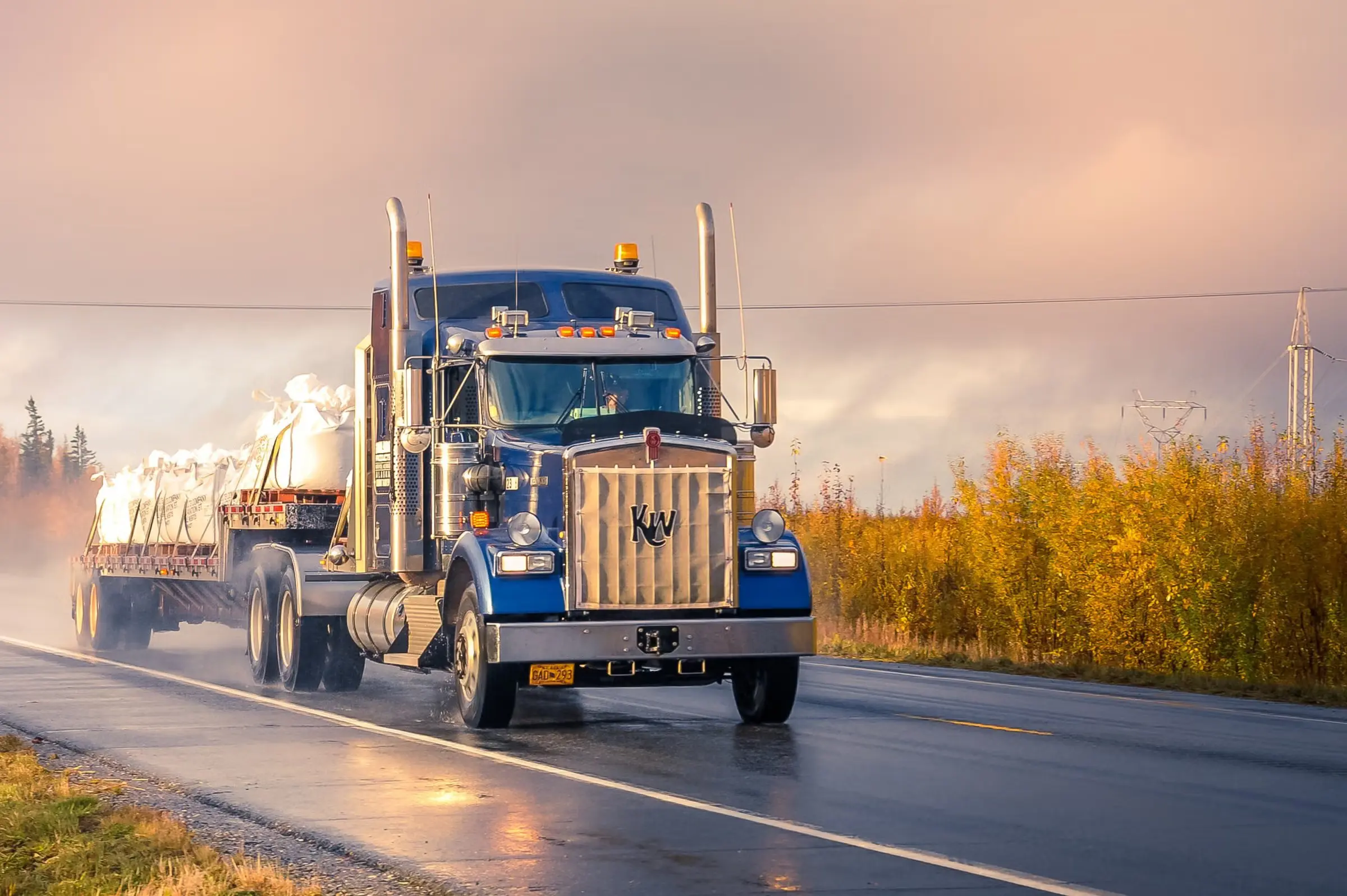
Flatbed trucking — Arizona trucking operations

States we serve · Arizona

Arizona trucking insurance

Arizona trucking runs across four interstates — I-10 east-west through Phoenix and Tucson, I-17 north-south between Phoenix and Flagstaff, I-40 across the northern tier, and I-19 south to the Nogales border — plus the Mariposa and DeConcini ports of entry handling a large share of US-Mexico commercial truck crossings. Phoenix distribution warehousing, the TSMC semiconductor build-out, Yuma winter produce, and the Tucson mining-equipment lane all sit on top of a desert-heat operating environment that pulls equipment and refrigeration questions to the front of the application. We place Arizona motor carrier programs through specialty markets that write the corridor and the class, not the generic commercial auto market.

What trucking insurance costs in Arizona

Arizona trucking insurance pricing comes down to a handful of underwriting variables that carry more weight than the state-of-domicile field on the application. The biggest of them is freight mix: a dry-van operation hauling general freight on I-10 between Phoenix and Tucson prices differently from a cross-border drayage operation running into the Nogales ports of entry, and both of those price differently from a refrigerated operation hauling Yuma winter produce or Nogales fresh-produce imports through the heat of summer. The Arizona Department of Insurance and Financial Institutions regulates the carriers and the forms, but rate adequacy on a specific risk runs through the specialty motor-carrier underwriter, not the regulator.

The second variable is corridor density and climate. Phoenix I-10 and Loop 101 produce high-frequency urban-arterial claim patterns that the Tucson and Flagstaff lanes do not, and desert-heat exposure across the southern half of the state drives tire, brake, and refrigeration unit stress that flatland temperate-zone underwriters do not price the same way. Cross-border carriers running through Nogales face Mexican customs-broker contract terms that often pull contracted limits above the FMCSA financial responsibility floor at 49 CFR section 387.9, which pulls auto liability premium upward on the southbound and northbound lane.

Third, claims history is the variable that does the most work on any individual renewal. One severity claim in the last three years — particularly a bodily-injury claim with reserves above the primary limit — changes the carrier appetite list materially. The right time to plan for that is before the renewal quote round, not after. Fourth, the owner-vs-driver structure: an owner-operator running a single tractor under their own authority prices differently than a small fleet with three drivers on payroll, even before workers compensation enters the picture. We work through each of these on the quote call rather than handing back a single number that hides the assumptions behind it.

Arizona trucking regulatory framework

Arizona trucking sits inside a four-agency regulatory framework: FMCSA at the federal level, the Arizona Department of Transportation for state highway and intrastate authority, the Arizona Department of Insurance and Financial Institutions for carrier and policy regulation, and the Industrial Commission of Arizona for workers compensation oversight.

Federal authority — FMCSA, USDOT, and PHMSA

Interstate Arizona motor carriers register with the Federal Motor Carrier Safety Administration for a USDOT number and motor-carrier authority, file BMC-91 or BMC-91X public-liability proof of insurance through their carrier, and carry the MCS-90 endorsement on the auto liability policy. Hazmat operations layer PHMSA placarding, training, and routing requirements on top of FMCSA authority — Phoenix TSMC semiconductor-chemical lanes, Tucson Caterpillar mining-chemical lanes, and Nogales cross-border hazmat are the three Arizona clusters where that layer matters most.

Arizona Department of Transportation (ADOT)

ADOT maintains the state highway and interstate network — I-8, I-10, I-15, I-17, I-19, I-40, US-60, US-93, and the state-route grid — and administers oversize and overweight permits through the Enforcement and Compliance Division. Heavy-haul operators running permitted loads work directly with ADOT on routing approvals; pilot-car and escort requirements vary by load dimension and corridor, and the I-17 climb from Phoenix to Flagstaff carries dimensional restrictions that flat I-10 routes do not.

Arizona Department of Insurance and Financial Institutions (DIFI)

DIFI regulates the property and casualty carriers that write Arizona trucking auto liability, motor truck cargo, trailer interchange, and physical damage programs. DIFI is the merged insurance-and-financial-institutions agency that consolidated the prior standalone Arizona Department of Insurance — worth knowing when verifying a carrier’s standing or filing a consumer complaint, because the agency’s footprint is broader than a typical state DOI.

Industrial Commission of Arizona — workers compensation

The Industrial Commission of Arizona administers workers compensation requirements and dispute resolution. CopperPoint Mutual (the rebranded former State Compensation Fund) is the state-affiliated insurer that competes with admitted private carriers, and Arizona trucking employers carry WC through either route. The owner-vs-employee question on leased drivers and family payroll matters here.
Common trucking risks in Arizona

The Arizona risk profile splits into four distinct exposure regions that an underwriter reads off the garaging address and the lane disclosure before anything else on the application.

  • Desert-heat equipment exposure. Sustained summer temperatures across the Phoenix and Tucson metros produce tire failure, brake degradation, and refrigeration-unit stress that flatland temperate-zone underwriters do not price the same way. Carriers writing Southwest motor carrier risks expect maintenance-program detail on the application — and reefer programs face refrigeration breakdown exposure on the summer Yuma-produce and Nogales-import lanes specifically.
  • Cross-border drayage exposure. Nogales Mariposa and DeConcini crossings expose carriers to Mexican customs-broker contract terms, shipper certificate-of-insurance demands, and trailer-interchange agreements that often outrun the FMCSA financial responsibility floor. A broker refusing loads because of an insurance certificate issue is the typical cross-border symptom of mismatched limits or wrong additional-insured wording.
  • Phoenix urban-corridor congestion exposure. Phoenix I-10, I-17, Loop 101, and Loop 202 produce a high-frequency urban interstate volume pattern that drives rear-end, sideswipe, and low-speed merge collisions across the West Valley distribution belt — a claim-frequency profile that an underwriter prices distinctly from the Tucson, Flagstaff, or Nogales programs.
  • High-altitude and weather exposure on I-17 and I-40. The I-17 climb from Phoenix to Flagstaff and the I-40 east-west through the northern Arizona high country produce winter chain-up requirements, sudden weather changes, and operating-elevation questions that desert-metro filings do not show. Carriers writing both halves of the state ask about high-altitude operating procedures on the application.
  • Long-distance bobtail and off-dispatch exposure. Arizona geography produces longer deadhead and personal-use legs than most states — an owner-operator garaged in Phoenix might bobtail to Tucson, Yuma, Flagstaff, or Nogales on a single weekend across desert, urban, and mountain corridors. Non-trucking bobtail liability is the policy that responds when the tractor is off-dispatch.

Common Arizona trucking claims we see

The claim mix on Arizona filings runs heavier on a few specific patterns than national averages would suggest. These are qualitative — no severity figures, because severity is a function of venue, jury composition, and limit adequacy that varies too widely to summarize honestly.

  • Phoenix urban-corridor rear-end and merge collisions. Stop-and-go congestion along I-10, I-17, and Loop 101 in the Phoenix metro produces a steady run of low-severity property-damage claims with the occasional bodily-injury claim where soft-tissue allegations layer on. The auto liability policy responds; the question is whether the limit holds on high-value loads moving through the corridor.
  • Cross-border cargo damage and shortage disputes. Loads moving through Nogales between US shippers and Mexican consignees produce cargo claims where the carrier disputes the loss value, the place-of-loss is contested, and the customs documentation comes into play. Motor truck cargo responds — and the contract terms decide the path from there.
  • Summer refrigeration breakdown and produce-load loss events. Refrigeration unit failures on Yuma winter-produce summer freight or Nogales-import summer produce loads produce cargo claims where the loss is total because the receiving grocery distribution center refuses the heat-damaged load. Motor truck cargo with explicit refrigeration breakdown coverage responds; cargo policies without that coverage form do not.
  • Desert-heat tire and brake failure incidents. Sustained summer operation across the I-10 desert corridor between Phoenix and the California state line produces tire and brake failure events at higher frequency than temperate-zone line-haul, and the secondary collision or rollover that follows a blowout on a desert interstate drives a distinct claim severity profile.

Specific carriers are not named here per our coverage placement policy — appetite changes faster than a website can. The Truck Guard Insurance homepage lists the active panel quoting Arizona motor carrier risks today.

Why Arizona trucking owner-operators choose Truck Guard Insurance

We are a specialty trucking insurance agency, and Arizona is one of the states where the difference between specialty and generic motor-carrier underwriting shows up most plainly. The four exposure regions — Nogales cross-border, Phoenix distribution and TSMC tech-supplier, Yuma winter-produce reefer, and the Tucson defense-and-mining lane — each have their own subset of carriers that want them and their own subset of carriers that decline them. Knowing which is which up front saves the application from getting bounced through markets that were never going to bind it.

We handle BMC-91 and BMC-91X filings end-to-end, issue certificates for broker compliance, and walk through MCS-90 mechanics on the quote call so the policy you bind matches the policy you thought you were binding. Cross-border certificate requests at Mariposa and DeConcini — Spanish and English versions of the same certificate, additional-insured wording, certificate holder structure, primary-and-non-contributory language — get handled the same day they come in when the underlying program is structured correctly at bind. When the issue is that the underlying program does not actually match what the customs broker is requiring, we tell you that on the quote call, not after the load gets refused at the crossing.

On the regulatory side, we know which Arizona freight needs interstate FMCSA authority, which needs intrastate ADOT authority, and which needs both. We have placed Arizona workers compensation programs through admitted carriers and walked through the CopperPoint option as the alternative. And we work the 48 U.S. states we are licensed in, so an Arizona-domiciled carrier running freight into Texas, California, New Mexico, or Nevada gets the same agency on the renewal whether the question is Arizona or the lane.

Major Arizona trucking markets

Arizona trucking is regional. The metros and corridors below are the ones where we place the most motor carrier programs — each runs a distinct exposure profile that drives carrier selection.

  • Phoenix metro. The I-10, I-17, Loop 101, Loop 202, and Loop 303 lattice at PHX Sky Harbor cargo, the rapidly expanding distribution-warehousing belt across the West Valley, and the TSMC Arizona Phoenix semiconductor plant — a major US chip fab — produces the densest distribution-and-tech-supplier freight cluster in the Southwest, where last-mile distribution, intermodal handoff, and silicon-chip equipment lanes all push cargo and trailer-interchange limits above commodity norms.
  • Tucson. The I-10 and I-19 junction at Davis-Monthan Air Force Base, the Pima Air & Space Museum boneyard logistics, the University of Arizona, and the Caterpillar mining operations south of the metro feeds a freight mix that combines defense-installation controlled shipments with mining-equipment heavy-haul — a dual-exposure profile that an underwriter prices differently from Phoenix line-haul.
  • Nogales. The I-19 terminus at the Mariposa and DeConcini ports of entry is the #2 US-Mexico commercial truck crossing in the country, and the winter-produce import flow from Mexico — among the largest fresh-produce imports into the United States — drives a refrigerated cross-border drayage exposure where shipper certificate-of-insurance scrutiny and customs-broker contract terms pull primary auto liability limits well above the FMCSA financial responsibility floor.
  • Flagstaff. The I-17 and I-40 junction at Northern Arizona University and the high-altitude logistics corridor — including the I-40 truck inspection station — combines mountain-pass winter exposure on I-17 from Phoenix with east-west long-haul through-freight on I-40, producing a high-altitude weather and inspection-station claim profile that desert-metro filings do not show.
  • Yuma. The I-8 corridor at the agricultural belt that produces the majority of US winter lettuce and leafy greens, the Yuma Proving Ground army installation, and the Marine Corps Air Station drives a winter-produce refrigerated freight pattern plus defense-installation logistics — a Southwest agricultural cluster where reefer breakdown exposure on lettuce loads is critical to the US grocery supply chain.
  • Sierra Vista. The Fort Huachuca army installation — a major US Army intelligence and signal facility — and the SR-90 corridor produce a defense-installation freight profile that combines controlled-shipment security requirements with rural state-highway operation, an exposure mix that an underwriter prices differently from the I-10 mainline lanes through the rest of southern Arizona.
  • Lake Havasu City. The I-40 corridor at the Colorado River and the regional tourism-and-retirement footprint produces a freight mix with sharp seasonal swing — peak winter snowbird traffic and summer recreational flow on I-40 layered on top of regional distribution to a smaller retirement-community population — that an underwriter reads differently from year-round line-haul on the Phoenix or Tucson lanes.
  • Prescott. The I-17 corridor through the central Arizona highlands at Embry-Riddle Aeronautical University combines mountain-elevation operating exposure with regional distribution to the central Arizona high country — a freight profile that sits between Phoenix desert line-haul and Flagstaff high-altitude winter, with operating-altitude and weather-window questions on the application that the Phoenix-only filings do not face.

Related reading

Coverages most relevant to Arizona trucking:

  • Trucking Auto Liability — the FMCSA-filed primary policy on the tractor, including Nogales cross-border limits
  • Motor Truck Cargo — the freight you haul, including Yuma winter produce and Nogales fresh-produce imports
  • Trailer Interchange — non-owned trailers under cross-border drayage and intermodal agreements
  • Physical Damage — collision and comprehensive on the tractor and trailer, with desert-heat exposure in view

Motor carrier classes that show up most often in Arizona:

Neighboring states we serve:

Primary regulatory and research sources:

Arizona trucking insurance FAQs

Does Arizona require state-level motor carrier registration in addition to FMCSA authority?

Interstate Arizona motor carriers register with FMCSA for a USDOT number and motor-carrier authority. Intrastate-only Arizona carriers — freight that originates and terminates inside the state — register through the Arizona Department of Transportation Motor Vehicle Division and Enforcement and Compliance Division. Many Arizona owner-operators carry both because lane mix shifts across the year, particularly for fleets running into Nogales cross-border, Phoenix distribution warehousing, and Yuma winter-produce reefer. The Arizona Department of Insurance and Financial Institutions regulates the carriers that write the auto liability and cargo policies in either case.

Why does Nogales cross-border freight push insurance limits higher than interior Arizona lanes?

Cross-border shippers and customs brokers at the Mariposa and DeConcini ports of entry tend to enforce certificate-of-insurance requirements aggressively, and the contracted primary auto liability floor in those contracts often runs well above the FMCSA financial responsibility floor at 49 CFR section 387.9. Cargo limits also climb on the manufactured-goods and winter-produce loads crossing through Nogales — Arizona handles a significant share of the US fresh-produce import flow from Mexico. A broker refusing loads because of an insurance certificate issue happens most often on cross-border lanes, usually fixable in the same business day once the underlying program is structured correctly.

How does the Arizona Industrial Commission handle workers compensation for trucking employers?

Workers compensation in Arizona is administered through the Arizona Industrial Commission of Arizona, which oversees coverage requirements, dispute resolution, and the State Compensation Fund (now operating as CopperPoint Mutual) — the state-affiliated workers comp insurer that competes with admitted private carriers. Arizona trucking employers carry WC through either an admitted private carrier or CopperPoint. The owner-vs-employee question on leased drivers and family payroll matters before binding because the structure decides which carrier appetite list applies.

What FMCSA filings does an Arizona motor carrier need before authority activates?

Interstate Arizona motor carriers need proof of public liability on file with FMCSA before authority goes active — a BMC-91 or BMC-91X submitted by the insurance carrier. Hazmat haulers add the BMC-32 (cargo financial responsibility) where the commodity triggers it. The MCS-90 endorsement attaches to the auto liability policy and is a federally-mandated public-protection backstop, not coverage for the carrier itself. Nogales cross-border drayage, Phoenix TSMC semiconductor-chemical hauling, and Tucson Caterpillar mining-chemical lanes are the three Arizona exposure clusters where MCS-90 mechanics come up most often on quote calls.

How does Arizona desert heat factor into physical damage and equipment underwriting?

Arizona physical damage and motor truck cargo pricing is sensitive to desert-heat exposure — sustained summer temperatures across the Phoenix and Tucson metros produce tire failure, brake degradation, and refrigeration-unit stress that flatland temperate-zone underwriters do not price the same way. Reefer programs in particular face refrigeration breakdown exposure on the summer Yuma-produce and Nogales-import lanes, where unit failure means total cargo loss because the receiving plant or distribution center refuses heat-damaged product. Carriers writing Southwest motor carrier risks expect maintenance-program detail on the application.

Are cross-border drayage and intermodal operations treated differently from general freight in Arizona?

Yes. Nogales cross-border drayage runs into Mexican customs-broker contract terms, shipper certificate requirements, and trailer-interchange exposures distinct from US domestic lanes — and the Phoenix Union Pacific intermodal terminal carries Uniform Intermodal Interchange Agreement language that requires trailer-interchange coverage written specifically. Both classes sit with specialty carriers that write them specifically. Quoting cross-border or intermodal through general-freight underwriters typically returns either decline or a quote with coverage gaps that show up at claim time.

Does Arizona accept out-of-state UCR registration, or is separate filing required?

Arizona participates in the Unified Carrier Registration program along with every other UCR state, so interstate motor carriers based outside Arizona do not file a separate Arizona UCR — the home-state UCR fee covers operation in Arizona. Arizona-based interstate carriers file their UCR through Arizona and the fee covers nationwide operation. ADOT handles UCR administration in coordination with the multi-state UCR Plan. Intrastate-only Arizona operations are a separate licensing path through ADOT and do not satisfy interstate UCR.

How long does it take to get an Arizona trucking insurance quote bound?

For straightforward general-freight operations with clean MVRs, two-to-three years of verifiable experience, and current FMCSA authority, we typically have Arizona quotes in hand within one to two business days and can bind the same day quotes come back if the paperwork is complete. Nogales cross-border programs, TSMC and Caterpillar hazmat lanes, and Yuma winter-produce reefer programs take longer because fewer markets write them and the underwriting questions run deeper. Renewal premium jumping after one loss year is a conversation we are happy to have at the start, not at renewal.

Get an Arizona trucking insurance quote

Send the basics on your authority, equipment, commodity, and Arizona lane mix. We pull the panel of specialty trucking markets quoting your class and corridor today and walk you through limit selection, MCS-90 mechanics, and Nogales cross-border compliance before you bind.