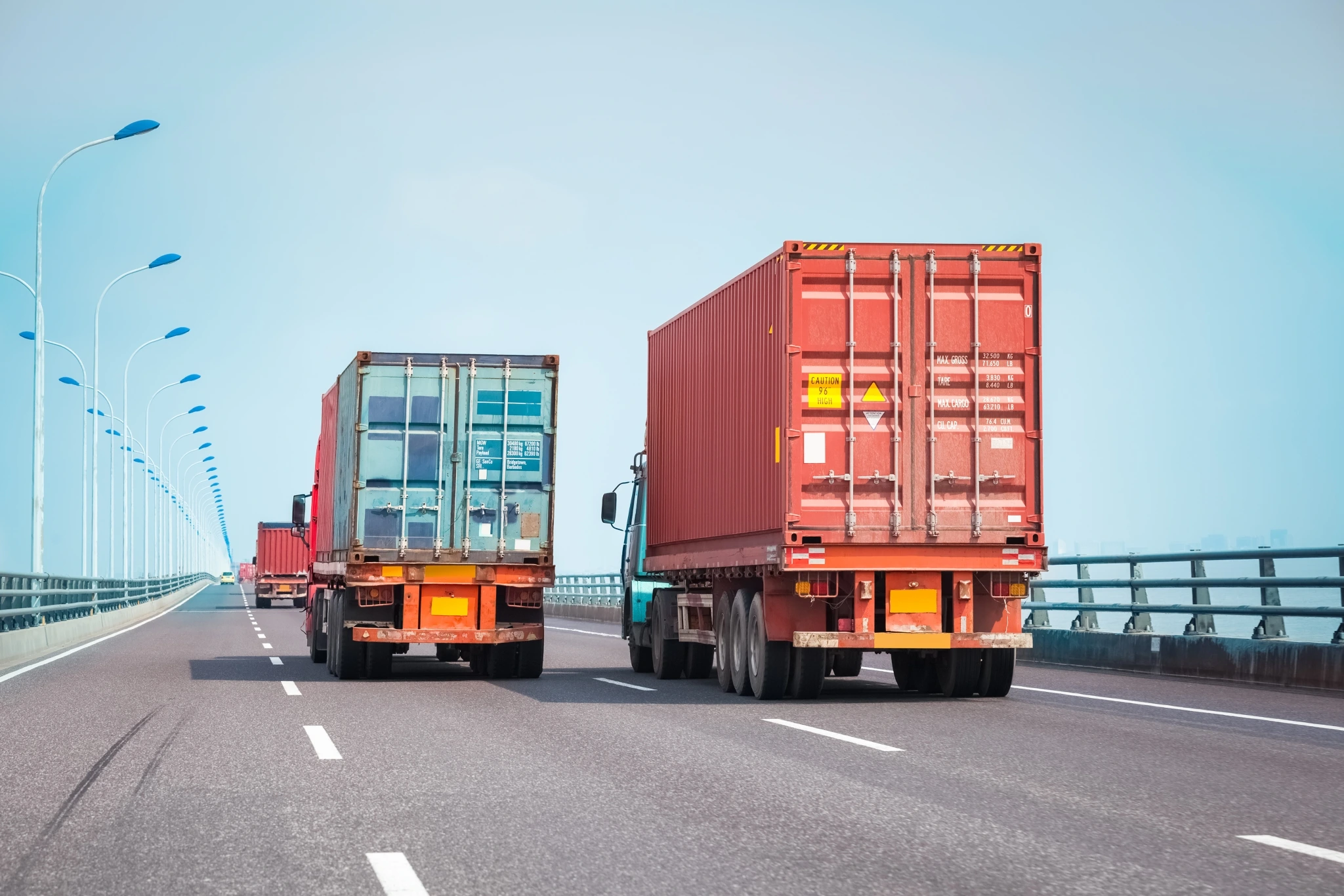
Intermodal transportation vehicle — Missouri trucking operations

States we serve · Missouri

Missouri trucking insurance

Missouri trucking sits on two of the most important intermodal nodes in the central United States — the Kansas City BNSF and KCS rail-truck complex on the western edge, and the St. Louis Mississippi River barge and rail handoff on the eastern edge — connected by I-70 east-west and crossed by I-44, I-35, and I-29. The underwriting questions reflect that: intermodal chassis and trailer-interchange exposure, hazmat and petroleum corridor scrutiny along the river, and a broad tornado and severe-weather property profile across the state.

What trucking insurance costs in Missouri

Missouri trucking insurance pricing is driven by a small set of underwriting variables that carry more weight than the state-of-domicile field on the application. The first is the freight mix: an intermodal operation working out of the Kansas City BNSF and KCS rail-truck complex prices differently from a general-freight operation running I-70 between Kansas City and St. Louis, and both of those price differently from a hazmat or petroleum operation running the Mississippi River corridor through St. Louis. The Missouri Department of Commerce and Insurance regulates the carriers that write Missouri trucking forms, but rate adequacy on a specific risk runs through the specialty motor-carrier underwriter, not the regulator.

The second variable is corridor density. I-70 across Missouri is one of the primary east-west transcontinental trucking spines, and I-44 carries the southwestern Missouri retail and medical-distribution traffic into the Texas and Oklahoma markets. Kansas City and St. Louis both sit on heavy interstate convergences that produce urban-arterial congestion claim frequency well above the outstate Missouri baseline. Federal financial responsibility floors live at 49 CFR section 387.9, but Kansas City intermodal contracts and St. Louis manufacturing shipper contracts regularly require limits above that floor.

Third, claims history is the variable that does the most work on any individual renewal. One severity claim in the last three years — particularly a bodily-injury claim with reserves above the primary limit — changes the carrier appetite list materially. The right time to plan for that is before the renewal quote round, not after. Fourth, the owner-vs-driver structure: an owner-operator running a single tractor under their own authority prices differently than a small fleet with three drivers on payroll, even before workers compensation enters the picture. We work through each of these on the quote call rather than handing back a single number that hides the assumptions behind it.

Missouri trucking regulatory framework

Missouri trucking sits inside a four-agency regulatory framework. Interstate authority runs through FMCSA at the federal level; intrastate authority and highway-infrastructure registrations run through the Missouri Department of Transportation; insurance carriers and policy forms are regulated by the Missouri Department of Commerce and Insurance; and workers compensation regulation sits inside the Missouri Division of Workers Compensation within the Missouri Department of Labor and Industrial Relations.

Federal authority — FMCSA, USDOT, and PHMSA

Interstate Missouri motor carriers register with the Federal Motor Carrier Safety Administration for a USDOT number and motor-carrier authority, file BMC-91 or BMC-91X public-liability proof of insurance through their carrier, and carry the MCS-90 endorsement on the auto liability policy. Hazmat operations layer PHMSA placarding, training, and routing requirements on top of FMCSA authority — St. Louis petrochemical lanes and the Mississippi River corridor traffic are the two Missouri clusters where that layer matters most.

Missouri Department of Transportation (MoDOT)

MoDOT maintains the state highway and interstate network — I-29, I-35, I-44, I-49, I-55, I-57, I-64, I-70, I-170, I-270, I-435, I-470, US-50, US-54, US-60, US-61, US-63, and US-71 — and administers oversize and overweight permits, intrastate motor-carrier registrations, and Unified Carrier Registration in coordination with the multi-state UCR Plan. Heavy-haul operators running permitted loads work directly with MoDOT Motor Carrier Services on routing approvals.

Missouri Department of Commerce and Insurance (DCI)

The Missouri Department of Commerce and Insurance regulates the property and casualty carriers that write Missouri trucking auto liability, motor truck cargo, physical damage, and pollution liability programs. DCI handles form approvals, rate filings, and producer licensing for the carriers Missouri motor carriers buy from.

Missouri Division of Workers Compensation

The Missouri Division of Workers Compensation inside the Department of Labor and Industrial Relations administers the state WC system. Missouri operates a private-carrier WC market — there is no state monopoly fund — and trucking payrolls run through specialty trucking-class WC underwriters because generic commercial WC carriers often decline the class. Driver employee-vs-independent-contractor classification is the question that drives premium most on a small-fleet quote.
Common trucking risks in Missouri

The Missouri risk profile splits into four distinct exposure regions that an underwriter reads off the garaging address and the lane disclosure before anything else on the application.

  • Kansas City intermodal exposure. The BNSF and KCS intermodal complex produces container drayage volume in 53-foot and 40-foot configurations with trailer- interchange agreements and intermodal-chassis liability sitting at the center of the underwriting conversation. Cross-river handoffs into Kansas KS layer interstate-coordination questions on top of the local exposure.
  • St. Louis river and hazmat-corridor exposure. The Mississippi River barge handoff at the Port of St. Louis, the petroleum and petrochemical corridor running along both sides of the river, and the Boeing Defense aerospace base produce a hazardous-materials and high-value-cargo exposure profile that runs through PHMSA placarding and MCS-90 mechanics differently than general-freight programs.
  • Severe-weather and tornado exposure. Missouri sits inside the spring-and- summer tornado belt with the 2011 Joplin event leaving lasting claim-history residue on southwest Missouri yards. Winter ice events on I-70 and I-44 add to the in-transit collision pattern, and hail-belt exposure across central Missouri pulls comprehensive claim frequency above national norms.
  • I-70 long-haul corridor exposure. The east-west I-70 spine across Missouri carries through-freight volume between St. Louis and Kansas City and onward to Denver and beyond — producing a driver-hours and high-mile claim frequency profile that pulls the auto liability rate above short-haul Missouri intrastate work.
  • St. Joseph and southwest Missouri meatpacking exposure. The I-29 meatpacking corridor and the broader beef-and-pork processing footprint produce refrigerated cargo and livestock-hauling exposure that runs through different underwriting markets than dry-van programs — consignee-rejection risk, reefer breakdown, and animal-welfare endorsements all factor in.

Common Missouri trucking claims we see

The claim mix on Missouri filings runs heavier on a few specific patterns than national averages would suggest. These are qualitative — no severity figures, because severity is a function of venue, jury composition, and limit adequacy that varies too widely to summarize honestly.

  • Urban interstate congestion claims on the Kansas City and St. Louis grids. The I-70 / I-435 / I-470 ring around Kansas City and the I-44 / I-55 / I-64 / I-70 / I-170 / I-270 convergence around St. Louis carry rear-end, sideswipe, and low-speed merge claims at higher frequency than outstate Missouri baselines. The auto liability policy responds; the question is whether the limit holds on a severity event.
  • Kansas City intermodal chassis and container events. Trailer-interchange, chassis-tire, and container-securement events at the BNSF and KCS intermodal yards produce a recurring claim pattern that general-freight underwriters do not always price correctly. UIIA Intermodal markets carry the specific endorsements that respond.
  • St. Louis petroleum and chemical-corridor cargo events. Mississippi River corridor petrochemical hauling produces upset-and-overturn, valve-failure, and cargo-release claim patterns where the MCS-90 endorsement, pollution liability, and the BMC-32 cargo financial responsibility filing all come into play. The right time to verify those forms is at bind, not after the spill.
  • Severe-weather yard and equipment events — tornado, hail, and ice. Missouri yards across the state pick up tornado-warning equipment-relocation events, hail damage on parked trailers, and ice-storm physical damage on tractors. The collision and comprehensive policy responds; deductible structure on the physical damage form matters when the same equipment files multiple severe-weather years in a row.

Specific carriers are not named here per our coverage placement policy — appetite changes faster than a website can. The Truck Guard Insurance homepage lists the active panel quoting Missouri motor carrier risks today.

Why Missouri trucking owner-operators choose Truck Guard Insurance

We are a specialty trucking insurance agency, and Missouri is one of the states where the difference between specialty and generic motor-carrier underwriting shows up most plainly. The four exposure regions — Kansas City intermodal, St. Louis river and hazmat corridor, the I-70 long-haul book, and St. Joseph and southwest Missouri meatpacking — each have their own subset of carriers that want them and their own subset of carriers that decline them. Knowing which is which up front saves the application from getting bounced through markets that were never going to bind it.

We handle BMC-91 and BMC-91X filings end-to-end, issue certificates for broker compliance, and walk through MCS-90 mechanics on the quote call so the policy you bind matches the policy you thought you were binding. Intermodal trailer-interchange language on Kansas City programs, BMC-32 cargo financial responsibility filings on St. Louis petroleum and chemical programs, and reefer breakdown coverage on St. Joseph meatpacking programs all get addressed at bind, not after the broker calls. When the issue is that the underlying program does not actually match what the shipper is requiring, we tell you that on the quote call, not after the load gets refused.

On the regulatory side, we know which Missouri freight needs interstate FMCSA authority, which needs intrastate MoDOT coordination, and which needs both. We have placed Missouri workers compensation programs through trucking-class WC underwriters and we walk through the driver-classification question before binding rather than assuming the prior agent got it right. And we work the 48 U.S. states we are licensed in, so a Missouri-domiciled carrier running freight into Illinois, Kansas, Iowa, or Arkansas gets the same agency on the renewal whether the question is Missouri or the lane.

Major Missouri trucking markets

Missouri trucking is regional. The metros and corridors below are the ones where we place the most motor carrier programs — each runs a distinct exposure profile that drives carrier selection.

  • St. Louis. I-44, I-55, I-64, I-70, I-170, and I-270 converge at the Port of St. Louis Mississippi River barge complex with the Lambert International cargo footprint, the Boeing Defense campus, and the Anheuser-Busch InBev North American operations base — a freight mix that combines barge-to-truck drayage, aerospace-defense hauling, and high-volume beverage distribution into the densest exposure profile in the state.
  • Kansas City. I-29, I-35, I-70, I-435, and I-470 converge at the BNSF and Kansas City Southern intermodal complex — the intermodal capital of the central United States — with the Hallmark Cards headquarters and the Garmin headquarters anchoring high-value cargo lanes and the cross-river handoff into Kansas KS adding interstate-coordination questions to every filing.
  • Springfield. I-44 carries the southern Missouri retail and medical-distribution belt through the Bass Pro Shops headquarters footprint and the Missouri State University campus — a freight base that combines outdoor-recreation retail distribution with regional medical-supply hauling, producing cargo lanes whose value concentration runs above general dry-van programs.
  • Columbia. I-70 carries the central Missouri university and state-research corridor through the University of Missouri-Columbia campus with the surrounding medical-and-research distribution footprint — a freight base built around higher-education and academic-medical-center receiving operations whose certificate-of-insurance protocols push primary auto liability limits above the FMCSA floor on a portion of the book.
  • Jefferson City. US-50 and US-54 carry the state capital corridor with the Missouri State Capitol and the surrounding state-government distribution footprint — a freight base that combines document and records hauling with state-agency supply deliveries, producing a certificate-and-vendor-compliance profile that differs from the broader Missouri commercial freight market.
  • Joplin. I-44 connects southwest Missouri to the Tri-State mining district legacy and the broader Ozark distribution corridor with the 2011 tornado-recovery profile still visible in yard-and-facility claim history — a freight base where severe-weather property exposure on parked equipment runs above the central and northern Missouri baseline.
  • Cape Girardeau. I-55 meets the Mississippi River at the Bill Emerson Memorial Bridge with the Southeast Missouri State University campus and the southeast Missouri agricultural-distribution footprint — a freight base that combines river-bridge wind exposure on tractor-trailers crossing the Mississippi with regional agricultural and university-supply hauling, producing a distinct underwriting profile.
  • St. Joseph. I-29 carries the northwest Missouri meatpacking and agricultural-processing corridor through the historic Pony Express terminus and the regional beef-and-pork processing footprint — a refrigerated and livestock freight base that lines up with the Sioux City corridor across the state line and runs through specialty meatpacking-class markets rather than general-freight underwriters.

Related reading

Coverages most relevant to Missouri trucking:

Motor carrier classes that show up most often in Missouri:

Neighboring states we serve:

Primary regulatory and research sources:

Missouri trucking insurance FAQs

Does Missouri require a separate intrastate authority beyond FMCSA registration?

Interstate motor carriers operating into or out of Missouri register with FMCSA for a USDOT number and motor-carrier authority. Intrastate-only operations — freight that originates and terminates inside Missouri — coordinate with the Missouri Department of Transportation (MoDOT) Motor Carrier Services for the Missouri-specific registrations that apply to the equipment and commodity. Unified Carrier Registration is administered through MoDOT in coordination with the multi-state UCR Plan. The Missouri Department of Commerce and Insurance regulates the carriers that write the auto liability and cargo policies on either authority path.

How does Missouri handle workers compensation differently from the federal default?

Missouri workers compensation is administered by the Missouri Division of Workers Compensation housed inside the Missouri Department of Labor and Industrial Relations, not under the insurance regulator. A Missouri-based trucking business carries statutory workers compensation through a licensed private carrier; there is no state monopoly fund. Driver classification under Missouri WC rules — employee vs. owner-operator independent contractor — is the question that drives premium most on a small-fleet quote, and getting it wrong creates audit exposure at year-end. We walk through classification before binding rather than after the audit invoice lands.

Why is Kansas City treated as an intermodal capital for trucking underwriting?

Kansas City sits at the BNSF Intermodal Center and the Kansas City Southern rail-truck handoff with multiple Class I railroads converging on the metro, and the freight base that results — domestic and international intermodal container drayage in 53-foot and 40-foot configurations — runs through different underwriting markets than dry-van line-haul programs. Trailer-interchange agreements, intermodal chassis liability, and container-securement questions all factor in. We place these programs through UIIA Intermodal Trucking Insurance markets that understand the rail-truck handoff exposure.

How does the St. Louis petroleum and chemical corridor change the auto liability program?

The Mississippi River corridor through St. Louis carries petroleum-refining and petrochemical freight along with the Anheuser-Busch beverage distribution base and the Boeing Defense aerospace traffic. Petroleum and chemical hauling falls under PHMSA placarding and routing rules on top of FMCSA authority, the MCS-90 endorsement on the auto liability policy responds to pollution-event public-protection scenarios, and the BMC-32 cargo financial responsibility filing applies where the commodity triggers it. We route these programs through fuel hauling insurance and hazmat trucking insurance markets that price the commodity correctly.

What FMCSA filings does a Missouri motor carrier need before authority activates?

Interstate Missouri carriers need proof of public liability on file with FMCSA before authority goes active — a BMC-91 or BMC-91X submitted by the insurance carrier. The MCS-90 endorsement attaches to the auto liability policy and is a federally-mandated public-protection backstop, not coverage for the carrier itself. Hazmat haulers add the BMC-32 cargo financial responsibility filing where the commodity triggers it. Federal financial responsibility floors live at 49 CFR section 387.9; shipper contracts on Kansas City intermodal and St. Louis manufacturing lanes regularly require limits above that floor.

What does Missouri severe-weather exposure mean for physical damage pricing?

Missouri carries a broad severe-weather exposure profile: winter ice events on I-70 and I-44, the spring-and-summer tornado belt across the state (the 2011 Joplin tornado is still visible in claim history), and the hail belt that runs through central Missouri. Parked equipment in unsheltered yards picks up the bulk of the property-side exposure; in-transit collision frequency tracks the winter-storm calendar. Carriers expect a documented yard-and-storm protocol on the application — where equipment shelters during a tornado warning and whether the driver pool has the relocation plan rehearsed.

Does Missouri participate in UCR, and how does it apply to out-of-state carriers running through?

Yes. Missouri participates in the Unified Carrier Registration program along with every other UCR state. Interstate motor carriers based outside Missouri do not file a separate Missouri UCR — the home-state UCR fee covers operation across all UCR states including Missouri. Missouri-based interstate carriers file UCR through MoDOT and the fee covers nationwide operation. Intrastate-only Missouri operations are a separate registration path and do not satisfy interstate UCR. Verify status on the FMCSA SAFER system before renewal — UCR lapses cascade quickly through filing carriers.

How long does it take to bind a Missouri trucking insurance quote?

For straightforward general-freight or intermodal operations with clean MVRs, two-to-three years of verifiable experience, and current FMCSA authority, we typically have quotes back in one to two business days and can bind the same day quotes return if the paperwork is complete. Kansas City BNSF and KCS intermodal programs, St. Louis hazmat and petroleum programs, and the St. Joseph and southwest Missouri meatpacking reefer book run through specialty markets and take a day or two longer. The conversation we want to have on the first call is the actual lane mix and the loss runs, not after the renewal jumps.

Get a Missouri trucking insurance quote

Send the basics on your authority, equipment, commodity, and Missouri lane mix. We pull the panel of specialty trucking markets quoting your class and corridor today and walk you through limit selection, MCS-90 mechanics, and broker compliance before you bind.