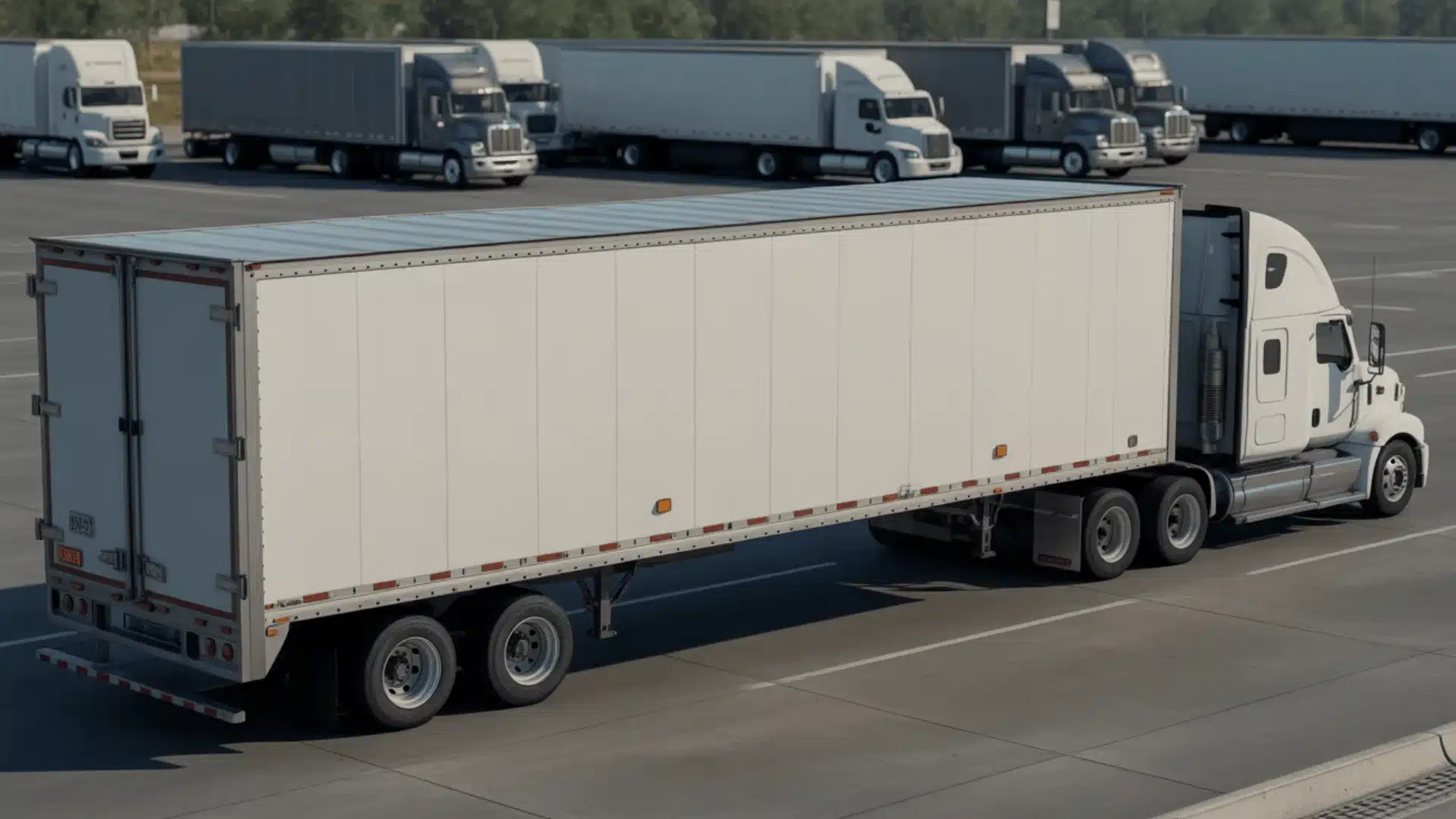
General freight trucking — Rhode Island trucking operations

States we serve · Rhode Island

Rhode Island trucking insurance

Rhode Island trucking sits inside the smallest US state by land area, with most domiciled fleets running materially more out-of-state miles than in-state miles in any given week. I-95 carries northeast-corridor pass-through volume between New York and Boston; Quonset Point and ProvPort drive specialty marine-terminal freight; and South County and Newport bring sharply peaked summer hospitality dispatch on top. The underwriting questions reflect that — multi-state lane disclosure, specialty Quonset carhauler appetite, and Narragansett Bay seafood reefer all factor into how a Rhode Island trucking program gets placed.

What trucking insurance costs in Rhode Island

Rhode Island trucking insurance pricing is driven by a small set of underwriting variables that carry more weight than the state-of-domicile entry on the application. The biggest of them is multi-state lane mix — Rhode Island geography means that a tractor garaged in Providence runs more Massachusetts, Connecticut, and New York miles in a typical week than purely intrastate miles. Accurate multi-state disclosure at bind is the difference between a clean renewal audit and a surprise premium adjustment. Freight mix runs a close second: a ProvPort bulk-cargo operation is a different underwriting package than a Quonset carhauler operation or an I-95 dry-van pass-through.

The second variable is corridor density. I-95 through Providence carries consistently heavy northeast-corridor through-truck volume, and Rhode Island-domiciled fleets running heavy I-95 miles read into that profile regardless of the technically modest in-state mileage. The FMCSA financial responsibility floor at 49 CFR section 387.9 is the federal minimum — contracted limits on Boston and NYC shipper agreements that show up routinely on Rhode Island lane sheets run above it.

Third, claims history is the variable that does the most work on any individual renewal. One severity claim in the last three years — particularly a bodily-injury claim with reserves above the primary limit — changes the carrier appetite list materially. The right time to plan for that is before the renewal quote round, not after. Fourth, the owner-vs-driver structure: an owner-operator running a single tractor under their own authority prices differently than a small fleet with three drivers on payroll, even before workers compensation enters the picture. We work through each of these on the quote call rather than handing back a single number that hides the assumptions behind it.

Rhode Island trucking regulatory framework

Rhode Island trucking sits inside a four-agency regulatory framework. Interstate authority runs through FMCSA at the federal level; intrastate authority runs through the Rhode Island Department of Transportation and the Division of Motor Vehicles; insurance carriers and policy forms are regulated by the Rhode Island Department of Business Regulation Insurance Division; and workers compensation runs through the Workers Compensation Court within the Department of Labor and Training.

Federal authority — FMCSA, USDOT, and PHMSA

Interstate Rhode Island motor carriers register with the Federal Motor Carrier Safety Administration for a USDOT number and motor-carrier authority, file BMC-91 or BMC-91X public-liability proof of insurance through their carrier, and carry the MCS-90 endorsement on the auto liability policy. Hazmat operations layer PHMSA placarding, training, and routing requirements on top of FMCSA authority — Port of Providence petroleum lanes are the cluster where that layer matters most.

Rhode Island Department of Transportation (RIDOT)

RIDOT maintains the state highway and interstate network — I-95, I-195, I-295, US-1, US-6, and the various state routes — and administers oversize and overweight permits. The Pell Bridge to Newport, the Mount Hope Bridge to Aquidneck Island, and the Newport Bridge connections all drive routing decisions that RIDOT permitting addresses. Intrastate motor carrier registration runs through RIDOT in coordination with the Division of Motor Vehicles.

Rhode Island Department of Business Regulation (DBR) Insurance Division

The Rhode Island Department of Business Regulation Insurance Division regulates the property and casualty carriers that write Rhode Island trucking auto liability, motor truck cargo, physical damage, and pollution liability programs. DBR rate and form approval lives upstream of the actual program placement, which still runs through the specialty motor-carrier underwriter. The agency name (Business Regulation rather than Insurance) reflects the consolidated regulatory structure that handles multiple business- licensing functions under a single umbrella.

Workers Compensation Court within the Department of Labor and Training

The Rhode Island Workers Compensation Court within the Department of Labor and Training administers the workers compensation system. Coverage can be placed in the voluntary market or, where the voluntary market declines a risk, through the state-designated residual-market mechanism. For a Rhode Island trucking business, voluntary-market placement carries lower premium and better dividend potential — we walk through what makes an application attractive to voluntary carriers before binding.
Common trucking risks in Rhode Island

The Rhode Island risk profile splits into five distinct exposure regions that an underwriter reads off the garaging address and the lane disclosure before anything else on the application.

  • I-95 northeast corridor pass-through congestion. Providence sits on the I-95 northeast-corridor through-truck route between New York and Boston, with congestion-related rear-end and low-speed merge frequency that pulls auto liability premium upward on Providence- metro filings.
  • Quonset Point and ProvPort marine-terminal exposure. Auto-import roll-on roll-off freight out of Quonset and bulk-commodity drayage out of ProvPort generate distinct specialty-freight exposures. Carhauler liability, marine-terminal additional-insured wording, and bulk-cargo pollution liability all show up in the underwriting questions for Quonset and ProvPort filings.
  • Multi-state lane-mix exposure. Rhode Island geography drives more out-of-state miles than in-state miles for most domiciled fleets. Massachusetts, Connecticut, and New York miles all show up on the lane sheet, and accurate multi-state disclosure at bind matters more on Rhode Island filings than on most states.
  • Newport and South County seasonal-tourism exposure. Sharply peaked summer hospitality dispatch into Newport, the South County beach communities, and Block Island ferry freight from Galilee combines with materially lower winter volume to produce a season-skewed exposure profile that pro-rata audits can surface unexpectedly.
  • Winter weather and northeast nor easter exposure. Rhode Island faces winter weather events that drive seasonal physical damage frequency upward — nor easters off the Atlantic, coastal flooding events on US-1 and the Aquidneck Island bridge approaches, and ice-storm events on I-95 all factor into comprehensive and collision pricing.

Common Rhode Island trucking claims we see

The claim mix on Rhode Island filings runs heavier on a few specific patterns than national averages would suggest. These are qualitative — no severity figures, because severity is a function of venue, jury composition, and limit adequacy that varies too widely to summarize honestly.

  • I-95 corridor rear-end and low-speed merge collisions. Stop-and-go congestion through Providence and on the approaches into Pawtucket produces a steady run of low-severity property-damage claims with the occasional bodily-injury claim where soft-tissue allegations layer on. The auto liability policy responds; the question is whether the limit holds in a Providence County venue.
  • Quonset Point carhauler vehicle-damage claims. Auto-import roll-on roll-off freight out of Quonset produces motor truck cargo claims when vehicles are damaged in transit between the port and the regional dealer network. Carhauler-specific motor truck cargo policy structure responds; a generic dry-van motor truck cargo policy applied to carhauler operations typically does not.
  • ProvPort bulk-commodity and petroleum spill events. Petroleum and bulk- cargo drayage out of ProvPort produces occasional spill and overturn events on the local corridor between the terminal and the rail or truck transfer points. Pollution liability and motor truck cargo both interact on these claims, and tank-truck specialty endorsements are load-bearing.
  • Seasonal Newport and South County tourism-corridor accidents. Summer volume on US-1, the Pell Bridge approach, and the Block Island ferry feeders produces a sharp seasonal accident-frequency spike with tourist-driver interactions feeding rear-end and sideswipe events. Seasonal exposure shows up cleanly in three-year loss runs.

Specific carriers are not named here per our coverage placement policy — appetite changes faster than a website can. The Truck Guard Insurance homepage lists the active panel quoting Rhode Island motor carrier risks today.

Why Rhode Island trucking owner-operators choose Truck Guard Insurance

We are a specialty trucking insurance agency, and Rhode Island is one of the states where the difference between specialty and generic motor-carrier underwriting shows up most plainly. The five exposure regions — I-95 northeast pass-through, Quonset and ProvPort marine-terminal, multi-state lane mix, Newport and South County seasonal, and northeast winter — each have their own subset of carriers that want them and their own subset of carriers that decline them. Knowing which is which up front saves the application from getting bounced through markets that were never going to bind it.

We handle BMC-91 and BMC-91X filings end-to-end, issue certificates for broker compliance, and walk through MCS-90 mechanics on the quote call so the policy you bind matches the policy you thought you were binding. Multi-state lane disclosure on Rhode Island filings — accurate Massachusetts, Connecticut, and New York mile percentages — gets handled at bind rather than discovered at audit, which keeps the renewal premium aligned with the actual operating footprint.

On the regulatory side, we know which Rhode Island freight needs interstate FMCSA authority, which needs intrastate RIDOT registration, and which needs both. We have placed Rhode Island workers compensation programs through both the voluntary market and the state-designated residual-market mechanism and we walk through the trade-off before binding rather than assuming the prior agent got it right. And we work the 48 U.S. states we are licensed in, so a Rhode Island-domiciled carrier running freight into Massachusetts, Connecticut, New York, or New Jersey gets the same agency on the renewal whether the question is Rhode Island or the lane.

Major Rhode Island trucking markets

Rhode Island trucking is regional, but the regions overlap with neighboring-state metros more than in most states. The metros and corridors below are the ones where we place the most motor carrier programs — each runs a distinct exposure profile that drives carrier selection.

  • Providence. The I-95 / I-195 / I-295 convergence, the Port of Providence (ProvPort) on Narragansett Bay, the state capital business district, and Brown University inbound research-and-supply distribution combine into the freight anchor for the state. Providence-domiciled fleets typically run heavy I-95 north-south through-freight on top of regional Narragansett Bay distribution, which drives a dual exposure profile.
  • Quonset Point. The Quonset Business Park and Port of Davisville — one of the busiest auto-import roll-on roll-off terminals on the east coast — anchor a specialty freight pattern that handles inbound vehicle distribution to regional dealer networks. The naval-base legacy infrastructure and the marine terminal exposure combine to make Quonset a distinct underwriting submarket separate from Providence.
  • Warwick. T.F. Green International Airport cargo facility, the I-95 corridor running south from Providence, and the Providence-metro distribution extension into Kent County drive an exposure mix that blends air-cargo overflow with general dry-van regional distribution. Warwick-domiciled fleets typically read closer to Providence than to standalone secondary markets.
  • Newport. The seasonal hospitality and tourism logistics network, Naval Station Newport and the Naval War College defense-contract supply chain, and the Pell Bridge connection to Jamestown combine into a freight pattern that runs sharply peaked into summer hospitality and steady year-round on defense logistics. Bridge-routing constraints on the Pell drive deadhead miles on Newport-bound dispatches.
  • Pawtucket-Central Falls. The Blackstone River industrial-legacy corridor, the I-95 / I-295 junction, and the regional toy and consumer-goods distribution network (the Pawtucket area carries Hasbro corporate-and-distribution headquarters) feed an exposure mix that combines manufacturing-supply distribution with consumer-goods specialty hauling. Pawtucket-domiciled fleets read as Providence-metro periphery in underwriting questions.
  • Woonsocket. Northern Rhode Island, the I-295 corridor and Worcester County (Massachusetts) adjacency, and the Blackstone Valley industrial-legacy corridor produce a freight pattern that runs more Worcester-bound than Providence-bound for many domiciled fleets. The CVS Health corporate headquarters and associated distribution network anchor part of the inbound logistics into Woonsocket.
  • South County and Westerly. The US-1 coastal corridor, the seasonal beach hospitality and second-home distribution pattern, and the Block Island ferry freight feed from Galilee and Point Judith produce a seasonally peaked South County exposure. Westerly sits at the Connecticut border on US-1 and serves as the freight gateway between Rhode Island and eastern Connecticut.
  • Cranston. The I-95 Providence-metro extension, regional retail distribution centers serving Providence and Warwick, and the Garden City retail-and-distribution corridor combine into a freight pattern that runs primarily as Providence-metro suburban distribution. Cranston-domiciled fleets typically read as Providence-adjacent in underwriting rather than as a standalone submarket.

Related reading

A Rhode Island trucking program is rarely a single-line placement. Most of the operations we write carry at least three or four interacting coverage parts, and the motor-carrier class that dominates the lane mix drives both the appetite list and the form choices. The reading below covers the coverage parts, the motor carrier classes, and the neighboring states that show up most on Rhode Island filings.

Coverage and class context. The I-95 New England pass-through is the heart of where general freight trucking insurance gets placed for Rhode Island-domiciled fleets, with dry-van and LTL operations dominating the broker boards. Quonset Point auto-import distribution and ProvPort bulk-cargo drayage extend UIIA intermodal trucking insurance and carhauler appetite into the Rhode Island marine-terminal corridor. Narragansett Bay seafood, regional grocery, and Boston-bound food distribution feed refrigerated hauling insurance programs where reefer breakdown coverage and motor truck cargo interaction matter more than the base auto liability. Boston-metro urban expedited and South County tight-window seasonal dispatch generate hot shot trucking insurance questions on delivery-window discipline and higher-value-cargo limit structure.

Coverages most relevant to Rhode Island trucking:

Neighboring states we serve:

Primary regulatory and research sources:

Rhode Island trucking insurance FAQs

Does Rhode Island have its own DOT number, or do interstate carriers only need FMCSA registration?

Rhode Island runs both. Interstate motor carriers register with FMCSA for a USDOT number and motor-carrier authority. Intrastate-only carriers — freight that originates and terminates inside Rhode Island — register with the Rhode Island Division of Motor Vehicles in coordination with the Department of Transportation for intrastate motor carrier authority. Rhode Island geography makes purely intrastate operation rare — most Rhode Island fleets run interstate authority because lanes cross into Massachusetts and Connecticut routinely. The Rhode Island Department of Business Regulation Insurance Division regulates the carriers that write the auto liability and cargo policies you file.

Why does Rhode Island geography affect trucking insurance differently than larger states?

Rhode Island is the smallest US state by land area, and most fleets domiciled in the state run materially more out-of-state miles than in-state miles in any given week. Multi-state lane disclosure matters more on Rhode Island filings than on geographically large states because the carrier needs to understand the actual operating footprint at bind. Massachusetts, Connecticut, and New York miles all show up on the lane sheet for Providence-domiciled fleets running northeast-corridor I-95 freight.

What FMCSA filings does a Rhode Island motor carrier need before authority activates?

Interstate Rhode Island motor carriers need proof of public liability on file with FMCSA before authority goes active — a BMC-91 or BMC-91X submitted by the insurance carrier. Hazmat haulers add the BMC-32 (cargo financial responsibility) where the commodity triggers it. The MCS-90 endorsement attaches to the auto liability policy and is a federally-mandated public-protection backstop, not coverage for the carrier itself. Port of Providence petroleum lanes and Quonset Point industrial freight are the two Rhode Island clusters where MCS-90 mechanics come up most often.

How does Rhode Island workers compensation differ from neighboring states?

Rhode Island workers compensation runs through the Workers Compensation Court within the Department of Labor and Training. Coverage can be placed in the voluntary market or, where the voluntary market declines a risk, through the state-designated residual-market mechanism. For a Rhode Island trucking business, voluntary-market placement is the goal because the residual-market plan carries a higher premium load.

Why does Quonset Point auto-import freight need specialized insurance treatment?

The Port of Davisville at Quonset Point handles roll-on roll-off auto imports at one of the highest volumes on the US east coast, and the freight that moves out from Quonset to regional auto dealer networks runs on specialized carhauler equipment with distinct cargo limits, additional-insured wording for the importing automakers, and shipper-contract terms that differ from general dry-van freight. Carhauler programs are a different appetite slice in the specialty motor-carrier market than general freight, and we place Quonset-domiciled carhauler operations into the markets that specifically write that class.

How does Port of Providence drayage interact with motor truck cargo coverage?

ProvPort handles bulk commodity and break-bulk cargo on Narragansett Bay, and drayage out of the terminal runs on a mix of tank-truck for petroleum products, flatbed for steel and lumber, and dry-van for break-bulk goods. UIIA intermodal interchange agreement language matters less on ProvPort drayage than at major container terminals because the cargo mix runs more bulk-commodity than container, but motor truck cargo limit structure still scales with the cargo type. Petroleum and steel hauling typically carry tighter contractual indemnity terms than break-bulk dry-van.

How does seasonal South County and Newport tourism freight affect underwriting?

South County beach communities, Block Island ferry freight from Galilee and Point Judith, and Newport hospitality logistics all produce sharply peaked summer dispatch volume with materially lower winter volume. Programs that look reasonable on annual revenue can underperform when the season-by-season exposure is examined, and pro-rata audits on workers compensation and general liability can produce return premiums or assessments. Seasonal exposure structure matters more on coastal Rhode Island filings than on year-round inland filings.

How long does it take to get a Rhode Island trucking insurance quote bound?

For straightforward general-freight operations with clean MVRs, two-to-three years of verifiable experience, and current FMCSA authority, we typically have quotes in hand within one to two business days and can bind the same day quotes come back if the paperwork is complete. Quonset Point carhauler programs, ProvPort petroleum and bulk-cargo programs, and Newport defense-contract hauling take longer because the underwriting questions run deeper. Renewal premium jumping after one loss year is a conversation we are happy to have at the start, not at renewal — the right time to remarket is before the bind, not after.

Get a Rhode Island trucking insurance quote

Send the basics on your authority, equipment, commodity, and Rhode Island lane mix. We pull the panel of specialty trucking markets quoting your class and corridor today and walk you through limit selection, MCS-90 mechanics, and broker compliance before you bind.