Log trucking — Vermont trucking operations

States we serve · Vermont

Vermont trucking insurance

Vermont trucking sits on the I-89 and I-91 Canadian border feeder corridors, with Highgate Springs and Derby Line carrying steady commercial volume between Quebec and New England distribution. Champlain Valley dairy, Barre granite, Northeast Kingdom forestry, and Green Mountain ski-and-tourism freight layer on top of regional New Hampshire-bound and Massachusetts-bound dispatches. The underwriting questions reflect that — Canadian additional-insured wording, mountain-corridor winter physical damage, Vermont dairy reefer breakdown exposure, and oversize-permit granite-and-marble flatbed all factor into how a Vermont trucking program gets placed.

What trucking insurance costs in Vermont

Vermont trucking insurance pricing is driven by a small set of underwriting variables that carry more weight than the state-of-domicile entry on the application. The biggest of them is freight mix — a Champlain Valley dairy reefer operation prices materially differently from a Highgate Springs cross-border drayage operation or a Barre granite-and-marble flatbed operation. Garaging address runs a close second: a tractor garaged in Burlington reads differently than a tractor garaged in the Northeast Kingdom, because urban-distribution frequency and mountain-corridor winter exposure diverge sharply.

The second variable is corridor density. I-89 between Burlington and the Canadian border carries steady cross-border volume; I-91 along the Connecticut River carries Massachusetts- bound regional volume; and the US-7 west-side corridor carries upstate New York-bound regional volume. The FMCSA financial responsibility floor at 49 CFR section 387.9 is the federal minimum — contracted limits on Canadian shipper agreements and on Massachusetts and New Hampshire receiver contracts that show up routinely on Vermont lane sheets run above it.

Third, claims history is the variable that does the most work on any individual renewal. One severity claim in the last three years — particularly a bodily-injury claim with reserves above the primary limit — changes the carrier appetite list materially. The right time to plan for that is before the renewal quote round, not after. Fourth, the owner-vs-driver structure: an owner-operator running a single tractor under their own authority prices differently than a small fleet with three drivers on payroll, even before workers compensation enters the picture. We work through each of these on the quote call rather than handing back a single number that hides the assumptions behind it.

Vermont trucking regulatory framework

Vermont trucking sits inside a four-agency regulatory framework. Interstate authority runs through FMCSA at the federal level; intrastate authority runs through the Vermont Agency of Transportation Department of Motor Vehicles; insurance carriers and policy forms are regulated by the Vermont Department of Financial Regulation; and workers compensation runs through the Department of Labor Workers Compensation Division.

Vermont motor carriers register intrastate authority with the Vermont Agency of Transportation, and insurance compliance questions are handled by the Vermont Department of Financial Regulation. Workers compensation claims and employer-coverage disputes route to the Vermont Department of Labor Workers Compensation Division.

Federal authority — FMCSA, USDOT, and PHMSA

Interstate Vermont motor carriers register with the Federal Motor Carrier Safety Administration for a USDOT number and motor-carrier authority, file BMC-91 or BMC-91X public-liability proof of insurance through their carrier, and carry the MCS-90 endorsement on the auto liability policy. Hazmat operations layer PHMSA placarding, training, and routing requirements on top of FMCSA authority — cross-border petroleum lanes and Northeast Kingdom paper-and-chemical lanes are the clusters where that layer matters most.

Vermont Agency of Transportation (VTrans)

VTrans maintains the state highway and interstate network — I-89, I-91, US-2, US-4, US-5, US-7, and the various state routes that thread through the Green Mountains and the Champlain Valley — and administers oversize and overweight permits through its permit office. Heavy-haul operators running permitted loads (granite-and-marble flatbed, oversize equipment for ski-area infrastructure) work directly with VTrans on routing approvals, with mountain- corridor route restrictions layered into the permitting decisions.

Vermont Department of Financial Regulation (DFR)

The Vermont Department of Financial Regulation regulates the property and casualty carriers that write Vermont trucking auto liability, motor truck cargo, physical damage, and pollution liability programs. Vermont is one of a handful of states that combines insurance, banking, and securities regulation under a single department, similar to a few other northeastern states. DFR rate and form approval lives upstream of the actual program placement, which still runs through the specialty motor- carrier underwriter.

Department of Labor Workers Compensation Division

The Vermont Department of Labor Workers Compensation Division administers the workers compensation system. Coverage can be placed in the voluntary market or, where the voluntary market declines a risk, through the state-designated residual-market mechanism. For a Vermont trucking business, voluntary-market placement carries lower premium and better dividend potential — we walk through what makes an application attractive to voluntary carriers before binding.
Common trucking risks in Vermont

The Vermont risk profile splits into five distinct exposure regions that an underwriter reads off the garaging address and the lane disclosure before anything else on the application.

  • Cross-border Canadian drayage exposure. Highgate Springs and Derby Line commercial truck ports carry steady US-Canada freight volume, with Canadian shipper certificate-of-insurance demands, bonded-load liability, and customs-broker contract terms all showing up in the underwriting questions for cross-border-active Vermont filings.
  • Vermont dairy and reefer breakdown exposure. Champlain Valley and central Vermont dairy supply chains run on temperature-sensitive logistics where reefer breakdown coverage is load-bearing. Cooperative-shipper certificate requirements and motor truck cargo interaction with reefer breakdown matter more than on standard dry-van programs.
  • Granite, marble, and stone-quarry flatbed exposure. Barre granite and Proctor marble produce specialty flatbed and oversize-permit-load freight that pulls VTrans permit-routing constraints, mountain-corridor weight restrictions, and shipper-contract indemnity terms into the underwriting questions.
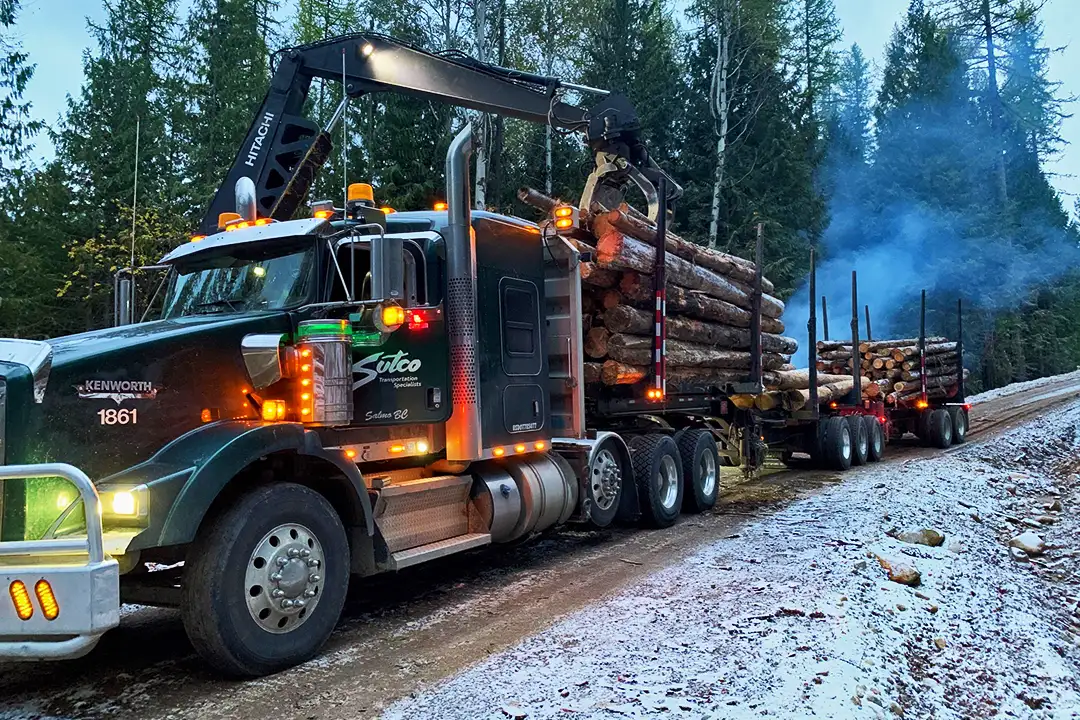
  • Forestry and paper-industry exposure. Northeast Kingdom logging and paper distribution produce log-truck and forestry-specialty hauling that reads differently than general freight — self-loader and pole-trailer equipment, forestry-specific motor truck cargo limits, and remote-route physical damage all factor into the rating.
  • Mountain-corridor and winter-weather exposure. Green Mountain weather, Champlain Valley lake-effect-adjacent precipitation, and Northeast Kingdom mountain-corridor ice events drive seasonal physical damage frequency materially above southern New England norms. Hill-descent and jackknife exposure on US-7, US-4, and I-89 grades is real.

Common Vermont trucking claims we see

The claim mix on Vermont filings runs heavier on a few specific patterns than national averages would suggest. These are qualitative — no severity figures, because severity is a function of venue, jury composition, and limit adequacy that varies too widely to summarize honestly.

  • Cross-border cargo damage and shortage disputes. Loads moving through Highgate Springs and Derby Line between US shippers and Quebec consignees produce cargo claims where the carrier disputes the loss value, the place-of-loss is contested, and the customs documentation comes into play. Motor truck cargo responds — and the contract terms decide the path from there.
  • Champlain Valley dairy reefer breakdown and rejected-load events. Dairy cooperative shippers running temperature-sensitive freight produce reefer breakdown claims and rejected-load events when delivery temperatures slip out of specification. Reefer breakdown coverage and motor truck cargo interact on these claims, and the policy form language is load-bearing.
  • Mountain-corridor winter physical damage events. Green Mountain weather, ice-storm events on I-89 and I-91, and Northeast Kingdom mountain-corridor accumulation produce winter physical damage claims at higher frequency than southern New England norms. Comprehensive and collision frequency on Vermont-domiciled filings runs above Connecticut and Rhode Island comparables.
  • Granite and marble flatbed load-shift and tie-down events. Stone-and- aggregate hauling produces load-shift events when tie-down is incorrect for the load profile, and pole-trailer and flatbed-specific motor truck cargo claims when grade exposure on mountain corridors interacts with heavy stone loads. Specialty flatbed program structure responds; generic dry-van programs typically do not address the load-shift mechanics.

Specific carriers are not named here per our coverage placement policy — appetite changes faster than a website can. The Truck Guard Insurance homepage lists the active panel quoting Vermont motor carrier risks today.

Why Vermont trucking owner-operators choose Truck Guard Insurance

We are a specialty trucking insurance agency, and Vermont is one of the states where the difference between specialty and generic motor-carrier underwriting shows up most plainly. The five exposure regions — Canadian cross-border, Champlain Valley dairy reefer, granite and marble flatbed, Northeast Kingdom forestry, and Green Mountain winter — each have their own subset of carriers that want them and their own subset of carriers that decline them. Knowing which is which up front saves the application from getting bounced through markets that were never going to bind it.

We handle BMC-91 and BMC-91X filings end-to-end, issue certificates for broker compliance, and walk through MCS-90 mechanics on the quote call so the policy you bind matches the policy you thought you were binding. Canadian cross-border certificate requests for Highgate Springs and Derby Line — additional-insured wording for Quebec consignees, primary-and-non-contributory language, certificate holder structure — get handled the same day they come in when the underlying program is structured correctly at bind.

On the regulatory side, we know which Vermont freight needs interstate FMCSA authority, which needs intrastate VTrans registration, and which needs both. We have placed Vermont workers compensation programs through both the voluntary market and the state-designated residual-market mechanism and we walk through the trade-off before binding rather than assuming the prior agent got it right. And we work the 48 U.S. states we are licensed in, so a Vermont-domiciled carrier running freight into New Hampshire, New York, Massachusetts, or Maine gets the same agency on the renewal whether the question is Vermont or the lane.

Major Vermont trucking markets

Vermont trucking is regional, with most metros sitting along the I-89, I-91, or US-7 corridors. The metros and corridors below are the ones where we place the most motor carrier programs — each runs a distinct exposure profile that drives carrier selection.

  • Burlington. The largest city in Vermont, the I-89 / US-2 corridor, the Champlain Valley distribution function, Burlington International Airport cargo facility, and the University of Vermont inbound research-and-medical-supply distribution combine into the freight anchor for northern and northwestern Vermont. Burlington-domiciled fleets typically run I-89 southbound to Boston-area distribution and northbound to the Canadian border feeders.
  • Montpelier. The state capital — the smallest US state capital by population — sits on I-89 between Burlington and White River Junction, with state-government inbound-distribution function and the capital-area regional logistics serving central Vermont. Montpelier-domiciled fleets typically run a mix of north-and-south I-89 corridor freight and east-west US-2 dispatches.
  • Rutland. Central Vermont, the US-7 / US-4 junction, the ski-resort and mountain-corridor freight network feeding Killington and the surrounding peaks, and the marble-and-stone industrial-legacy quarrying region combine into a freight pattern that blends regional dry-van distribution with specialty flatbed for stone-and-aggregate hauling. Rutland-domiciled fleets often run multi-state into upstate New York.
  • Brattleboro. Southern Vermont, the I-91 corridor at the Massachusetts border, the regional arts-and-co-op food-distribution network, and the Connecticut River industrial-legacy corridor combine into a freight pattern that runs heavily Massachusetts-bound. Brattleboro-domiciled fleets typically read as Connecticut-River-valley operations rather than as standalone Vermont submarkets.
  • Bennington. Southwestern Vermont, the US-7 corridor at the New York border, Bennington College inbound logistics, and the regional manufacturing-and-distribution corridor combine into a freight pattern that runs more upstate-New-York-bound than Massachusetts-bound. Bennington-domiciled fleets typically run heavier US-7 north-south mileage than I-91 mileage.
  • St. Albans. Northern Vermont, the I-89 corridor, the Highgate Springs Canadian border crossing (one of the two primary US-Canada commercial truck ports in Vermont), and the Lake Champlain Islands distribution function combine into a freight pattern that blends cross-border lane access with regional Champlain Valley distribution. Cross-border bonded-load liability and Canadian shipper certificate-of-insurance reciprocity factor heavily into St. Albans filings.
  • Newport and the Northeast Kingdom. Northeastern Vermont, the US-5 / I-91 corridor, Lake Memphremagog and the Derby Line Canadian border crossing (the secondary US-Canada commercial truck port in Vermont), and the Northeast Kingdom forestry-and-paper industrial distribution combine into a remote freight pattern with cross-border lane access and seasonal logging logistics.
  • White River Junction. The I-89 / I-91 junction at the Connecticut River, the Upper Valley bi-state distribution function with Lebanon-Hanover (New Hampshire side), the Veterans Affairs Medical Center inbound medical-supply distribution, and the regional Dartmouth-area logistics combine into a freight pattern that crosses the Connecticut River routinely. Upper Valley-domiciled fleets often read as bi-state operations for underwriting purposes.

Related reading

A Vermont trucking program is rarely a single-line placement. Most of the operations we write carry at least three or four interacting coverage parts, and the motor-carrier class that dominates the lane mix drives both the appetite list and the form choices. The reading below covers the coverage parts, the motor carrier classes, and the neighboring states that show up most on Vermont filings.

Coverage and class context. The I-89 / I-91 regional corridors and Canadian border feed are the heart of where general freight trucking insurance gets placed for Vermont-domiciled fleets, with dry-van and LTL operations dominating the broker boards. Champlain Valley dairy, maple syrup, and regional agricultural distribution feed refrigerated hauling insurance programs where reefer breakdown coverage and motor truck cargo interaction matter more than the base auto liability. New York-bound and tech-corridor expedited dispatches feed hot shot trucking insurance questions on tight delivery windows. Barre granite, Proctor marble, regional manufacturing- equipment moves, and Stowe and Killington ski-area infrastructure transport generate flatbed trucking insurance underwriting questions where oversize-permit routing through VTrans and tie-down mechanics on stone loads all interact at bind.

Coverages most relevant to Vermont trucking:

Neighboring states we serve:

Primary regulatory and research sources:

Vermont trucking insurance FAQs

Does Vermont have its own DOT number, or do interstate carriers only need FMCSA registration?

Vermont runs both. Interstate motor carriers register with FMCSA for a USDOT number and motor-carrier authority. Intrastate-only carriers — freight that originates and terminates inside Vermont — register with the Vermont Agency of Transportation Department of Motor Vehicles for intrastate motor carrier authority. Vermont geography makes purely intrastate operation uncommon — most fleets cross into New Hampshire, Massachusetts, New York, or the Canadian border routinely. The Vermont Department of Financial Regulation regulates the carriers that write the auto liability and cargo policies you file in either case.

Why does the Canadian border affect Vermont trucking insurance differently than interior US states?

Vermont has two primary US-Canada commercial truck ports — Highgate Springs (I-89 to Autoroute 35 in Quebec) and Derby Line (I-91 to Autoroute 55 in Quebec) — that together carry steady cross-border commercial volume. Canadian shippers and freight brokers on the Quebec side expect certificate-of-insurance wording that names them as additional insured with primary-and-non-contributory language, and contracted primary auto liability limits on cross-border lanes typically run above the FMCSA financial responsibility floor at 49 CFR section 387.9. We see broker-refused-load issues most often on cross-border lanes when the underlying program does not carry the right additional-insured structure at bind.

What FMCSA filings does a Vermont motor carrier need before authority activates?

Interstate Vermont motor carriers need proof of public liability on file with FMCSA before authority goes active — a BMC-91 or BMC-91X submitted by the insurance carrier. Hazmat haulers add the BMC-32 (cargo financial responsibility) where the commodity triggers it. The MCS-90 endorsement attaches to the auto liability policy and is a federally-mandated public-protection backstop, not coverage for the carrier itself. Northeast Kingdom forestry-and-paper lanes and cross-border petroleum lanes are the two Vermont clusters where MCS-90 mechanics come up most often.

How does Vermont workers compensation differ from neighboring states?

Vermont workers compensation runs through the Department of Labor Workers Compensation Division. Coverage can be placed in the voluntary market or, where the voluntary market declines a risk, through the state-designated residual-market mechanism. For a Vermont trucking business, voluntary-market placement carries lower premium and better dividend potential — we walk through what makes an application attractive to voluntary carriers before binding rather than defaulting into the residual market.

Why does Vermont dairy and agricultural freight need specialized reefer treatment?

Vermont dairy is a defining state industry — Cabot Creamery cooperative distribution, regional farmstead cheese production, and maple syrup logistics all run on temperature-sensitive supply chains. Reefer breakdown coverage is load-bearing on Vermont dairy and maple programs, and motor truck cargo interaction with reefer breakdown matters more than on standard dry-van programs. Carriers writing Vermont dairy specifically understand the temperature-excursion claim patterns and the cooperative-shipper certificate requirements that come with the lane.

How does winter weather and mountain-corridor exposure affect Vermont physical damage pricing?

Vermont winters drive seasonal physical damage frequency materially above southern New England norms. Green Mountain corridor weather, lake-effect-adjacent precipitation across the Champlain Valley, and Northeast Kingdom mountain-corridor ice events all factor into comprehensive and collision pricing on Vermont-domiciled filings. Mountain-corridor grade exposure on US-7, US-4, and Interstate 89 produces hill-descent and jackknife events that southern Vermont lanes do not carry to the same degree as the Green Mountain interior.

How do granite and stone-quarry freight operations affect underwriting?

Vermont has a long granite and marble quarrying industrial-legacy, with Barre granite and Proctor marble both producing specialty flatbed and oversize-permit-load freight. Stone-and-aggregate hauling reads differently than dry-van general freight — heavier loads pulling oversize-overweight permits through VTrans, mountain-corridor routing constraints, and tighter contractual indemnity terms with the shippers all show up in the underwriting questions. We place granite and quarry-related flatbed operations into the markets that specifically write that class.

How long does it take to get a Vermont trucking insurance quote bound?

For straightforward general-freight operations with clean MVRs, two-to-three years of verifiable experience, and current FMCSA authority, we typically have quotes in hand within one to two business days and can bind the same day quotes come back if the paperwork is complete. Highgate Springs and Derby Line cross-border programs, Northeast Kingdom forestry-and-paper lanes, and Barre granite-and-marble flatbed programs take longer because fewer markets write them and the underwriting questions run deeper. Renewal premium jumping after one loss year is a conversation we are happy to have at the start, not at renewal — the right time to remarket is before the bind, not after.

Get a Vermont trucking insurance quote

Send the basics on your authority, equipment, commodity, and Vermont lane mix. We pull the panel of specialty trucking markets quoting your class and corridor today and walk you through limit selection, MCS-90 mechanics, and broker compliance before you bind.