Motor carrier classes by state

Alabama dump trucking insurance for aggregate and construction haulers

Alabama has a paragraph that names dump trucks and dump trailers and then takes the axle-spacing table away from them. In exchange it imposes a single flat equipment requirement, stated in five words: “All axles shall be brake equipped.” That trade — spacing relief for a brake mandate — is the center of the Alabama aggregate business.

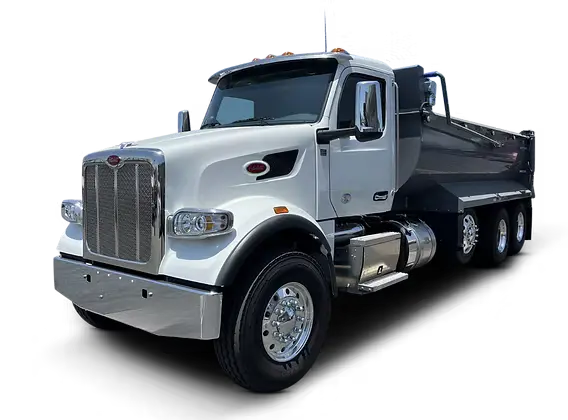
Dump truck raising its bed to unload gravel — Alabama Dump Trucking Insurance from Truck Guard Insurance

Nearly every state computes maximum gross weight from the distance between the first and last axle. That arithmetic punishes short trucks, and a dump truck is a short truck by design: the body has to tip, the wheelbase has to turn inside a pit, and the axles end up close together.

Alabama solves it by exemption rather than by formula. Paragraph e of Ala. Code § 32-9-20 (a)(3), headed “Special Trucks,” provides that dump trucks, dump trailers, concrete mixing trucks, fuel oil and gasoline trucks, and trucks designated and constructed for special type work or use “shall not be made to conform to the axle spacing requirements of paragraph b.” Two conditions replace it: the vehicle is limited to twenty thousand pounds per axle plus the allowable load tolerance, and its maximum gross weight may not exceed the maximum this section allows for the appropriate number of axles, irrespective of the distance between axles, plus that tolerance.

Then the equipment sentence. “All axles shall be brake equipped.” It is not qualified by weight, by axle position or by whether an axle is loaded, and it applies to every vehicle claiming the paragraph. A lift axle that is dropped to make weight and is not braked does not merely fail an inspection item in Alabama — it puts the truck outside the provision it is relying on for its legal gross.

The section carries amendments through Act 2025-272, and the practical shape it produces is unusual: a short-wheelbase Alabama dump truck reaches the same gross weight the table allows for its axle count without having to buy the wheelbase, and it pays for that with brakes on everything it rolls on.

Running Alabama dump units under the § 32-9-20 special truck paragraph? Send the axle counts and confirm every axle is brake equipped — that sentence is a condition of the exemption, not a suggestion.

Start a Alabama quote

Spacing relief, and what the axle count is worth without it

To see what paragraph e is actually delivering, read the table it excuses a dump truck from. Paragraph b of § 32-9-20 (a)(3) sets the computed gross weight table, keyed to the distance in feet between the first and last axles of the vehicle or combination measured longitudinally to the nearest foot, with columns for two, three, four, five and six axles.

Every column in that table climbs with distance and then stops. The two-axle column reaches forty thousand pounds at ten feet and goes no further. The three-axle column climbs to sixty thousand pounds at twenty-nine feet. The four-axle column reaches seventy-five thousand pounds, the five-axle column eighty thousand, and the six-axle column eighty-four thousand — all three of them at the table’s final row, forty-four feet and over.

For a conventional truck those figures are conditional on wheelbase. For a special truck under paragraph e they are not. A three-axle Alabama dump truck is entitled to the three-axle figure irrespective of how far apart its axles sit; a four-axle unit to the four-axle figure; a six-axle configuration to eighty-four thousand pounds. That is the whole commercial value of the paragraph, and it is why an Alabama aggregate operator counts axles rather than measuring wheelbase when deciding what a unit can bill.

The axle limit that replaces spacing is not generous, and it is the binding constraint on a heavy unit. Paragraph a.1 sets twenty thousand pounds as the gross weight imposed on the highway by the wheels of any one axle, with a.2 defining an axle load as the total load transmitted to the road by all wheels whose centers fall between two parallel transverse vertical planes forty inches apart. Paragraph e keeps that number in place and adds the tolerance to it. A truck that reaches its table figure but distributes it badly is over on an axle even though it is legal on gross.

One line at the end of paragraph e removes any argument about posted structures. Subparagraph e.4 states that it is a violation if a vehicle named under the paragraph travels upon bridges designated and posted by the Director of Transportation as incapable of carrying the load. The spacing exemption reaches the table; it does not reach a posting.

  • Two axles — the table reaches forty thousand pounds at ten feet.
  • Three axles — sixty thousand pounds at twenty-nine feet and above.
  • Four axles — seventy-five thousand pounds at forty-four feet and over.
  • Five axles — eighty thousand pounds at forty-four feet and over.
  • Six axles — eighty-four thousand pounds at forty-four feet and over.
  • Under paragraph e — a special truck takes the figure for its axle count irrespective of the distance between axles, plus the allowable load tolerance.

Fifty miles from home base, written into the law three separate times

Alabama keeps returning to the same radius, and an aggregate operator will cross it in more than one statute on the same day.

The first appearance is in the weight section itself. Subparagraph e.2 provides that trucks delivering asphalt plant mix that do not exceed the maximum allowable gross weight and operate within fifty miles of their home base “shall not be required to conform to the requirements of paragraph a.” Paragraph a is the axle weight paragraph — the twenty-thousand-pound limit and the interstate provisions — so a plant-mix truck inside the radius is relieved of the per-axle rule while remaining bound by the gross figure. Subparagraph e.3 grants the identical relief to concrete mixing trucks on the same two conditions.

Note the difference between e.1 and e.2, because it is easy to blur. Subparagraph e.1 relieves special trucks of the spacing table in paragraph b and keeps the axle limit in place. Subparagraphs e.2 and e.3 relieve a narrower class — plant mix and concrete mixers, inside fifty miles of home base — of the axle limit in paragraph a. They are relief from different paragraphs, and a truck can qualify for one without qualifying for the other.

The third appearance is in an entirely different title, and it decides whether a hauler is economically regulated at all. Ala. Code § 37-3-4 (a)(1)c excludes from the Alabama Motor Carrier Act, among other things, “motor vehicles hauling road materials and paid by the State of Alabama, or paid by any county or other political subdivision thereof, or paid by any contractor performing work for the State of Alabama, or any county or other political subdivision thereof, for a distance not exceeding 50 miles.”

Read the payer as carefully as the distance. The exemption follows who is paying for the haul — the state, a county or other political subdivision, or a contractor performing work for one of them — and it stops at fifty miles. A dump operator working a county resurfacing contract inside the radius sits outside the chapter; the same trucks running private commercial fill beyond it do not. The subdivision also carries its own administrative string: motor vehicles hauling property for hire that are exempt under paragraph a of that subdivision must, before transporting exempt property, secure a permit from the Alabama Department of Revenue, which may be furnished without cost on proper application.

The tolerance is drafted as a rule of evidence

Alabama’s allowable load tolerance is not a grace band bolted onto an enforcement policy. It is written into the statute, and it is written as a rule about what a court may hear.

Subparagraph d.1 provides that for purposes of enforcing the subdivision, all weights less than or equal to the sum of the weight otherwise prescribed plus the allowable load tolerance “shall be deemed to be in compliance with the requirements of this section and shall not constitute violations thereof.” Then it turns to litigation: “No evidence shall be admitted into evidence or considered by the trier of fact in any civil action unless the evidence proffered would tend to prove that the weight of the vehicle exceeded the amount provided in this subsection.” The same subparagraph preserves the other direction, leaving a defendant free to put in evidence tending to prove compliance.

Subparagraph d.2 supplies the arithmetic: the allowable load tolerance is calculated by multiplying the weight prescribed by the subdivision by one-tenth.

The evidentiary limb is the part that matters on an insurance file. In an Alabama civil action arising out of a collision involving a loaded dump truck, weight evidence that does not tend to prove the vehicle was above the prescribed figure plus tolerance is not supposed to reach the trier of fact at all. That is a meaningful constraint on how an overweight theme can be developed against a hauler, and it is a reason to be exact — in scale tickets, in load records and in what a driver says at the scene — about what a unit actually weighed. It sits directly alongside the auto liability defense rather than beside the citation.

We place Alabama dump and aggregate accounts, including plant mix and concrete operations working inside the fifty-mile radius and fleets running multi-axle units under the special truck paragraph.

Get a Alabama quote

Portable scales come with a challenge right, and a clock

Alabama permits portable scale enforcement and then writes the operator a procedure for contesting it. Paragraph g of § 32-9-20 (a)(3) is unusually detailed, and it is worth training drivers to.

Subparagraph g.1 sets the method. To determine the weight of each axle, the axles of any vehicle described or commonly referred to as tandem or triaxle rigs — that is, vehicles having two or more axles in addition to a steering axle — shall be weighed simultaneously, and the total weight so derived divided by the number of axles weighed in the group to arrive at the per axle weight. There is a cap on the averaging: if any one axle in the group exceeds twenty thousand pounds in weight, it shall not exceed the weight of any other axle in the group by more than fifty percent.

Subparagraph g.2 gives the operator two routes when it believes the portable scales are inaccurate. Under clause (i) the operator may request that an enforcement officer accompany the operator and vehicle to the nearest platform scales certified by the Department of Agriculture and Industries and operated by a bonded operator within ten highway miles. Under clause (ii) the operator may instead proceed unaccompanied to such certified platform scales within one hundred highway miles. Under either route, if the platform scales show the axle or gross weights within the legal limits including the allowable load tolerance, the operator shall not be held to be in violation.

The unaccompanied route carries a deadline and a reward. The operator must provide a copy of the platform scale weight ticket and an affidavit — to be established and provided online by the court having jurisdiction — within forty-eight hours of being weighed by the portable scales. On complying, the statute provides that no court costs, fees or penalties shall apply.

One further limit on enforcement sits in subparagraph g.3: when portable scales are used, not more than five vehicles may be detained at any one time, including a vehicle being weighed. And paragraph f keeps a simpler remedy available throughout — if the driver can comply with the weight requirements by shifting or equalizing the load on all wheels or axles, and does so when requested by the proper authority, the driver shall not be held to be operating in violation.

Who is allowed to publish a smaller number

Alabama’s statutory figures are ceilings for the state, not floors for everyone else, and two paragraphs say who may go lower.

Paragraph h provides that the governing body of a county, by appropriate resolution, may authorize limitations less than those prescribed in the section for vehicles operated upon the county highways of that county. Paragraph i provides that the Department of Transportation may post or limit any road or bridge to weights less than those prescribed, and then states a legislative instruction rather than a mere authorization: “It is the legislative intent and purpose that this section be rigidly enforced by the Department of Transportation, the Alabama State Law Enforcement Agency, any other authorized law enforcement officer of this state, and any county, city, and incorporated town.”

That enforcement roster is broader than it looks. A municipal officer in a small incorporated town is named in the same sentence as the state agencies, which is why an Alabama dump operator running short local hauls can meet weight enforcement from an authority that has no scale house and no permit office.

The counterpart on the exempt side is narrow and specific. Paragraph j provides that two and three axle vehicles being used exclusively for transporting agricultural commodities or products to and from a farm, and for agricultural purposes relating to the operation and maintenance of a farm, by a farmer, custom harvester or husbandman, may not be made to conform to the axle requirements of paragraph a or the gross weight requirements of paragraph b. Aggregate is not in that paragraph, and a dump truck moving fill on a farm road is not made agricultural by its destination.

The permit that requires insurance, and the condition on paying out

Alabama’s oversize and overweight permit statute, Ala. Code § 32-9-29, as amended by Act 2019-473, is aimed at a different kind of freight than aggregate — subsection (a)(1) conditions a permit on the load being “of such nature that it is a unit which cannot be readily dismantled or separated,” with bulldozers and similar construction equipment expressly not deemed readily separable. A mixed operation that moves its own machinery between job sites will meet it regularly.

The insurance condition inside it is the reason to read the section on an aggregate account. Subsection (b)(1)a. provides that a permit to operate a vehicle exceeding the statutory limits of height, weight, width or length “shall be issued only on condition of payment of an indemnity bond or proof of insurance protection for three hundred thousand dollars ($300,000.00),” conditioned for payment to the department to be held in trust for the benefit of the owners of bridges and their appurtenances, traffic signals, signs or other highway structures damaged by a vehicle operating under the permit.

Then comes the qualifier that changes its character entirely: “The liability under the bond or insurance certificate shall be contingent upon proof of negligence or fault on the part of the permittee, his or her agents, or operators.” This is not a strict-liability road bond of the kind several states impose. It is a fault-based security, and a permittee that damages a structure without negligence is outside it. That distinction is worth confirming against the wording of whatever instrument is actually filed.

The same subsection sets what an annual permit can and cannot authorize, including all enforcement tolerances: a total gross weight not exceeding one hundred fifty thousand pounds, with gross weights over one hundred thousand pounds requiring advance routing by the department; a single axle weight not exceeding twenty-two thousand pounds; a total length not exceeding seventy-five feet; a total width not exceeding one hundred twenty inches or a load width exceeding one hundred forty-four inches; and a height not exceeding fourteen feet.

Two discretionary powers sit above the schedule. Subsection (a)(5) lets the director withhold a permit, establish seasonal or other time limitations within which the described vehicles may operate on the indicated road, otherwise limit or prescribe conditions of operation when necessary to assure against undue damage to road foundation, surfaces or bridge structures, and “require such undertaking or other security as may be deemed necessary to compensate the state for any injury to any roadway or bridge structure.” Subsection (a)(6) lets the director refuse to issue, or cancel, suspend or revoke, a permit for just cause, including repeated and consistent past violations.

What is left to underwrite on an Alabama aggregate account

Two equipment allowances round out the section and are easy to overlook when reconciling a scale ticket. Subsection (b)(1) allows a vehicle using an auxiliary power or idle reduction technology unit an additional four hundred pounds total to the gross, axle, tandem or bridge formula weight limits, and subsections (b)(2) and (b)(3) condition that on written proof or certification of the unit’s weight, a demonstration or certification that the technology is fully functional at all times, and the certification being available to law enforcement if the vehicle is found in violation — with the allowance capped at four hundred pounds or the actual proven weight, whichever is less. Subsection (c) separately allows a motor vehicle operated by an engine fueled primarily by natural gas to exceed the limits, up to a maximum gross vehicle weight of eighty-two thousand pounds, by the difference between the weight of its natural gas tank and fueling system and that of a comparable diesel tank and fueling system.

Everything else on an Alabama dump account is the ordinary shape of the class — hoist, body and tailgate damage that a physical damage schedule rarely anticipates, pit and job-site operations that live at the boundary of a highway auto form and drive the general liability and workers compensation lines, and the separate exposure profile of any machinery moves that fall under the oversized and overweight permit regime.

  • Axle count per unit, and brake equipment on every axle, since the § 32-9-20 (a)(3)e.1 spacing exemption states the brake requirement as a condition rather than a preference.
  • Home base and haul radius, given that fifty miles decides both the plant mix and concrete mixer relief in e.2 and e.3 and the Motor Carrier Act exclusion in § 37-3-4 (a)(1)c.
  • Who pays for the haul, because the road materials exclusion follows payment by the state, a county or other political subdivision, or a contractor performing work for one.
  • Scale ticket and load record discipline, in light of the evidentiary limb of the allowable load tolerance in paragraph d.1.
  • Local postings and county resolutions along the routes, since paragraphs h and i let counties and the department publish lower numbers than the statute.
  • Any § 32-9-29 permit on file and the instrument backing it, given the three-hundred-thousand-dollar requirement and its fault-based trigger.

Coverage lines a Alabama dump and aggregate account usually carries

The state minimum is a licensing threshold. The program an operator actually needs is built from these lines:

  • Trucking Auto Liability — Primary liability coverage for bodily injury and property damage caused by your truck while under dispatch.
  • Physical Damage — Collision and comprehensive coverage for the tractor, trailer, and attached equipment you own or finance.
  • Motor Truck Cargo — Coverage for the freight you haul against loss or damage in transit.
  • Trailer Interchange — Coverage for non-owned trailers you pull under written interchange agreements.
  • General Liability — Coverage for premises and operations liability away from the truck — terminal yards, customer docks, and non-driving exposures.
  • Workers Compensation — Statutory coverage for driver and yard-employee injury, structured for trucking payrolls and interstate operations.
  • Non-Trucking (Bobtail) Auto Liability — Liability coverage for the tractor when operated off-dispatch — bobtailing home or running personal errands.
  • Pollution Liability — Coverage for cargo-related pollution events and upset/overturn spills not covered by standard auto liability.

Why Truck Guard Insurance for a Alabama dump and aggregate account

We write dump and aggregate hauling as a named class rather than as an exception to general trucking, and we read each account against the weight and permit regime of the state it operates in. For a Alabama operator that means starting from what the trucks are actually licensed and configured to carry, sizing physical damage to bodies and hoists rather than to a chassis value, and treating pit, stockpile and job-site work as its own exposure rather than an extension of the highway auto form.

If the operation also runs freight under separate authority, the Alabama trucking insurance page covers the state’s broader motor carrier picture, and the dump trucking insurance page covers the class mechanics that apply wherever the operator runs.

Alabama dump trucking insurance questions

Does an Alabama dump truck have to meet the axle spacing table?

No. Ala. Code § 32-9-20 (a)(3)e.1 provides that dump trucks, dump trailers, concrete mixing trucks, fuel oil and gasoline trucks, and trucks designated and constructed for special type work or use shall not be made to conform to the axle spacing requirements of paragraph b, provided the vehicle is limited to 20,000 pounds per axle plus the allowable load tolerance and its gross does not exceed the maximum allowed for the appropriate number of axles, irrespective of the distance between axles, plus that tolerance.

What does the brake requirement in that paragraph actually say?

Five words, unqualified: “All axles shall be brake equipped.” The sentence appears in Ala. Code § 32-9-20 (a)(3)e.1 immediately after the weight conditions, and it is not limited by axle weight, axle position or whether an axle is carrying load. A unit relying on the spacing exemption with an unbraked lift axle is not meeting the terms of the paragraph it is relying on.

How much can a six-axle Alabama dump configuration gross?

Eighty-four thousand pounds. The computed gross weight table in Ala. Code § 32-9-20 (a)(3)b sets 84,000 pounds in the six-axle column at its final row, forty-four feet and over. Four axles reach 75,000 and five axles 80,000 in the same row, while the three-axle column tops out at 60,000 pounds at twenty-nine feet. A special truck under paragraph e takes the figure for its axle count without meeting the distance.

What is the fifty-mile rule for asphalt plant mix?

Ala. Code § 32-9-20 (a)(3)e.2 provides that trucks delivering asphalt plant mix that do not exceed the maximum allowable gross weight and operate within fifty miles of their home base shall not be required to conform to the requirements of paragraph a — the axle weight paragraph. Subparagraph e.3 gives concrete mixing trucks the same relief on the same two conditions.

Are aggregate haulers regulated as motor carriers in Alabama?

Not always. Ala. Code § 37-3-4 (a)(1)c excludes from the Alabama Motor Carrier Act motor vehicles hauling road materials and paid by the State of Alabama, by any county or other political subdivision, or by any contractor performing work for the state or such a subdivision, for a distance not exceeding fifty miles. The exclusion turns on who is paying and on the distance, so the same trucks can be inside the chapter on one job and outside it on another.

How does Alabama’s ten percent load tolerance work?

It is defined and then given evidentiary effect. Ala. Code § 32-9-20 (a)(3)d.2 calculates the allowable load tolerance by multiplying the prescribed weight by one-tenth. Subparagraph d.1 deems weights at or below the prescribed weight plus that tolerance to be in compliance, and provides that no evidence shall be admitted or considered by the trier of fact in any civil action unless it would tend to prove the vehicle exceeded that amount, while preserving a defendant’s right to put in evidence of compliance.

Can an Alabama driver challenge a portable scale reading?

Yes, two ways. Under Ala. Code § 32-9-20 (a)(3)g.2, the operator may ask an enforcement officer to accompany the vehicle to certified platform scales within ten highway miles, or may proceed unaccompanied to certified platform scales within one hundred highway miles. On the unaccompanied route the operator must supply the platform scale ticket and an affidavit, provided online by the court having jurisdiction, within forty-eight hours; on complying, no court costs, fees or penalties apply.

Does an Alabama overweight permit require insurance?

Yes, and it names an amount. Ala. Code § 32-9-29 (b)(1)a. provides that a permit to operate a vehicle exceeding the statutory limits shall be issued only on condition of payment of an indemnity bond or proof of insurance protection for $300,000, held in trust for the benefit of the owners of bridges, traffic signals, signs or other highway structures damaged by the permitted vehicle. Liability under it is contingent upon proof of negligence or fault by the permittee, agents or operators.

Sources

Every figure on this page was read at the source below on August 11, 2026, with the effective date of the version read. Treat each as current as of that date rather than as permanent.

Get a Alabama dump trucking insurance quote

Send the declared or registered weights alongside the axle configurations, and tell us where the material moves from. We will size the program against the work the trucks actually do rather than against a statutory floor.

Start a quote Call 317-942-0549