Motor carrier classes by state

Colorado dump trucking insurance for aggregate and construction haulers

Most states will sell extra weight only for a load that cannot be taken apart. Colorado wrote the opposite into statute: § 42-4-510 (1)(b)(II) says in terms that an overweight permit “shall be available for overweight divisible loads,” and then names the two configurations that qualify. A dump truck is the vehicle that provision was built around.

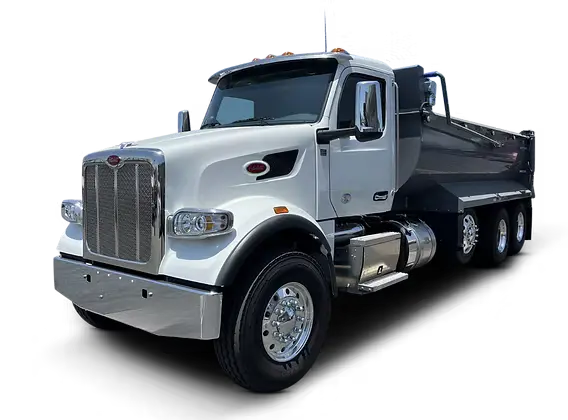
Dump truck raising its bed to unload gravel — Colorado Dump Trucking Insurance from Truck Guard Insurance

Sand, gravel, road base and fill are divisible by definition. They can always be split into two loads, which in most of the country puts them outside the permit system entirely and leaves an aggregate hauler with whatever the ordinary legal limit happens to be.

Colorado runs the other way. C.R.S. § 42-4-510 (1)(b)(II), as carried in the Colorado Revised Statutes 2024, makes an overweight permit available for a divisible load in either of two shapes: a vehicle with a quad axle grouping whose maximum gross weight does not exceed one hundred ten thousand pounds, or a vehicle operated in combination with a trailer or semitrailer having two or three axles whose maximum gross weight does not exceed ninety-seven thousand pounds.

Two further conditions attach to both. The owner and operator must be in compliance with the federal Motor Carrier Safety Improvement Act of 1999, Pub. L. 106-159, as amended, as applicable to commercial vehicles, and the vehicle must comply with rules promulgated by the department of transportation concerning the distribution of the load upon the vehicle’s axles. Subparagraph (III) then closes the obvious door: a permit issued under that paragraph does not authorize operation on the interstate highway in violation of federal law.

That single provision reorganizes a Colorado aggregate fleet. Payload becomes a purchasable quantity rather than a fixed one, the purchase is annual, and the configuration that qualifies — quad axle grouping, or a two- or three-axle pup behind a truck — is a capital decision made before the first load ever moves.

Running Colorado quad-axle or pup combinations under a divisible-load permit? Send the permit tier and the axle configuration with the schedule — they change what each unit is legally carrying.

Start a Colorado quote

A permit written for a load that comes apart

Section 42-4-510 opens conventionally. Subsection (1)(a) authorizes the department of transportation, the Colorado state patrol with respect to highways under its jurisdiction, or any local authority with respect to highways under its jurisdiction, to issue a single trip, special, or annual permit on written application and good cause shown, authorizing movement of a vehicle of a size or weight exceeding the maximum specified in the article, on highways under the jurisdiction of the party granting the permit and for whose maintenance that party is responsible.

Subsection (1)(b)(I) sets out what an application must contain — a specific description of the vehicle and load, the particular highways for which the permit is requested, whether it is for a single trip, a special or an annual operation, and the time of movement. All state permits are issued in the discretion of the department, subject to rules adopted by the transportation commission under § 42-4-511, and local permits are issued in the discretion of the local authority under ordinances or resolutions that must not conflict with the section.

Then comes the sentence that separates Colorado from its neighbors. Subparagraph (1)(b)(II) provides that an overweight permit issued under the section shall be available for overweight divisible loads if the vehicle has a quad axle grouping and maximum gross weight does not exceed one hundred ten thousand pounds, or the vehicle is operated in combination with a trailer or semitrailer with two or three axles and maximum gross weight does not exceed ninety-seven thousand pounds — and if the safety and load-distribution conditions in subparagraphs (C) and (D) are satisfied.

Reading the two limbs against each other tells an operator what to buy. The quad-axle path is the heavier of the two and belongs to a single power unit carrying its own load. The ninety-seven-thousand-pound path belongs to a combination and turns on how many axles are under the trailing unit, which is why a two- or three-axle pup is the standard Colorado aggregate answer rather than a heavier trailer. Neither number is available to a conventional tandem or tri-axle that has not been configured for it.

The permit is carried, and it can be electronic. Subsection (4) requires the original or a copy of every permit to be in the vehicle and open to inspection by any police officer or authorized agent of the granting authority, except that where a peace officer or authorized agent can verify the permit electronically at the time of contact, a copy need not be carried. The same subsection adds the operative prohibition: no person shall violate any of the terms or conditions of the permit.

  • Quad axle grouping — maximum gross weight not exceeding 110,000 pounds.
  • Combination with a two- or three-axle trailer or semitrailer — maximum gross weight not exceeding 97,000 pounds.
  • Federal safety compliance — owner and operator in compliance with the Motor Carrier Safety Improvement Act of 1999 as applicable to commercial vehicles.
  • Load distribution — compliance with department of transportation rules on distribution of the load upon the vehicle’s axles.
  • No interstate relief — the permit does not authorize movement on the interstate highway in violation of federal law.

The fee schedule has its own tiers for the divisible permits

Colorado did not fold divisible-load permits into the general overweight fee. Section 42-4-510 (11)(a) runs a schedule with separate subparagraphs for each of the two divisible configurations, and a third for fleets of them.

For a quad axle grouping under subsection (1)(b)(II)(A), subparagraph (11)(a)(VI) sets an annual permit at five hundred dollars and a single trip permit at thirty dollars plus ten dollars per axle. For a combination with a two- or three-axle trailer under subsection (1)(b)(II)(B), subparagraph (11)(a)(VII) sets an annual permit at five hundred dollars, a six-month permit at two hundred fifty dollars, and a single-trip permit at fifteen dollars plus ten dollars per axle. Subparagraph (11)(a)(VIII), added by HB 20-1030 effective July 1, 2020, prices an annual fleet overweight permit for fleets of either configuration, or of both, at two thousand dollars plus thirty-five dollars per vehicle to be permitted.

Set those against the general tier. Subparagraph (11)(a)(III), which covers overweight permits for vehicles or loads exceeding legal weight limits up to two hundred thousand pounds, charges four hundred dollars annually and fifteen dollars plus five dollars per axle for a single trip. The divisible permits therefore cost more annually and more per axle on a single trip than an ordinary overweight permit — Colorado is charging for the privilege of moving weight that could have been split, and the six-month tier exists only on the combination side.

Local authorities can add to the bill, but not without limit. Subsection (11)(b) allows a local authority to impose a fee in addition to, but not exceeding, the amounts in subparagraphs (11)(a)(I) and (III), as provided by the applicable local ordinance or resolution. Section 42-4-511 (2)(a) then requires that any locally required permit be issued under an ordinance or resolution adopted after a public hearing, with published notice not less than eight days beforehand and expressly not placed in the legal notices or classified section, and subsection (2)(b) requires the local authority to send the proposed ordinance to the department of transportation for written comment at least thirty days before that hearing.

A surcharge doubles single-trip permits, and it skips exactly one line

The permit fee is not the whole cost of a single trip in Colorado. C.R.S. § 43-4-804 (1)(c)(I), in the Colorado Revised Statutes 2024, imposes a supplemental oversize and overweight vehicle surcharge “in an amount equal to the amount of the fee charged pursuant to section 42-4-510 (11)(a)” by the department or the state patrol for issuance of a single trip permit. A surcharge equal to the fee is a doubling, and it applies across the single-trip schedule.

Except in one place. The same subparagraph continues: “except that the surcharge shall not be imposed on a vehicle if the single trip permit fee was imposed pursuant to section 42-4-510 (11)(a)(VI)(B).” That citation is the single trip permit for a quad axle grouping carrying a divisible load — thirty dollars plus ten dollars per axle. The one single-trip permit in the Colorado schedule that is exempt from the doubling surcharge is the aggregate hauler’s.

The mechanics are ordinary. Subparagraph (1)(c)(II) requires the issuing agency to collect the surcharge at the same time as the single trip permit fee and to forward it to the department, whose executive director forwards it to the state treasurer for credit to the highway users tax fund, from which it is allocated to the state highway fund, counties and municipalities as specified in § 43-4-205 (6.3). The subparagraph was amended by HB 12-1019 § 26, effective July 1, 2012.

What that carve-out means on a real fleet is that the cost gap between the two divisible configurations is wider than the printed fees suggest. A quad-axle single trip is charged once; a combination single trip under subparagraph (VII) is charged twice. On an operation that runs occasional permitted moves rather than an annual permit, that difference compounds across a season.

We place Colorado dump and aggregate accounts, including quad-axle units and truck-and-pup combinations running under divisible-load overweight permits.

Get a Colorado quote

Off the Interstate, Colorado computes gross weight with a different equation

Colorado does not simply adopt the federal bridge formula and apply it everywhere. It runs two equations, and which one applies depends on the road under the tires.

For highways generally, C.R.S. § 42-4-508 (1)(b) provides that, subject to the axle limits in § 42-4-507, the maximum gross weight of any vehicle or combination shall not exceed that determined by the formula W = 1,000 (L + 40), where W is gross weight in pounds and L is the length in feet between the centers of the first and last axles — “except that, in computation of this formula, the gross vehicle weight must not exceed eighty-five thousand pounds.” That is a linear equation with a flat cap, and it is a materially different instrument from the federal formula.

The same subsection carries a distribution rule that catches combinations. Where a combination of vehicles is used, a vehicle must not carry a gross weight of less than ten percent of the overall gross weight of the combination, with an exception for specialized trailers of fixed public utilities; subsection (1)(d) repeats the rule with an exception for specialized pole-hauling trailers. A very light pup behind a heavily loaded truck is not merely inefficient in Colorado — it can put the combination out of compliance on its own. And the subsection closes with an instruction that is unusual to see in a weight statute: “The limitations provided in this section must be strictly construed and enforced.”

On the interstate system, subsection (1)(c) substitutes the familiar federal formula, W = 500 [(LN/N-1) + 12N + 36], up to a maximum of eighty thousand pounds, except as may be authorized under § 42-4-510. Reading (1)(b) and (1)(c) together gives the Colorado shape: eighty-five thousand pounds is the computed ceiling off the interstate, eighty thousand on it, and anything above either comes from the permit section.

One provision bridges the two. Section 42-4-510 (5) directs that the department of transportation or the state patrol “shall, unless such action will jeopardize distribution of federal highway funds to the state, authorize the operation or movement of a vehicle or combination of vehicles on the interstate highway system of Colorado at a maximum weight of eighty-five thousand pounds.” The off-interstate cap is therefore also the figure Colorado is directed to authorize on the interstate, subject to the federal funding condition.

The axle numbers change at the same line the formula does

Section 42-4-507 sets the wheel and axle limits that sit underneath both formulas, and one of them is road-dependent in the same way the gross formula is.

Gross weight upon any wheel may not exceed eight thousand pounds where the wheel is equipped with a solid rubber or cushion tire, or nine thousand pounds where it is equipped with a pneumatic tire. Gross weight upon any single or tandem axle may not exceed sixteen thousand pounds on solid or cushion tires, or twenty thousand pounds on a single axle with pneumatic tires. And then subsection (2)(c) splits: a tandem axle on pneumatic tires is limited to thirty-six thousand pounds for highways on the interstate system and forty thousand pounds for highways not on the interstate system.

That four-thousand-pound difference on a tandem is the practical reason a Colorado aggregate operation cares which route a dispatcher picks, quite apart from mileage. The statute defines the terms it is measuring: a single axle is all wheels whose centers may be included within two parallel transverse vertical planes not more than forty inches apart extending across the full width of the vehicle, and a tandem axle is two or more consecutive axles whose centers fall between planes spaced more than forty and not more than ninety-six inches apart.

Two narrower provisions in the same section show how Colorado handles specialized equipment. Subsection (2)(b.5) allows twenty-one thousand pounds on a single pneumatic-tired axle for a digger derrick or bucket boom truck operated by an electric utility on a non-interstate highway. Subsection (3)(a) exempts vehicles equipped with a self-compactor and used solely for transporting trash from the single-axle limit in paragraph (2)(b), and subsection (3)(c), added by HB 14-1160 effective August 6, 2014, exempts a vehicle contracted by or owned and operated by a city, county, municipal utility or special district, equipped with vacuum or jet equipment for water, wastewater or storm water work and not operated on the interstate system, from the tandem limit. Aggregate appears in none of them.

One allowance does reach an ordinary truck. Section 42-4-508 (1.5), as amended by HB 20-1167 effective September 14, 2020, increases the gross weight limits in subsection (1) “but by no more than two thousand pounds” for a vehicle or combination that contains an alternative fuel system and operates on alternative fuel or on both alternative and conventional fuel, with alternative fuel taking the meaning given in § 24-30-1104 (2)(c)(III)(A).

A permit is not a defense to the damage bill

Colorado separates the right to move weight from responsibility for what the weight does, and it says so in terms. Section 42-4-512 (1) prohibits driving, operating or moving any vehicle over a highway or highway structure in a manner that causes damage, and then adds that where the damage results from a vehicle weighing in excess of the maximum authorized by §§ 42-4-501 to 42-4-512 and 42-4-1407, “it shall be no defense to any action, either civil or criminal, brought against such person that the weight of the vehicle was authorized by special permit.”

Subsection (2) sets the liability. Every person violating subsection (1) is liable for all damage the highway or structure sustains, and where the driver is not the owner but is operating with the owner’s express or implied consent, owner and driver are jointly and severally liable. The authorities in control of the highway enforce that liability by civil action, and satisfying it releases nothing on the criminal side. Subsection (3) makes a violation a class A traffic infraction.

The permit purchased under § 42-4-510 therefore buys lawful movement and nothing else. That is a distinction worth making explicitly on a Colorado aggregate account, because the cost of a bridge or culvert failure is not bounded by the permit fee, and it is not bounded by the fine schedule either. It is bounded by the structure.

The roadside consequence of being over is also worth knowing before it happens. Section 42-4-509 (1) authorizes any police or peace officer with reason to believe a vehicle’s weight is unlawful to require the driver to stop and submit to weighing, by portable or stationary scales, or to drive to the nearest public scales within five miles. Subsection (2)(a) then requires the officer to have the driver stop in a suitable place and remain standing until enough of the load is removed to bring the vehicle within the limits — and provides that “all material so unloaded shall be cared for by the owner or operator of such vehicle at the risk of such owner or operator.” A pile of product on a shoulder in Colorado belongs to the hauler, together with whatever happens to it and to anyone near it.

One newer penalty runs alongside. Section 42-4-510 (12)(e), added by SB 24-220 effective August 7, 2024, provides that a carrier using a permit subject to the third-party documentation requirement in subsection (1)(b)(IV) that fails to have that documentation is subject to a penalty of one dollar per pound in excess of the gross weight authorized by the permit, with the court transferring the penalty to the state treasurer for credit to the statewide bridge and tunnel enterprise special revenue fund created in § 43-4-805 (3). The documentation requirement itself applies to applications for vehicle and load combinations weighing at least two hundred thousand pounds and less than five hundred thousand pounds, so it sits above ordinary aggregate work — but it is a useful measure of how Colorado prices a paperwork failure once weight is involved.

Where the state patrol’s safety authority lands on a dump fleet

Colorado’s commercial vehicle safety rules attach at a threshold well below the commercial driver’s license line. Section 42-4-235 (1)(a) defines a commercial vehicle to include a self-propelled or towed vehicle bearing an apportioned plate, or having a manufacturer’s gross vehicle weight rating or gross combination rating of at least sixteen thousand one pounds and used in commerce on public highways. Subsection (2)(a) forbids operating such a vehicle unless it complies with the rules adopted by the chief of the Colorado state patrol, and makes a violator — expressly including an intrastate motor carrier — subject to the civil penalties authorized under 49 CFR 386, subpart G.

Colorado then modifies the federal penalty machinery for its own carriers. Under subsection (2)(b)(I), intrastate motor carriers are not subject to the provisions of 49 CFR part 386, subpart G that relate the amount of a penalty to a violator’s ability to pay; penalties instead rest on the nature and gravity of the violation, the degree of culpability, and such other matters as justice and public safety may require. Subsection (2)(b)(II) caps the lookback: when assessing a civil penalty for safety violations, the period of a carrier’s safety compliance history a compliance review officer may consider shall not exceed three years.

The enforcement consequence is the part that reaches a business rather than a driver. Subsection (2)(c) gives the state patrol exclusive authority to conduct compliance reviews as defined in 49 CFR 385.3 and to impose civil penalties pursuant to those reviews. Subsection (2)(d)(I) then provides that on notice from the state patrol, for a carrier that fails to pay a civil penalty in full within thirty days after notification, or fails to cooperate with completion of a compliance review within thirty days after notification of that failure, the department shall cancel the motor carrier’s registration and enter both the motor carrier and its vehicles as out-of-service in the federal motor carrier safety administration system of record.

An unpaid penalty in Colorado therefore does not stay a Colorado problem. Out-of-service status in the federal system of record follows the fleet across state lines, and it is visible to every shipper, broker and general contractor that checks. That is a solvency question long before it is a compliance question, and it belongs in the same conversation as the auto liability and general liability program rather than after it.

The rest of a Colorado dump account looks like the class does anywhere — hoist, body and tailgate exposure that a physical damage schedule rarely anticipates, pit and job-site work sitting at the boundary of a highway auto form, and a workers compensation exposure that moves with the sites rather than the miles. What Colorado adds is a set of documents that answer the underwriting questions directly.

  • Which divisible-load permit tier each unit holds, and whether the configuration on the schedule actually matches the quad-axle or two-or-three-axle-trailer limb it was issued under.
  • Annual versus single-trip permit use, since the § 43-4-804 (1)(c)(I) surcharge doubles a single-trip fee everywhere except the quad-axle divisible line.
  • Interstate versus non-interstate route mix, given the different gross formula and the four-thousand-pound tandem difference in § 42-4-507 (2)(c).
  • Compliance review history with the Colorado state patrol, including any unpaid civil penalty, given the thirty-day registration cancellation and out-of-service entry in § 42-4-235 (2)(d)(I).
  • Load distribution practice at the pit, because § 42-4-510 (1)(b)(II)(D) makes department load-distribution rules a permit condition rather than a courtesy.

Coverage lines a Colorado dump and aggregate account usually carries

The state minimum is a licensing threshold. The program an operator actually needs is built from these lines:

  • Trucking Auto Liability — Primary liability coverage for bodily injury and property damage caused by your truck while under dispatch.
  • Physical Damage — Collision and comprehensive coverage for the tractor, trailer, and attached equipment you own or finance.
  • Motor Truck Cargo — Coverage for the freight you haul against loss or damage in transit.
  • Trailer Interchange — Coverage for non-owned trailers you pull under written interchange agreements.
  • General Liability — Coverage for premises and operations liability away from the truck — terminal yards, customer docks, and non-driving exposures.
  • Workers Compensation — Statutory coverage for driver and yard-employee injury, structured for trucking payrolls and interstate operations.
  • Non-Trucking (Bobtail) Auto Liability — Liability coverage for the tractor when operated off-dispatch — bobtailing home or running personal errands.
  • Pollution Liability — Coverage for cargo-related pollution events and upset/overturn spills not covered by standard auto liability.

Why Truck Guard Insurance for a Colorado dump and aggregate account

We write dump and aggregate hauling as a named class rather than as an exception to general trucking, and we read each account against the weight and permit regime of the state it operates in. For a Colorado operator that means starting from what the trucks are actually licensed and configured to carry, sizing physical damage to bodies and hoists rather than to a chassis value, and treating pit, stockpile and job-site work as its own exposure rather than an extension of the highway auto form.

If the operation also runs freight under separate authority, the Colorado trucking insurance page covers the state’s broader motor carrier picture, and the dump trucking insurance page covers the class mechanics that apply wherever the operator runs.

Colorado dump trucking insurance questions

Can a Colorado dump truck get an overweight permit for a load of aggregate?

Yes. C.R.S. § 42-4-510 (1)(b)(II), in the Colorado Revised Statutes 2024, provides that an overweight permit issued under the section shall be available for overweight divisible loads where the vehicle has a quad axle grouping and maximum gross weight does not exceed 110,000 pounds, or where it operates in combination with a trailer or semitrailer having two or three axles and maximum gross weight does not exceed 97,000 pounds.

What does a divisible-load overweight permit cost in Colorado?

Under C.R.S. § 42-4-510 (11)(a)(VI), a quad axle grouping permit is $500 annually or $30 plus $10 per axle for a single trip. Under subparagraph (VII), a two- or three-axle trailer combination permit is $500 annually, $250 for six months, or $15 plus $10 per axle for a single trip. Subparagraph (VIII), added by HB 20-1030 effective July 1, 2020, prices an annual fleet permit at $2,000 plus $35 per vehicle.

Is there a surcharge on top of a Colorado single-trip permit fee?

Yes, with one exception that matters here. C.R.S. § 43-4-804 (1)(c)(I) imposes a supplemental oversize and overweight vehicle surcharge equal to the single trip permit fee charged under § 42-4-510 (11)(a) — except that the surcharge is not imposed where the fee was imposed under § 42-4-510 (11)(a)(VI)(B), the single trip permit for a quad axle grouping carrying a divisible load.

Does Colorado use the federal bridge formula for gross weight?

Only on the interstate system. C.R.S. § 42-4-508 (1)(c) applies the federal formula up to a maximum of 80,000 pounds on the interstate. Off it, subsection (1)(b) applies W = 1,000 (L + 40), with the computed gross vehicle weight not to exceed 85,000 pounds. Section 42-4-510 (5) separately directs the department or state patrol to authorize movement at 85,000 pounds on the interstate system unless doing so would jeopardize federal highway funds.

Is a Colorado tandem axle limited to 34,000 pounds?

No — the state figures are higher and they differ by road. C.R.S. § 42-4-507 (2)(c) limits a tandem axle on pneumatic tires to 36,000 pounds on the interstate system and 40,000 pounds off it. A single axle on pneumatic tires is limited to 20,000 pounds under subsection (2)(b), and gross weight on any wheel is limited to 9,000 pounds with a pneumatic tire under subsection (1)(b).

Does holding a permit protect a Colorado hauler from damage claims?

No. C.R.S. § 42-4-512 (1) states that where damage to a highway or highway structure results from a vehicle weighing in excess of the statutory maximum, it is no defense to any civil or criminal action that the weight was authorized by special permit. Subsection (2) makes the violator liable for all damage, makes a consenting owner and the driver jointly and severally liable, and provides that satisfying the civil liability does not release criminal liability.

What happens if a Colorado carrier does not pay a state patrol civil penalty?

The registration goes. Under C.R.S. § 42-4-235 (2)(d)(I), on notice from the Colorado state patrol, where a carrier fails to pay a civil penalty in full within thirty days after notification, or fails to cooperate with the completion of a compliance review within thirty days after notification of that failure, the department shall cancel the motor carrier’s registration and enter both the carrier and its vehicles as out-of-service in the federal motor carrier safety administration system of record.

What happens to the load if a Colorado truck is stopped overweight?

It comes off, and it stays the hauler’s problem. C.R.S. § 42-4-509 (2)(a) requires the officer, on determining that the weight is unlawful, to have the driver stop in a suitable place and remain standing until enough of the load is removed to bring the vehicle within the limits, and provides that all material so unloaded “shall be cared for by the owner or operator of such vehicle at the risk of such owner or operator.”

Sources

Every figure on this page was read at the source below on August 11, 2026, with the effective date of the version read. Treat each as current as of that date rather than as permanent.

Get a Colorado dump trucking insurance quote

Send the declared or registered weights alongside the axle configurations, and tell us where the material moves from. We will size the program against the work the trucks actually do rather than against a statutory floor.

Start a quote Call 317-942-0549