Motor carrier classes by state

Maine dump trucking insurance for aggregate and construction haulers

Maine legislates its international border in street names. Three short runs inland from the Canadian line — at Calais, at Madawaska, at Van Buren — carry gross weights no other road in the state allows, and the section granting them fixes one of its dimensional limits in meters. Away from those three runs, a Maine aggregate operation works under a hard 100,000-pound operational ceiling, a commodity tolerance that names dump trucks in terms, and a winter rule that waives fines rather than imposing them.

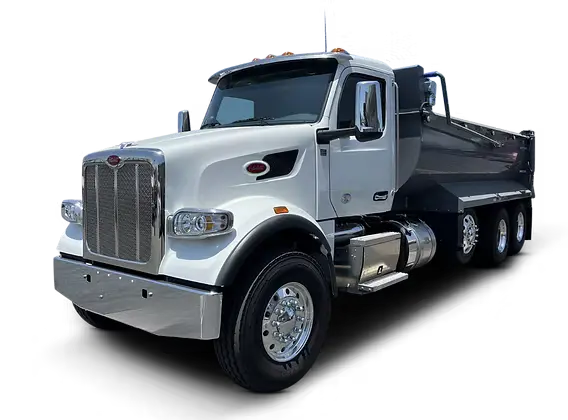
Dump truck raising its bed to unload gravel — Maine Dump Trucking Insurance from Truck Guard Insurance

Almost every state weight code is a variation on the same federal shape. Maine’s is too, up to a point — and then it does three things that have no counterpart elsewhere in the country. It authorizes Canadian gross vehicle weights on named streets in named towns. It writes a metric length limit into US state statute. And it defines a trailer configuration, the B-train double, that most legislatures never mention at all.

None of that is a general permission. The border allowances at 29-A M.R.S. §2354-C attach to three specific routes and two specific configurations, and the statute is careful to say that every other Maine limit continues to apply on them. For an aggregate hauler running pit-to-plant or plant-to-site work anywhere else in Maine, the operative material is a different set of sections entirely: a maximum operational weight in §2352, an axle schedule in §2353, and a commodity tolerance in §2357 that names dump trucks and quarry ore outright.

That last point is worth stating plainly, because it is easy to read Maine the wrong way round. Maine does not make an aggregate hauler buy relief. It grants a weight tolerance on the commodity and the haul leg, with no application, no fee and no permit — provided the truck is carrying the listed material and is registered for at least the legal weight of its own configuration. The sections below are read from the authenticated Chapter 21 text published by the Maine Revisor of Statutes, which carries all 39 sections of the chapter in one document.

Hauling aggregate in Maine, or running to the Canadian line? Tell us which routes the trucks actually work and what they are registered for — in Maine those two answers decide the weight regime before any permit does.

Start a Maine quote

Three border streets carry weights no other Maine road allows

29-A M.R.S. §2354-C authorizes the Commissioner of Transportation, in consultation with the Department of Public Safety and the Department of the Secretary of State, to allow certain commercial vehicles at Canadian gross vehicle weight limits to travel inland from the United States-Canada border at three points. The statute does not describe a corridor in the abstract; it names the streets. From the border at Calais the route runs north on U.S. Route 1 to Access Road in Baileyville, east on Access Road to the Woodland Pulp LLC mill or its successor on Main Street, and north on Main Street to the former oriented strand board facility. From the border at Madawaska the route runs directly north or south into the Twin Rivers facility or its successor, or up Bridge Street to Mill Street to reverse direction. From the border at Van Buren it runs on Acadian Way, west to Main Street — also designated Route 1 — then north approximately 2 miles.

Two configurations qualify, and their numbers are the largest legal weights in Maine. A 3-axle truck tractor with a 3-axle semitrailer may run at a gross vehicle weight of 108,900 pounds, with individual distribution maxima of 12,375 pounds on the steering axle, 40,500 pounds on the drive axles and 58,500 pounds on the semitrailer axles — and the paragraph closes the arithmetic itself, providing that “in no case may the total of these values exceed 108,900 pounds.” A 3-axle truck tractor with a semitrailer-semitrailer combination “configured as a B-train double with 8 axles total” may run at 137,700 pounds, with the second semitrailer barred from outweighing the first.

The allowance is credentialed rather than merely permitted. Each qualifying combination must display a credential obtained for a fee from the Secretary of State, and the statute tells the Commissioner of Transportation how to size that fee: it must cover administrative costs, compliance monitoring “and the additional cost of highway damage resulting from the allowance under this section calculated using accepted engineering practices.” That is an unusually explicit statement that the fee is a road-wear charge and not a filing charge, and it is the reason the credential is not transferable in practice to work that never touches the designated route.

Loss of the privilege is administrative and quick. The Commissioner may revoke operating privileges for cause, “including repeatedly exceeding size and weight limits or operating outside the designated route of travel,” and the section adds that “Revocation by the Commissioner of Transportation is considered a final agency action.” For a carrier whose Aroostook or Washington County work depends on these runs, a revocation is a business event rather than a citation, and it belongs in the risk conversation alongside the equipment.

One clause inside §2354-C has already expired and the section gives no outward sign of it. Subsection 5 provides that “After December 31, 2025, the department may not authorize under this section the routes identified in subsection 1 for the travel of commercial vehicles transporting wood” at Canadian weights above the chapter’s limits. That date has passed. The wood allowance on these three routes is spent, while the subsection expressly preserves §2354-D as the route forward — so a wood movement that used to run on §2354-C now has to be proposed as a §2354-D route allowance or run at ordinary Maine weights.

  • Calais to Baileyville — north on U.S. Route 1 to Access Road, east to the mill on Main Street, north to the former oriented strand board facility.
  • Madawaska — directly into the Twin Rivers facility or its successor, or up Bridge Street to Mill Street to reverse direction.
  • Van Buren — on Acadian Way, west to Main Street, then north approximately 2 miles from the border.
  • 108,900 pounds on a 3-axle tractor with a 3-axle semitrailer, distributed 12,375 / 40,500 / 58,500 and capped at the total.
  • 137,700 pounds on an 8-axle B-train double, with the second semitrailer no heavier than the first.

A length limit written in meters, and a trailer class most statutes never name

The sentence that makes §2354-C genuinely unusual is the one that keeps the rest of Maine law switched on. Paragraph (1)(C) provides that “Maine axle weight limits, axle group limits, commodity allowances, maximum dimensions and all other commercial vehicle limits and requirements apply, except that the B-train double overall length limit must be not greater than 82.02 feet, or 25 meters.” A metric measurement inside an American state statute is rare enough to be worth naming for its own sake, and the conversion is not incidental — 82.02 feet is 25 meters expressed to the hundredth of a foot, which is the tell that the limit was drafted to a Canadian specification and then transcribed rather than negotiated.

Maine also defines the vehicle. Subsection 2 provides that “B-train double” means a truck tractor-semitrailer-semitrailer combination in which the two trailing units are connected with a B-train assembly, describes that assembly as a rigid frame extension attached to the rear frame of the first semitrailer allowing a fifth wheel connection point for a second semitrailer, and then states the engineering consequence: the combination “has one less articulation point than the conventional A-dolly-connected truck tractor-semitrailer-trailer combination.” A statutory definition that reaches the articulation count is a definition written by someone who cared about how the unit tracks, and an underwriter reading a Maine border account should treat the configuration as its own object rather than as a long double.

Paragraph (1)(D) adds a limit that overrides the statutory one wherever it is lower: “The manufacturer’s ratings for gross vehicle weight, axle capacity, brake systems and other components for which a manufacturer’s rating is available may not be exceeded.” In practice that means a Maine border credential does not authorize running a unit above its own plate, and the equipment file — not the statute — becomes the binding document. Fleets that run at these weights are carrying loads the ordinary highway auto form was never priced against, and the specification detail matters on the physical damage side as much as anywhere.

There is one trap in the chapter index worth knowing about before anyone plans around it. §2354-E, captioned “Allow certain commercial vehicles with 7-axle configuration to travel from the United States-Canada border to certain points in the State,” appears in correct document order and is not marked repealed. In place of a body it carries a revisor’s note recording that Public Law 2015, chapter 119, section 6 contained a contingent effective provision, that the notification required by the contingency was not received before January 1, 2018, and that “this section never took effect.” There is no 7-axle border allowance in Maine. The caption alone would tell a reader otherwise.

The general mechanism for everything the three named routes do not cover is §2354-D, which lets the Commissioner allow a specified configuration “with any number of axles” otherwise in violation of the chapter to operate on a specified route. It runs on four conditions: a proposal from the entity seeking it; a finding by the department’s chief engineer that the configuration can be operated safely on that route; a finding that the ways and bridges “can withstand, or can be improved and maintained to withstand” it; and satisfactory assurance that at least 50% of the cost of any infrastructure assessment and at least 50% of the cost of any necessary improvements will be provided by the entity seeking the allowance, with the department free to fund the balance if feasible. Implementing rules are major substantive rules, must ensure that appropriate input from or approval of a municipality, county, or a federally recognized Indian tribe is obtained where the route crosses its ground, and the section excludes the Interstate Highway System outright.

Ten miles of New Hampshire plates, running Maine work

Maine’s other cross-border instrument is domestic, small, and does something most reciprocity provisions are careful not to do. 29-A M.R.S. §156 authorizes the Secretary of State to agree with New Hampshire that buses, taxicabs, trucks, truck tractors, trailers, semitrailers or double-bottoms owned by New Hampshire residents and legally registered there may be operated in Maine “including for purposes of intrastate commerce, within a zone not to exceed 10 miles from the border with that state.” The agreement must give Maine residents substantially equivalent benefits and privileges in New Hampshire.

Read the qualifier carefully, because it is the whole point. Ordinary registration reciprocity relieves an out-of-state plate of registration duties while the vehicle is moving in interstate commerce, and stops the moment the vehicle picks up and delivers between two points inside the host state. Maine’s New Hampshire agreement is authorized to reach intrastate commerce inside a measured band. A New Hampshire-plated tri-axle can lawfully work point-to-point inside that band, which is exactly the geometry of a York County or Oxford County pit that sells across the line.

The band is bilateral, it is measured, and it belongs to one neighbor. Nothing in §156 makes a truck legal elsewhere in Maine because it is legal on the New Hampshire line, and nothing in §2354-C makes a truck legal on the New Hampshire line because it is credentialed at Calais. Maine’s two cross-border regimes are separate instruments pointed at separate borders, and a fleet running both is holding two unrelated authorizations.

Above both sits the ordinary apportionment machinery. §157 authorizes the Secretary of State, in concurrence with the Commissioner of Transportation, to enter reciprocal agreements or plans with another jurisdiction for registration on an apportionment or allocation basis, and expressly authorizes membership in the International Registration Plan. Separately, 29-A M.R.S. §2384 lets the Commissioner of Transportation enter regional overdimensional truck permit agreements whose stated purposes include making permit administration uniform among member jurisdictions and to “Establish and maintain consolidated multistate overdimensional and overweight permits based on rules established under the regional agreements.” That regional apparatus is written for nondivisible interstate movement rather than for aggregate hauling, and a fleet that spends real time in it is being underwritten closer to the oversized and overweight class than to a straight dump account.

We place Maine dump and aggregate accounts, including operations running the designated Canadian-weight border routes and fleets working under the §2357 commodity tolerance.

Get a Maine quote

The tolerance that names dump trucks

29-A M.R.S. §2357 is captioned “Weight tolerance for certain vehicles,” names no commodity in its title, and is the most commercially significant section in the chapter for an aggregate operation. Subsection 1 lists what qualifies. Paragraph (B) reaches “Dump trucks or transit-mix concrete trucks, carrying highway construction materials.” Paragraph (D) reaches “A vehicle loaded with raw ore from the mine or quarry to a place of processing.” Paragraph (A) reaches a vehicle loaded entirely with a list that includes “soil, unconsolidated rock material including limestone,” road salt, manufacturer’s concrete products, solid waste and incinerator ash — and “unconsolidated rock material including limestone” is the statutory phrase that carries crushed stone and gravel.

Note the shape of paragraph (D). It is drafted as a haul leg rather than as a commodity class: the tolerance attaches to the movement from the extraction point to the place of processing. It is available on the pit-to-plant run and it lapses when the same material leaves the plant as finished product on the same truck. An operation whose tickets do not distinguish the two legs cannot show which weights were lawful on which trip, and that is a records problem before it is a legal one.

The tolerance itself is in subsection 2. A qualifying vehicle “is not in violation if its gross vehicle weight does not exceed 110% of the maximum gross vehicle weight established in section 2353, subsection 1” and its maximum axle loads do not exceed 24,200 pounds on a single-axle unit, 46,000 pounds on a tandem-axle unit and 54,000 pounds on a tri-axle unit. Two higher tri-axle figures sit above those: 64,000 pounds on the tri-axle unit of a 4-axle single-unit vehicle hauling forest products, and 64,000 pounds on the same unit of a farm truck registered under §505 hauling potatoes. The forest-products figure is why a Maine fleet that runs both gravel and wood is running two different axle ceilings on the same chassis, and it is why a Maine fleet with a winter wood contract is frequently underwritten alongside log hauling rather than apart from it.

Three limits bound it, and each of them catches a common configuration. Subsection 3: “Notwithstanding subsection 2, the tandem-axle unit limit for a vehicle with a combination of 5 or more axles may not exceed 44,000 pounds” — so the 46,000-pound tandem figure is not available to the five-axle and six-axle combinations most aggregate fleets actually run. Subsection 4: a 6-axle combination of a 3-axle truck tractor and a tri-axle semitrailer may not exceed 100,000 pounds, must span at least 32 feet between extreme axles excluding the steering axle, must be registered for at least 90,000 pounds, and loses 2,000 pounds of permitted gross for each foot the span falls short of 32 feet. Subsection 5: the tolerances apply only while the vehicle “Is actually transporting the listed commodities” and “Is registered for at least the maximum legal weight for its configuration allowed under section 2353.”

That last condition is the one that quietly disqualifies fleets. A commodity tolerance in Maine cannot be banked by an under-registered truck. An operator who registered at a lower gross weight to save on the annual fee has, by that act, given up the tolerance the commodity would otherwise have earned — and the saving is measured in a few hundred dollars against a tolerance measured in thousands of pounds.

  • Qualifying by vehicle — dump trucks or transit-mix concrete trucks carrying highway construction materials (§2357(1)(B)).
  • Qualifying by haul leg — raw ore moving from the mine or quarry to a place of processing (§2357(1)(D)).
  • Qualifying by material — soil, unconsolidated rock material including limestone, road salt, manufacturer’s concrete products, solid waste or incinerator ash (§2357(1)(A)).
  • The tolerance — 110% of the §2353(1) gross, with 24,200 single, 46,000 tandem and 54,000 tri-axle.
  • The five-axle carve-back — 44,000 pounds on the tandem unit of any combination of 5 or more axles (§2357(3)).

The ceiling above the ceiling, and a tolerance measured against your own plate

Maine states an absolute operational ceiling before it states any schedule. 29-A M.R.S. §2352 opens “Except as allowed by specific exception in section 2382, a vehicle may not be operated on a public way if the weight exceeds” and then names four independent ceilings, each violated on its own terms: a gross vehicle weight of 100,000 pounds; “Registered weight with a tolerance of 500 pounds or 2 1/2% over the registered weight, whichever is greater”; the weight limits on axle configurations; and the axle weight limit provided in the subchapter. The 108,900 and 137,700-pound border figures are express statutory departures from that 100,000-pound number, not from the federal 80,000-pound one.

The registered-weight limb is a Maine peculiarity worth understanding operationally. It means a truck can be overweight in Maine without being overweight on any axle or any gross figure — overweight, that is, against its own registration. The greater-of formulation puts the crossover at 20,000 pounds of registered weight, above which the 2.5% figure governs and the 500-pound floor stops doing any work. A fleet that registers close to its working weight is buying a proportionally larger margin than one that registers at exactly the weight it hauls.

The schedule itself is §2353. Gross limits by configuration run 34,000 pounds for a 2-axle vehicle, 54,000 for a 3-axle vehicle or combination, 69,000 for a 4-axle vehicle or combination and for single-unit vehicles of 5 or more axles, 80,000 for combination vehicles with 5 or more axles, and 100,000 for a combination of 3-axle truck tractor and tri-axle semitrailer. Axle limits under subsection 4 are 22,400 pounds on a single-axle unit, 38,000 on a tandem-axle unit and 48,000 on a tri-axle unit — a named tri-axle class that many states never define, and a tandem 4,000 pounds above the federal figure.

Maine then adds distribution rules inside the groups, which is where multi-axle dump equipment tends to fail rather than on the totals. A single axle of a tandem-axle unit may not support more than 60% of the total weight supported by that unit, unless neither axle exceeds the weight legally allowed on a single-axle unit. A single axle of a tri-axle unit may not support more than 40% of the total supported by that unit. And the maximum gross weight of a vehicle or axle may not be increased by adding an axle unless the added axle supports at least 50% of the weight its addition permits.

Subsection 2 applies a spacing reduction that the bridge formula does not: a four-axle combination’s maximum is reduced by 1,000 pounds for each foot the distance between the centers of the extreme axles, excluding the steering axle, is less than 18 feet; a five-or-more-axle combination’s is reduced by 2,000 pounds for each foot that distance is less than 24 feet. Subsection 3 then switches the reduction off entirely on the Interstate Highway System. Subsection 5 caps load on the road surface at 600 pounds per inch of tire width by the manufacturer’s rating, with exceptions for potato harvest farm trucks and for vehicles running under an overweight permit issued pursuant to §2381.

Penalties escalate on a percentage rather than a poundage. §2361-A provides that operating a vehicle exceeding the maximum allowable gross vehicle weight by 20% or more is an aggravated gross weight violation, carrying the fine established in §2360(3). A single overloaded trip is a citation; a loading practice that habitually runs a fifth over is a different exposure, and it shows up on a loss run long before it shows up on a schedule.

Deep winter waives the fine; the thaw is posted, not scheduled

Maine’s only statutory seasonal window runs in the opposite direction from what most operators expect. 29-A M.R.S. §2360-A, captioned “Exception to axle fines during the midwinter season,” provides that “The fine is waived and the Violation Summons and Complaint is not issued for violations of axle and axle group weight limits or tolerances provided by sections 2352, 2353, 2354, 2357, 2364 and 2365 for vehicles traveling during the months of January and February.” The legislature’s reasoning is visible in the instrument: in deep winter the ground is frozen and carries load, so Maine relieves enforcement rather than tightening it.

Two exceptions bound the waiver and they stack in a stated order. It does not apply to vehicles traveling on the Interstate Highway System, “including the portion of the Maine Turnpike designated Interstate 95 and that portion of Interstate 95 from the southern terminus of the Maine Turnpike to the New Hampshire state line.” And it does not apply to “Vehicles traveling on ways restricted under the provisions of section 2395” — so a posted road overrides the midwinter waiver rather than the other way round. The waiver also reaches only axle and axle-group limits. Gross weight is untouched by it.

The restriction season is the thaw, and Maine handles the thaw by posting rather than by statute. §2395 lets the Department of Transportation restrict the weight or passage of any vehicle over any way when, in its judgment, such passage would be unsafe or likely to cause excessive damage, and lets it designate state and state aid highways and bridges over which restrictions on gross weight, speed, operation and equipment apply “during periods of the year determined by the Department.” County commissioners and municipal officers may designate other ways and impose similar restrictions within their jurisdictions. The restriction takes effect physically: “A notice specifying the designated sections of a public way, the periods of closing and prescribed restrictions or exclusions must be conspicuously posted at each end of the public way requiring special protection.”

There is no percentage reduction and no calendar range anywhere in the chapter — read at all 39 of its 39 sections, Chapter 21 contains no seasonal weight schedule at all. Two carve-outs travel through the posting rather than around it: a vehicle delivering home heating fuel or organic animal bedding material operating under a Department permit “may travel over any county or town way without a specific municipal or county permit,” with the municipality free to impose additional restrictions but barred from requiring a permit for them; and, during a drought emergency declared by the Governor, a vehicle transporting well-drilling equipment may travel a county or municipal way without a specific county or municipal permit on the conditions §2395(4-A) states, including advance notice to local officials. Aggregate is not among the commodities that travel through a posting.

The penalty is drafted to remove judicial discretion: a violation of §2395 “is a traffic infraction punishable by a fine, which may not be suspended, of not less than $250.” Municipal officers hold the same enforcement power as the State Police for this section within their municipalities, and serve without compensation when they exercise it.

Municipal authority over routing is preserved expressly rather than by implication. 29-A M.R.S. §557 provides that the motor carrier registration subchapter “does not restrict the authority of a municipality to enact ordinances to regulate and control the routing, parking, speed or safety of operation of motor vehicles; to exercise general police power over its public ways; or to require compliance with certain conditions before a motor vehicle is operated within that municipality.” Against that, §2388(3) supplies review: an appeal in writing may be taken to the Department of Transportation from an order or decision of a municipal official under sections 2380 to 2382, 2387 and 2395, the Department may hear and decide it summarily, and — the sentence that decides whether an appeal is worth filing mid-season — “An appeal does not suspend the order or decision of the municipal official unless ordered by the Department of Transportation.”

Inside a construction area, the permit rules are different rules

Maine’s construction permit is not in a separate statute. It is subsection 7 of the overlimit permit section, and it works by removing the movement from the section it sits inside. §2382(7) provides that “A permit for a stated period of time may be issued for loads and equipment employed on public way construction projects, United States Government projects or construction of private ways, when within construction areas established by the Department of Transportation.”

Four features separate it from the ordinary permit in the same section. It is scoped to a period of time, where §2382(6) limits an ordinary permit to “the particular vehicle or object to be moved, the trailer or semitrailer hauling the overlimit object and particular ways and bridges.” It reaches construction of private ways, which is what brings subdivision and site-development haul roads inside the regime. Issuance is doubly decentralized: paragraph (A) requires that the permit “Must be procured from the municipal officers for a construction area within that municipality,” while paragraph (C) provides it “May be granted by the Department of Transportation or by the state engineer in charge of the construction contract” — grant authority resting in a named individual officer on a state contract, not only in an agency. And paragraph (D) makes it free and jurisdictionally separate: “For construction areas, carries no fee and does not come within the scope of this section.”

That last phrase does real work. Because the construction-area permit does not come within the scope of §2382, none of the section’s fee provisions touch it — not the single-trip band the Secretary of State may set “at not less than $6, nor more than $30, based on weight, height, length and width,” and not the long-term fee schedule established by rule for permits of up to one year for trucks, truck tractors, semitrailers, heavy duty recovery vehicles and Class A special mobile equipment. The whole regime is bounded by the phrase “construction areas established by the Department of Transportation”: the department draws the area, and inside it the free permit displaces the priced one.

Security for road damage sits alongside it as a condition rather than as a schedule, and Maine gives the contracting agency a choice most states do not. Paragraph (B) provides that a construction permit may require the contractor to be responsible for damage to ways used in the construction areas and may provide for either withholding by the agency contracting the work of final payment under contract, or “The furnishing of a bond by the contractor to guarantee suitable repair or payment of damages,” with suitability or amount determined by the Department of Transportation on state-maintained ways and bridges and otherwise by the municipal officers. More generally, §2388(2) provides that “In granting a permit under this subchapter, an operator may be required to post a satisfactory bond to reimburse for expenses necessarily incurred in repairing damage caused to the way or bridge by the operator’s use” — discretionary, attaching at grant, and reaching every permit issued under the subchapter. The residual penalty in §2388(1) is a traffic infraction carrying a forfeiture of not less than $25 nor more than $1,000 for each offense.

The pit-to-plant problem — a pit on one side of a town road and a plant or stockpile on the other — has its own section, and it runs on a contract rather than a permit. §2383 lets the Department of Transportation (for state aid highways and other ways it maintains), municipal officers (for ways within the municipality) or county commissioners (for county roads in the unorganized territory) authorize the crossing of ways by vehicles or objects of excessive length, width, height or weight “by a contract with the abutting landowners at the designated crossing.” The contract must contain at least a term, “including a term of years, for which the authorization remains valid”; provisions for reimbursement to the authorizing agency for costs of repair or maintenance of the way arising out of the use of the crossing; and other terms and conditions for safety, grading and maintenance.

Subsection 3 is what makes the instrument work commercially: “A contract grants authority to use the crossing to the abutting landowners at the point of crossing and to those using the crossing with the landowner’s permission.” The authorization runs with the land and extends to the pit operator’s contract haulers without a separate instrument for each of them — which is convenient in operation and worth reading carefully in a certificate request, since the party carrying the reimbursement covenant to the authorizing agency is the landowner rather than the trucking company crossing under it.

One adjacent exemption completes the picture. §513(3) exempts from registration entirely any special mobile equipment used exclusively on the closed portion of a public way for the limited purposes of constructing or repairing that public way and transported by another vehicle to and from the project, provided it operates only within the boundaries of a closed way, while requiring the owner or operator to maintain the financial responsibility amounts specified in §1605.

The registration is the gate on everything else

Maine puts registration upstream of the permit and says so in one sentence. §2382(4): “A vehicle granted a permit for excess weight must first be registered for the maximum gross vehicle weight allowed for that vehicle.” Combined with §2357(5)(B)’s registration condition on the commodity tolerance and §2352(2)’s tolerance measured against registered weight, Maine has three separate provisions all keyed to what the truck is registered for. In this state the registration certificate is the operative document, not a formality that follows the equipment.

The annual fee is graduated by gross weight rather than flat, and §504(1) prints the ladder in full. The top of it is where a Maine aggregate fleet lives: $877 for gross weight from 78,001 to 80,000 pounds, $982 from 80,001 to 90,000, $1,026 from 90,001 to 94,000, and $1,234 from 94,001 to 100,000. The schedule’s operative amendment is PL 2025, c. 9, Pt. F, §3 — this is current law rather than an inherited table. Three further subsections carry real weight. §504(2) allows a credit of $40 on the original annual registration fee where a motor vehicle registered for a gross weight of 23,001 pounds or more is operated only in the truck tractor-semitrailer configuration, with a truck tractor plate displayed on the front. §504(3) provides that “A registration or license is not required for the use of a truck, trailer or tractor on that part of a way adjoining the premises of the vehicle’s owner.” §504(4) gates the certificate on federal heavy vehicle use tax, barring issuance for a vehicle subject to 26 U.S.C. §4481 until proof of payment is presented. And §504(5) computes a tractor-semitrailer fee on the combined gross weight of the two units rather than on the power unit alone.

The instrument a seasonal hauler actually reaches for is §507, temporary registered gross weight increase. A truck properly base registered in Maine may raise its registered gross vehicle weight on application and fee. Increases “must be issued for at least one month and may not exceed 8 months” and may not extend beyond the expiration of the regular registration. The fee is the difference between the annual fee for the original registration and the annual fee for the desired weight, multiplied by a published percentage: 20% for one month, 30% for two, 40% for three, 50% for four, 60% for five, 70% for six, 75% for seven and 80% for eight. Issuance runs through the Bureau of Motor Vehicles, the Bureau of the State Police, or an agent appointed by the Secretary of State for that specific purpose, and may be issued by facsimile.

Two consequences follow that a Maine operator should price before the season rather than during it. The percentage ladder is regressive on a monthly basis — eight months costs 80% of the differential where one month costs 20% — so a fleet that will run heavy for five months of a construction season is paying materially more per month than one that commits for eight. And the increase does not travel: “The fee is not apportionable, and the temporary registered gross weight increase is valid only in this State or in a jurisdiction not a member of the International Registration Plan.” A fleet based in Maine under the plan can raise its Maine weight seasonally and gets nothing across the New Hampshire or Canadian line for it.

Special mobile equipment has its own ladder at §513. Class A runs under an annual registration priced on gross weight, rising to $712 for 94,001 to 100,000 pounds. Class B is a flat $20, but where the gross weight exceeds 20,000 pounds the registrant must obtain a permit under §2382(5) — and special mobile equipment may be moved unloaded between construction projects and to or from the place it is customarily kept only under that same permit. §513(1) excludes property-conveying vehicles from the definition except for hand tools or parts used with the equipment, and except for “Road construction or maintenance machinery transporting earth on that portion of the highway under construction.”

One dimensional rule reaches into ordinary aggregate work more often than operators expect. §2382(9-A) provides that “A person may not operate a single vehicle or a combination of vehicles of 125 feet or more in length or 16 feet or more in width on a public way unless the vehicle or combination of vehicles is accompanied by a police escort,” and lets the Secretary of State require an escort at lesser dimensions. The Bureau of State Police must provide an escort when a permittee requests one; a county sheriff or municipal police department may refuse; and a state police escort is mandatory on the Interstate. Fees are set by the escorting agency to defray cost.

Every figure above is read from the Revisor of Statutes’ own authenticated chapter text, which hedges its own currency in terms and the hedge travels with the numbers: “The text included in this publication reflects changes made through the First Special Session of the 132nd Maine Legislature and is current through October 1, 2025. The text is subject to change without notice. It is a version that has not been officially certified by the Secretary of State.”

What a Maine dump and aggregate submission should show

Because Maine keys relief to registration and to commodity rather than to a purchased permit, the underwriting questions are about what the trucks are registered for and where the material actually moves.

  • Registered gross weight per power unit, since §2352(2), §2357(5)(B) and §2382(4) each condition something on it, and an under-registered truck forfeits the commodity tolerance it would otherwise earn.
  • Whether §507 temporary increases are used, for how many months, and whether the fleet is base registered under the International Registration Plan — the increase is not apportionable and is valid only in Maine.
  • The commodity and leg mix, separating raw ore moving from mine or quarry to processing from finished product leaving the plant, because §2357 attaches to the first and not the second.
  • Axle configuration against the §2357 carve-backs, particularly whether any combination runs 5 or more axles, which caps the tandem unit at 44,000 pounds regardless of commodity.
  • Whether any unit runs the §2354-C border routes, which configuration it runs, and whether the Secretary of State credential is current — revocation there is a final agency action, not a citation.
  • Extreme-axle spacing on any 6-axle 3+3 combination, since §2357(4) requires 32 feet excluding the steering axle and takes 2,000 pounds of gross for each foot short of it.
  • Posted-road exposure by town and county under §2395, since a posting also switches off the §2360-A midwinter fine waiver on that way.
  • Any §2383 crossing contract covering a pit-to-plant road crossing, its term of years, and who carries the repair-reimbursement covenant to the authorizing agency.
  • What happens with the wheels stopped — loading at the face, working a stockpile, backing at a plant — since that work answers to general liability rather than to the auto liability form, and Maine’s crossing contracts and construction areas put a great deal of a season there.

Coverage lines a Maine dump and aggregate account usually carries

The state minimum is a licensing threshold. The program an operator actually needs is built from these lines:

  • Trucking Auto Liability — Primary liability coverage for bodily injury and property damage caused by your truck while under dispatch.
  • Physical Damage — Collision and comprehensive coverage for the tractor, trailer, and attached equipment you own or finance.
  • Motor Truck Cargo — Coverage for the freight you haul against loss or damage in transit.
  • Trailer Interchange — Coverage for non-owned trailers you pull under written interchange agreements.
  • General Liability — Coverage for premises and operations liability away from the truck — terminal yards, customer docks, and non-driving exposures.
  • Workers Compensation — Statutory coverage for driver and yard-employee injury, structured for trucking payrolls and interstate operations.
  • Non-Trucking (Bobtail) Auto Liability — Liability coverage for the tractor when operated off-dispatch — bobtailing home or running personal errands.
  • Pollution Liability — Coverage for cargo-related pollution events and upset/overturn spills not covered by standard auto liability.

Why Truck Guard Insurance for a Maine dump and aggregate account

We write dump and aggregate hauling as a named class rather than as an exception to general trucking, and we read each account against the weight and permit regime of the state it operates in. For a Maine operator that means starting from what the trucks are actually licensed and configured to carry, sizing physical damage to bodies and hoists rather than to a chassis value, and treating pit, stockpile and job-site work as its own exposure rather than an extension of the highway auto form.

If the operation also runs freight under separate authority, the Maine trucking insurance page covers the state’s broader motor carrier picture, and the dump trucking insurance page covers the class mechanics that apply wherever the operator runs.

Maine dump trucking insurance questions

Does Maine grant a weight tolerance for hauling aggregate?

Yes, and it names the vehicle. 29-A M.R.S. §2357 gives a weight tolerance to dump trucks and transit-mix concrete trucks carrying highway construction materials, to a vehicle loaded with raw ore moving from the mine or quarry to a place of processing, and to loads of soil and unconsolidated rock material including limestone. A qualifying vehicle is not in violation at up to 110% of the §2353(1) gross, with 24,200 pounds on a single-axle unit, 46,000 on a tandem-axle unit and 54,000 on a tri-axle unit. There is no application and no fee, but the vehicle must actually be carrying the listed commodity and must be registered for at least the maximum legal weight for its configuration.

What are the Canadian weights on the border routes, and who can use them?

29-A M.R.S. §2354-C allows two configurations on three named routes running inland from the border at Calais, Madawaska and Van Buren: a 3-axle truck tractor with a 3-axle semitrailer at 108,900 pounds gross, distributed no more than 12,375 pounds on the steering axle, 40,500 on the drive axles and 58,500 on the semitrailer axles; and a 3-axle truck tractor with a semitrailer-semitrailer combination configured as a B-train double with 8 axles total at 137,700 pounds. Each combination must display a credential obtained for a fee from the Secretary of State, and every other Maine limit continues to apply on those routes.

Is there a 7-axle Canadian border allowance in Maine?

No. 29-A M.R.S. §2354-E is captioned for exactly that and appears in the chapter in normal document order without a repealed marking, but in place of a body it carries a revisor’s note stating that the contingent effective provision in Public Law 2015, chapter 119, section 6 was never satisfied and that the section never took effect. Reading the caption alone would suggest a live allowance that has never been law.

Does Maine post a spring weight restriction on a published schedule?

No. Across all 39 sections of 29-A Chapter 21 there is no seasonal weight schedule, no percentage reduction and no calendar window for restrictions. Under §2395 the Department of Transportation designates ways over which restrictions apply during periods of the year it determines, and the restriction takes effect by a notice conspicuously posted at each end of the way. The only statutory date window in the chapter runs the other way: §2360-A waives axle and axle-group fines during January and February, except on the Interstate Highway System and except on ways restricted under §2395.

Why does my Maine registration keep coming up in weight questions?

Because three separate provisions key off it. §2352(2) makes registered weight itself an operational ceiling, with a tolerance of 500 pounds or 2.5% over it, whichever is greater. §2357(5)(B) makes the commodity tolerance available only to a vehicle registered for at least the maximum legal weight for its configuration. And §2382(4) requires that a vehicle granted an excess-weight permit first be registered for the maximum gross vehicle weight allowed for that vehicle. A truck registered below its working weight loses relief in all three places at once.

Can a New Hampshire truck run point-to-point work inside Maine?

Within a measured band, yes. 29-A M.R.S. §156 authorizes the Secretary of State to agree with New Hampshire that trucks, truck tractors, trailers, semitrailers or double-bottoms owned by New Hampshire residents and registered there may operate in Maine, including for purposes of intrastate commerce, within a zone not to exceed 10 miles from the border with that state, on substantially equivalent reciprocal terms for Maine residents. That is a bilateral arrangement with one neighboring state inside a stated distance, and it says nothing about any other border or any other state.

What does an overlimit permit cost in Maine, and who issues it?

The Secretary of State issues it, acting under guidelines and advice of the Commissioner of Transportation, rather than the transportation department. Under §2382(2) the Secretary of State may set the single-trip fee at not less than $6 nor more than $30 based on weight, height, length and width, and may implement by rule the fees set by the Commissioner for multiple-trip and long-term overweight permits; long-term permits under §2382(5) run up to one year with the fee schedule established by rule. County commissioners and municipal officers may grant permits for a reasonable fee for travel over ways they maintain. A permit for loads and equipment inside a Department-established construction area carries no fee at all.

How much can a Maine overload cost beyond the ticket?

The exposure scales with the percentage rather than the poundage. §2361-A makes operation exceeding the maximum allowable gross vehicle weight by 20% or more an aggravated gross weight violation carrying the fine established in §2360(3). Separately, a violation of the posted-road section carries a fine that may not be suspended of not less than $250 under §2395(7), the general subchapter penalty in §2388(1) runs from $25 to $1,000 per offense, and §2388(2) lets the issuing authority require a bond at the time a permit is granted to reimburse the cost of repairing damage caused to the way or bridge.

Sources

Every figure on this page was read at the source below on August 11, 2026, with the effective date of the version read. Treat each as current as of that date rather than as permanent.

Get a Maine dump trucking insurance quote

Send the declared or registered weights alongside the axle configurations, and tell us where the material moves from. We will size the program against the work the trucks actually do rather than against a statutory floor.

Start a quote Call 317-942-0549