Where the state limits stop, and the industry that got a higher one
NRS 484D.660(1) contains the federal-funding carve-out that most states carry in some form: the provisions of NRS 484D.635, 484D.640 and 484D.645 do not apply to any highway that is part of the Federal-Aid Primary System, Federal-Aid Urban System, Federal-Aid Secondary System or Interstate System if their application would prevent Nevada from receiving federal highway funds under section 127 of Title 23, U.S.C. Subsection (2) then lets the Department, and the governing bodies of cities and counties for roads under their jurisdiction, fix a reduced maximum weight by proper notice after determining that conforming vehicles are likely to cause substantial stress to a highway, road, street or structure.
The comparison worth drawing is with NRS 484D.640, because it shows what a Nevada industry-specific weight allowance actually looks like when the legislature grants one. A vehicle used by a licensed hauler of garbage and refuse may run 22,000 pounds on a single axle and 40,000 pounds on a tandem axle — above the 20,000 and 34,000 that NRS 484D.635 sets for everyone else — provided it stays off the designated interstate system, where subsection (2) puts it back to 20,000, 34,000 and the bridge formula.
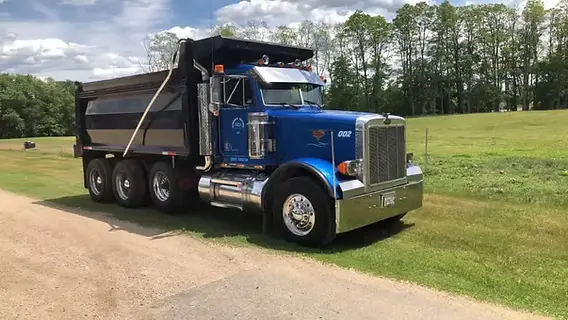
Dump and aggregate equipment has no counterpart provision. Nevada demonstrably knows how to write an axle-weight uplift for a named industry, and it wrote one for refuse collection rather than for construction hauling. A Nevada dump operator runs on the general limits, and the material difference from a refuse fleet on the same street is 2,000 pounds on a single axle and 6,000 on a tandem.
Overweight movements that genuinely need relief run through NRS 484D.685(2), which lets the Department and local governing bodies authorize an applicant to operate a vehicle, combination, special mobile equipment or load exceeding the legal maximum on highways under the granting authority’s jurisdiction. A Nevada operator reaching for it has left routine bulk hauling behind; the exposure it creates belongs to oversized and overweight work and should be underwritten as such.