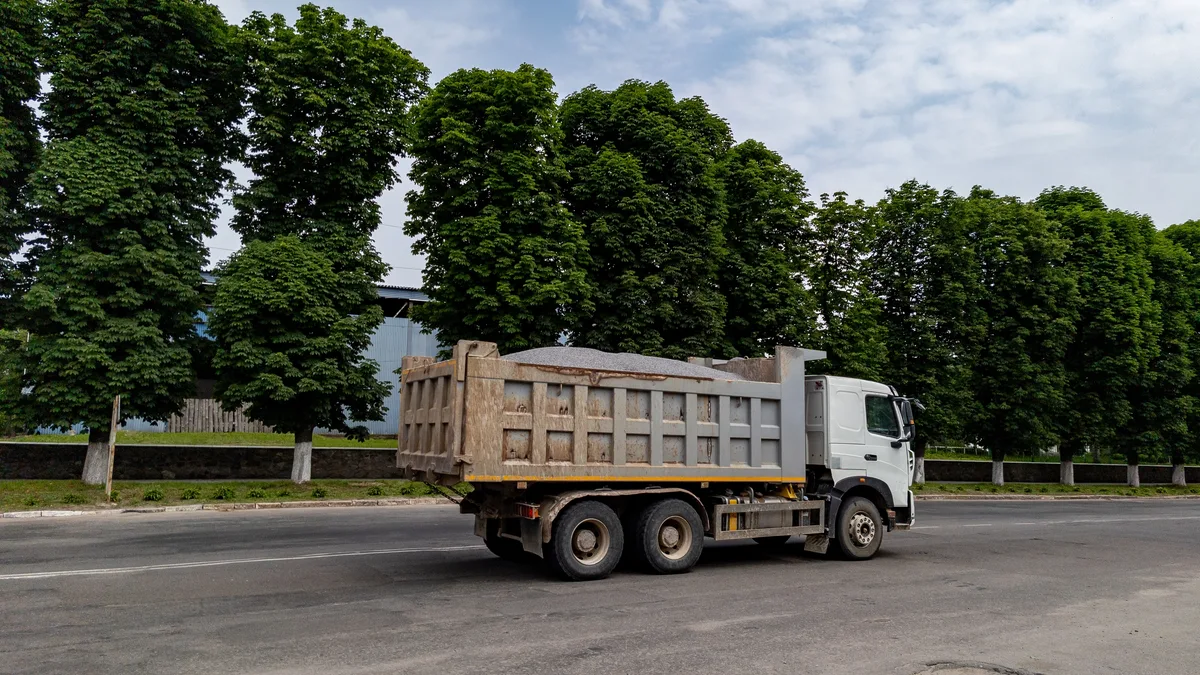
North Carolina owns the dirt its aggregate moves on
The context that makes the rest of the statute make sense is a fact about ownership. Per North Carolina Official State Mileages, published by the NCDOT Operations Program Management Unit and stamped updated 7/28/2026, the state contained 109,286.90 public road miles in 2025, of which 80,662.16 were state maintained. Of those state-maintained miles, 65,450.43 were secondary routes. Secondary roads are the overwhelming bulk of what North Carolina maintains, and the document footnotes that state-maintained mileage includes both primary and secondary routes, with primary comprising Interstate, Business Interstate, US and NC routes.
The unpaved picture is sharper still. NCDOT’s 2024 Highway and Road Mileage, published June 2026, reports 3,930 unpaved miles across all state systems at the end of 2024, of which 3,825 were non-municipal state secondary roads and only 12 were primary. North Carolina’s unpaved network is, to three figures, entirely its secondary system — and that is the network a dump truck delivering fill to a rural site is actually driving on.
The weight statute is built around that fact. Section 20-118(a)(5) defines a light-traffic road as any highway on the State Highway System, excepting routes designated I, US or NC, posted by the Department of Transportation to limit the axle weight below the statutory limits. Section 20-118(b)(4) gives the Department authority to designate such roads “when in the opinion of the Department of Transportation, the road is inadequate to carry and will be injuriously affected by vehicles using the road carrying the maximum axle weight,” and requires that all such roads be conspicuously posted with the maximum axle weight displayed on proper signs.
The posting power comes with a second power layered on top of it. Under § 20-118(d), the Department may abrogate the exceptions in subdivisions (c)(4) and (c)(5) as applied to any light-traffic road upon determining that undue damage is resulting from the exempted vehicles, and where it does so must post the road to indicate no exemptions. The (c)(5) list of commodities that escape light-traffic limits runs to seafood, farm crops, forest products, livestock, recyclables, garbage, treated sludge, apples, Christmas trees and farm inputs. Aggregate is not on it, so a posted light-traffic road is simply a lower axle limit for a dump truck, with no commodity relief behind it.