Motor carrier classes by state

Oregon dump trucking insurance for aggregate and construction haulers

Oregon wrote a tax election for exactly one kind of truck doing exactly one kind of work. ORS 825.480 (4)(a) names the vehicle — a motor vehicle equipped with a dump body — then names the commodity, then names where the load has to be coming from. Almost nothing else in American motor carrier taxation is that specific, and it is the first thing to understand about running aggregate here.

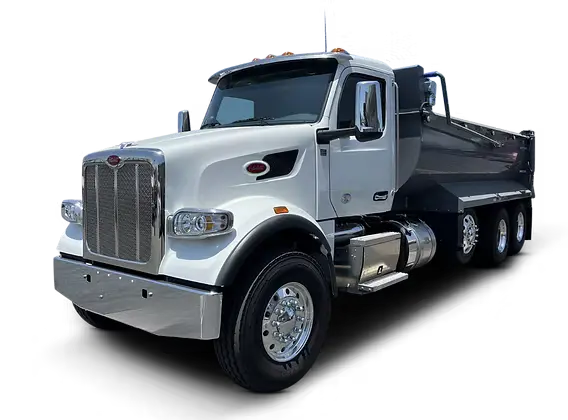
Dump truck raising its bed to unload gravel — Oregon Dump Trucking Insurance from Truck Guard Insurance

Oregon does not tax heavy trucks on diesel. It taxes them on weight and distance, under the weight-mile tax in ORS 825.474, which multiplies the miles a carrier runs in Oregon by a rate keyed to the combined weight it has declared. Every load, empty or full, is a metered event.

For a handful of commodities the legislature decided that metering was the wrong instrument, and it built flat annual alternatives. One of those alternatives belongs to the dump truck. Under ORS 825.480 (4)(a), carriers operating motor vehicles equipped with dump bodies and used in the transportation of “sand, gravel, rock, dirt, debris, cinders, asphaltic concrete mix, metallic ores and concentrates or raw nonmetallic products, whether crushed or otherwise, moving from mines, pits or quarries” may pay an annual fee computed on declared combined weight in lieu of the mileage tax.

Three conditions have to hold at once: the body, the commodity and the origin. A dump truck hauling the right rock from the wrong place is not in the subsection, and neither is a flat-bodied unit hauling the right rock from the right quarry. That is a narrower gate than most commodity elections in American trucking law, and it makes the origin of a load a tax fact rather than a dispatch detail.

The commercial consequence is that an Oregon aggregate hauler chooses a tax regime before it chooses a route. High-mileage pit work is priced very differently under a flat annual fee than under a per-mile rate, and the choice is made once, in advance, and locked for the calendar year.

Electing the flat fee on an Oregon dump fleet? Send the declared combined weights and the origin mix — under ORS 825.480 (4)(a) the pit is part of what qualifies the vehicle.

Start a Oregon quote

One subsection names the body, the commodity and the origin

ORS 825.480 is titled “Substitute taxes for certain vehicles,” and subsection (4)(a) is the aggregate hauler’s. It provides that in lieu of other fees under ORS 825.474, carriers engaged in the operation of motor vehicles equipped with dump bodies and used in the transportation of the listed materials moving from mines, pits or quarries may pay annual fees computed at a stated rate for each one hundred pounds of declared combined weight. The printed rate in the 2025 Edition of the Oregon Revised Statutes is $11.50 for each 100 pounds of declared combined weight, and it carries a live caution from the Oregon Revised Statutes editor: “825.480 is amended by Enrolled House Bill 3991 (2025 special session). As of the date of publication of the 2025 Edition of the Oregon Revised Statutes, Enrolled House Bill 3991 (2025 special session) is subject to potential referendum petitions that may be filed with the Secretary of State as provided in Article IV, section 1, of the Oregon Constitution. The full text of Enrolled House Bill 3991 (2025 special session) is set forth following 801.610.”

Take that note at face value rather than around it. The mechanism in subsection (4)(a) — a flat annual fee on declared combined weight, elected in place of the mileage tax, for dump-bodied vehicles hauling pit and quarry material — is stable and is what an operator plans against. The number attached to that mechanism is the part the note is about.

Payment is annual on its face but monthly in practice. Subsection (2) allows the annual fees in subsections (1), (4) and (5) to be paid monthly, and then imposes a lock: a carrier electing to pay under that method may not change the election during the same calendar year in which it is made. The carrier may be relieved of the payment due for any month in which a vehicle is not operated, but it must report on all vehicles on the annual fee basis every month, including any vehicle that did not turn a wheel. Reports and payment are due on or before the tenth of each month for the preceding month’s operations, which is an earlier deadline than the last-day-of-month rhythm ORS 825.490 sets for mileage-tax filers.

There is one escape valve inside the election. Subsection (4)(b) lets a carrier that has elected the flat fee choose, as to vehicles otherwise exempt from taxation, to be taxed on the mileage basis for movements of those empty vehicles over public highways when the movement is for repair, maintenance, servicing, or moving from one exempt highway operation to another. Deadhead miles between exempt operations do not have to be swallowed by the flat fee.

  • Sand, gravel, rock, dirt — the core aggregate list.
  • Debris and cinders — which brings demolition and reclamation hauls inside the subsection.
  • Asphaltic concrete mix — plant mix, named in the statute rather than left to interpretation.
  • Metallic ores and concentrates, and raw nonmetallic products, whether crushed or otherwise — the quarry’s output in either state.
  • Moving from mines, pits or quarries — the origin condition that has to hold alongside the body and the commodity.

Set it against the three elections Oregon wrote for everybody else

The dump election is one of four in ORS 825.480, and reading them together is the fastest way to see how Oregon values different kinds of heavy work. Subsection (1)(a) covers carriers operating motor vehicles in the transportation of logs, poles, peeler cores or piling. Subsection (3)(a) covers motor vehicles described in ORS 825.024 — the farm vehicle provision — with a combined weight of less than forty-six thousand pounds operating under a permit issued under ORS 825.102, and it is the only one of the four with a weight ceiling built into it. Subsection (5)(a) covers wood chips, sawdust, barkdust, hog fuel or shavings, and it sits at a conspicuously higher rate than the others, which is what happens when a commodity is light and voluminous and the tax is charged per hundred pounds of declared weight.

Oregon also built a review cycle into the scheme. ORS 825.482 directs the Department of Transportation and the Oregon Transportation Commission to review the flat fee rates established under ORS 825.480 in each even-numbered year and to recommend any adjustments they deem appropriate to the next odd-numbered year regular session. The flat fees are therefore designed to be revisited on a two-year cadence rather than left to drift, which is a reason to treat a rate as a current-year input rather than a fixed cost of the business.

What the election is replacing, and why the shape of it matters

ORS 825.474 assesses a tax for the use of the highways against every carrier, applied to each motor vehicle on the basis of the declared combined weight, in accordance with the weight group tax rate tables set out in ORS 825.476. The tax is computed by multiplying the extreme mileage of travel in Oregon by the appropriate weight group rate. Two tables do the work. Table A applies to vehicles not issued an annual variance permit under ORS 818.200 (1)(a) to (c) to operate above eighty thousand pounds combined, and runs in two-thousand-pound bands. Table B applies to vehicles issued or required to obtain such a permit, and it is the more interesting of the two for a heavy aggregate combination: it prices each weight band by the number of axles, in columns for five, six, seven, eight, and nine or more axles, and the rate falls as the axle count rises within a band.

That axle-count structure is the reason a heavy Oregon combination is engineered the way it is. Under Table B a carrier that spreads the same declared combined weight over more axles pays a lower rate per mile for it, so axles are not merely a legal-weight question in Oregon — they are a running-cost question, every mile, for every mileage-tax filer.

The declared combined weight itself is not a guess. ORS 825.474 (3)(c) makes it the combined weight declared in the application for authority under ORS 825.100, subject to audit and approval by the Department of Transportation. Above the tables, ORS 825.474 (3)(d) subjects vehicles exceeding the annual variance permit weight limits to the road use assessment fee imposed under ORS 818.225 for the entire vehicle weight, less the fee for the maximum weight the annual permit allows.

We place Oregon dump and aggregate accounts, including carriers on the ORS 825.480 flat fee election and heavy combinations registered toward the 105,500-pound ceiling.

Get a Oregon quote

Three tables, and a vehicle has to survive the one that binds hardest

Oregon’s legal weight scheme in ORS 818.010 is not one limit with exceptions. It is three separate tables, and a loaded weight that exceeds the maximum allowable weight determined by any of them exceeds the maximum weight limitations for purposes of ORS 818.020.

Table I is the tire table, and it is the one operators forget. Maximum allowable weight is the manufacturer’s side wall tire rating — but not to exceed six hundred pounds — multiplied by the sum of the tire widths, in inches, of the wheels of the axle or tandem axles. An axle’s legal capacity in Oregon is therefore a function of what is molded into the rubber under it, and specifying a narrower tire quietly lowers a legal limit without touching the truck’s rating plate.

Table II is the flat table: a maximum allowable weight stated for any individual wheel, for any axle, and for any tandem axles. Table III is the lowest-of test, and it is where the other two get reconciled. Under Table III the maximum allowable weight is whichever of two methods produces the lower weight — Method A, the sum of the permissible axle, tandem axle or group-of-axles weights as determined under Table I or Table II; or Method B, a distance-and-axle-count table running from four feet to fifty-seven feet or over across two- through seven-or-more-axle groups, with distances measured to the nearest foot and a fractional half-foot rounded up.

The point for a dump operator is that Oregon never lets a favorable reading of one table stand alone. A truck can satisfy the axle table and still be illegal on the tire table, or satisfy both and still be illegal on the spacing method. And a posting displaces the statutory number entirely: ORS 818.040 makes it a separate offense to exceed weight limits indicated by appropriate signs, with the authority to set them running through ORS 810.030.

105,500 pounds belongs to the registration, not to the road

The number an Oregon operator hears most often is one hundred five thousand five hundred pounds, and it is worth being precise about what it governs. Under ORS 826.013 (3), registration weight is established at the time of registration, and whenever the vehicle has been altered or reconstructed, by furnishing a declaration of weight containing a statement of the maximum combined gross weight at which the vehicle will be operated on Oregon highways. The same subsection states that the maximum registration weight for any vehicle required to establish one is one hundred five thousand five hundred pounds, and that vehicles operating above that weight will operate under a variance permit issued under ORS 818.200.

So the figure is a registration ceiling. It is the top of the declaration a carrier may make, and it is the top of Table B in the weight-mile tax tables, which is why the two numbers agree. It is not a statement that any given road, bridge or configuration will carry that weight — those questions are answered by the three tables in ORS 818.010 and by whatever the road is posted at.

The declaration has teeth of its own. ORS 826.013 (2)(b) provides that a vehicle required to establish registration weight violates ORS 803.315 if it is operated on an Oregon highway at a weight in excess of its registration weight, subject to four carve-outs: loads under the forest road provisions of ORS 376.305 to 376.390, loads over one hundred five thousand five hundred pounds combined under an ORS 818.200 variance permit, loads under a registration weight trip permit issued under ORS 803.600, and loads consisting of towed motor vehicles.

No agreement Oregon signs with another state can reach the weight-mile tax

Interstate aggregate work runs on reciprocity, and Oregon has drawn a wall through the middle of it. ORS 826.005 authorizes the Department of Transportation to enter reciprocal registration agreements with other jurisdictions, and subsection (4) then states the boundary flatly: an agreement “shall not provide for any benefit, exemption or privilege with respect to fuel taxes, use fuel taxes, weight mile taxes or any other fees or taxes levied or assessed against the use of highways or use or ownership of vehicles except registration taxes, fees and requirements.”

Registration reciprocity is available. Tax reciprocity is not. An out-of-state carrier that has apportioned its plates and considers itself squared away with Oregon has resolved the registration question and left the weight-mile question entirely open. The same wall is repeated on the tax side of the statute book: ORS 825.550, which authorizes multijurisdictional agreements for the collection of weight-mile taxes, provides in subsection (5) that such an agreement shall not provide for any benefit, exemption or privilege with respect to any other fees or taxes except weight-mile taxes, fees and requirements.

Two more provisions of ORS 826.005 shape how a base is established. Subsection (2) limits agreement benefits to vehicles registered where the registrant legally resides, or, for a commercial vehicle, to a jurisdiction where the enterprise has a place of business to which the vehicle is assigned and from or in which it is most frequently dispatched, garaged, serviced, maintained, operated or otherwise controlled. Subsection (3) reserves to the department the final determination of the proper place of registration when there is a dispute or doubt.

The deposit ODOT can require as a condition of staying in business

Oregon holds one financial lever over motor carriers that most states do not, and it is aimed at tax collection rather than at road damage or at the public. Under ORS 825.506 (1), if the Department of Transportation finds it necessary to insure the collection of fees, taxes, charges or penalties imposed on a carrier under the motor carrier chapter or under ORS 818.225, it may — at the time and as a condition of granting a certificate or permit, of continuing one, or of issuing a motor vehicle registration device — require the carrier to deposit and keep on deposit a sum the department determines proper, taking into account the nature and scope of the carrier’s operations.

The test the department applies is written into the statute, and it is a credit test rather than a safety test. In determining the necessity for a deposit the department shall consider the applicant’s or carrier’s financial capability and responsibility, and the department’s own prior experience, if any, in collecting fees, taxes, charges or penalties from the applicant, the carrier, “or any person having a substantial interest or control, directly or indirectly, in or over the operations conducted or to be conducted under the carrier’s authority.” A new entity assembled by people with a collection history at ODOT is not a clean slate under that sentence.

There is a way out and a way to contest it. Subsection (4) requires the department, within a reasonable time of receiving all payments due after a carrier ceases to be a carrier, to refund or return all deposits and securities remaining to the carrier’s credit and to release the surety on any bond. Subsection (5) gives any applicant or carrier required to make a deposit the right to demand a hearing by proper petition on the necessity of the deposit or the reasonableness of the amount, and it puts the department on a clock: “A hearing shall be granted and held within 10 days after the demand therefor,” with the department’s decision becoming final ten days after service of the order. Separately, ORS 825.507 provides that a bond filed under ORS 825.506 may not be canceled before its expiration until the surety files a notice of cancellation with the department, effective not less than thirty days from receipt, and that no agreement between the parties can avoid that restriction.

Filings, cargo, and a waiver that was written for material like this

Oregon runs its own intrastate insurance filing regime alongside the federal one, and one provision in it is unusually well suited to aggregate. ORS 825.160 conditions a certificate or permit on liability insurance at minimum limits the Department of Transportation prescribes by rule, on terms the department determines necessary for the reasonable indemnification of the applicant’s patrons and of the public against damage and injury for which the applicant may be liable by reason of operating a motor vehicle. In fixing the amount, the department is directed to give due consideration to the character and amount of traffic, the number of persons involved and the degree of danger the proposed operation involves.

Cargo is treated separately, and then relaxed. ORS 825.162 (1) provides that a certificate or permit may not be issued to operate intrastate as a for-hire carrier of freight until the person has cargo insurance in such penal sum as the department deems necessary, binding the assurer for loss of or damage to property carried in, upon or attached to the vehicles, or while in the care or custody of the assured. Subsection (2) then allows the department to waive the cargo requirement “for any carrier whose service is limited to commodities not subject to material damage or loss through ordinary transportation hazards.”

That waiver is worth raising deliberately on an Oregon aggregate account. Pit run, crushed rock and fill are close to the paradigm case of freight that ordinary transportation hazards do not damage, and a carrier whose service is genuinely limited to that material has a statutory basis to ask. It is a waiver of a filing requirement rather than a judgment that no cargo exposure exists — a mixed fleet that also moves equipment or plant mix under time and temperature pressure is not in the same position, and motor truck cargo terms should be set against what the fleet actually hauls rather than against the filing.

Cancellation is regulated on both sides. ORS 825.164 (2) provides that a policy furnished under ORS 825.160 or 825.162 may not be canceled or otherwise terminated before expiration until the entity that executed it files a notice of cancellation with the department, with the cancellation effective not less than thirty days from receipt and no agreement between the parties able to avoid the restriction. Subsection (3) makes the consequence automatic: if a required policy becomes inoperative, the authority under the certificate or permit ceases and is suspended as to affected vehicles until a compliant policy is effective and accepted by the department. ORS 825.166 offers an alternative to a policy altogether, letting the holder file an irrevocable letter of credit or deposit money or specified government obligations equal in amount to the required insurance or bond.

  • Which ORS 825.480 election each unit is on, and whether the origin and commodity conditions in subsection (4)(a) hold for the work actually being dispatched.
  • Declared combined weight per unit, since it drives the flat fee, the mileage tables and the registration weight alike.
  • Axle count on the heavy combinations, which changes the Table B rate per mile as well as the legal weight under ORS 818.010.
  • Any ORS 825.506 deposit or bond on file, and what prompted it — the statute’s test reaches persons with substantial interest or control, not just the entity.
  • Whether a cargo waiver under ORS 825.162 (2) has been sought or granted, and whether the fleet’s actual commodity mix still supports it.

Coverage lines a Oregon dump and aggregate account usually carries

The state minimum is a licensing threshold. The program an operator actually needs is built from these lines:

  • Trucking Auto Liability — Primary liability coverage for bodily injury and property damage caused by your truck while under dispatch.
  • Physical Damage — Collision and comprehensive coverage for the tractor, trailer, and attached equipment you own or finance.
  • Motor Truck Cargo — Coverage for the freight you haul against loss or damage in transit.
  • Trailer Interchange — Coverage for non-owned trailers you pull under written interchange agreements.
  • General Liability — Coverage for premises and operations liability away from the truck — terminal yards, customer docks, and non-driving exposures.
  • Workers Compensation — Statutory coverage for driver and yard-employee injury, structured for trucking payrolls and interstate operations.
  • Non-Trucking (Bobtail) Auto Liability — Liability coverage for the tractor when operated off-dispatch — bobtailing home or running personal errands.
  • Pollution Liability — Coverage for cargo-related pollution events and upset/overturn spills not covered by standard auto liability.

Why Truck Guard Insurance for a Oregon dump and aggregate account

We write dump and aggregate hauling as a named class rather than as an exception to general trucking, and we read each account against the weight and permit regime of the state it operates in. For a Oregon operator that means starting from what the trucks are actually licensed and configured to carry, sizing physical damage to bodies and hoists rather than to a chassis value, and treating pit, stockpile and job-site work as its own exposure rather than an extension of the highway auto form.

If the operation also runs freight under separate authority, the Oregon trucking insurance page covers the state’s broader motor carrier picture, and the dump trucking insurance page covers the class mechanics that apply wherever the operator runs.

Oregon dump trucking insurance questions

Can an Oregon dump truck pay a flat annual fee instead of the weight-mile tax?

Yes, if it fits ORS 825.480 (4)(a). The subsection covers carriers operating motor vehicles equipped with dump bodies used in transporting sand, gravel, rock, dirt, debris, cinders, asphaltic concrete mix, metallic ores and concentrates or raw nonmetallic products, whether crushed or otherwise, moving from mines, pits or quarries. The body, the commodity and the origin all have to hold. The fee is computed on declared combined weight and is paid in lieu of the ORS 825.474 mileage tax.

Is the printed flat fee rate reliable right now?

The mechanism is settled; the rate carries a caution. The 2025 Edition of the Oregon Revised Statutes prints $11.50 for each 100 pounds of declared combined weight and attaches an editor’s note stating that ORS 825.480 is amended by Enrolled House Bill 3991 (2025 special session), and that as of the date of publication that measure “is subject to potential referendum petitions that may be filed with the Secretary of State as provided in Article IV, section 1, of the Oregon Constitution.” Confirm the current figure with the department before pricing a year against it.

How often can a carrier switch between the flat fee and the mileage tax?

Not within the year. ORS 825.480 (2) allows the annual fees to be paid on a monthly basis, but provides that a carrier electing to pay under that method may not change the election during the same calendar year in which it is made. The carrier may be relieved of payment for any month in which a vehicle is not operated, but must file a monthly report on or before the tenth covering every vehicle on the annual fee basis, including vehicles that were not operated.

What is the legal weight limit for a dump combination in Oregon?

There is no single figure. ORS 818.010 sets three tables and a loaded weight that exceeds the maximum determined by any of them is over the limit. Table I is computed from the manufacturer’s side wall tire rating, not to exceed 600 pounds, multiplied by the sum of the tire widths on the axle. Table II states flat maximums by wheel, axle and tandem. Table III takes whichever of two methods yields the lower weight — the sum of Table I or II allowances, or a distance-and-axle-count table.

Does the 105,500-pound figure mean an Oregon truck can carry that much?

It means it can be registered for that much. ORS 826.013 (3) sets 105,500 pounds as the maximum registration weight for a vehicle required to establish one, and directs vehicles operating above it to a variance permit issued under ORS 818.200. Actual legal weight on a given road still comes from the three tables in ORS 818.010 and from any posted limit enforced under ORS 818.040.

Does an apportioned plate settle a carrier’s Oregon weight-mile tax obligation?

No. ORS 826.005 (4) provides that a reciprocal registration agreement shall not grant any benefit, exemption or privilege with respect to fuel taxes, use fuel taxes, weight mile taxes or any other highway-use fees or taxes, except registration taxes, fees and requirements. ORS 825.550 (5) draws the same line from the tax side. Registration reciprocity and weight-mile tax liability are separate questions in Oregon and have to be handled separately.

Why would ODOT require a carrier to post a deposit?

To secure tax collection. ORS 825.506 (1) lets the Department of Transportation require a deposit as a condition of granting or continuing a certificate or permit, or of issuing a registration device, where it finds that necessary to insure collection. The statute directs the department to weigh the applicant’s financial capability and responsibility and the department’s own prior collection experience with the applicant, the carrier, or any person having a substantial interest or control over the operations. Subsection (5) grants a hearing within ten days of a demand.

Can an aggregate hauler avoid the Oregon cargo insurance filing?

It can ask. ORS 825.162 (1) conditions an intrastate for-hire freight certificate or permit on cargo insurance in a penal sum the department deems necessary, and subsection (2) allows the department to waive the requirement for any carrier whose service is limited to commodities not subject to material damage or loss through ordinary transportation hazards. A waiver removes a filing obligation; it does not decide what a mixed fleet actually needs to carry.

Sources

Every figure on this page was read at the source below on August 11, 2026, with the effective date of the version read. Treat each as current as of that date rather than as permanent.

Get a Oregon dump trucking insurance quote

Send the declared or registered weights alongside the axle configurations, and tell us where the material moves from. We will size the program against the work the trucks actually do rather than against a statutory floor.

Start a quote Call 317-942-0549