Motor carrier classes by state

Pennsylvania dump trucking insurance for aggregate and construction haulers

Most states tell an aggregate hauler how heavy he may be. Pennsylvania tells him what the road will cost him. On a posted highway the Commonwealth does not simply refuse the load — it issues a permit, takes security by the linear mile, and makes the permittee financially responsible for the pavement he wears out.

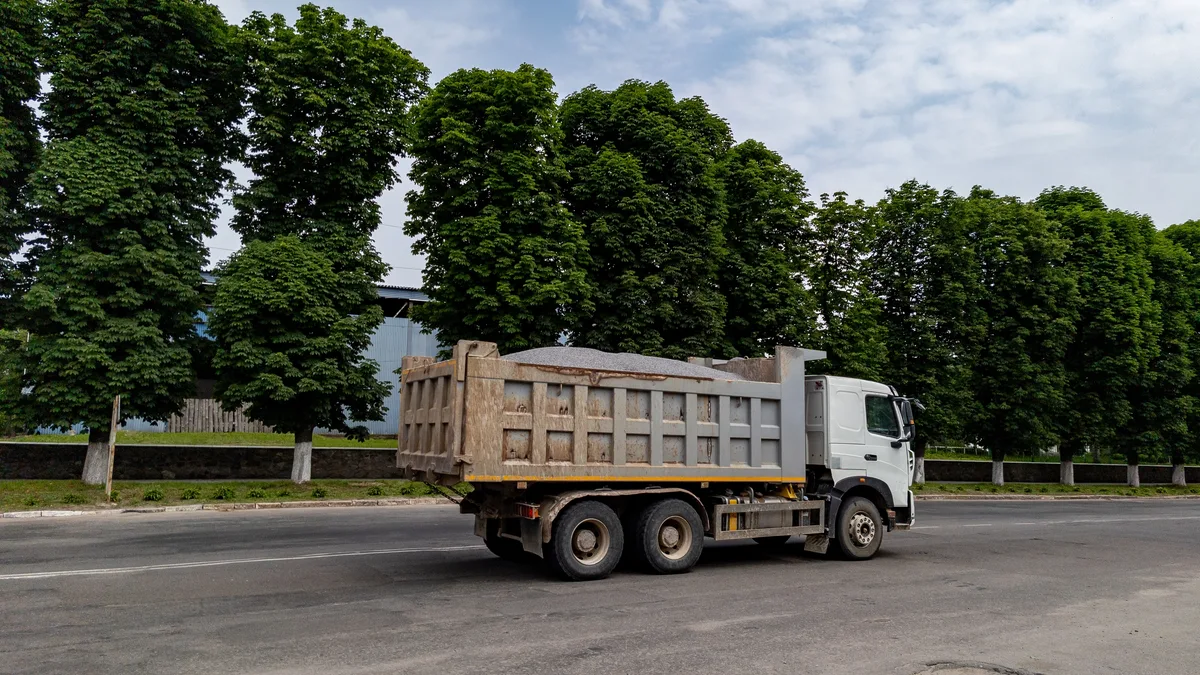
Loaded dump truck on a paved road — Pennsylvania Dump Trucking Insurance from Truck Guard Insurance

Pennsylvania runs two weight systems at once, and only one of them looks like a weight system. The first is the ordinary statutory one: gross ceilings, axle ceilings, registered gross weight, fines calculated per 500 pounds. The second is a bonding and excess-maintenance regime that governs the roads an aggregate operation actually lives on — the posted township and state routes between a pit and a job — and it treats a loaded dump truck less as a vehicle to be limited than as a party to a maintenance contract.

That second system is where the money is. A hauler who wants to run over-posted weight signs an excess-maintenance agreement, posts security calculated on the miles of road he will use, submits to inspections before and after, and accepts that if the damage estimate reaches a defined fraction of the security he may be told to rebuild the road inside a month. None of that is insurance — but all of it lands on the same balance sheet the policy is underwritten against.

The other half is the weight law itself, and Pennsylvania writes it in a shape worth understanding on its own terms. The Commonwealth caps gross weight by counting axles rather than by running a formula, keeps a second ceiling in the registration certificate, and switches on a different rulebook entirely once a truck is registered above a specific figure. Every number below is tied to the statute or code section that sets it, with the amendment or effective date the source itself displays.

Running over-posted weight in Pennsylvania? Send the permit types, the bonded mileage and the excess-maintenance agreements with the loss runs — in this state they describe the exposure as clearly as the equipment list does.

Start a Pennsylvania quote

A posted road is a road you can buy your way onto

The starting point is 75 Pa.C.S. § 4902, most recently amended by Act 91 of July 11, 2022, effective in 60 days. Subsection (a)(1) lets state and local authorities restrict weight on highways under their jurisdiction, but only after an engineering and traffic study concludes the road may be damaged or destroyed otherwise. Subsection (c)(1) then does the thing that shapes the aggregate business: it authorizes those same authorities to issue permits for movement in excess of the restriction, and to require “such agreement or security as they deem necessary to cover the cost of repairs and restoration necessitated by the permitted movement of vehicles.”

The statute also limits the authority’s ability to say no: under the same paragraph, it “shall not refuse to issue a permit with respect to a highway under their jurisdiction if there is no reasonable alternate route available.” A posted road serving the only entrance to a quarry is, in practice, a road the posting authority is obliged to let a bonded hauler use — for a price. The machinery lives in 67 Pa. Code Chapter 189, adopted March 27, 1981, effective March 28, 1981, at 11 Pa.B. 1102. Section 189.1 states its own reach plainly: the chapter governs vehicles exceeding a posted limit and “applies to both State highways and highways under the jurisdiction of local authorities.” One rulebook and one schedule, whether the posting authority is PennDOT or a township.

Section 189.4(b) sets out three permit types, and choosing among them is a commercial decision rather than a clerical one. A Type 1 permit covers one vehicle on a particular posted highway and is valid only when carried in it. A Type 2 permit covers any number of over-posted-weight vehicles driven to or from a common destination, and is issued only where per-vehicle permits are not feasible. A Type 3 permit covers a number of specified highways and is issued only where the posting authority finds damage will be minimal given the limited moves and short-term use anticipated.

What a linear mile costs before the first load moves

Security is the price of admission, and § 189.4(d) states the amounts as flat rates per linear mile rather than as a discretionary estimate. For Type 1 and Type 2 permits the schedule reads: “$6,000 per linear mile for unpaved highways to be maintained at a level consistent with the type of highway,” “$12,500 per linear mile for paved highways to be maintained at a level consistent with the type of highway,” and “$50,000 per linear mile for any highway which the posting authority allows to be maintained below a level consistent with the type of highway.” For a Type 3 permit the figure is not per mile at all — it is “$10,000 for each county or municipality covered by the permit.”

Read the third rate carefully, because it inverts the intuition. The most expensive category is not the best road but the one the posting authority has agreed to let fall below its proper standard — four times the paved rate and more than eight times the unpaved rate. An operator who negotiates a lower maintenance standard buys that concession with a much larger bond. Section 189.4(d)(2) leaves the form of the security to the permittee within limits: a performance bond with surety from a company authorized in the Commonwealth, or at his option a certified or cashier’s check, a bank account, or an irrevocable letter of credit in favor of the posting authority. Each consumes something different — surety line, cash, or bank capacity.

One hedge in the regulation is load-bearing and should travel with the figures. Section 189.4(d)(1)(iii) provides that “the Department will from time to time, but not more often than annually, publish a revised schedule of bonding amounts based on increased or decreased maintenance costs.” The amounts quoted here are the ones the Pennsylvania Code carries in the text of § 189.4; a revised schedule published under that clause would govern a later permit. Confirm the current schedule with the posting authority rather than relying on the codified numbers alone.

The one fee in the section is narrower than it is usually described. Section 189.4(g) provides that the Department “will charge a $15 administrative fee for issuance of each Type 3 permit,” and that local authorities “may charge an administrative fee of no more than $15 for issuance of each Type 3 permit.” It is a Type 3 fee, and it caps what a township may charge at the same figure the Commonwealth charges. Type 1 and Type 2 permits carry no administrative fee under that subsection at all.

  • $6,000 per linear mile — unpaved highway maintained at a level consistent with the type of highway (Type 1 and Type 2).
  • $12,500 per linear mile — paved highway maintained at a level consistent with the type of highway (Type 1 and Type 2).
  • $50,000 per linear mile — any highway the posting authority allows to be maintained below a level consistent with its type.
  • $10,000 per county or municipality covered by a Type 3 permit, plus the $15 administrative fee that applies to Type 3 issuance only.

Self-bonding reaches past the company and into the household

Not every permittee posts cash or surety. Section 189.4(d)(4) allows the posting authority to authorize self-bonding where it determines, on the basis of the permittee’s financial ability, that it is unlikely to be unable to collect a judgment for failure to comply with the maintenance agreement — a solvency test dressed as a permit condition. Subparagraph (i) provides that the posting authority “may require corporate officers and stockholders and their spouses to execute a self-bond, if the financial ability of a corporation is insufficient in itself to justify self-bonding.” Subparagraph (ii) allows liens on real or personal property, or both, to be required as a condition. Subparagraph (iii) requires an applicant seeking Department self-bonding to file Contractor’s Financial Statement, Department Form CS 4300, Part 1, updated annually and within 30 days of any Department request. For a closely held aggregate business — which describes most of them — that is a personal guarantee reaching the owners’ spouses, secured against personal property, refreshed against a financial statement the Department can call for at will.

The regulation also builds in a trigger that converts slow deterioration into an immediate demand. Under § 189.4(d)(3), when the posting authority estimates that damage in excess of normal maintenance constitutes 75% or more of the amount of the security, it “may require the highway to be maintained or reconstructed within 30 days unless the permittee agrees to provide such additional security as the posting authority shall determine.” A permittee three-quarters of the way through his bond is a month away from either a construction crew or a second bond, and the choice is not entirely his.

Where several haulers work the same posted road, § 189.4(e) lets them agree among themselves on relative responsibility for excess maintenance, and directs the posting authority to determine the shares if they cannot. Those provisions apply even where one operator has already signed an agreement and posted security before another applies — so a hauler who bonded a route first can find his share renegotiated when a competitor arrives on the same job.

We place Pennsylvania aggregate and dump accounts, including operators running Chapter 189 posted-road permits and fleets registered across the Class 17 through Class 25 range.

Get a Pennsylvania quote

Four inspections decide who pays for the pavement

The excess-maintenance obligation is settled by inspection, and § 189.4(f) specifies when those inspections happen. Representatives of the posting authority and of the permittee inspect the posted highway on site immediately before issuance of each permit. The road is reinspected on issuance of any new permit, from time to time as the posting authority determines repairs may be required, and on termination of any permit “in order to determine the amount of damage for which the permittee or permittees are responsible.”

Type 3 permits get a before-and-after inspection of each specified highway under § 189.4(f)(3), and § 189.4(f)(4) requires that all Type 1 and Type 2 permittees on a posted highway be notified of every inspection on it, with the right to participate. The costs run to the permittee: § 189.4(f)(5) provides that the posting authority’s inspection costs are paid by the permittee or permittees, and that costs related to a county-wide or municipality-wide Type 3 permit are paid solely by the Type 3 permittee.

The pre-permit inspection record is the operator’s only real defense against being charged for deterioration that predated his first load — a documentary discipline, extending what a contractor already keeps for its general liability file to the haul route.

The local-delivery exemption is written so the pit cannot use it

Posted-road restrictions come with exemptions, and the most valuable of them is local traffic. Under § 4902(a)(2), vehicles making local deliveries or pickups may be exempted from restrictions imposed under subsection (a). Under 67 Pa. Code § 189.3(a), over-posted-weight local traffic may exceed posted limits unless the posting authority determines the vehicles are likely to damage the highway — and a bill of lading or shipping order showing a destination on the posted highway is evidence of that status.

Aggregate is written out of it. Section 4902(a)(5), as amended by Act 91 of 2022, states: “Exemptions for local delivery or pickup may not include traffic going to or coming from a site at which minerals, natural gas or natural resources are developed, harvested or extracted, notwithstanding whether the site is located at a residence, a commercial site or on farmland.” The exclusion follows the site, not the truck, and it does not care that the destination is on the posted road.

Two industries are then written back in by name in the same subsection. Delivery or pickup of forest products to or from permanent processing mills on posted highways “shall be considered local delivery or pickup,” and delivery or pickup of coal to or from permanent coal reprocessing plants likewise counts. Timber gets a carve-back. Coal gets a carve-back. Sand, stone and gravel get neither.

That aggregate falls inside the exclusion is not an inference. 67 Pa. Code § 190.2, amended December 4, 2015, effective December 5, 2015 at 45 Pa.B. 6886, defines “Extract” as “the processes associated with gathering or removal of minerals, wind and other natural resources from the air, surface or subsurface, including, but not limited to, coal, stone, water and related site preparation, construction and onsite stockpiling.” Stone is named. So is site preparation, and so is onsite stockpiling — which puts the quarry yard itself inside the extraction site for this purpose. Section 190.3(a) then removes the shortcut: a hauling activity may be self-certified as local traffic, “but not hauling activity related to natural resource development, harvesting or extraction.”

One conflict on Chapter 190’s currency is unresolved and belongs in the open. The codified Source note on the Chapter 190 table of contents records adoption May 11, 2012, effective May 12, 2012 at 42 Pa.B. 2481, and adds that “under the Vehicle Code, 75 Pa.C.S. § 4902, this Chapter 190 remains in effect until December 31, 2018.” The statute it points at reads, in its current form, that the exemptions and related requirements under § 4902(a)(4) “may remain in existence only until December 31, 2028.” We have found no document that reconciles the two dates. What is not in doubt is the sentence that matters most here: the exclusion of extraction traffic sits in the statute itself, not in Chapter 190, and carries no expiry at all.

Gross weight by axle count, not by formula

Away from the posted roads, the ordinary ceilings sit in 75 Pa.C.S. § 4941, last amended by Act 145 of November 3, 2022, effective in 60 days. Subsection (a) fixes 80,000 pounds as the outer limit and then immediately subordinates it: no combination may exceed 80,000 pounds “or the applicable weight set as forth in subsection (b) or (c), whichever is less.” Subsection (c) is the one an aggregate operator lives under, and it works by counting axles on a single motor vehicle rather than measuring a wheelbase. A two-axle motor vehicle is capped at 38,000 pounds, a three-axle motor vehicle at 58,400 pounds, four-axle and five-axle motor vehicles at 73,280 pounds each, a six-axle at 77,000 and a seven-axle at 80,000. For the straight dump truck that does most Pennsylvania aggregate work, the governing number is a function of how many axles are on the ground — so adding a lift axle to a tri-axle is a jump from 58,400 to 73,280 pounds of legal gross, not a marginal gain. Subsection (b) does the same for combinations, capping a two-axle tractor with a single-axle semitrailer at 58,400 pounds and several common four-axle arrangements at 73,280.

Axle limits come from 75 Pa.C.S. § 4943, last amended by Act 151 of December 21, 1998, effective in 60 days. Subsection (a) caps every axle at the lesser of the manufacturer’s rated axle capacity or the statutory figure — a two-part test that quietly makes the door-jamb data plate a legal document. The steering axle is limited to 20,000 pounds. Every other axle falls under a three-band table keyed to center-to-center spacing between the nearest adjacent axles: under 6 feet, 18,000 and 18,000 pounds; 6 to 8 feet, 18,000 and 22,400; over 8 feet, 22,400 and 22,400.

The band that governs a working dump truck is the first one. Standard tandem and tri-axle spreads sit at or under 6 feet, which puts the operative figure at 18,000 pounds per axle — below the federal single-axle limit, and well below what an operator accustomed to a 34,000-pound tandem expects. Spreading axles buys capacity in Pennsylvania in a way it does not everywhere, and the widest band needs spacing a short-wheelbase dump body rarely has room for.

Registration class is a switch, and 73,280 is where it flips

Pennsylvania keeps a second weight ceiling in the registration certificate. 75 Pa.C.S. § 4942, amended by Act 138 of October 24, 2018, effective in 180 days, provides that no vehicle registered as a truck, a combination or a trailer may be operated with a gross weight in excess of its registered gross weight. A legally loaded truck that is registered light is still in violation, and the registration is the operator’s own declaration.

The registered figure does more than set a ceiling. Section 4943(b)(1) provides that no combination “registered and carrying a gross weight in excess of 73,280 pounds” may exceed 20,000 pounds on any single axle other than the steering axle, or exceed the weight produced by the bridge formula set out in the same paragraph — with the customary allowance that two consecutive pairs of axles may carry 34,000 pounds each where the distance between the first and last axles of those pairs is 36 feet or more. Below that registered figure, the three-band spacing table governs. Above it, a different regime does. Subsection (b)(2) softens the switch in one direction: a tractor registered above 73,280 pounds but operating in a combination grossing 73,280 or less is weighed under the ordinary subsection (a) limits.

The trigger is not an arbitrary poundage. Under 75 Pa.C.S. § 1916, which sets registration classes for trucks and truck tractors by registered gross or combination weight, Class 20 covers 68,001 to 73,280 pounds and Class 21 begins at 73,281. The § 4943(b)(1) switch lands exactly on the boundary between them. Choosing a registration class in Pennsylvania is choosing which axle rulebook the truck is judged under, and the decision is made once a year at a counter rather than at a scale. The dollar figures in the § 1916 table run only through fiscal year 2017-2018, so a current fee is a question for PennDOT; the class boundaries are structural, and they are what matters here.

Two further paragraphs single out registration classes by name. Section 4943(b)(3) provides that “no trucks registered in Classes 17 and 20 shall have an overall gross weight in excess of 21,400 pounds on any tandem axle,” and that “a group of three tandem axles shall not have an overall gross weight in excess of 60,000 pounds.” Class 17 covers 56,001 to 60,000 pounds; Class 20 covers 68,001 to 73,280. Section 4943(b)(5) gives a six-axle combination registered in Class 25 — 79,001 to 80,000 pounds — its own arithmetic where the external bridge is 43 feet and the internal bridge is 32 feet.

The penalties are calculated rather than tariffed, which makes an overload an open-ended number rather than a ticket. Under 75 Pa.C.S. § 4945, amended by Act 166 of December 11, 1986, effective in 60 days, exceeding the § 4941 maximum or the § 4942 registered gross weight — whichever is less — is a summary offense carrying $75 plus $75 for each 500 pounds or part thereof in excess of 3,000 pounds over the limit, doubled where the § 4941(a) gross weight itself is exceeded. Posted roads run on their own scale: § 4902(g)(1) sets a $75 fine for an ordinary restriction violation but $150 plus $150 for each 500 pounds, or part thereof, in excess of 3,000 pounds over the maximum allowable weight where the conviction is for exceeding a posted weight — double the ordinary gross rate, and separate from what the excess-maintenance agreement already obliges the permittee to pay for the road.
Where the bond meets the balance sheet

Pennsylvania’s design puts an unusual amount of an aggregate operator’s risk outside the insurance program and inside contract and credit. The bond is not an insurance product, the excess-maintenance agreement is not a covered liability, and the self-bond signed by an owner and his spouse transfers nowhere — but those instruments consume the same capacity a growing fleet needs for equipment. There is also a sign-posting rule with a defense embedded in it: § 4902(e) requires restriction signs within 25 feet of each end of a restricted bridge or highway portion and bars conviction unless the sign facing the driver’s direction was posted as required, while stating that failure to post the opposite-direction sign or any advance informational sign “shall not constitute a defense.”

What that adds up to on a submission is a short and specific list, and it is not the list an underwriter would build in a state that publishes a seasonal tonnage table. The exposure here is contractual, route-specific and continuous, which is why the paperwork behind a haul route belongs in the file alongside the equipment schedule and the loss runs on any dump and aggregate operation working the Commonwealth.

  • Which haul routes are posted, and under whose authority — Chapter 189 applies identically to state and local roads, so a township posting binds the same way PennDOT’s does.
  • Permit type by route, since Type 1, Type 2 and Type 3 carry different security bases and only Type 3 carries the $15 administrative fee.
  • Bonded mileage and the form the security takes — surety, cash, bank account or letter of credit — because each consumes a different part of the operator’s capacity.
  • Whether any permit is self-bonded, and whether officers, stockholders or their spouses have executed it or granted liens under § 189.4(d)(4).
  • Any road standing near the 75% damage threshold, which puts the permittee 30 days from a repair obligation or a second bond.
  • Registration class per unit, reconciled against axle count and configuration, since the 73,280-pound line in § 4943(b)(1) changes which axle rulebook applies.
  • Pit, stockpile and job-site operations, which § 190.2 treats as part of the extraction site and which sit at the boundary between auto liability and general liability.
  • Body, hoist and tarp values on the schedule, since the axle-count ceilings reward added axles and the physical damage figures often lag the equipment changes made to reach them.

Coverage lines a Pennsylvania dump and aggregate account usually carries

The state minimum is a licensing threshold. The program an operator actually needs is built from these lines:

  • Trucking Auto Liability — Primary liability coverage for bodily injury and property damage caused by your truck while under dispatch.
  • Physical Damage — Collision and comprehensive coverage for the tractor, trailer, and attached equipment you own or finance.
  • Motor Truck Cargo — Coverage for the freight you haul against loss or damage in transit.
  • Trailer Interchange — Coverage for non-owned trailers you pull under written interchange agreements.
  • General Liability — Coverage for premises and operations liability away from the truck — terminal yards, customer docks, and non-driving exposures.
  • Workers Compensation — Statutory coverage for driver and yard-employee injury, structured for trucking payrolls and interstate operations.
  • Non-Trucking (Bobtail) Auto Liability — Liability coverage for the tractor when operated off-dispatch — bobtailing home or running personal errands.
  • Pollution Liability — Coverage for cargo-related pollution events and upset/overturn spills not covered by standard auto liability.

Why Truck Guard Insurance for a Pennsylvania dump and aggregate account

We write dump and aggregate hauling as a named class rather than as an exception to general trucking, and we read each account against the weight and permit regime of the state it operates in. For a Pennsylvania operator that means starting from what the trucks are actually licensed and configured to carry, sizing physical damage to bodies and hoists rather than to a chassis value, and treating pit, stockpile and job-site work as its own exposure rather than an extension of the highway auto form.

If the operation also runs freight under separate authority, the Pennsylvania trucking insurance page covers the state’s broader motor carrier picture, and the dump trucking insurance page covers the class mechanics that apply wherever the operator runs.

Pennsylvania dump trucking insurance questions

How much security does Pennsylvania require to haul over a posted weight limit?

Under 67 Pa. Code § 189.4(d)(1), a Type 1 or Type 2 permit requires $6,000 per linear mile for unpaved highways and $12,500 per linear mile for paved highways maintained at a level consistent with the type of highway, and $50,000 per linear mile for any highway the posting authority allows to be maintained below that level. A Type 3 permit requires $10,000 for each county or municipality covered. The Department may publish a revised schedule not more often than annually, so confirm current figures with the posting authority.

Can a Pennsylvania quarry haul claim the local-delivery exemption?

No. 75 Pa.C.S. § 4902(a)(5), as amended by Act 91 of July 11, 2022, provides that exemptions for local delivery or pickup “may not include traffic going to or coming from a site at which minerals, natural gas or natural resources are developed, harvested or extracted.” 67 Pa. Code § 190.2, effective December 5, 2015, defines “Extract” to include coal, stone and water together with related site preparation and onsite stockpiling. The same subsection writes forest products and coal reprocessing back in by name; aggregate is not written back in.

What is the $15 fee on a Pennsylvania posted-road permit?

It applies to Type 3 permits only. 67 Pa. Code § 189.4(g) provides that the Department will charge a $15 administrative fee for issuance of each Type 3 permit, and that local authorities may charge an administrative fee of no more than $15 for each Type 3 permit. Type 1 and Type 2 permits carry no administrative fee under that subsection. The fee is separate from the security required under § 189.4(d) and from the inspection costs the permittee pays under § 189.4(f)(5).

What is the maximum gross weight for a Pennsylvania tri-axle dump truck?

75 Pa.C.S. § 4941(c), as the section stands after Act 145 of November 3, 2022, caps a three-axle motor vehicle at 58,400 pounds. Four-axle and five-axle motor vehicles are each capped at 73,280 pounds, a six-axle at 77,000 and a seven-axle at 80,000. Pennsylvania sets the ceiling by counting axles on the vehicle rather than applying a formula to its wheelbase, so adding a lift axle changes the legal gross by a step rather than by a margin.

Why does 73,280 pounds keep appearing in Pennsylvania’s weight law?

It is a registration-class boundary that doubles as a rulebook switch. Under 75 Pa.C.S. § 1916, Class 20 runs from 68,001 to 73,280 pounds and Class 21 begins at 73,281. Section 4943(b)(1) provides that a combination registered and carrying a gross weight above 73,280 pounds is governed by a 20,000-pound non-steering single axle limit and the bridge formula, rather than by the three-band spacing table in § 4943(a)(2). The registration decision therefore selects which axle rules apply.

What happens if damage to a bonded Pennsylvania haul road approaches the bond amount?

67 Pa. Code § 189.4(d)(3) provides that when the posting authority estimates damage in excess of normal maintenance at 75% or more of the amount of the security, it may require the highway to be maintained or reconstructed within 30 days unless the permittee agrees to provide such additional security as the posting authority determines. The permittee also pays the posting authority’s inspection costs under § 189.4(f)(5), and a Type 3 permittee pays the whole cost of a county-wide or municipality-wide inspection.

Who can be required to sign a Pennsylvania self-bond?

67 Pa. Code § 189.4(d)(4)(i) provides that the posting authority “may require corporate officers and stockholders and their spouses to execute a self-bond, if the financial ability of a corporation is insufficient in itself to justify self-bonding.” Subparagraph (ii) allows liens on real or personal property to be required as a condition, and subparagraph (iii) requires a permittee seeking Department self-bonding to file Contractor’s Financial Statement, Department Form CS 4300, Part 1, updated annually and within 30 days of any Department request.

Sources

Every figure on this page was read at the source below on August 11, 2026, with the effective date of the version read. Treat each as current as of that date rather than as permanent.

Get a Pennsylvania dump trucking insurance quote

Send the declared or registered weights alongside the axle configurations, and tell us where the material moves from. We will size the program against the work the trucks actually do rather than against a statutory floor.

Start a quote Call 317-942-0549