Motor carrier classes by state

South Carolina dump trucking insurance for aggregate and construction haulers

South Carolina wrote dump trucks into its weight statute by name and released them from the axle spacing table. Then it wrote four words at the head of the subsection — “Except on the interstate highway system” — and every one of those allowances stops at the ramp.

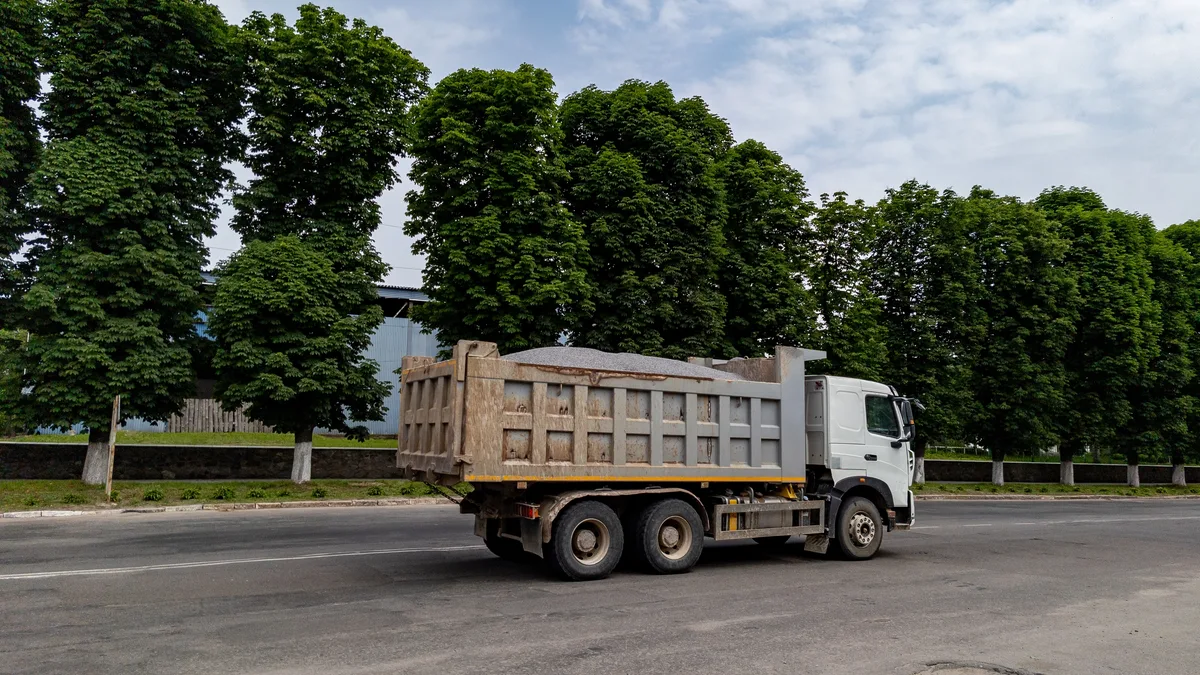
Loaded dump truck on a paved road — South Carolina Dump Trucking Insurance from Truck Guard Insurance

Very few states name a vehicle type in the body of a weight statute. South Carolina names six, and dump trucks lead the list. Section 56-5-4140(C)(1) frees them from the axle spacing requirements that govern everybody else, substitutes a flat per-axle ceiling, and leaves the gross weight to a categorical table keyed to axle count. For a tri-axle working pits and job sites off the Interstate, that is a genuinely favorable rule and it is the single most important thing to understand about hauling aggregate here.

The catch is geographic and absolute. The waiver sits under a heading that limits it to non-Interstate travel, and South Carolina applies a separate and tighter set of Interstate ceilings that are stated as inclusive of every enforcement tolerance. A truck configured to take advantage of the state rule can be over the line the moment it uses an Interstate to shorten a haul, and the configuration that made it legal on the secondary road is the configuration that makes it illegal on I-26.

Above the statute sits a second layer with an unusual legal character. South Carolina’s oversize and overweight permit rules are not a promulgated regulation. They live in a departmental guidelines document that the General Assembly has exempted from the ordinary administrative-procedure process, which means the rules that bind a hauler can be revised by republishing a PDF. Two editions of that document are presently reachable online, and they do not say the same thing.

Every figure below is tied to the statute or department publication that sets it, with the amendment date or printed revision the source itself carries.

Running aggregate in South Carolina? Tell us the axle count per unit and how much of the haul touches an Interstate — in this state those two facts change the legal weight more than anything else on the schedule.

Start a South Carolina quote

The statute names the truck and releases it from the spacing table

The provision is S.C. Code § 56-5-4140(C)(1), in the section last amended by 2016 Act No. 188 (H.4932), § 3, effective May 25, 2016. It reads: “Dump trucks, dump trailers, trucks carrying agricultural products, concrete mixing trucks, fuel oil trucks, line trucks, and trucks designated and constructed for special type work or use are not required to conform to the axle spacing requirements of this section.”

The relief is not unconditional. The same paragraph continues: “However, the vehicle is limited to a weight of twenty thousand pounds for each axle plus scale tolerances and the maximum gross weight of these vehicles may not exceed the maximum weight allowed by subsection (A)(1) for the appropriate number of axles, plus allowable scale tolerances.” So the trade is a flat 20,000-pound axle ceiling and the categorical gross table, in place of the spacing arithmetic — which for a short-wheelbase dump body is very often the better bargain.

The categorical table in § 56-5-4140(A)(1) is stated by configuration rather than by wheelbase, and the statute prints its own caution above it: “The following weight limits do not include applicable tolerances.” A single-unit vehicle with two axles is capped at 35,000 pounds, with three axles at 46,000, with four axles at 63,500, and with five or more axles at 65,000. Combinations run 50,000 pounds at three axles, 65,000 at four, and 73,280 at five or more.

The company that provision keeps is worth noticing, because it shows what the legislature thought it was doing. Paragraph (C)(2) exempts concrete mixing trucks operating within a fifteen-mile radius of their home base from the section’s requirements entirely, limiting them to the rated capacity of the mixer with a true gross load not exceeding 66,000 pounds and requiring at least three axles each with brake-equipped wheels. Paragraph (C)(3) frees well-drilling and boring rigs and tender trucks from the spacing requirements, at 70,000 pounds gross and 25,000 pounds per axle plus scale tolerances. These are short-radius vocational rules, written for equipment that cannot be re-spaced, and the dump truck sits at the head of the list.

Four words at the top of the subsection, and the ramp is a cliff

Subsection (C) opens with the words “Except on the interstate highway system:”. Everything described above — the spacing waiver, the concrete radius rule, the drilling rig allowance — is conditioned on that clause. There is no Interstate version of any of it.

What applies instead is stated in § 56-5-4140(A)(1) and is unusually explicit about tolerances being already inside the number: “the gross weight on a single axle operated on the interstate may not exceed 20,000 pounds, including all enforcement tolerances; the gross weight on a tandem axle operated on the interstate may not exceed 35,200 pounds, including all enforcement tolerances; the overall gross weight for vehicles operated on the interstate may not exceed 75,185 pounds, including all enforcement tolerances except as provided in item (4).”

Item (4) is the route to 80,000. It permits vehicles above 75,185 pounds to operate on the Interstate System up to an overall maximum of 80,000 pounds under a formula the statute prints in full, with the standard exception that two consecutive sets of tandem axles may carry a gross load of 68,000 pounds where the overall distance between the first and last axles of those sets is 36 feet or more. Reaching it means meeting spacing — which is precisely what the dump-truck waiver excused the vehicle from.

For an operation that runs a mix of secondary and Interstate routes, this is not a compliance footnote. It means the same loaded truck has two different legal weights depending on which road it is on, and that the higher one belongs to the road with the softer pavement. Routing, dispatch and the driver’s own habits are doing legal work here, and a fleet that treats an Interstate as simply the faster way between two points is carrying an exposure it has not priced.

Axle limits still written around tire pressure

Underneath the gross weight rules sits an older provision that most operators have never read, and it is one of the more unusual survivals in American truck law. Section 56-5-4130(A)(1), in the section last amended by 2016 Act No. 188 (H.4932), § 2, effective May 25, 2016, sets wheel and axle limits not by axle type but by the inflation pressure of the tires underneath.

The text provides that the gross weight upon any wheel “shall not exceed eight thousand pounds when equipped with high-pressure pneumatic, solid rubber or cushion tires, nor ten thousand pounds when equipped with low-pressure pneumatic tires,” and that the gross weight upon any one axle “shall not exceed sixteen thousand pounds when equipped with high-pressure pneumatic, solid rubber or cushion tires, nor twenty thousand pounds when equipped with low-pressure pneumatic tires.”

Subsection (B) then supplies the definitions that decide which column a truck falls into: “every pneumatic tire designed for use and used when inflated with air to less than one hundred pounds pressure shall be deemed a ‘low-pressure tire’ and every pneumatic tire inflated to one hundred pounds pressure or more shall be deemed a ‘high-pressure tire’.” The same subsection defines an axle load as the total transmitted by all wheels whose centers fall between two parallel transverse vertical planes forty inches apart.

The practical consequence is that the 20,000-pound axle figure quoted everywhere — including in the dump-truck waiver at § 56-5-4140(C)(1) — is the low-pressure figure. The statute makes inflation pressure a legal fact about a vehicle rather than a maintenance setting, and it draws the line at a round number that sits in the same neighborhood as the pressures commercial truck tires are actually run at. Any South Carolina operator should be able to say, from his own tire specifications and the pressures he runs, which side of that hundred-pound line his axles are on.

We place South Carolina aggregate and dump accounts, including tri-axle and quad configurations running under the § 56-5-4140(C) spacing waiver and mixed fleets with SCDOT permitted units.

Get a South Carolina quote

The permit rulebook is a document, not a regulation

The permit power comes from S.C. Code § 57-3-130, which allows the Department of Transportation, in its discretion and on written application showing good cause in the public interest, to issue special permits for vehicles exceeding the maxima in Article 33 of Chapter 5 of Title 56. The permit must be carried in the vehicle and be open to inspection, and no person may violate its terms or conditions.

Subsection (D) of the same section is the one that changes the character of everything below it: “The detailed implementation of this section does not have general applicability to the public as prescribed in Chapter 23 of Title 1. Additional procedures established by the Department of Transportation for implementation are exempt from the requirement of General Assembly approval required by that chapter when the procedures are established in accordance with this section.” Chapter 23 of Title 1 is South Carolina’s Administrative Procedures Act. The permit program is carved out of it.

So the operative rules live in a departmental publication rather than in the Code of Regulations. That publication is the Guidelines for Movement Over South Carolina Highways of Oversize and Overweight (OSOW) Vehicles and Loads, whose pages carry a printed revision stamp of Rev. 3/2026. Its own front matter states its authority — “SC Code of Law Section 56-5-4010 through 56-5-4230 and 57-3-130 through 57-3-190” — and then disclaims part of itself: “The caption and/or section headings contained in these guidelines are not binding and are only used for reference purposes.”

There is a currency trap attached. An earlier edition of the same guidelines carrying a Rev. 8/2021 footer remains live and reachable, and it is not merely an old copy — the non-divisible test, the permit terms and the route prohibitions were rewritten between the two. Anyone quoting South Carolina permit rules should check the revision stamp in the page footer of the file actually opened, because two differently worded editions are in circulation and only one of them is current.

What the discretionary permit will and will not do for a load of stone

The Rev. 3/2026 guidelines set out the discretionary permit in Section B, and the test is a three-part one applied to the load rather than to the truck. The Department may issue a permit for a non-divisible load or vehicle exceeding legal size and weight provided the load “cannot be readily disassembled to reduce the size and/or gross weight to the legal limits except if separated into smaller loads or vehicles, would” compromise the intended use of the vehicle, destroy the value of the load or vehicle, or “require more than 8 hours to dismantle using appropriate equipment.” The document then places the evidentiary burden squarely: “The applicant has the burden of proof as to the number of work hours required to dismantle the load.”

Sand, stone and gravel meet none of the three. A load of aggregate separates into smaller legal loads without losing value, without compromising the truck, and without any dismantling at all. The words dump, aggregate, sand, gravel, stone and quarry do not appear anywhere in the Rev. 3/2026 guidelines. The consequence for a South Carolina hauler is that his legal headroom is what the statute gives him at § 56-5-4140 and nothing more — there is no permit counter to visit for a heavier load of rock.

Where a permit does exist, the same guidelines attach an insurance condition that belongs on any submission. Section M provides that the Department “may require the vehicle owner, operator or mover to furnish a bond or insurance prior to the move in an amount to be determined by the Department as a guarantee that the provisions of the permit will be carried out and to reimburse the Department for any damage that may be done to the highway or structures by reason of the movement,” that this also covers the Department’s inspection expenses, and that “if no damage is done and the Department does not have any expense as a result of the move, the bond will be reimbursed.” The stated floor is “a minimum coverage of one (1) million dollar Automobile and one (1) million dollar General Liability.” That $1 million auto liability and $1 million general liability requirement appears in the guidelines and not in the statute, which is a good illustration of how much of South Carolina’s operative rulemaking sits in the document rather than the Code.

For an operator whose fleet is genuinely mixed — aggregate on some units, machinery moves on others — that split matters commercially. The machinery side has a permit path and an insurance condition attached to it; the aggregate side has neither, and lives entirely inside the statutory ceilings. Fleets that run both should not assume a single compliance posture covers them, and the oversize and overweight side of the operation is where the permit conditions bite.

Six inches below the top, measured at the loading point — and the loader is liable too

South Carolina’s load-containment rule for aggregate is written as a construction and loading standard rather than as a covering requirement, and it is measured at a moment most rules do not reach. Section 56-5-4100(B), in the section last amended by 2024 Act No. 202 (H.4601), § 1, effective May 21, 2024, provides that trucks, trailers or other vehicles loaded with rock, gravel, stone “or other similar substances which could blow, leak, sift, or drop” must not be driven on any highway unless the height of the load against all four walls does not extend above a horizontal line six inches below their tops “when loaded at the loading point.”

The subsection offers alternatives — an uneven load may sit six inches below the tops at the walls with its highest point still below the tops, or the load may instead be securely covered by tarpaulin or other suitable covering, or the vehicle may be otherwise constructed to prevent escape. But the primary standard is a freeboard measured where the material went into the body, which puts the compliance decision at the pit or the plant rather than at the highway.

That is why the next subsection reaches a second party. Section 56-5-4100(C) provides that “the loader of the vehicle and the driver of the vehicle, in addition to complying with the other provisions of this section, shall sweep or otherwise remove any loose gravel or similar material from the running boards, fenders, bumpers, or other similar exterior portions of the vehicle before it is moved on a public highway.” The statute names the loader — the quarry, the plant, the excavation contractor filling the truck — as a person with a duty, alongside the driver.

Subsection (D) adds that no load or covering may be operated unless securely fastened against becoming loose, detached or a hazard, and subsection (F) makes a violation of (B), (C), (D) or (E) a misdemeanor carrying a fine of one hundred dollars on conviction. Subsection (E) then handles escape after the fact: an operator whose cargo has fallen must make every reasonable effort to have the highway cleaned immediately and must pay the costs, and if he does not, the Department or a law enforcement officer may remove the material without the owner’s consent, with the owner, driver or motor carrier bearing all reasonable costs of removal, storage or disposition. The section closes that paragraph with a sentence that matters for anyone reading it as a liability cap: “Nothing in this section bars a claim for damages.” Subsection (G) exempts a list of agricultural, forest and textile commodities from the containment rules; aggregate is not among them.

Damage to the road runs against the owner and the driver together

South Carolina does not operate a road-damage bonding scheme for aggregate haulers. It relies instead on ordinary civil liability, and it makes that liability joint. Section 56-5-4230 provides that any person driving or moving a vehicle on a highway or highway structure is liable for all damages the highway or structure sustains as a result of any illegal operation — and expressly extends that to damage from moving a vehicle weighing more than the maxima in the article “but authorized by special permit.”

The joint clause is the operative one for a fleet: “Whenever such driver is not the owner of such vehicle, object or contrivance, but is so operating, driving or moving it with the express or implied permission of such owner, the owner and driver shall be jointly and severally liable for any such damage.” Recovery is by civil action brought by the authorities in control of the highway or structure. One drafting artifact travels with the section and should be flagged rather than repeated as law: its internal cross-reference points to § 56-5-4170, which is not the permit statute — the permit authority is at § 57-3-130.

A second and broader provision sits in the highways title. Section 57-7-10 makes it a misdemeanor to negligently, willfully or wantonly damage a highway, highway facility, highway structure or trees or shrubs on a highway, punishable by a fine of not more than one hundred dollars or imprisonment for not more than thirty days, and adds: “Any such person shall also be liable to the proper highway authorities in charge for the cost of such injury or damage in a civil action.” The criminal exposure is small; the civil cost-recovery attached to it is not capped at all.

None of that is transferred by a weight permit, and none of it is settled by paying a fine. It is a civil claim by a road authority against an owner and a driver together, and it is exactly the sort of exposure that gets discovered late on an account where a bridge strike or a culvert collapse follows an overweight movement.

  • Axle count and configuration per unit, since § 56-5-4140(A)(1) sets gross weight categorically rather than by wheelbase.
  • The share of haul miles on the Interstate System, where the § 56-5-4140(C) waiver does not reach and the ceilings are stated as inclusive of all tolerances.
  • Tire specification and running pressures, because § 56-5-4130 sets the wheel and axle limits by whether a tire is high- or low-pressure at the hundred-pound line.
  • Whether any unit runs under an SCDOT permit, and the insurance the Department required as a condition of it.
  • Loading practice at the pit or plant, given that the six-inch freeboard in § 56-5-4100(B) is measured at the loading point and § 56-5-4100(C) reaches the loader.
  • Bridge and culvert exposure on the haul route, since § 56-5-4230 puts owner and driver jointly on the hook for the damage a road authority sues to recover.
  • Body, hoist and tailgate values on the schedule, which drive the physical damage side of an aggregate account far more than the tractor cost does.

Coverage lines a South Carolina dump and aggregate account usually carries

The state minimum is a licensing threshold. The program an operator actually needs is built from these lines:

  • Trucking Auto Liability — Primary liability coverage for bodily injury and property damage caused by your truck while under dispatch.
  • Physical Damage — Collision and comprehensive coverage for the tractor, trailer, and attached equipment you own or finance.
  • Motor Truck Cargo — Coverage for the freight you haul against loss or damage in transit.
  • Trailer Interchange — Coverage for non-owned trailers you pull under written interchange agreements.
  • General Liability — Coverage for premises and operations liability away from the truck — terminal yards, customer docks, and non-driving exposures.
  • Workers Compensation — Statutory coverage for driver and yard-employee injury, structured for trucking payrolls and interstate operations.
  • Non-Trucking (Bobtail) Auto Liability — Liability coverage for the tractor when operated off-dispatch — bobtailing home or running personal errands.
  • Pollution Liability — Coverage for cargo-related pollution events and upset/overturn spills not covered by standard auto liability.

Why Truck Guard Insurance for a South Carolina dump and aggregate account

We write dump and aggregate hauling as a named class rather than as an exception to general trucking, and we read each account against the weight and permit regime of the state it operates in. For a South Carolina operator that means starting from what the trucks are actually licensed and configured to carry, sizing physical damage to bodies and hoists rather than to a chassis value, and treating pit, stockpile and job-site work as its own exposure rather than an extension of the highway auto form.

If the operation also runs freight under separate authority, the South Carolina trucking insurance page covers the state’s broader motor carrier picture, and the dump trucking insurance page covers the class mechanics that apply wherever the operator runs.

South Carolina dump trucking insurance questions

Do South Carolina dump trucks have to meet axle spacing requirements?

Off the Interstate, no. S.C. Code § 56-5-4140(C)(1), in the section last amended by 2016 Act No. 188 effective May 25, 2016, provides that dump trucks, dump trailers, trucks carrying agricultural products, concrete mixing trucks, fuel oil trucks, line trucks and trucks designated and constructed for special type work or use “are not required to conform to the axle spacing requirements of this section.” In exchange the vehicle is limited to 20,000 pounds per axle plus scale tolerances, and to the categorical gross weight for its axle count.

What is the maximum gross weight for a South Carolina tri-axle dump truck?

S.C. Code § 56-5-4140(A)(1) caps a single-unit vehicle with three axles at 46,000 pounds, with the statute noting above the table that “the following weight limits do not include applicable tolerances.” A two-axle single unit is capped at 35,000 pounds, four axles at 63,500 and five or more at 65,000. Combinations run 50,000 pounds at three axles, 65,000 at four, and 73,280 at five or more. On the Interstate System a separate and tighter set of ceilings applies.

Does the South Carolina dump truck weight allowance apply on the Interstate?

No. Subsection (C) of § 56-5-4140 opens with the words “Except on the interstate highway system,” so none of its waivers reach an Interstate route. What applies there is a single axle limit of 20,000 pounds, a tandem limit of 35,200 pounds and an overall gross of 75,185 pounds, each stated as including all enforcement tolerances, with a route to 80,000 pounds available only through the axle-spacing formula in item (4) of the same subsection.

Can a South Carolina hauler get an overweight permit for sand or gravel?

In practice, no. The SCDOT Guidelines for Movement of Oversize and Overweight Vehicles and Loads, Rev. 3/2026, condition a discretionary permit on the load being one that cannot be readily disassembled, and require separation to either compromise the vehicle’s intended use, destroy the value of the load, or take more than 8 hours to dismantle — with the applicant carrying the burden of proof on dismantling hours. Aggregate meets none of those, and the guidelines never use the words dump, aggregate, sand, gravel or stone.

Why do South Carolina’s axle limits mention tire pressure?

Because the statute still sets them that way. S.C. Code § 56-5-4130(A)(1) caps an axle at 16,000 pounds on high-pressure pneumatic, solid rubber or cushion tires and 20,000 pounds on low-pressure pneumatic tires, with the corresponding wheel limits of 8,000 and 10,000 pounds. Subsection (B) draws the line at one hundred pounds of pressure: below that a tire is low-pressure, at or above it the tire is high-pressure. The familiar 20,000-pound axle figure is the low-pressure number.

How high can a South Carolina dump truck be loaded with stone?

Under S.C. Code § 56-5-4100(B), as amended by 2024 Act No. 202 effective May 21, 2024, a vehicle loaded with rock, gravel, stone or similar substances may not be driven on a highway unless the height of the load against all four walls stays below a horizontal line six inches below their tops “when loaded at the loading point,” unless the load is securely covered or the vehicle is otherwise constructed to prevent escape. Violation is a misdemeanor carrying a fine of one hundred dollars.

Is the quarry or plant that loads the truck liable in South Carolina?

For one duty, expressly yes. S.C. Code § 56-5-4100(C) provides that “the loader of the vehicle and the driver of the vehicle” must sweep or otherwise remove loose gravel or similar material from the running boards, fenders, bumpers and other exterior portions of the vehicle before it moves on a public highway. A violation is a misdemeanor under subsection (F) carrying a one hundred dollar fine, and subsection (E) closes with the statement that nothing in the section bars a claim for damages.

Who pays if a South Carolina haul damages a road or bridge?

The owner and the driver together. S.C. Code § 56-5-4230 makes a person moving a vehicle liable for all damage a highway or structure sustains from illegal operation, expressly including movement above the statutory maxima under a special permit, and provides that where the driver is not the owner but operates with the owner’s express or implied permission, “the owner and driver shall be jointly and severally liable.” Section 57-7-10 adds a misdemeanor plus civil liability for the cost of the damage.

Sources

Every figure on this page was read at the source below on August 11, 2026, with the effective date of the version read. Treat each as current as of that date rather than as permanent.

Get a South Carolina dump trucking insurance quote

Send the declared or registered weights alongside the axle configurations, and tell us where the material moves from. We will size the program against the work the trucks actually do rather than against a statutory floor.

Start a quote Call 317-942-0549