Motor carrier classes by state

Texas dump trucking insurance for aggregate and construction haulers

Texas does not sell an aggregate hauler extra pounds. It sells a tolerance. The permit in Transportation Code § 623.011 leaves the legal weight where it is and widens the band around it — ten percent on an axle, five percent on gross — and it costs the operator a bond payable to every county in the state.

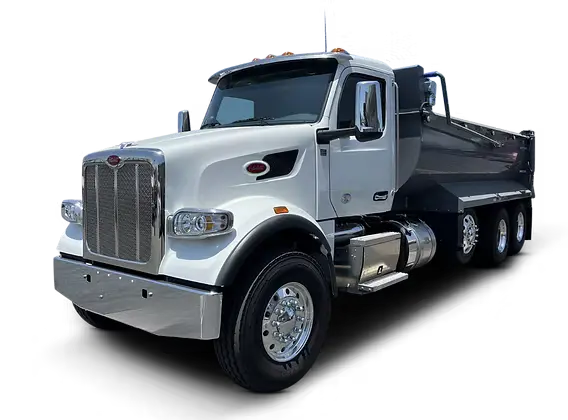
Dump truck raising its bed to unload gravel — Texas Dump Trucking Insurance from Truck Guard Insurance

The base numbers are the federal ones. Tex. Transp. Code § 621.101 forbids operating a vehicle with a single axle weight heavier than twenty thousand pounds or a tandem axle weight heavier than thirty-four thousand pounds, both including all enforcement tolerances, and computes gross weight on a group of consecutive axles from the bridge formula, with subsection (b) capping the group at eighty thousand pounds “regardless of tire ratings, axle spacing (bridge), and number of axles.”

What Texas does next is unusual. Rather than issuing a divisible-load permit that raises those limits, § 623.011 authorizes a permit that lets a vehicle operate at an axle weight not heavier than the maximum allowable axle weight plus a tolerance allowance of ten percent, and at a gross weight not heavier than the maximum allowable gross weight plus a tolerance allowance of five percent. The legal ceiling never moves. The enforcement threshold does.

The qualifying conditions are short and consequential. The vehicle must be registered under Chapter 502 for the maximum gross weight applicable under § 621.101, not to exceed eighty thousand pounds. The security requirement of § 623.012 must be satisfied. And a base permit fee of ninety dollars must be paid, together with the county fee under § 623.0111 and any administrative fee the board sets under § 623.0112.

For a Texas dump operator, that structure turns two ordinary business facts into compliance facts: which counties the trucks will actually run in, and whether the pit is prepared to certify what it loaded.

Permitting a Texas dump fleet under § 623.011? Send the county list from the permit applications — the number of counties designated sets both the fee tier and where the permit is valid.

Start a Texas quote

A tolerance permit, a windshield sticker and a county list

Section 623.011 issues an annual permit that must be carried in the vehicle, and it comes with a physical artifact. Subsection (d) requires the department to issue a sticker to be placed on the front windshield, designed in a form that aids enforcement of weight limits. Subsection (e) requires the sticker to show the expiration date and to be removed when the permit expires, when a lease of the vehicle expires, or when the vehicle is sold. Subsection (f) makes failure to display it a Class C misdemeanor.

There is one further allowance tucked into subsection (g). A vehicle operating under the permit may exceed the maximum allowable gross weight tolerance allowance by not more than five percent, regardless of the weight of any one axle or tandem axle, provided no axle or tandem axle exceeds the tolerance permitted by subsection (a).

The geography of the permit is set by the applicant and then enforced against it. Under § 623.0111 (a), the applicant must designate in the application each county in which the vehicle will be operated and pay an annual fee on a tiered table — one hundred seventy-five dollars for one to five counties, two hundred fifty dollars for six to twenty, four hundred fifty dollars for twenty-one to forty, six hundred twenty-five dollars for forty-one to sixty, eight hundred dollars for sixty-one to eighty, nine hundred dollars for eighty-one to one hundred, and one thousand dollars for one hundred one to two hundred fifty-four.

Subsection (b) then states the consequence in one line: a permit issued under § 623.011 does not authorize operation of the vehicle in a county that is not designated in the application. A Texas dump operator that wins work two counties over has a permit problem before it has a routing problem, and the fee tiers mean the cost of designating broadly is modest compared with the cost of being caught narrow.

Two route restrictions sit above all of it. Section 623.0113 (a) provides that the permit does not authorize operation on the interstate system if the weight is greater than federal law authorizes, or on a bridge for which a maximum weight and load limit has been established and posted by the Texas Transportation Commission under § 621.102 or by a commissioners court under § 621.301, where the vehicle exceeds the posted limits. Subsection (b) carves out the case where such a bridge provides the only public vehicular access from an origin or to a destination for a permit holder.

  • Axle tolerance — ten percent of the maximum allowable axle weight for the vehicle or combination.
  • Gross tolerance — five percent of the maximum allowable gross weight.
  • Registration — under Chapter 502 for the maximum gross weight applicable under § 621.101, not to exceed 80,000 pounds.
  • Security — the blanket bond or letter of credit required by § 623.012.
  • Fees — a $90 base permit fee, the county-count fee under § 623.0111, and any administrative fee set under § 623.0112.

The bond is payable to the counties, and it can end the permit

Section 623.012 is the provision that gives the Texas permit its shape, and it is a county instrument rather than a state one. An applicant for a § 623.011 permit — other than one to operate a vehicle loaded with timber or pulp wood, wood chips, cotton, or agricultural products in their natural state — must file with the department either a blanket bond or an irrevocable letter of credit issued by a financial institution whose deposits are guaranteed by the Federal Deposit Insurance Corporation.

Aggregate is not on that exemption list. A dump operator hauling sand, gravel or crushed stone under a tolerance permit files the security; a timber hauler under the same section does not.

The terms are specific. Under subsection (b) the bond or letter of credit must be in the amount of fifteen thousand dollars payable to the counties of this state, conditioned that the applicant will pay a county for any damage to a county road or bridge caused by operating the permitted vehicle at a heavier weight than the maximum authorized under Subchapter B of Chapter 621 or § 621.301 or § 623.321, and must provide that the issuer will notify the county and the applicant in writing promptly after a payment is made.

Then comes the replacement clock that catches operators by surprise. Subsection (c) requires the permit holder, if the issuer pays out, to file with the department before the thirty-first day after the payment either a replacement bond or letter of credit in the full amount, or a notification from the existing issuer that the instrument has been restored to that amount. Subsection (d) supplies the penalty for missing that deadline: “each permit held by the permit holder under Section 623.011 automatically expires on the 31st day after the date on which the payment is made.” One road-damage claim, unreplenished for a month, terminates every tolerance permit in the fleet at once.

The counties are given the tools to use it. Section 623.013 requires the department to publish on its website a searchable and downloadable list by county of each § 623.011 permit, including the permit holder’s name and address, the vehicle identification and license plate numbers, the permit number and the effective date, and to send a county a copy of the permit and the security instrument on request. Section 623.016 then confines a county’s recovery route to a suit against the permit holder and the issuer, with venue in the county where the defendant resides, where it has its principal Texas place of business, or where the damage occurred.

Holding the permit turns off the county permit and the road use agreement

The other half of the bargain is preemption, and for a dump operator working across county lines it is worth as much as the tolerance itself.

Section 623.018 (a) lets a commissioners court, through the county judge, issue permits for the movement over county highways of overweight, oversize or overlength commodities that cannot reasonably be dismantled, for superheavy or oversize equipment carrying such commodities, and for vehicles exceeding the weights authorized under Subchapter B of Chapter 621 or § 621.301. Subsection (b) caps such a permit at ninety days, and subsection (e) lets the court require a bond sufficient to guarantee payment of road or bridge damage.

Subsection (d) then takes all of that away where a state permit is in force. If a vehicle is being operated in compliance with a permit issued under § 623.011 or § 623.402, a commissioners court may not issue a permit under § 623.018 or charge an additional fee for, or otherwise regulate or restrict, the operation of the vehicle because of weight; and it may not require the owner or operator to execute or comply with a road use agreement or indemnity agreement, to make a filing or application, or to provide a bond or letter of credit other than the one prescribed by § 623.012.

That last clause is the one to raise with a general contractor or a county engineer. Road use agreements and indemnity agreements are a routine ask on Texas aggregate work, and the statute says a county may not require one of a § 623.011 permit holder because of weight. Section 621.304 extends the same idea to the state highway system: except as expressly authorized by the subtitle, a county or municipality may not require a permit, bond, fee or license for the movement of a vehicle or load on the state highway system that exceeds the weight or size limits on that system.

We place Texas dump and aggregate accounts, including fleets running § 623.011 tolerance permits across multiple counties and pit operations with bonded highway crossings.

Get a Texas quote

Loading a truck is its own offense in Texas

Texas is one of a small number of states that criminalizes the act of loading rather than only the act of driving, and on an aggregate account that provision sits at the pit rather than in the cab.

Section 621.503 (a) provides that a person may not load, or cause to be loaded, a vehicle for operation on a public highway that exceeds the height, width, length or weight limitations for that vehicle. Subsection (b) supplies a presumption that does a great deal of work: “Intent to violate a weight limitation is presumed if the weight of the loaded vehicle is heavier than the applicable axle or gross weight limit by 15 percent or more.” Subsection (c) exempts the loading of an agricultural or forestry commodity before it is changed in processing from its natural state — again, not aggregate.

Section 621.506 (a)(2) then makes it an offense to load a vehicle or cause a vehicle to be loaded in violation of § 621.503, and prices it on the same fine schedules that apply to operating overweight: for a gross weight violation, from one hundred to five hundred dollars under twenty-five hundred pounds over, rising through the bands to seven thousand to ten thousand dollars for more than forty thousand pounds over.

Section 621.503 (d) routes a loading violation to administrative enforcement under Subchapter N of Chapter 623, except that an administrative penalty may not be imposed on the loader if it is the same entity as, or is owned by the same entity that operated, the loaded vehicle and has already been assessed a criminal penalty for a violation associated with the load. In other words, a vertically integrated operator that both loads and hauls is not billed twice for the same load; an independent pit loading someone else’s truck is exposed on its own account.

For an aggregate hauler that does not own the pit, the practical question is which side of that line the operation sits on, and what the loading agreement says about it. Weight liability that begins on a loader’s scale and ends on a highway scale is a shared exposure, and it belongs in the contract before it belongs in a general liability conversation.

The shipper’s certificate of weight, and the defense it creates

Texas gives the hauler something to put against that exposure, and it is a form rather than a clause. Section 623.274 (a) requires the department to prescribe a form to be used for a shipper’s certificate of weight, with space for the maximum weight of the shipment being transported. Subsection (b) then makes the duty run on request: on the written request of the person transporting the shipment, a shipper must certify that the information on the certificate is accurate and deliver the certificate to the person transporting the shipment.

The value of holding one is stated directly. Section 623.271 (c) provides that “it is an affirmative defense to administrative enforcement under this section that the person or holder of the permit relied on the shipper’s certificate of weight.” Section 623.271 (a) is the department’s administrative enforcement power — the authority to impose an administrative penalty or revoke an oversize or overweight permit for false information on an application, for violating Chapter 621, 622 or 623 or a rule or order under them, or for failing to obtain a required permit.

The shipper carries its own risk in the same subchapter. Section 623.272 (a) lets the department investigate and impose an administrative penalty on a shipper that does not provide a certificate of weight required under § 623.274 (b), or that provides false information on a certificate it delivers to a person transporting a shipment.

Two more features of Subchapter N matter to a permitted fleet. Section 623.271 (e) provides that a person ordered to pay an administrative penalty, and the vehicle that is the subject of the enforcement order, may not be issued a permit under the chapter until the penalty has been paid — so an unpaid penalty freezes the permit renewal rather than merely sitting on a ledger. And § 623.273 lets the attorney general, at the department’s request, petition a district court in Travis County for injunctive relief, with the court granting appropriate relief without bond and the state recovering court costs, reasonable attorney’s fees, investigative costs, witness fees and deposition expenses.

Eighty-four thousand pounds carries its own extra fine

Texas prices overweight on a schedule and then adds two surcharges, one of which is aimed squarely at loads that could have been split.

Section 621.506 (b-3) provides that a defendant operating a vehicle or combination at a weight in excess of eighty-four thousand pounds “with a load that can reasonably be dismantled” shall be punished by a fine in addition to the ordinary fine of not less than five hundred dollars or more than one thousand dollars, and, for a second or subsequent conviction under the section, by an additional fine of not less than twenty-five hundred dollars or more than five thousand dollars. Sand, gravel and crushed stone are the paradigm case of a load that can reasonably be dismantled.

Subsection (b-2) adds a parallel surcharge for operating at a weight a permit would have authorized while not holding the permit — not less than five hundred dollars or more than one thousand dollars on a first conviction, and not less than twenty-five hundred dollars or more than five thousand dollars on a second or subsequent one. Together they mean that in Texas the cheapest way to be heavy is to be permitted, and the most expensive is to be heavy, divisible and unpermitted at once.

Two procedural provisions cut the other way and are worth knowing. Subsection (c) lets a court, on conviction of an axle weight violation, assess a fine below the applicable minimum if it finds that when the violation occurred the vehicle was registered to carry the maximum gross weight authorized under § 621.101 and the gross weight did not exceed that maximum. Subsection (i) bars any fine above the minimum dollar amount unless the vehicle’s weight was determined by a portable or stationary scale furnished or approved by the Department of Public Safety.

Crossing a public road from one piece of private property to another

One Texas provision speaks to pit operations in terms, and it was amended in 2025. Section 623.052 (a) lets a person operate a vehicle exceeding the overall gross weight limits of § 621.101 to cross the width of a highway from private property to other private property if the vehicle is transporting grain, sand, or another commodity or product and its overall gross weight is not heavier than one hundred ten thousand pounds, or if the vehicle is an unlicensed vehicle transporting sand, gravel, stones, rock, caliche, or a similar commodity.

The price of that crossing is a contract and a bond. Subsection (b) requires the person, before operating, to contract with the Texas Department of Transportation to indemnify it for the cost of maintenance and repair for damage caused by a vehicle crossing that part of the highway, and to execute an adequate surety bond to compensate for that cost, approved by the department, with a corporate surety authorized to do business in Texas and conditioned on fulfilling each obligation of the agreement. Both subsections were amended by Acts 2025, 89th Leg., R.S., Ch. 791 (S.B. 995), effective June 20, 2025.

A pit with material on both sides of a farm-to-market road is therefore running a bonded, contracted crossing rather than an informal one, and the bond is a distinct instrument from the § 623.012 blanket bond that backs the tolerance permit. Both can be live on the same operation at the same time.

Registration, filings and what an underwriter is reconciling

Texas runs its own motor carrier registration regime alongside the federal one, and its insurance provisions are more prescriptive than most. Section 643.101 (a) requires a motor carrier registered under Subchapter B to maintain liability insurance in an amount set by the department for each vehicle requiring registration, with subsection (b) capping that amount at the federal figure required under 49 U.S.C. § 13906(a)(1) and directing the department to consider the class and size of the vehicle and the persons or cargo transported.

Subsection (e) is the provision that decides where the paper can come from. Unless state law permits self-insurance, required insurance must be obtained from an insurer authorized to do business in Texas whose aggregate net risk after reinsurance under any one policy is not in excess of ten percent of policyholders’ surplus, or from an insurer meeting the eligibility requirements of a surplus lines insurer under Chapter 981 of the Insurance Code. It then adds a preemption: notwithstanding any other provision of law, an insurer in compliance with the subsection is deemed to be in compliance with any rating or financial criteria established for motor carriers by any political subdivision of the state.

The filing mechanics are exacting. Section 643.103 requires evidence of insurance to be filed at initial registration, at a subsequent registration where continuous registration lapsed, when the carrier changes insurers, and when ownership changes, with a copy kept in the cab of each registered vehicle and a filing fee of up to one hundred dollars. Section 643.104 (a) forbids an insurer from terminating coverage unless it notifies the department at least thirty days before the termination takes effect, and subsection (d) lets a law enforcement officer detain or impound any commercial vehicle operating without liability insurance until coverage is properly filed.

Underneath the filings sit the exposures that actually price a Texas dump account — hoist, body and tailgate damage a physical damage schedule rarely anticipates, pit and job-site work at the boundary of a highway auto form, the workers compensation exposure that moves with the sites, and, for a fleet that also relocates its own machinery, the separate profile of oversized and overweight moves.

  • Counties designated on each § 623.011 permit, reconciled against where the trucks are actually dispatched.
  • The § 623.012 blanket bond or letter of credit, whether it has ever been drawn on, and whether it was restored inside the thirty-day window.
  • Whether the operation loads its own trucks, given that § 621.503 makes loading a separate offense with a fifteen percent intent presumption.
  • Whether shipper’s certificates of weight are requested in writing and retained, since § 623.271 (c) makes reliance on one an affirmative defense.
  • Any § 623.051 or § 623.052 crossing contract and surety bond, which are separate instruments from the permit bond.
  • Insurance filing history with the department, including changes of insurer and any lapse triggering the § 643.105 affidavit.

Coverage lines a Texas dump and aggregate account usually carries

The state minimum is a licensing threshold. The program an operator actually needs is built from these lines:

  • Trucking Auto Liability — Primary liability coverage for bodily injury and property damage caused by your truck while under dispatch.
  • Physical Damage — Collision and comprehensive coverage for the tractor, trailer, and attached equipment you own or finance.
  • Motor Truck Cargo — Coverage for the freight you haul against loss or damage in transit.
  • Trailer Interchange — Coverage for non-owned trailers you pull under written interchange agreements.
  • General Liability — Coverage for premises and operations liability away from the truck — terminal yards, customer docks, and non-driving exposures.
  • Workers Compensation — Statutory coverage for driver and yard-employee injury, structured for trucking payrolls and interstate operations.
  • Non-Trucking (Bobtail) Auto Liability — Liability coverage for the tractor when operated off-dispatch — bobtailing home or running personal errands.
  • Pollution Liability — Coverage for cargo-related pollution events and upset/overturn spills not covered by standard auto liability.

Why Truck Guard Insurance for a Texas dump and aggregate account

We write dump and aggregate hauling as a named class rather than as an exception to general trucking, and we read each account against the weight and permit regime of the state it operates in. For a Texas operator that means starting from what the trucks are actually licensed and configured to carry, sizing physical damage to bodies and hoists rather than to a chassis value, and treating pit, stockpile and job-site work as its own exposure rather than an extension of the highway auto form.

If the operation also runs freight under separate authority, the Texas trucking insurance page covers the state’s broader motor carrier picture, and the dump trucking insurance page covers the class mechanics that apply wherever the operator runs.

Texas dump trucking insurance questions

What does a Texas § 623.011 permit actually allow?

A tolerance rather than a higher limit. Tex. Transp. Code § 623.011 (a) authorizes operation at an axle weight not heavier than the maximum allowable axle weight plus a tolerance allowance of ten percent, and at a gross weight not heavier than the maximum allowable gross weight plus a tolerance allowance of five percent. The vehicle must still be registered under Chapter 502 for the maximum gross weight applicable under § 621.101, not to exceed 80,000 pounds.

Why does the county list on the application matter so much?

Because it is the boundary of the permit. Tex. Transp. Code § 623.0111 (a) requires the applicant to designate each county in which the vehicle will be operated and pay an annual fee on a tier from $175 for one to five counties up to $1,000 for 101 to 254. Subsection (b) then provides that the permit does not authorize operation of the vehicle in a county that is not designated in the application.

What bond does a Texas overweight permit require?

Tex. Transp. Code § 623.012 requires a blanket bond or an irrevocable letter of credit from an FDIC-insured institution, in the amount of $15,000 payable to the counties of this state, conditioned that the applicant will pay a county for damage to a county road or bridge caused by operating the permitted vehicle over the authorized weights. Vehicles loaded with timber, pulp wood, wood chips, cotton or agricultural products in their natural state are excepted; aggregate is not.

What happens if the bond is paid out?

A clock starts. Under Tex. Transp. Code § 623.012 (c), the permit holder must file with the department, before the thirty-first day after the payment, either a replacement bond or letter of credit in the full amount or a notification from the issuer that the instrument has been restored. Subsection (d) provides that if that filing is not made, each permit the holder has under § 623.011 automatically expires on the thirty-first day after the payment.

Can a Texas county require a road use agreement from a permitted hauler?

Not because of weight. Tex. Transp. Code § 623.018 (d) provides that if a vehicle is operating in compliance with a permit issued under § 623.011 or § 623.402, a commissioners court may not issue a county permit or charge an additional fee for, or otherwise regulate or restrict, the vehicle because of weight, and may not require the owner or operator to execute or comply with a road use agreement or indemnity agreement, to make a filing or application, or to provide a bond other than the one prescribed by § 623.012.

Is the pit that loaded the truck exposed under Texas law?

Yes. Tex. Transp. Code § 621.503 (a) prohibits loading, or causing to be loaded, a vehicle for highway operation that exceeds the applicable limits, and subsection (b) presumes intent to violate a weight limitation where the loaded vehicle is heavier than the applicable axle or gross limit by fifteen percent or more. Section 621.506 (a)(2) makes that an offense on the same fine schedules as operating overweight, and § 623.272 lets the department penalize a shipper that fails to provide, or falsifies, a certificate of weight.

What protection does a shipper’s certificate of weight give the carrier?

A statutory defense. Tex. Transp. Code § 623.271 (c) makes it an affirmative defense to administrative enforcement under that section that the person or permit holder relied on the shipper’s certificate of weight. Section 623.274 (b) requires the shipper, on the written request of the person transporting the shipment, to certify that the information on the certificate is accurate and to deliver it to that person.

Is there an extra penalty for being overweight with aggregate in Texas?

There is, and it is written around divisibility. Tex. Transp. Code § 621.506 (b-3) adds a fine of not less than $500 or more than $1,000 — and not less than $2,500 or more than $5,000 on a second or subsequent conviction — for operating in excess of 84,000 pounds with a load that can reasonably be dismantled. Subsection (b-2) adds a comparable surcharge for operating at a weight a permit would have authorized without holding the permit.

Sources

Every figure on this page was read at the source below on August 11, 2026, with the effective date of the version read. Treat each as current as of that date rather than as permanent.

Get a Texas dump trucking insurance quote

Send the declared or registered weights alongside the axle configurations, and tell us where the material moves from. We will size the program against the work the trucks actually do rather than against a statutory floor.

Start a quote Call 317-942-0549