Motor carrier classes by state

California hot shot trucking insurance for light-combination and expedited freight operators

California defines a commercial motor vehicle for permit purposes with a catch-all limb that reads, in full, “any other motor vehicle used to transport property for compensation.” No weight, no rating, no axles. The permit and the liability figure attach at the same instant on the same words, the person who hires the carrier is bound by the permit requirement too, and the smaller of the two liability figures is a test of the whole fleet rather than of the truck doing the work.

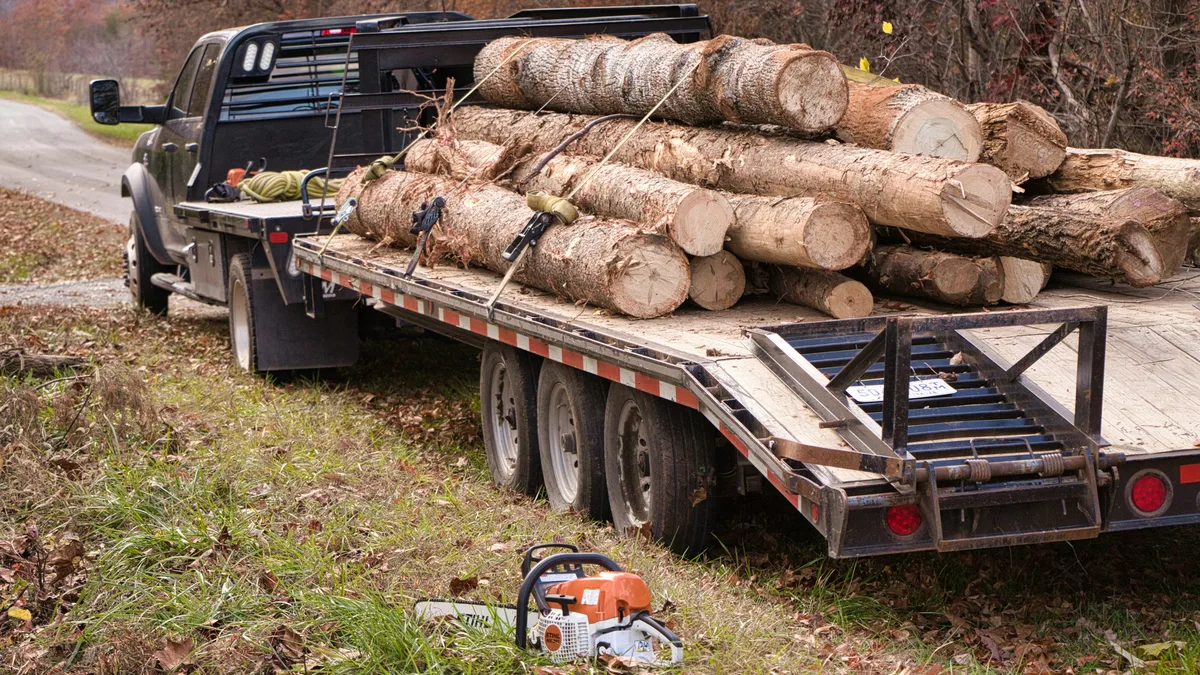
Flatbed dually towing a gooseneck flatbed trailer loaded with logs — California Hot Shot Trucking Insurance from Truck Guard Insurance

What is the same about this work everywhere — the securement duty across mixed freight, the value density that outruns a limit written for an average load, the delivery window a shipper is actually paying for — belongs to the class rather than to California, and it is set out on the hot shot trucking insurance page rather than repeated here.

California’s own material is unusual in three ways, and none of them is about weight. The first is that the state does not adopt the federal safety regulations for its intrastate carriers at all — the California Highway Patrol wrote its own motor carrier safety chapter, and a state regulation says in terms that intrastate drivers answer to it rather than to the federal hours part. The second is that the permit requirement is written as a duty on the shipper or broker as well as on the carrier. The third is that cargo is expressly outside the required insurance, twice, on the face of the statute.

Those three combine into a state where the entry question is settled quickly and the interesting questions are all about who is bound by what. There is no threshold to argue about; the argument is about scope.

Every figure below is attributed to the section that sets it. Where a claim on this page is a negative — and the most useful one is — the reading that licenses it is stated alongside it rather than left to be assumed.

Hauling property for compensation anywhere in California? The motor carrier permit attaches on that fact alone, the liability figure attaches with it, and a broker who engages you without a valid permit is in breach of the same section you are.

Send the gross vehicle weight ratings of every vehicle in the operation — not only the one doing this work — plus the commodities you take. The smaller California liability figure is lost by owning one heavier truck, not by driving it.

Start a California quote

Subdivision (j) is the limb with no weight in it, and it is easy to cite the wrong one

California’s no-floor result is real, and the subdivision that produces it is not the one usually cited for it. CVC 34500 lists the vehicles the California Highway Patrol regulates for safe operation, and subdivision (j) reads: “Any other motortruck regulated by the Department of Motor Vehicles, the Department of Consumer Affairs, or the United States Secretary of Transportation.” It contains no number.

Subdivision (k) is the one commonly quoted, and it is a weight limb: a commercial motor vehicle with a gross vehicle weight rating of 26,001 or more pounds, or a commercial motor vehicle of any gross vehicle weight rating towing a vehicle described in subdivision (e) with a gross vehicle weight rating of more than 10,000 pounds. Citing (k) for a no-floor proposition gets the right answer from the wrong sentence, which matters the moment anyone checks.

The mechanism runs through subdivision (j) because the Department of Motor Vehicles regulates motor carriers of property under Division 14.85 of the Vehicle Code, and CVC 34601(c)(1) defines the class with an explicit catch-all: a “commercial motor vehicle” means “any self-propelled vehicle listed in subdivisions (a), (b), (f), (g), and (k) of Section 34500, any motortruck of two or more axles that is more than 10,000 pounds gross vehicle weight rating, and any other motor vehicle used to transport property for compensation.”

Three routes in, and the third has no size element at all. A motortruck over 10,000 pounds on two or more axles is in by the second route. Anything at all used to transport property for compensation is in by the third. For this equipment both routes are usually satisfied, and the third is satisfied by the fact of taking a rate.

The California Highway Patrol’s safety chapter then applies to the section 34500 population, which is how a vehicle that entered through the Department of Motor Vehicles’ permit scheme ends up inside the Highway Patrol’s rules. Two agencies, one population, joined by a single subdivision most summaries skip past.

A trailer over 10,000 pounds pulls the tow vehicle in whatever the tow vehicle is rated

Subdivision (k) of CVC 34500 is worth reading properly rather than dismissing as a 26,001 pound limb, because its second clause is drawn around exactly this configuration. It reaches “a commercial motor vehicle of any gross vehicle weight rating towing a vehicle described in subdivision (e) with a gross vehicle weight rating of more than 10,000 pounds”.

“Of any gross vehicle weight rating” is the operative phrase. The tow vehicle’s own rating is removed from the question entirely; what decides it is the rating of the trailer behind. A light power unit does not escape by being light if what it is pulling is heavy enough.

For a class of work built on putting a substantial trailer behind a pickup, that is the limb that converts a routine equipment decision into a regulatory one. An operator who upgrades to a heavier deck has not merely bought capacity — they have changed which subdivision of CVC 34500 the combination sits in, and they have done it without touching the truck.

Read together with the catch-all in CVC 34601(c)(1), the practical result is that this equipment is inside California’s scheme by more than one route, and closing one of them does nothing. An operator who reduces the trailer to get under subdivision (k) is still inside the definition through the compensation limb, and the permit requirement follows the definition rather than the subdivision.

  • CVC 34500(j) — “any other motortruck regulated by” the named agencies. No weight.
  • CVC 34500(k) second clause — any rating of tow vehicle, if the towed vehicle is rated over 10,000 pounds.
  • CVC 34601(c)(1) — a motortruck of two or more axles over 10,000 pounds gross vehicle weight rating.
  • CVC 34601(c)(1) catch-all — “any other motor vehicle used to transport property for compensation.”

Two exclusions mention 26,001 pounds and both require the truck never to work

CVC 34601(c)(2) lists what is not a commercial motor vehicle for the division, and two of its limbs carry a familiar-looking number. Subparagraph (F) excludes “Two-axle daily rental trucks with a gross vehicle weight rating of less than 26,001 pounds, when operated in noncommercial use.” Subparagraph (G) excludes vehicles “never operated in commercial use, including motortrucks or two-axle truck tractors, with a gross vehicle weight rating of less than 26,001 pounds, when operated singly, or, when used to tow a camp trailer, trailer coach, fifth-wheel travel trailer, trailer designed to transport watercraft, or a utility trailer, never operated in commercial use.”

An operator scanning that list will see the weight and stop. The condition attached to it is the point: “when operated in noncommercial use” in the first, and “never operated in commercial use” — stated twice — in the second. These are exclusions for personal vehicles that happen to be large, not reliefs for small commercial ones.

The word “never” in subparagraph (G) is stronger than the alternative and is doing deliberate work. A vehicle is not outside the definition on the days it is not working; it is outside only if it does not work at all. One paid load ends the exclusion for the vehicle, not merely for the trip.

Subparagraph (E) excludes pickup trucks as defined in CVC 471, and it is the limb most often quoted at a hot shot operator — but it excludes them only “if the conditions in subparagraphs (A) and (B) are also met”, which are conditions about vehicles described elsewhere in CVC 34500 and about hazardous materials transportation not requiring placards, licensing or waste-transporter registration and the vehicle not being operated in commercial use. It is not a general pickup exemption.

CVC 34622 then supplies the only exemptions from the permit chapter itself, and the list is two items long: vehicles described in CVC 5004 or 5011 and those exempt from vehicle registration fees, and a household mover transporting used office, store and institution furniture and fixtures under a household mover permit. There is no third item and there is no weight in either of the two.

Send the gross vehicle weight rating of every vehicle the operation runs, the commodities carried, and who you contract with. In California the first of those decides which statutory figure applies and the third decides what your counterparty has to keep on file.

Get a California quote

The permit binds the person who hires you as much as the person who holds it

CVC 34620(a) states the carrier’s duty: except as subdivision (b) and CVC 34622 provide, “a motor carrier of property shall not operate a commercial motor vehicle on any public highway in this state, unless it has complied with Section 34507.5 and has registered with the department its carrier identification number authorized or assigned thereunder, and holds a valid motor carrier permit issued to that motor carrier by the department.”

Subdivision (b) is the provision that makes California different from most states, and it is written to the counterparty: “A person shall not contract with, or otherwise engage the services of, a motor carrier of property, unless that motor carrier holds a valid motor carrier of property permit issued by the department.” A shipper, a broker or another carrier who tenders a load to an unpermitted operator is in breach of the same subdivision the operator is.

The subdivision then builds an evidence trail around that duty. A motor carrier of property, or a broker of construction trucking services, may not contract or subcontract with another motor carrier of property until the contracted carrier provides certification of compliance with subdivision (a), in the manner the section prescribes. The certification must include a provision requiring the contracted carrier to notify the person it is contracted to immediately if its permit is suspended or revoked. A copy of the contracted carrier’s permit must accompany the certificate.

The retention duty is longer than most operators expect and the inspection right is specific: the certificate or a copy “shall be maintained by each involved party for the duration of the contract or period of service plus two years”, and must be presented for inspection at the location designated under CVC 34501.10 immediately upon the request of an authorized employee of the Department of the California Highway Patrol.

For an operator who runs under other carriers’ authority some of the time and their own the rest, that structure is worth understanding as leverage rather than as burden. A permit in good standing is not just permission to work; in California it is the thing a broker needs on file to lawfully hand over the load, and a suspension is something the operator is contractually obliged to report the moment it happens.

The $300,000 relief is a test of the whole fleet, not of the truck

CVC 34631.5(a)(1) sets the general figure: every motor carrier of property as defined in CVC 34601, except those subject to paragraphs (2), (3) or (4), “shall provide and thereafter continue in effect adequate protection against liability imposed by law upon those carriers for the payment of damages in the amount of a combined single limit of not less than seven hundred fifty thousand dollars ($750,000)” for bodily injury or death, or damage to or destruction of property other than property being transported by the carrier for any shipper or consignee.

Paragraph (2) is the smaller figure, and how it is drafted decides who gets it: “Every motor carrier of property, as defined in Section 34601, who operates only vehicles under 10,000 pounds GVWR and who does not transport any commodity subject to paragraph (3) or (4), shall provide and thereafter continue in effect adequate protection … in an amount not less than three hundred thousand dollars ($300,000).”

The subject of that sentence is the carrier, and the test is “who operates only vehicles under 10,000 pounds GVWR”. It is not a per-vehicle rate table. An operator with a single light van qualifies. The same operator who adds one truck rated above the line loses the relief across the whole operation, including for the van, and moves to the higher figure.

That is a materially different structure from a laddered schedule, and it produces a specific and avoidable surprise. A carrier that buys one heavier unit for occasional work has not bought a higher requirement for that unit; it has changed the requirement for the business. For a hot shot operation the question is usually academic — a one-ton pickup rated to pull a loaded gooseneck is over the line by itself — but for a mixed light fleet adding its first hot shot rig, it is the whole answer.

The remaining paragraphs are commodity ladders rather than size ones. Paragraph (3) sets figures for an intrastate carrier transporting petroleum products in bulk, including waste petroleum: not less than five hundred thousand dollars for bodily injury to one person, subject to a total of not less than one million dollars for more than one person in any one accident, and not less than two hundred thousand dollars for property damage other than property being transported, or a combined single limit of not less than one million two hundred thousand dollars. Paragraph (4) sets a hazardous-materials table with combined single limits of one million dollars and five million dollars depending on the material and the packaging, including a five million dollar row for hazardous substances or compressed gas carried in tanks with capacities in excess of 3,500 water gallons.

A certificate per vehicle, thirty days’ notice, and a permit that suspends the same day

The mechanics in CVC 34631.5(b) are where an otherwise compliant operation gets into trouble, and they are worth reading in sequence. Paragraph (1) requires the protection to be evidenced by the deposit with the department, “covering each vehicle used or to be used in conducting the service performed by each motor carrier of property, an authorized certificate of public liability and property damage insurance, issued by a company licensed to write the insurance in the State of California, or by a nonadmitted insurer subject to Section 1763 of the Insurance Code.”

Two conditions are buried in that sentence. The evidence is per vehicle — each vehicle used or to be used — rather than per carrier, which is a different unit of account from the paragraph (2) relief above, where the test is what the carrier operates. And the writing company must be licensed in California, or a nonadmitted insurer meeting the Insurance Code’s surplus lines provision.

Paragraph (3) sets the cancellation clock: a certificate of insurance “shall not be cancelable on less than 30 days’ written notice to the department, the notice to commence to run from the date notice is actually received at the office of the department in Sacramento.” The clock runs from actual receipt in Sacramento, not from the date on the letter.

Then the consequence, in paragraph (5), which has no grace period in it at all: on cancellation of an insurance certificate or of authorized equivalent protection, “the motor carrier permit of any motor carrier of property, shall stand suspended immediately upon the effective date of the cancellations.” Paragraph (6) adds that no carrier shall engage in any operation on any public highway of the state during the suspension of its permit, and paragraph (7) provides that a carrier whose permit is suspended may not resume operations until it has filed a certificate or equivalent protection that is in effect and meets the section’s standards, whereupon the operative rights are reinstated.

Read together, a lapse in California is not a compliance defect with a cure period; it is an immediate loss of authority that also, under CVC 34620(b), makes the operator someone a broker may not lawfully engage. That is the sequence to have in mind when a policy renewal is close and a certificate has not yet been filed.

Chapter 3 has five sections, all five were read, and cargo is in none of them

California requires no cargo insurance and takes no cargo filing from a motor carrier of property, and because that is a negative it is worth stating what licenses it rather than simply asserting it. The relevant body is Chapter 3 of Division 14.85 of the Vehicle Code, headed “Insurance”, and it consists of sections 34630 to 34634. All five were read in full: CVC 34630, proof of financial responsibility as a condition of the permit; CVC 34631, the permitted forms of proof; CVC 34631.5, the dollar figures; CVC 34632, the annual vehicle list; CVC 34633, the annual employee report; and CVC 34634, the Director of Industrial Relations stop-order provision. Not one of them mentions cargo. Five of five.

The statute also excludes cargo affirmatively rather than merely omitting it, and it does so twice. CVC 34631.5(a)(1) sets its figure for damage to property “other than property being transported by the carrier for any shipper or consignee”, and paragraph (2) repeats the same exclusion in its own terms. Freight on the deck is not what the required protection is for, and the section says so where a reader will meet it.

CVC 34630(a) closes the loop on the permit side: the permit is conditioned on filing proof of financial responsibility in the form of a currently effective certificate of insurance, if the policy the certificate represents “meets the minimum insurance requirements contained in Section 34631.5” — the liability figures, and nothing beyond them.

One boundary belongs with this finding and it is a scope line rather than a shortfall in reading. The conclusion is scoped to a motor carrier of property under Division 14.85. Household goods carriers and passenger carriers are regulated under a different scheme that was not read, and no claim is made about them here. An operator whose work includes household goods should treat that as a separate question with a separate answer.

The practical consequence is the same one that follows in any state without a cargo schedule, and it cuts the opposite way from how it sounds. Nothing in California will tell an operator what cargo limit to carry, so the limit ends up being whatever a shipper contract demands or whatever the operator’s own judgment supplies — and a limit chosen against an average load fails against exactly the load that generates the claim.

Two annual filings do exist, and neither one is about the freight

Operators sometimes remember that California requires something filed annually and conclude it must be the cargo piece. It is not, and both of the annual filings that exist are worth knowing about on their own account.

CVC 34632(a) provides: “Every motor carrier of property shall furnish the department annually, as specified by the department, a list, prepared under oath, of all vehicles, described in Section 34601, used in transportation during the preceding year.” Under oath, and covering every vehicle used — including one borrowed for a fortnight or rented for a season. It is an inventory duty, and for an operation whose equipment mix changes it is the filing most likely to be inaccurate without anyone intending it to be.

CVC 34633 reaches a different subject entirely: every motor carrier of property with a carrier fleet of twenty or more commercial motor vehicles as defined in CVC 34601 must, under oath, file annually a report indicating the number, classification and compensation of all employees and owner-operator drivers hired or engaged during the reporting period. It is a workers’ compensation report, routed to the carrier’s compensation insurer or self-insurance administrator, and it has a threshold that most operations in this class sit well below.

CVC 34634 sits behind that one and gives it teeth that have nothing to do with trucking: it concerns the Director of Industrial Relations’ stop-order power and false workers’ compensation statements. It is the section that explains why the employee report is written under oath.

None of the three is a cargo filing, and an operator who has satisfied all three has not done anything about the freight. That is not a criticism of the scheme; it is the shape of it. California asks about liability, about equipment and about labor, and leaves cargo to the parties.

California never froze the federal text, and its only dated pocket is about limousines

Most states adopt the federal motor carrier safety regulations for their intrastate carriers and pin them to an edition — a date after which later federal amendments do not enter state law without a rulemaking. California does neither. It does not adopt them for intrastate carriers at all, and there is therefore no freeze date to find. The absence is the answer, not a gap in the search.

The California Highway Patrol’s Motor Carrier Safety chapter, 13 CCR Division 2 Chapter 6.5, is the state’s own standalone rule text rather than an adoption of somebody else’s. Where the California scheme does point at federal material, it points on rolling terms. CVC 34501.2(a) requires the hours-of-service regulations adopted for intrastate vehicles to be consistent with the federal regulations “as those regulations now exist or are hereafter amended”. 13 CCR 1201(o) defines an interstate driver by reference to the federal definition “as those regulations now exist or are hereafter amended”. The same formulation appears at 13 CCR 1212(n) and 13 CCR 1212.5(b).

There is exactly one dated incorporation in the sections read, and it is recorded here specifically so it is not mistaken for a general adoption date. 13 CCR 1212.5(b)(1) provides that modified limousine drivers engaged in interstate transportation shall comply with the federal hours-of-service limits applicable to drivers of passenger-carrying vehicles “as published August 25, 2005, which are hereby incorporated by this reference.” It is a passenger provision, it reaches interstate transportation, it names a single federal section, and it has no application whatever to an intrastate property carrier.

The provision that settles the relationship between the two schemes is 13 CCR 1213(a)(4), and it says it plainly: “Notwithstanding Title 49, CFR, Section 395.20(a), intrastate drivers, as defined by Section 1201 of this chapter, shall comply with hours-of-service regulations pursuant to Section 1212 and 1212.5, of this chapter.” An intrastate California driver answers to the California sections.

For research purposes that structure is the whole trap. Searching for a California adoption of the federal safety regulations returns nothing, and “nothing” is easy to record as a failed search rather than as a finding. The correct conclusion is that the question has a different shape here than in the states next door.

Twelve hours, an eighty-hour eight-day cycle, and one hundred air miles with no second tier

Because California wrote its own hours rules rather than adopting federal ones, the numbers differ from what an operator moving in from another state expects, and they differ in both directions. CVC 34501.2(b)(1)(A) sets the maximum driving time within a work period at twelve hours for a driver of a truck or truck tractor, except for a driver of a tank vehicle with a capacity of more than 500 gallons transporting flammable liquid, who is held to ten. 13 CCR 1212.5(a)(2) states the same limit in the regulation and adds the duty-window limb: no driving “for any period after the end of the 16th hour after coming on duty following ten consecutive hours off duty.”

The weekly cycle runs the other way. CVC 34501.2(b)(2) and 13 CCR 1212.5(a)(4) bar driving after having been on duty for eighty hours in any consecutive eight days, and 13 CCR 1212.5(a)(5) provides that any period of eight consecutive days may end with the beginning of any off-duty period of thirty-four or more consecutive hours. More driving time in a day; a tighter ceiling across the week.

Adverse conditions add two hours under 13 CCR 1212(b)(1), capped at fourteen aggregate driving hours for truck drivers and at the end of the sixteenth on-duty hour. Two oilfield provisions sit at 13 CCR 1212(d): a twenty-four hour restart for drivers of vehicles used exclusively in oilfield equipment transportation, and an exclusion of well-site waiting time from on-duty time for specially trained drivers of specially constructed well-service vehicles.

The short-haul relief is California’s own and it has one tier rather than two. 13 CCR 1212(e) exempts a driver from the record-of-duty-status requirements if the driver operates within a one hundred air-mile radius of the normal work reporting location, returns and is released from work within twelve consecutive hours, has at least ten consecutive hours off duty separating work periods for truck drivers, and the employing carrier maintains and retains for six months accurate time records showing the report time, the total hours on duty, the release time and the total time for the preceding seven days. There is no one hundred and fifty air-mile counterpart anywhere in the sections read.

Two further California-only provisions are worth naming because they exist nowhere else. 13 CCR 1212(e)(6) allows a tachograph record to serve as the driver’s record for an intrastate tour of duty that does not exceed fifteen consecutive hours or the one hundred air-mile radius, subject to the driving caps. And 13 CCR 1212(f) suspends the maximum driving time itself — not merely the logging duty — for drivers engaged solely in making local deliveries from retail stores or retail catalog businesses to the ultimate consumer, within a one hundred air-mile radius of the work-reporting location, “during the period from December 10 to December 25, both inclusive, of each year.”

  • Twelve hours driving in a work period for a truck or truck tractor driver; ten for a driver of a tank vehicle over 500 gallons carrying flammable liquid.
  • No driving after the end of the sixteenth hour after coming on duty following ten consecutive hours off.
  • Eighty hours on duty in any consecutive eight days, with a thirty-four hour restart.
  • A one hundred air-mile short-haul exception with a twelve consecutive hour release condition and six-month record retention — and no second tier.
  • A seasonal December 10 to December 25 suspension of the driving maximum for retail local delivery within one hundred air miles.

Fleet composition decides the statutory figure, and four other things decide the rest

There is no table to quote for this class and any figure offered without seeing the operation would be invented. What follows is not a rate; it is the set of facts a California submission is actually read on, and the order is different here because entry is never in doubt.

The fleet composition question comes first, and it comes first only in California. Because the smaller liability figure in CVC 34631.5(a)(2) is a test of the carrier — “who operates only vehicles under 10,000 pounds GVWR” — the ratings of every vehicle in the operation matter, not only the one doing the hot shot work. An operator who sends the rating of the rig alone has not answered the question the statute asks.

Commodity comes second and it moves more than usual, because California’s ladder above the general figure is entirely commodity-driven. Bulk petroleum has its own set of figures under paragraph (3); hazardous materials have their own table under paragraph (4) keyed to the material and the packaging. For general freight the commodity question is about cargo exposure rather than about the statutory figure — light-combination freight skews toward high value per pound, and California sets no cargo minimum for the limit to anchor to.

The counterparty stack is third, and it is heavier in California than elsewhere because CVC 34620(b) makes the permit a condition on the person hiring. A broker or shipper that has to hold a certification and a copy of the permit for the duration of the contract plus two years is a counterparty with a standing interest in the operation’s compliance status, and additional-insured, primary-and-non-contributory and waiver-of-subrogation terms tend to arrive alongside that interest.

Filing hygiene is fourth and it is a rating input rather than a formality, because of what a lapse does. Certificates are deposited per vehicle with the department; cancellation runs on thirty days’ written notice from actual receipt in Sacramento; and the permit stands suspended immediately on the effective date of a cancellation, with no operation permitted during the suspension. An operation with a history of filing gaps is a different risk from one without, and the record of that is held by the state.

Driver and hours discipline closes it out, and California’s own rules are the reference rather than the federal ones: twelve-hour driving, a sixteenth-hour wall, an eighty-hour eight-day cycle, and a one hundred air-mile short-haul relief whose conditions include a twelve consecutive hour release and six-month record retention.

  • Gross vehicle weight ratings for every vehicle the carrier operates, not only the hot shot rig.
  • Commodity mix, and whether anything carried falls into the bulk petroleum or hazardous materials ladders.
  • The value of the heaviest load actually carried, since California sets no cargo figure at all.
  • Who the operation contracts with, and what their CVC 34620(b) certification file requires.
  • Filing history: per-vehicle certificates, cancellations, and any period of suspension.
  • Driver ages and tenure, and what hours records exist under the California sections rather than the federal part.

The parts of the California scheme this page did not open

No California statute or regulation read for this page names this work. There is no defined term for it, no permit class written for it, no separate insurance figure and no endorsement the state mandates for it by name. California reaches it through a definition written for motor carriage generally, whose catch-all limb happens to reach anything moving property for money.

The limits of the reading behind this page are stated rather than left to be inferred. Chapter 3 of Division 14.85 — the insurance chapter — was read complete, five of five sections, which is what licenses the cargo negative. The four Vehicle Code sections the permit and liability conclusions rest on were each read in full at source. The California Highway Patrol’s safety chapter, 13 CCR Division 2 Chapter 6.5, runs to roughly ninety-three sections and five of them were read: the scope section, the definitions, and the three hours-of-service and record-of-duty-status sections quoted above. Everything on this page about California’s hours and short-haul rules comes from those five.

A second boundary is a scope line rather than a gap. The cargo conclusion is scoped to a motor carrier of property under Division 14.85. Household goods carriers and passenger carriers answer to a different regulator under a different scheme that was not read for this page, and nothing here should be read as a statement about them.

What is left is a state whose answer to the entry question is unusually short and whose answers to everything after it are unusually detailed. The permit attaches on compensation. The liability figure attaches with it. Cargo is expressly outside both. And the rules the driver actually runs under were written in Sacramento rather than adopted from anywhere.

Coverage lines a California hot shot account usually carries

The state minimum is a licensing threshold. The program an operator actually needs is built from these lines:

  • Trucking Auto Liability — Primary liability coverage for bodily injury and property damage caused by your truck while under dispatch.
  • Physical Damage — Collision and comprehensive coverage for the tractor, trailer, and attached equipment you own or finance.
  • Motor Truck Cargo — Coverage for the freight you haul against loss or damage in transit.
  • Trailer Interchange — Coverage for non-owned trailers you pull under written interchange agreements.
  • General Liability — Coverage for premises and operations liability away from the truck — terminal yards, customer docks, and non-driving exposures.
  • Workers Compensation — Statutory coverage for driver and yard-employee injury, structured for trucking payrolls and interstate operations.
  • Non-Trucking (Bobtail) Auto Liability — Liability coverage for the tractor when operated off-dispatch — bobtailing home or running personal errands.
  • Pollution Liability — Coverage for cargo-related pollution events and upset/overturn spills not covered by standard auto liability.

Why Truck Guard Insurance for a California hot shot account

We write hot shot and expedited hauling as a named class rather than as an exception to general trucking, and we read each account against the weight and authority regime of the state it operates in. For a California operator that means starting from the rating of the power unit and the trailer separately rather than from the combination, sizing cargo against the heaviest load actually carried rather than the average one, and treating the state line as a rating fact because a single crossing can change which driver file the operation owes.

If the operation also runs freight under separate authority, the California trucking insurance page covers the state’s broader motor carrier picture, and the hot shot trucking insurance page covers the class mechanics that apply wherever the operator runs.

California hot shot trucking insurance questions

Is there a weight below which California does not require a motor carrier permit?

No. CVC 34601(c)(1) defines a commercial motor vehicle for the Motor Carriers of Property Permit Act to include “any other motor vehicle used to transport property for compensation”, a catch-all with no weight element, alongside a motortruck of two or more axles over 10,000 pounds gross vehicle weight rating and the vehicles listed in several subdivisions of CVC 34500. CVC 34620(a) then bars a motor carrier of property from operating a commercial motor vehicle on any public highway in the state without a valid permit. The only exemptions from the chapter, at CVC 34622, are vehicles described in CVC 5004 or 5011 and those exempt from registration fees, and certain household mover operations.

What liability limit does California require for an intrastate motor carrier of property?

CVC 34631.5(a)(1) requires a combined single limit of not less than $750,000 for bodily injury or death and for damage to property other than property being transported by the carrier. CVC 34631.5(a)(2) allows $300,000 instead, but only for a carrier “who operates only vehicles under 10,000 pounds GVWR” and who carries no commodity subject to the petroleum or hazardous materials paragraphs. Bulk petroleum figures are in paragraph (3) and a hazardous materials table is in paragraph (4). Read at source September 1, 2026; the section was amended by Stats. 1999, Ch. 724, Sec. 48, effective January 1, 2000.

Can I use California’s $300,000 figure if my hot shot rig is the only heavy truck I own?

No, and the drafting is the reason. CVC 34631.5(a)(2) tests the carrier rather than the vehicle: it applies to a motor carrier of property “who operates only vehicles under 10,000 pounds GVWR”. Owning or operating a single vehicle rated at or above that figure removes the relief for the whole operation and moves it to the $750,000 combined single limit in paragraph (1). A one-ton pickup rated to pull a loaded gooseneck is normally over the line by itself.

Does California require cargo insurance or a cargo filing?

No, and the finding rests on a complete chapter read rather than on an absence of search results. Chapter 3 of Division 14.85 of the Vehicle Code — the insurance chapter — is sections 34630 to 34634, and all five were read in full: none mentions cargo. The statute also excludes it affirmatively twice, at CVC 34631.5(a)(1) and (a)(2), which set their figures for damage to property “other than property being transported by the carrier” for a shipper or consignee. This conclusion is scoped to a motor carrier of property under Division 14.85; household goods and passenger carriers are regulated under a different scheme that was not read.

Can a broker hire an unpermitted carrier in California?

Not lawfully. CVC 34620(b) provides that “A person shall not contract with, or otherwise engage the services of, a motor carrier of property, unless that motor carrier holds a valid motor carrier of property permit issued by the department.” A motor carrier of property or a broker of construction trucking services must obtain certification of compliance from the carrier before contracting, together with a copy of the permit, and the certification must require the carrier to give immediate notice if its permit is suspended or revoked. Both parties must keep the certificate for the duration of the contract plus two years.

What happens if my California insurance certificate is canceled?

The permit is suspended immediately. CVC 34631.5(b)(3) requires that a certificate not be cancelable on less than thirty days’ written notice to the department, running from actual receipt at its Sacramento office. Paragraph (5) then provides that on cancellation “the motor carrier permit of any motor carrier of property, shall stand suspended immediately upon the effective date of the cancellations”, and paragraph (6) bars any operation on a public highway during the suspension. Paragraph (7) restores operative rights on filing a certificate that is in effect and meets the section’s standards.

What edition of the federal safety regulations does California use for intrastate carriers?

None — and the absence of a date is the answer rather than a gap. California does not adopt the federal motor carrier safety regulations for intrastate carriers; 13 CCR Division 2 Chapter 6.5 is the California Highway Patrol’s own rule text. Where the scheme references federal material it does so on rolling terms, as in CVC 34501.2(a) and 13 CCR 1201(o), 1212(n) and 1212.5(b), each of which reads “as those regulations now exist or are hereafter amended”. The single dated incorporation found, at 13 CCR 1212.5(b)(1), applies to modified limousine drivers in interstate transportation and is not a general adoption date.

How do California’s intrastate hours of service compare with the federal rule?

More driving time in the day, less across the week, and one short-haul tier instead of two. CVC 34501.2(b)(1)(A) and 13 CCR 1212.5(a)(2) set twelve hours driving in a work period for a truck driver and bar driving after the end of the sixteenth hour on duty. CVC 34501.2(b)(2) and 13 CCR 1212.5(a)(4) cap on-duty time at eighty hours in any consecutive eight days, with a thirty-four hour restart at 13 CCR 1212.5(a)(5). The short-haul relief at 13 CCR 1212(e) is a one hundred air-mile provision with a twelve consecutive hour release condition, ten hours off duty for truck drivers and six-month record retention. There is no one hundred and fifty air-mile counterpart in the sections read.

How much does hot shot insurance cost in California?

There is no table to quote from and any number offered without seeing the operation would be invented. What sets it is the gross vehicle weight ratings of every vehicle the carrier operates — because the smaller statutory figure is a fleet test — the commodity mix and whether anything falls into the petroleum or hazardous materials ladders, the value of the heaviest load carried given that California sets no cargo figure, who the operation contracts with and what their CVC 34620(b) file requires, the filing history including any suspension, and driver ages and tenure against the California hours sections.

Sources

Every figure on this page was read at the source below on September 1, 2026, with the effective date of the version read. Treat each as current as of that date rather than as permanent.

  • CVC 34601 — Motor Carriers of Property Permit Act, definitions — Read September 1, 2026; served title block “Vehicle Code - VEH / DIVISION 14.85. MOTOR CARRIERS OF PROPERTY PERMIT ACT [34600 - 34672] / CHAPTER 1. General Provisions and Definitions [34600 - 34605]”. Subdivision (a) defining motor carrier of property and its household mover and passenger exclusions; (c)(1), the three-route definition of commercial motor vehicle ending in the catch-all “any other motor vehicle used to transport property for compensation”; (c)(2)(A)–(G), the exclusions, including the daily rental limb at (F) conditioned on noncommercial use and the “never operated in commercial use” limb at (G); (d) defining private carrier. Section operative January 1, 2016; amended by Stats. 2022, Ch. 295, Sec. 24 (AB 2956), effective January 1, 2023..
  • CVC 34620 — Motor carrier permit required — Read September 1, 2026 under “DIVISION 14.85 … CHAPTER 2. Motor Carrier Permits [34620 - 34624]”. Subdivision (a), the carrier’s permit and carrier identification number duty; subdivision (b), the bar on any person contracting with or engaging the services of an unpermitted motor carrier of property, together with the certification requirement, the immediate-notice provision on suspension or revocation, the requirement that a copy of the permit accompany the certificate, the duration-plus-two-years retention duty, and the California Highway Patrol inspection right; subdivision (c), the tow-truck retrieval provisions..
  • CVC 34631.5 — Insurance, minimum amounts — Read section-complete September 1, 2026 under “CHAPTER 3. Insurance [34630 - 34634]”. Subdivision (a)(1), the $750,000 combined single limit and its express exclusion of property being transported for a shipper or consignee; (a)(2), the $300,000 figure conditioned on a carrier “who operates only vehicles under 10,000 pounds GVWR”; (a)(3), the bulk petroleum figures of $500,000, $1,000,000 and $200,000 or a $1,200,000 combined single limit; (a)(4), the hazardous materials table at $1,000,000 and $5,000,000 including the 3,500 water gallon row; (b)(1) the per-vehicle certificate deposited with the department and the licensed-or-nonadmitted insurer condition; (b)(3) the thirty days’ written notice running from actual receipt in Sacramento; (b)(5) immediate suspension on cancellation; (b)(6) the bar on operating during suspension; (b)(7) reinstatement. Amended by Stats. 1999, Ch. 724, Sec. 48, effective January 1, 2000..
  • CVC 34622 — Exemptions from the permit chapter; CVC 34630, 34632, 34633, 34634 — CVC 34622 read September 1, 2026: the chapter “does not apply to any of the following: (a) Vehicles described in Section 5004 or 5011, and those that are exempt from vehicle registration fees. (b) A household mover transporting used office, store, and institution furniture and fixtures under its household mover permit pursuant to Section 19241 of the Business and Professions Code.” Two items, no weight in either. CVC 34630 (proof of financial responsibility as a permit condition, keyed to the CVC 34631.5 minimums), CVC 34632(a) (the annual list of all vehicles used, prepared under oath), CVC 34633 (the annual employee and owner-operator report for carrier fleets of twenty or more commercial motor vehicles) and CVC 34634 (Director of Industrial Relations stop order) complete the five-of-five read of Chapter 3 that licenses this page’s cargo negative..
  • 13 CCR §§ 1200, 1201, 1212, 1212.5, 1213 — CHP Motor Carrier Safety (Division 2, Chapter 6.5) — The California hours-of-service, short-haul and record-of-duty-status material on this page comes from these five sections. § 1212(b)(1) adverse conditions; § 1212(d) the oilfield twenty-four hour restart and well-site waiting time; § 1212(e) the one hundred air-mile exception with its twelve consecutive hour release, ten-hour off-duty separator for truck drivers and six-month retention; § 1212(e)(6) the tachograph provision; § 1212(f) the December 10 to December 25 retail delivery suspension; § 1212.5(a)(2), (a)(4) and (a)(5) the twelve-hour, sixteenth-hour, eighty-in-eight and thirty-four hour restart limits; § 1212.5(b) and (b)(1) the rolling federal reference for interstate and hazardous substance drivers and the single dated August 25, 2005 incorporation for modified limousine drivers in interstate transportation; § 1213(a)(4) directing intrastate drivers to §§ 1212 and 1212.5 notwithstanding the federal provision. ⚠ DENOMINATOR STATED: Chapter 6.5 runs to roughly ninety-three sections and five were read. Statutory counterparts CVC 34501.2(a) and (b) were read on leginfo.legislature.ca.gov..

Get a California hot shot trucking insurance quote

Send the power unit and trailer ratings separately, the radius distribution, and whether any dispatch crosses a state line. We will size the program against the work the trucks actually do rather than against a statutory floor.

Start a quote Call 317-942-0549