Motor carrier classes by state

Illinois hot shot trucking insurance for light-combination and expedited freight operators

Illinois keeps its motor carrier law in two adjacent chapters of the same Code, and they start in two completely different places. Chapter 18b, the safety chapter, is built on a weight. Chapter 18c, the licensing chapter, is built on the fact of hauling property for hire, and its jurisdiction section reaches every motor carrier of property in the state. An operator who reads only the first one concludes there is a floor. There is not.

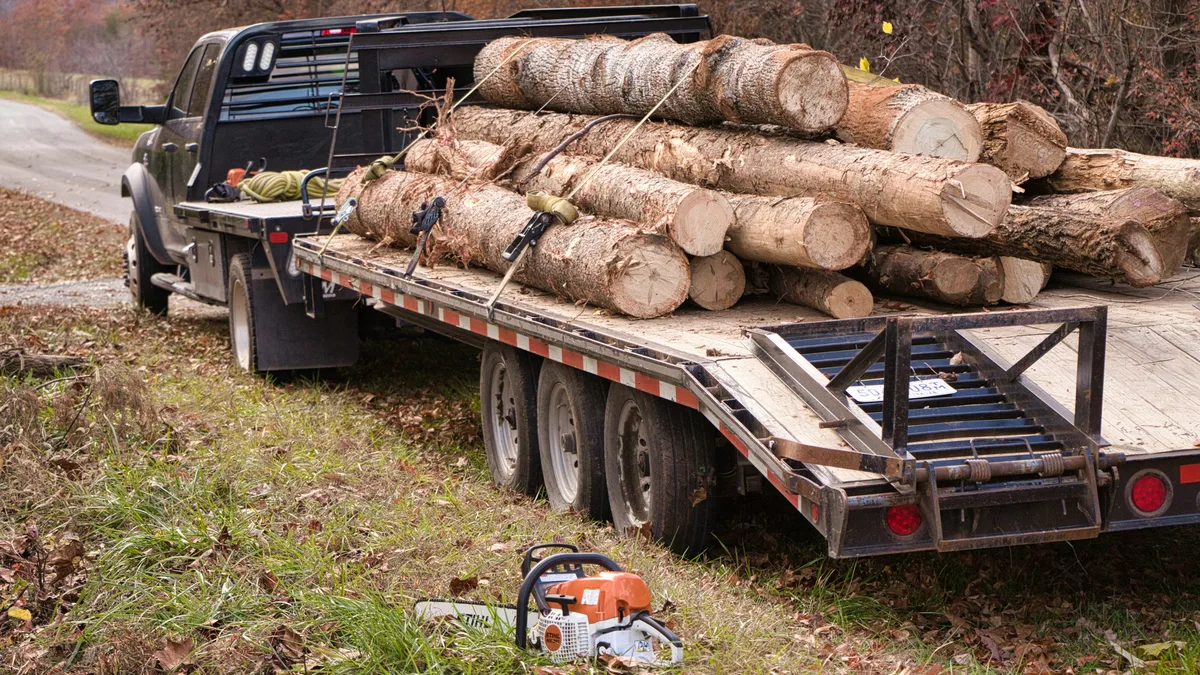
Flatbed dually towing a gooseneck flatbed trailer loaded with logs — Illinois Hot Shot Trucking Insurance from Truck Guard Insurance

The parts of light-combination work that are the same in every state — the short lead time, the deck somebody else loaded, the load whose value has nothing to do with what it weighs — belong to the class rather than to Illinois, and they sit on the hot shot trucking insurance page rather than being repeated here.

Illinois’s own material comes in two pieces and they are frequently reported as one. The safety chapter and the licensing chapter were enacted for different purposes, are administered by different bodies, and answer the question “when does Illinois law reach this operation” with two different answers. Both are correct. Only one of them costs a license.

The second piece is a genuine oddity that an operator will not find by reading the statute. The Commission rule that sets the dollar minimums for both liability and cargo does not state a figure. It incorporates one, by reference to a numbered part of the federal code as it stood on a date in 1990 — and that part was removed from the federal code afterwards. The rule then forecloses the usual escape by providing that no incorporation in it carries any later amendment or edition.

That is not a reason to conclude there is no requirement, and this page does not draw that conclusion. The statutory route to a minimum is separate from the rule’s route and it is live. What the defect changes is where the number comes from, which is worth knowing before a claim rather than after one.

Hauling property for hire inside Illinois? Operating as an intrastate motor carrier of property without a license from the Commission is unlawful under the Vehicle Code, and there is no weight in the sentence that says so.

Send your Illinois intrastate license number and the identifier printed on your cab card, together with who filed your form E and form H. Those tell us whether the authority is sound before any coverage question is reached.

Start a Illinois quote

The safety chapter starts at a weight; the licensing chapter starts at a payment

Both chapters live in the same statute — the Illinois Vehicle Code, 625 ILCS 5 — and they sit next to each other. That proximity is exactly why they get collapsed.

Chapter 18b is the safety chapter. 625 ILCS 5/18b-101 opens with a hedge that travels with everything under it — “Unless the context otherwise clearly requires, as used in this Chapter” — and then defines “Commercial motor vehicle” as “any self propelled or towed vehicle used on public highways in interstate and intrastate commerce to transport passengers or property when the vehicle has a gross vehicle weight, a gross vehicle weight rating, a gross combination weight, or a gross combination weight rating of 10,001 or more pounds,” together with several passenger limbs and a hazardous materials limb. That figure is what sets how far Chapter 18b reaches.

Chapter 18c is the Illinois Commercial Transportation Law, and its reach is set without reference to any weight. 625 ILCS 5/18c-4101 reads, in its entirety: “Except as provided in Section 18c-4102 of this Chapter, the jurisdiction of the Commission shall extend to all motor carriers of property operating within the State of Illinois.”

The term that sentence turns on is defined at 625 ILCS 5/18c-1104(19): “‘Motor carrier’ means any person engaged in the transportation of property or passengers, or both, for hire, over the public roads of this State, by motor vehicle. Motor carriers engaged in the transportation of property are referred to as ‘motor carriers of property’.” There is no weight in it, no rating band and no equipment description. Paragraph (11) defines “For-hire” as “for compensation or hire, regardless of the form of compensation and whether compensation is direct or indirect.”

So the trigger in Chapter 18c is the transportation of property for compensation over public roads. A combination that sits comfortably below every figure in Chapter 18b is inside Chapter 18c from the first paid load. This is the axis that binds first in Illinois, and it binds at no weight at all.

The exemptions are fourteen, and the two numbers in them belong to livestock and water

A jurisdiction section that reaches everything is only as broad as its exemption list, so the list was read in full rather than sampled.

625 ILCS 5/18c-4102 is captioned “Exemptions from Commission Jurisdiction” and provides that the chapter “shall not apply to transportation, by motor vehicle” of fourteen described kinds, lettered (a) through (n).

They are: mail exclusively for the United States Postal Service; agricultural commodities and farm supplies moved by an agricultural cooperative association; farm or dairy products, livestock, poultry, fruits and agricultural products moved by or on behalf of the producer without monetary compensation; livestock moved farm to farm or farm to farm market in a vehicle not registered above twenty-eight thousand pounds; farm tractors and self-propelled machinery used in agricultural production; towing performed on the written order of a law enforcement official; relocation of trespassing vehicles by a licensed commercial vehicle relocator; newspapers being delivered to residential subscribers; waste of no commercial value moved to a disposal site; transportation “incidental to and within the scope of the person’s primary business purpose, and the primary business is other than transportation”; emergency transportation of a wrecked or disabled vehicle; towing by a tow truck or rollback car carrier at the owner’s request; recycling and waste-processing movements by the generator in specified equipment; and potable water for human and livestock consumption in containers of 1,600 gallons or less.

Two of the fourteen contain a number, and both numbers describe a commodity movement rather than a class of truck. Twenty-eight thousand pounds appears only in the livestock exemption and only as a registration ceiling on that specific farm-to-farm movement. Sixteen hundred gallons appears only in the potable water exemption. Neither is a general weight exemption, and there is no fifteenth exemption for small vehicles.

Exemption (j) is the one that most nearly reaches a light truck, and reading it carefully shows that it does not reach this business. It excuses transportation “incidental to and within the scope of the person’s primary business purpose” where “the primary business is other than transportation.” A contractor moving their own materials on a gooseneck may be inside it. A carrier whose primary business is moving other people’s freight is, by the words of the exemption, outside it.

So the list confirms the shape of the jurisdiction section rather than qualifying it. Illinois excuses categories of shipper and categories of movement. It does not excuse categories of equipment.

A license, a cab card, and an identifier printed on it

What follows from being inside Chapter 18c is stated as a prohibition rather than as a permission, and the prohibition has several limbs that can be broken independently.

625 ILCS 5/18c-4104(1) makes it unlawful for any person to, among other things: “(a) Operate as an intrastate motor carrier of property without a license from the Commission; or as an interstate motor carrier of property without a registration from the Commission.” No weight qualifier appears in the paragraph.

Paragraph (c) adds a second, separate offence: operating as an intrastate motor carrier of property any motor vehicle “which does not carry a copy of a valid, current license issued by the Commission to such carrier,” or failing to produce that copy on request. Holding the license and leaving the copy at the office are two different failures.

Paragraphs (f) and (g) add a third document. It is unlawful to operate any motor vehicle “for which the carrier has not executed a prescribed intrastate cab card, with current Illinois intrastate identifier printed thereon,” and separately unlawful to operate a vehicle “which does not carry the properly executed intrastate cab card” with that identifier. The cab card is executed per vehicle, so a trailer swap or an added truck is a documentation event.

Paragraph (l) reaches outward, making it unlawful to aid or abet a violation “by soliciting, receiving, or compensating service from a person not authorized to provide such service.” That reaches shippers and brokers, and it is the reason Illinois shipper contracts frequently ask for a license number rather than merely for a certificate of insurance.

The statute then supplies a limited defense at subsection (2)(a): presenting at hearing a copy of a current license or registration valid on the date of the violation excuses the carrier from penalties under paragraph (c), provided no concurrent violations are found; the same mechanism excuses a lease failure under paragraph (d) and a cab card failure under paragraph (g). Note what the defense does not cover — paragraph (a), operating without a license at all, is not on the list.

The class of license for general freight is named in the definitions. 18c-1104(27.1) provides that “‘Public carrier’ means a motor carrier of property, other than a household goods carrier,” and (27.2) that a “‘Public carrier certificate’ means a certificate issued to a motor carrier to transport property, other than household goods, in intrastate commerce,” adding that its issuance “shall not be subject to the provisions of Article I of Sub-chapter 2 of this Chapter.” General freight is a public carrier matter and is not routed through the public convenience and necessity machinery that governs household goods.

Send your Illinois intrastate license, confirmation that cab cards are executed for every unit, the name of the admitted insurer filing your forms, and the value of the heaviest load you actually carry. Those four answers settle the Illinois questions before any coverage question is reached.

Get a Illinois quote

The Commission’s own minimums are pinned to a 1990 edition of a part that has since been removed

Illinois requires proof of insurance on file as a condition of the license, and the statute is unambiguous about it. 625 ILCS 5/18c-4901 provides: “No motor carrier of property shall operate within this State unless it has on file with the Commission or its agent proof of continuous insurance or surety coverage in accordance with Commission regulations.” The rule at 92 Ill. Adm. Code 1425.10 states the consequence from the other end: a license or registration “has force and effect only while the carrier is in compliance with requirements for the filing of proof of insurance or bond coverage.”

Then the amounts. 92 Ill. Adm. Code 1425.30 provides: “The minimum amounts of public liability and property damage insurance coverage required of all motor carriers of property shall be the amounts required by 49 CFR 1043.2, November 13, 1990, ‘Security for the protection of the public: Minimum limits’.” And 1425.40(a) provides: “The minimum amounts of cargo damage coverage required of all motor common carriers of property shall be as required by the provisions of 49 CFR 1043.2(c), November 13, 1990, except as specified in subsection (b) below.”

Both figures — liability and cargo — ride on the same citation. And that citation no longer points anywhere. The structure of title 49 of the Code of Federal Regulations was read at the federal source for this page: 419 part nodes, and Part 1043 is absent. The node covering the range where it would sit is labelled, verbatim, “Parts 1040-1089 [Reserved]”, under Chapter X, the Surface Transportation Board. The enumerated parts run 1039, then 1090.

The same problem reaches the filing machinery a section earlier. 1425.20(a) provides that the Commission “incorporates by reference 49 CFR 1023.51 through 1023.65, 1023.71, 1023.72, and 1023.81 as of December 1, 1986, as its regulations governing the filing of proof of insurance or bond coverage of cancellation.” Part 1023 is likewise absent from title 49; the enumerated parts run 1022, then 1033.

The rule then closes the door that would normally solve this. 1425.20(e) reads: “No incorporation in this Section contains any later amendments or editions.” That is a deliberate freeze rather than an oversight, and it means the incorporation cannot follow the material to wherever it was relocated.

One amount survives on the face of the rule, and it is narrow. 1425.40(b): “The minimum amounts of cargo damage coverage required of intrastate motor common carriers of property transporting unprocessed agricultural commodities and ordinary livestock shall be $5,000 liability for the unprocessed agricultural commodities, milk in bulk, commodities in dump-type vehicles, or ordinary livestock carried on each vehicle at any one time.” That is a commodity-specific figure and it does not reach general freight. No historical figures from the removed part are substituted here.

Where a live minimum does come from, and why the answer is not zero

A rule whose dollar reference has vanished is not the same as an absence of any requirement, and the distinction matters because reading it the other way produces exactly the kind of false zero that shows up at this weight class.

The statutory route is separate from the rule and it is intact. 625 ILCS 5/18b-105(b) adopts by reference, “as though they were set out in full,” a list of parts of title 49 of the Code of Federal Regulations for the purposes of Chapter 18b, and the list expressly names “Part 387 - Minimum Levels of Financial Responsibility for Motor Carriers” alongside Parts 40, 380, 382, 383, 385, 386 Appendix B, 390, 391, 392, 393, 395, 396 and 397.

How far that adoption reaches is set by the Chapter 18b definition quoted earlier, which turns on ten thousand and one pounds measured on any of four bases — gross vehicle weight, gross vehicle weight rating, gross combination weight or gross combination weight rating. A for-hire combination in the fifteen to twenty-six thousand pound band is above that on any measure, and is inside the adopted parts including the financial-responsibility part.

The adopted part carries its own applicability rules along with it, and they are worth reading rather than assuming. Its scope provision excludes a motor vehicle with a gross vehicle weight rating of less than ten thousand and one pounds. That exclusion sits below the Chapter 18b line rather than above it, so for this class of equipment the two thresholds point the same way and neither produces a gap.

The result is that an Illinois intrastate hot shot has a live financial-responsibility obligation, and the number is not zero. What is genuinely uncertain is the amount the Commission’s own rule prescribes, because that rule points at removed material and forecloses following it. This page states the structure and declines to state a figure sourced to a citation that cannot be dereferenced.

There is also a filing consequence rather than merely a limits consequence. 1425.20(c) provides that coverage “shall remain in effect until a cancellation form is filed with the Commission or the coverage is cancelled by the filing of a subsequent form E or H certificate of insurance” — so the Illinois filing runs on forms E and H, named in the rule, and it terminates on a filing rather than on a policy expiry. And 1425.20(f) requires that for Illinois-domiciled carriers and for Illinois-licensed intrastate carriers regardless of domicile, coverage “shall be executed by an admitted insurance company authorized under the laws of the State of Illinois to deliver commercial automobile insurance.” A surplus lines policy does not satisfy that sentence.

A waiver you can sign if you will never carry more than five thousand dollars

Illinois offers a route out of the cargo filing, and the route has two conditions that operate together. Both are worth reading before anyone signs, because the second is easier to fail than the first.

92 Ill. Adm. Code 1425.40(c), captioned “Waiver of Requirement,” provides that an intrastate motor common carrier of property may be excused from filing proof of cargo insurance if: “1) The carrier has filed with the Commission a completed copy of the Commission’s Cargo Insurance Waiver Affidavit form stating that the carrier will not, at any time, carry in any vehicle cargo with a value exceeding $5,000, and the carrier does not, at any time, carry cargo in any vehicle with a value exceeding $5,000; and 2) The carrier advises each shipper in writing, prior to rendition of the service, that it does not carry the minimum level of cargo insurance. The burden of proving compliance with this latter requirement shall be on the carrier.”

The first condition is doubled on purpose. The affidavit states an intention, and the paragraph separately requires that the carrier in fact does not carry cargo above the value. A single load above five thousand dollars breaks the second half whatever the affidavit says, and on this class of freight five thousand dollars is not a high bar — a pallet of controlled parts or a single piece of production equipment can pass it without the trailer looking any different.

The second condition is a written disclosure to each shipper before service, and the rule places the burden of proving compliance on the carrier. That is an evidentiary allocation rather than a formality: a carrier relying on the waiver has to be able to produce, for each customer, a written communication that predates the first load.

A separate waiver with the same architecture applies to the collect-on-delivery bond. 1425.50(a) sets that bond at ten thousand dollars “for each shipper or consignee for failure of the carrier to remit payment of C.O.D. monies,” and 1425.50(b) offers a waiver on an affidavit that the carrier will not accept a C.O.D. shipment together with written notice to each shipper. That ten thousand dollar figure is a collect-on-delivery bond and not a cargo limit, and the two should not be run together.

One scope point sits underneath the whole section and is easy to miss. 1425.40(a) reaches “all motor COMMON carriers of property” — common, not contract. Part 1425 does not elsewhere extend the cargo requirement to contract carriers, although 1425.30 reaches “all motor carriers of property.” The word choice differs between two adjacent sections of the same subpart, and it differs in the section that matters most to a freight operator.

Self-insurance is a net-worth test with three steps and a property requirement

Illinois publishes what it takes to be excused from filing at all, which is unusual and useful — it puts a number on the scale at which the state stops asking for evidence from an insurer.

92 Ill. Adm. Code 1425.110 provides that “A carrier which has been authorized by order of the Commission to act as a self-insurer is not required to file proof of insurance or bond coverage under this Part.” 1425.120 then sets the qualifications: a net worth of five hundred thousand dollars if the carrier operates fewer than twenty-five vehicles; seven hundred fifty thousand dollars from twenty-five to one hundred vehicles; and one million dollars for more than one hundred vehicles. In addition, the carrier must hold “Property with a value of $500,000 or more located within the State of Illinois, free from all liens.”

The second requirement is the one that matters to a light-combination operator, and it is not a net-worth test at all. It is a half-million dollars of unencumbered property physically located in Illinois. A carrier with a leased yard and financed equipment does not satisfy it regardless of its balance sheet, which puts the route out of reach of essentially every operation in this class.

The obligations that follow authorization are ongoing rather than one-off. 1425.130 requires each self-insured motor carrier of property to file a quarterly report with the Commission, not later than the twentieth day after the end of each calendar quarter, listing all accidents, injuries and fatalities arising out of its Illinois operations together with claims filed of the type for which it self-insures. 1425.140 covers revocation of the authorization and 1425.150 reinstatement.

The reason to set this out on a page about light combinations is not that anyone in the class will use it. It is that the figures show what Illinois considers adequate security when nobody is filing anything — and a carrier buying limits well below that scale, with no property in the state and a financed truck, is not in the position the Commission had in mind when it wrote the alternative.

Air mile means nautical mile here, and the Code says so

Illinois writes its own hours-of-service positions rather than adopting the federal ones wholesale, and one of them redefines a unit that most operators assume is fixed.

625 ILCS 5/18b-105(d) provides: “Intrastate carriers subject to the recording provisions of Section 395.8 of Part 395 of the Federal Motor Carrier Safety Regulations shall be exempt as established under paragraph (1) of Section 395.8; provided, however, for the purpose of this Code, drivers shall operate within a 150 air-mile radius of the normal work reporting location to qualify for exempt status.”

And 18b-101 supplies the unit: “Air mile” is defined as “a nautical mile, which is equivalent to 6,076 feet or 1,852 meters.” A statutory definition of a distance unit is uncommon, and it is not a rounding detail — a hundred and fifty nautical miles is a materially larger circle than a hundred and fifty statute miles, and the difference falls exactly where an operator working out of a suburban yard will care about it.

The remaining Illinois departures for intrastate operation are listed at 18b-105(c), which provides that certain federal sections “shall not apply to those intrastate carriers, drivers or vehicles subject to subsection (b).” They are: section 393.93 for vehicles manufactured before June 30, 1972; section 393.86 for vehicles registered as farm trucks; paragraph (b)(1) of section 391.11 — the minimum age requirement; all of Part 395 for agricultural operations at any time of year, for farm to market agricultural transportation, and for grain hauling within a radius of 200 air miles of the normal work reporting location; and paragraphs (b)(3) and (b)(10) of section 391.41 for a narrow grandfathered class of drivers licensed before July 29, 1986.

For a general-freight light combination, only two of those are live. The minimum age relief at (c)(5) applies. Everything on the agricultural side does not, and the 200 air mile grain provision in particular is a different rule from the 150 air mile provision in subsection (d) — same unit, different radius, different population, and they are frequently confused.

One further Illinois variance sits in a separate section and is named so it is not misread as freight relief. 625 ILCS 5/18b-106.1 sets hours for drivers employed by contract carriers transporting employees in the course of their employment; Part 395 is adopted in 18b-105(b) “except as provided in Section 18b-106.1.” That is a passenger-side rule and it does not reach property carriage.

Finally, on how the safety text moves: 18b-105(b) adopts the listed parts “as now in effect,” and 18b-105(e) provides that “Regulations adopted by the Department subsequent to those adopted under subsection (b) hereof shall be identical in substance to the Federal Motor Carrier Safety Regulations.” There is no numeric edition date in the statute — the currency mechanism is a conformity duty on the Department rather than a stated year.

How Part 1425 was proved to be in force, and by what contrast

A rule that incorporates removed material invites the question of whether the rule itself is still live. It is, and the way that was established is worth setting out because it is the same method that would have shown the opposite.

The Part’s own source block, read on the served document, records: “Emergency rule at 4 Ill. Reg. 2, p. 237, effective January 1, 1980, for a maximum of 150 days; adopted at 4 Ill. Reg. 23, p. 71, effective May 28, 1980; codified at 8 Ill. Reg. 13670; Part recodified at 10 Ill. Reg. 18002; Part repealed, new Part adopted at 11 Ill. Reg. 16472, effective October 1, 1987; amended at 18 Ill. Reg. 11162, effective July 1, 1994.” The word “repealed” in that history refers to the 1980 predecessor Part, which was replaced by the Part now in force in 1987 and amended in 1994.

The stronger evidence is a contrast rather than a reading. The Title 92 parts index marks repeals explicitly, and it marks several of Part 1425’s immediate neighbours: “PART 1400 TARIFF BUREAUS (REPEALED)”, “PART 1410 MOTOR BUS CARRIERS (GENERAL ORDER 153) (REPEALED)”, “PART 1420 FRANCHISE FEES (REPEALED)”, “PART 1430 APPLICATIONS FOR EMERGENCY TEMPORARY AUTHORITY (REPEALED)” and “PART 1455 TRANSPORTATION OF HOUSEHOLD GOODS IN INTRASTATE COMMERCE (REPEALED)”. Part 1425 appears in the same list as “PART 1425 FINANCIAL RESPONSIBILITY OF CARRIERS” with no marker at all.

Because the index demonstrably marks repeals in the same block of motor carrier parts, the absence of a marker on Part 1425 is affirmative evidence that it is in force rather than an unread field. That is a different quality of evidence from not having found a repeal notice.

The neighbours are also informative about Illinois in their own right. A block of the Commission’s motor carrier rules — tariff bureaus, franchise fees, emergency temporary authority, intrastate household goods — has been repealed around a financial responsibility part that survives. The economic-regulation apparatus has been dismantled in large part; the insurance-filing apparatus was kept.

One more path detail is recorded because it produced a false negative in earlier research. The legacy JCAR route at /commission/jcar/admincode/ returns HTTP 404 for these parts. That is a dead path, not a blocked host; the live route is /agencies/JCAR/EntirePart, and Part 1425 was read complete through it — ten sections across two subparts, plus the authority and source blocks.

What a Commission file shows that a photograph of the truck does not

There is no rate table for this class and nothing here is a price. What follows is what an Illinois submission actually turns on, and the striking thing about the list is how much of it is documentary rather than physical.

Authority standing comes first, because Illinois is one of the states where it can be checked and where its absence is an offence rather than an irregularity. A license from the Commission for intrastate property carriage, a copy of it in every vehicle, and an executed cab card with a current Illinois intrastate identifier printed on it are three separate requirements under 18c-4104(1), each independently breakable. An operation that holds the license and has not executed cab cards for two recently added trailers is out of compliance on paragraph (f) while being perfectly compliant on paragraph (a).

The filing chain comes second and it has an insurer-quality condition most states do not impose. Under 1425.20(f), for an Illinois-domiciled carrier or any Illinois-licensed intrastate carrier, coverage must be executed by an admitted insurance company authorized in Illinois to deliver commercial automobile insurance. That constrains the market before it constrains the price, and it is a live constraint on a class of business that is frequently placed outside the admitted market.

Weight comes third rather than first, which is the inversion Illinois produces. It does not decide whether the state reaches the operation — Chapter 18c already did that at the first paid load. What it decides is whether Chapter 18b and the federal parts adopted into it apply, and the test is ten thousand and one pounds on any of four measures. On a combination, the gross combination weight rating moves when the trailer changes.

Cargo limit is fourth and it is the input where the state contributes least. The Commission’s cargo minimum points at removed material, the only figure on the face of the rule is a five thousand dollar agricultural commodity provision, and the waiver route requires both never carrying above five thousand dollars in value and proving written notice to every shipper. What that adds up to is that the cargo limit a hot shot operator carries in Illinois is a commercial decision, and it should be set against the value of the heaviest single load actually carried.

Radius is fifth and it has a specific Illinois meaning. The 150 air-mile relief in 18b-105(d) is measured in nautical miles by statutory definition, from the normal work reporting location. What an underwriter needs is not a maximum distance but the geometry — how many reporting locations, and what fraction of dispatches stay inside each circle.

Authority type and the contract stack finish it. Whether the operation runs on its own Illinois license or moves freight under another carrier’s changes who files what, and 18c-4104(1)(l) makes compensating an unauthorized carrier an offence in its own right — which is why Illinois brokers and shippers ask for license numbers. Additional-insured wording, primary and non-contributory language and waivers of subrogation flowing down from shipper agreements change the program without changing anything about the truck.

  • The Illinois intrastate license, a copy carried in each vehicle, and an executed cab card with the current intrastate identifier printed on it.
  • Whether coverage is written by an insurer admitted in Illinois, as 1425.20(f) requires for an Illinois-licensed intrastate carrier.
  • Gross combination weight rating and actual combination weight against the 10,001 pound Chapter 18b line.
  • Cargo limit against the heaviest single load actually carried, and whether any cargo waiver affidavit is on file.
  • Whether written notice was given to every shipper before service, if the waiver is being relied on.
  • Reporting locations and the fraction of dispatches inside each 150 nautical mile radius.
  • Whether the operation runs on its own license or under another carrier’s, given 18c-4104(1)(l).
  • Shipper and broker contract terms — additional insured, primary and non-contributory, waiver of subrogation.

What is established here, and the one figure this page declines to give

No Illinois statute or rule read for this page names this work. There is no defined term for it, no dedicated license class and no separate filing table. Illinois reaches it as it reaches motor carriage generally — through a jurisdiction section with no weight in it and a safety definition with one.

The cluster label this cell arrived with put Illinois at ten thousand and one pounds, taken from the Chapter 18b definition. That is the correct number for the safety chapter and it is the wrong number for the question the label asks, because Chapter 18c reaches first and reaches lower. The correction rests on three readings rather than on an inference from silence: 18c-4101 extends Commission jurisdiction to all motor carriers of property; 18c-1104(19) defines that term with no weight element and 18c-1104(11) defines for-hire broadly; and the fourteen exemptions at 18c-4102 were read in full, with the only two numbers in them attaching to a farm livestock movement and a potable water container size.

The one thing this page declines to state is the Commission’s prescribed dollar minimum, for liability or for cargo. Both are set by 92 Ill. Adm. Code 1425.30 and 1425.40(a) by reference to 49 CFR 1043.2 as of November 13, 1990, and that part is absent from the current title 49 — verified against the federal structure document, 419 part nodes, with the range labelled “Parts 1040-1089 [Reserved]”. The filing procedure at 1425.20(a) points at 49 CFR Parts 1023.51 to 1023.81, likewise absent. Substituting historical figures would be publishing a number this page cannot source, and 1425.20(e) forecloses following the material forward.

What that does not mean is that no minimum applies. The statutory adoption of the federal financial-responsibility part at 18b-105(b) is intact and reaches this equipment through the Chapter 18b definition, so the obligation is live and the answer is not zero. The uncertainty is about which figure the Commission’s own rule prescribes, not about whether Illinois requires coverage.

The result an operator has to work with is that Illinois asks for more documents than most states and states fewer numbers than most. The license, the copy in the cab, the cab card and the identifier are all checkable at the roadside. The dollar figure the Commission’s rule intends is not checkable anywhere.

Coverage lines a Illinois hot shot account usually carries

The state minimum is a licensing threshold. The program an operator actually needs is built from these lines:

  • Trucking Auto Liability — Primary liability coverage for bodily injury and property damage caused by your truck while under dispatch.
  • Physical Damage — Collision and comprehensive coverage for the tractor, trailer, and attached equipment you own or finance.
  • Motor Truck Cargo — Coverage for the freight you haul against loss or damage in transit.
  • Trailer Interchange — Coverage for non-owned trailers you pull under written interchange agreements.
  • General Liability — Coverage for premises and operations liability away from the truck — terminal yards, customer docks, and non-driving exposures.
  • Workers Compensation — Statutory coverage for driver and yard-employee injury, structured for trucking payrolls and interstate operations.
  • Non-Trucking (Bobtail) Auto Liability — Liability coverage for the tractor when operated off-dispatch — bobtailing home or running personal errands.
  • Pollution Liability — Coverage for cargo-related pollution events and upset/overturn spills not covered by standard auto liability.

Why Truck Guard Insurance for a Illinois hot shot account

We write hot shot and expedited hauling as a named class rather than as an exception to general trucking, and we read each account against the weight and authority regime of the state it operates in. For a Illinois operator that means starting from the rating of the power unit and the trailer separately rather than from the combination, sizing cargo against the heaviest load actually carried rather than the average one, and treating the state line as a rating fact because a single crossing can change which driver file the operation owes.

If the operation also runs freight under separate authority, the Illinois trucking insurance page covers the state’s broader motor carrier picture, and the hot shot trucking insurance page covers the class mechanics that apply wherever the operator runs.

Illinois hot shot trucking insurance questions

Is there a weight below which Illinois does not require a license?

No. 625 ILCS 5/18c-4101 provides that “Except as provided in Section 18c-4102 of this Chapter, the jurisdiction of the Commission shall extend to all motor carriers of property operating within the State of Illinois,” and 18c-1104(19) defines a motor carrier as any person engaged in the transportation of property for hire over the public roads by motor vehicle — with no weight element. The fourteen exemptions in 18c-4102 were read in full for this page and none of them is a weight exemption for general freight.

Then what is the 10,001 pound figure people cite for Illinois?

It is the Chapter 18b safety definition, and it answers a different question. 625 ILCS 5/18b-101 defines a commercial motor vehicle for that chapter as one with a gross vehicle weight, gross vehicle weight rating, gross combination weight or gross combination weight rating of 10,001 or more pounds, subject to the chapter’s opening hedge “Unless the context otherwise clearly requires.” That figure sets how far the adopted federal safety parts reach. It does not set whether Illinois licenses the operation.

What documents does an Illinois intrastate freight carrier have to carry?

Three things, and each is a separate offence to lack. 625 ILCS 5/18c-4104(1)(a) makes operating as an intrastate motor carrier of property without a Commission license unlawful; (1)(c) requires a copy of the valid, current license to be carried in the vehicle and produced on request; and (1)(f) and (g) require an executed intrastate cab card with the current Illinois intrastate identifier printed on it, carried in the vehicle. The limited hearing defense in subsection (2)(a) covers the copy and the cab card, but not operating without a license.

What cargo insurance does the Illinois Commerce Commission require?

The rule does not state a figure that can be quoted. 92 Ill. Adm. Code 1425.40(a) sets the cargo minimum by reference to 49 CFR 1043.2(c) as of November 13, 1990, and that part is absent from the current title 49 — the federal structure document labels the range “Parts 1040-1089 [Reserved]”. The only amount on the face of the rule is 1425.40(b)’s $5,000 for unprocessed agricultural commodities, milk in bulk, commodities in dump-type vehicles and ordinary livestock, which does not reach general freight.

Does that mean Illinois requires no minimum liability limit either?

No — the statutory route is intact and separate. 92 Ill. Adm. Code 1425.30 sets the liability minimum by the same removed citation, but 625 ILCS 5/18b-105(b) adopts 49 CFR Part 387 by reference for Chapter 18b, and the Chapter 18b definition reaches a combination at 10,001 pounds on any of four measures. A for-hire hot shot in the fifteen to twenty-six thousand pound band is inside that adoption, so a financial responsibility obligation applies and the answer is not zero.

Can I get out of the Illinois cargo filing?

Only on two conditions that operate together. 92 Ill. Adm. Code 1425.40(c) allows an intrastate motor common carrier of property to be excused if it files the Commission’s Cargo Insurance Waiver Affidavit stating it will not at any time carry cargo valued above $5,000 in any vehicle and in fact does not, and if it advises each shipper in writing before service that it does not carry the minimum level of cargo insurance. The rule places the burden of proving that second requirement on the carrier.

Can a surplus lines policy satisfy the Illinois filing?

No, for an Illinois-licensed intrastate carrier. 92 Ill. Adm. Code 1425.20(f) requires that for Illinois-domiciled carriers, and for Illinois-licensed intrastate carriers regardless of domicile, coverage “shall be executed by an admitted insurance company authorized under the laws of the State of Illinois to deliver commercial automobile insurance.” That constrains where the business can be placed before it constrains the price.

Does Illinois change the federal short-haul air-mile rule?

Yes, and it also defines the unit. 625 ILCS 5/18b-105(d) provides that intrastate carriers subject to the recording provisions of section 395.8 are exempt as established under paragraph (1) of that section, provided drivers operate within a 150 air-mile radius of the normal work reporting location. 625 ILCS 5/18b-101 then defines “Air mile” as “a nautical mile, which is equivalent to 6,076 feet or 1,852 meters.” A separate 200 air-mile provision at 18b-105(c)(6) applies to grain hauling only.

How much does hot shot insurance cost in Illinois?

There is no table to quote and any figure offered without seeing the operation would be invented. What moves it here is the standing of the Commission license and whether cab cards are executed for every unit, the requirement that the filing come from an admitted Illinois insurer, the combination weight against the 10,001 pound Chapter 18b line, the cargo limit set against the heaviest load in a state whose own figure cannot be sourced, the reporting locations and the 150 nautical mile geometry, and the additional-insured and waiver terms in shipper contracts.

Sources

Every figure on this page was read at the source below on September 1, 2026, with the effective date of the version read. Treat each as current as of that date rather than as permanent.

  • 625 ILCS 5/18c-4101, 18c-4102 and 18c-4104 — Commission jurisdiction, exemptions and unlawful operations — 18c-4101 extending Commission jurisdiction to all motor carriers of property except as provided in 18c-4102; 18c-4102’s fourteen exemptions (a) through (n), read in full, whose only two numbers are a 28,000 pound registration ceiling on a farm livestock movement and a 1,600 gallon potable water container limit; 18c-4104(1)(a), (c), (f), (g) and (l) and the limited hearing defense at (2)(a). Read in served bytes September 1, 2026; the fulltext.asp route 302s to the /Documents/legislation/ilcs/documents/ path that serves the section..
  • 625 ILCS 5/18c-1104 — Definitions (Illinois Commercial Transportation Law) — Paragraph (19) defining motor carrier as any person engaged in the transportation of property or passengers for hire over the public roads by motor vehicle, with no weight element, and naming motor carriers of property; paragraph (11) defining for-hire as for compensation or hire regardless of form and whether direct or indirect; paragraphs (27.1) and (27.2) defining public carrier and public carrier certificate; paragraph (20) defining motor vehicle. Read September 1, 2026..
  • 625 ILCS 5/18b-101 and 18b-105 — Definitions and adoption of federal regulations — 18b-101’s opening hedge “Unless the context otherwise clearly requires, as used in this Chapter”, its 10,001 pound commercial motor vehicle definition on four weight bases, and its definition of air mile as a nautical mile of 6,076 feet or 1,852 meters. 18b-105(b) adopting thirteen parts of 49 CFR including Part 387 “as now in effect”; (c)’s seven intrastate de-applications including 391.11(b)(1) and the agricultural and 200 air-mile grain provisions; (d)’s 150 air-mile substitution; (e)’s conformity duty. Read September 1, 2026..
  • 92 Ill. Adm. Code Part 1425 — Financial Responsibility of Carriers — Read complete: ten sections across Subpart A (1425.10 licenses conditioned on compliance, 1425.20 proof of insurance including the 49 CFR 1023 incorporation, the form E and H cancellation mechanism, the no-later-amendments clause and the admitted-insurer requirement, 1425.30 liability minimums by reference to 49 CFR 1043.2, 1425.40 cargo minimums and the waiver affidavit, 1425.50 the $10,000 C.O.D. bond and its waiver) and Subpart B (1425.110 to 1425.150 self-insurance, including the three net-worth steps and the $500,000 unencumbered Illinois property requirement), plus the authority and source blocks. The legacy /commission/jcar/ path returns 404; this live JCAR route serves the Part. Read September 1, 2026..

  • 625 ILCS 5/18c-4901 — Insurance Coverage as a Prerequisite to Operations — The statutory requirement that no motor carrier of property operate within the State unless it has on file with the Commission or its agent proof of continuous insurance or surety coverage in accordance with Commission regulations — the provision that makes the Part 1425 filing a condition of operating rather than a formality. Read September 1, 2026..
  • eCFR — Title 49 structure (control for the removed parts) — Fetched September 1, 2026 to test the citations Part 1425 relies on. 419 part nodes are present. Part 387 is present. Parts 1023 and 1043 are absent; the enumerated parts run 1022 then 1033, and 1039 then 1090, with the intervening node labelled verbatim “Parts 1040-1089 [Reserved]” and marked reserved, under Chapter X, Surface Transportation Board. This is why no dollar figure is stated on this page for 92 Ill. Adm. Code 1425.30 or 1425.40(a)..

Get a Illinois hot shot trucking insurance quote

Send the power unit and trailer ratings separately, the radius distribution, and whether any dispatch crosses a state line. We will size the program against the work the trucks actually do rather than against a statutory floor.

Start a quote Call 317-942-0549