Motor carrier classes by state

New Jersey hot shot trucking insurance for light-combination and expedited freight operators

New Jersey rewrote the definition of a commercial motor vehicle for intrastate commerce and added a prong nobody expects: registered weight, whichever is greater. Your registration paperwork can put the truck over the line before the scale does. The same rewrite then gives intrastate drivers a longer working day than the federal limits allow — and it arrived in 2018, when a repeal removed the appendix that had said something entirely different.

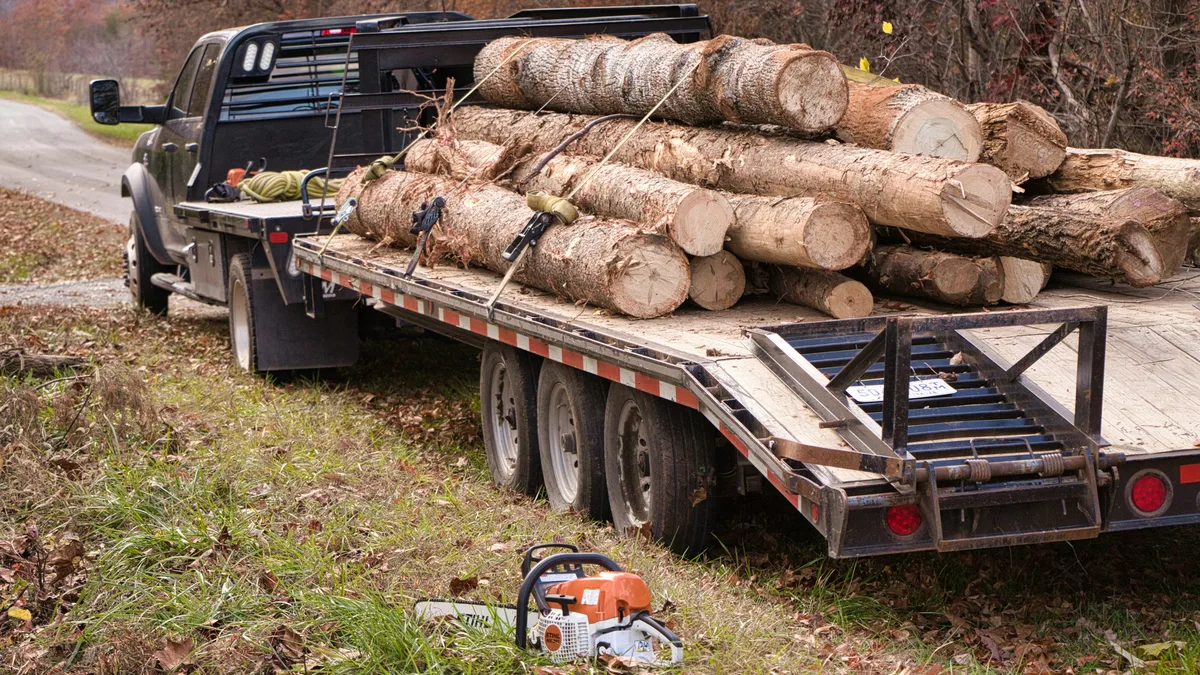
Flatbed dually towing a gooseneck flatbed trailer loaded with logs — New Jersey Hot Shot Trucking Insurance from Truck Guard Insurance

The parts of light-combination hauling that behave identically in New Jersey and in Idaho — the securement duty that resets every load, the delivery window with no slack, the mismatch between a cargo limit set against an average shipment and the one that produces the claim — belong to the equipment and the trade rather than to any state, and the hot shot trucking insurance page deals with them. This one does not.

New Jersey’s own contribution sits almost entirely in one rule, and specifically in one subsection of it. The State Police motor carrier chapter adopts the federal safety regulations by reference, and then a modification list sets out five changes. Two of them decide who is covered and what registration is required. Three of them change the hours a driver may work. Every New Jersey-specific number in the chapter lives in that one subsection, and it is the part most easily missed by a reader who confirms that the chapter adopts the federal rules and stops there.

The other half of the New Jersey answer is what is not there. There is no state operating authority to apply for. There is no cargo insurance filing, because there is no agency to file it with. And the only financial responsibility floor that reaches a for-hire truck is the same one that reaches every registered vehicle in the state, in a statute that says nothing about carriers at all.

There is also a date worth carrying. On February 5, 2018 a rulemaking repealed the chapter’s appendix, and the appendix is where New Jersey’s old intrastate threshold and its old hours carve-out lived. That repeal is legible only in the title block of the repealed document. Any summary of New Jersey written before it — and a good many written since — is describing law that no longer exists.

Running a light truck and trailer inside New Jersey? The state definition takes gross vehicle weight rating, gross combination weight rating, or registered weight — whichever is greater — so how the truck is registered can decide the answer before anything is loaded.

Send the ratings and the registered weight on the current registration as separate numbers. They are frequently not the same, and in New Jersey the largest of them governs.

Start a New Jersey quote

The paperwork can put you over the line before the scale does

New Jersey does not adopt the federal definition of a commercial motor vehicle and leave it in place for intrastate operation. It writes its own, and the modification list says so directly: the definition in the federal general applicability part “is modified to read as follows”.

The replacement, at N.J.A.C. 13:60-2.1(d)(1), provides that a commercial motor vehicle “means any self-propelled or towed motor vehicle used on a highway in intrastate commerce to transport passengers or property when the vehicle: i. Has a gross vehicle weight rating or gross combination weight rating, or a registered weight of 4,536 kg (10,001 pounds) or more, whichever is greater”, followed by prongs addressed to vehicles built or used to move more than eight people for hire, more than fifteen not for hire, and placardable hazardous material.

Three measures, and the third is the one that does not appear in the federal text at all: registered weight. New Jersey put a registration figure alongside the two manufacturer ratings and then instructed that the greatest of the three governs.

That is a genuinely different mechanism from a weight test, and it produces a genuinely different failure mode. Ratings are fixed properties of equipment. Registered weight is a declared figure on a document, chosen when the vehicle is registered, and it is routinely set higher than an operator strictly needs — because registering at a higher weight buys headroom, avoids a mid-year amendment, or simply matches what the fleet does with everything else. A vehicle whose ratings sit comfortably under the line can be registered above it, and the definition takes the registration.

For light-combination work this is the single most consequential thing on the page, because it is the one an operator can be caught by while doing everything else correctly. Nothing about the truck changes. Nothing about the load changes. A clerk enters a weight on a registration and the vehicle is inside New Jersey’s intrastate definition, with everything that follows from it. It is worth checking what the current registration actually says rather than reasoning from the door jamb.

  • Gross vehicle weight rating — what the builder certified for the power unit.
  • Gross combination weight rating — what the builder certified for the pairing.
  • Registered weight — a declared figure on the registration, and the prong that has no federal counterpart.
  • The rule takes whichever of the three is greater, so the registration alone can settle it.

An intrastate USDOT number, written into a state rule

The second item on the modification list is short and creates a duty that operators frequently assume applies only to interstate work.

N.J.A.C. 13:60-2.1(d)(2) modifies the federal registration provision to read: “A commercial motor vehicle providing transportation in intrastate commerce must not be operated without a USDOT registration and an active USDOT Number.”

That is a state-imposed obligation attaching to purely intrastate operation, and it keys to the same definition set out above — so it attaches at the same place, including through the registered-weight prong. An operator whose work never leaves New Jersey, who has concluded on that basis that a federal registration number is not their concern, is inside this sentence if the vehicle meets the definition.

It is also worth noticing that the duty is written to operation of the vehicle rather than to the carrier’s status. The words are that a commercial motor vehicle “must not be operated” without the registration and an active number. Active is doing work there: a number that exists but has lapsed into inactive status does not satisfy the sentence.

The practical consequence is that New Jersey has a registration requirement without an operating authority requirement, which is an unusual combination and is why the two questions get conflated. The state requires the number. It does not, on anything read for this page, require a certificate or permit from any New Jersey agency to carry general freight inside the state. Those are different obligations with different sources, and the section below on the absence of authority takes up the second.

New Jersey gives intrastate drivers a longer day, and it is easy to miss

The remaining three items on the modification list all change the federal hours-of-service part for intrastate operation, and together they produce limits materially more generous than the ordinary ones. This is live New Jersey law and it applies to general freight — there is no commodity gate on it.

The first sets the daily window. N.J.A.C. 13:60-2.1(d)(3) modifies the federal maximum driving time provision so that “a driver may drive only during a period of 16 consecutive hours after coming on duty following 10 consecutive hours off duty.”

The second sets the driving time inside that window. Subsection (d)(4) modifies the corresponding provision so that “a driver may drive a total of 12 hours during the 16-hour period.”

The third sets the weekly limits. Subsection (d)(5) modifies the federal cumulative provisions to prohibit driving after “having been on duty 70 hours in any period of 7 consecutive days” or “80 hours in any period of 8 consecutive days.”

Read as a set: a sixteen-hour window rather than the shorter federal one, twelve hours of driving inside it rather than eleven, and seventy-in-seven or eighty-in-eight on the cumulative side. For an operation dispatched on availability, where the load goes to whoever can be moving soonest, the difference between those numbers and the ordinary ones is not academic — it is the difference between a dispatch being legal and not.

Two cautions belong with it, and both are important enough that an operator should not rely on the relief without settling them. The modification is to the intrastate side of a chapter whose reach is defined by the New Jersey definition above, so it goes when the operation crosses a state line — and in New Jersey, crossing a state line is not an occasional event. Second, a longer permitted day is not a safer one, and it is not priced as one: an underwriter reading a fatigue-related loss does not consult the permitted maximum. The state has set a ceiling, not a recommendation.

  • A 16-hour window after coming on duty following 10 consecutive hours off duty, per (d)(3).
  • 12 hours of driving inside that 16-hour period, per (d)(4).
  • 70 hours in any 7 consecutive days, or 80 hours in any 8 consecutive days, per (d)(5).
  • Intrastate only — the relief goes with the first load that leaves the state, and the reach of the chapter is set by New Jersey’s own commercial motor vehicle definition.
  • A permitted maximum, not a safe practice, and not something an insurer treats as a defense.

Send the registered weight from the current registration alongside both manufacturer ratings, an honest count of how often a week includes a load leaving New Jersey, and the value of the heaviest single shipment you carry. Those three answers settle which regime applies before any coverage question is reached.

Get a New Jersey quote

The number that moved when nobody amended it

There is a specific reason so much published material about New Jersey is wrong, and it is a rule-change shape that leaves nothing behind for a reader to find.

The chapter used to carry an appendix. The appendix contained a New Jersey-specific definition of a commercial motor vehicle in intrastate commerce that sat at a substantially higher weight, and it contained a modification to the federal maximum driving time provision that turned on the same higher figure. Both were real New Jersey law and both governed for years.

On February 5, 2018 the appendix was repealed in its entirety. The document is still served, under a heading that carries the word Repealed in it, with a note recording the New Jersey Register citation and the effective date of February 5, 2018. That title block is the only place the change is legible. There is no amendment to the threshold anywhere, because the threshold was never amended — its container was removed and it went with it.

The same rulemaking amended the adoption section, which is where the current definition and the current hours modifications now live. So the substance did not vanish; it moved and it changed. But an operator or an adviser searching for a change to the number will find nothing, because the change was structural rather than numerical.

This is the practical reason a secondary source cannot be trusted on New Jersey even when it is careful. A summary written before February 2018 was accurate when written and is now describing a repealed appendix. A summary written after it, by an author working from the older material, reproduces the same error with a newer date on it. Neither looks wrong. The only way to tell is to read the current rule and look at the effective-date notes, which is what was done for this page.

The lesson generalizes past New Jersey. Rules move by repeal and by expiry as well as by amendment, and those two routes leave no amendment event to find. Effective-date blocks and history notes are where they are legible, and they are the part of a legal source that summaries reliably discard.

There is no New Jersey operating authority to apply for

The question every for-hire operator asks first is what they have to obtain from the state before the first paid load, and on everything read for this page the New Jersey answer is nothing — with a specific and bounded exception for the registration duty described above.

The chapter this page has been quoting is a State Police safety chapter. Its stated purpose is the adoption of federal motor carrier safety regulations, and it creates no economic entry regime: it does not issue certificates, does not issue permits, and does not establish a commission or bureau to administer either. Its enforcement provision routes violations to a penalty statute rather than to a licensing consequence.

The candidate homes for such a regime elsewhere in the New Jersey administrative code were enumerated and eliminated. The Department of Transportation’s title carries chapters on truck access, hazardous materials transportation, rail freight assistance, transportation utilities, reduced-fare and senior transportation programs and a private carrier capital improvement program — none of which is a property-carrier entry regime. The Board of Public Utilities’ title, which is where such a chapter would historically have sat, has no motor carrier chapter at all; the numeric ranges where one would appear are reserved.

One specific suspicion was chased down and closed. The chapter cross-references federal rules adopted by another authority in a parallel chapter of the Department of Transportation’s title, and the natural inference is that the parallel chapter might carry the authority or insurance content. It does not: that chapter is a hazardous materials chapter, running to general provisions, definitions, general requirements and a set of restrictions in one tunnel facility. It is a routing and restriction instrument, not an economic one.

The scope of that negative should be stated with its limits. It is scoped to intrastate general-freight carriage of property. Commodity-specific transport permitting outside these titles — the kind that attaches to alcoholic beverages or to solid waste, for instance — was not investigated and nothing is claimed about it in either direction.

And therefore no cargo filing, which is not the same as no cargo exposure

The cargo answer follows directly from the authority answer, and it follows for a structural reason rather than as a separate policy choice: there is no cargo insurance filing for intrastate property carriers in New Jersey because there is no agency holding the filings.

In most states a cargo filing exists because an authority regime exists — the certificate is the thing, and the filing is a condition of holding it. Take away the certificate and the filing has nothing to attach to. New Jersey’s safety chapter adopts the federal financial responsibility part by reference along with everything else, but that machinery is keyed to carriers registered federally, and New Jersey enacts no rewrite extending it to intrastate property carriage. The rewrite New Jersey once had was in the appendix, and the appendix is repealed.

That leaves an operator with no state figure to anchor a cargo limit to, which sounds like freedom and is closer to the opposite. In a state with a filing, an operator at least discovers that a number exists and has to think about whether it is enough. In New Jersey nothing prompts the question at all, and the default — carrying whatever limit came with the policy — is the default precisely because nothing challenged it.

The exposure is unaffected by any of this. This equipment carries dense value by the nature of the job: nothing goes on a light combination unless waiting has become more expensive than paying for speed. Tooling that has halted a line, a consignment with a temperature window, a component sourced at whatever it took to get it moving tonight — the money is in what is strapped down, and no regulatory silence subtracts a cent from it.

The correct method is the same one that should be used in a filing state and is simply more obviously necessary here: size the motor truck cargo limit off the single most valuable consignment the operation has ever moved, rather than off a typical one, and re-open the question whenever the customer base shifts. An operator who cannot say what their heaviest load is worth has not yet done the exercise that sets the number.

The only floor is the one every registered vehicle carries

With no state carrier regime to require a filing and no state rewrite extending the federal financial responsibility machinery inward, the question becomes what liability floor a New Jersey for-hire truck actually sits on, and the answer is a statute that does not mention carriers at all.

New Jersey’s compulsory liability statute, as amended by the 2022 enactment served by the Legislature’s own publication service, provides that “Every owner or registered owner of a motor vehicle registered or principally garaged in this State shall maintain motor vehicle liability insurance coverage, under provisions approved by the Commissioner of Banking and Insurance, insuring against loss resulting from liability imposed by law for bodily injury, death and property damage sustained by any person arising out of the ownership, maintenance, operation or use of a motor vehicle”, at stated minimum amounts.

Those amounts step up on fixed dates written into the statute. For plans issued or renewed on or after January 1, 2026 the figures are $35,000 on account of injury to or death of one person; $70,000 on account of injury to or death of more than one person in any one accident, subject to the per-person limit; and $25,000 for damage to property in any one accident. Earlier windows in the same subsection carried lower figures for plans issued or renewed before those dates.

As of this reading — August 31, 2026 — the January 2026 figures are the operative ones. A page written a year earlier would correctly have stated different numbers, which is exactly why the statute’s own date windows are quoted here rather than a bare set of amounts.

It is important to be precise about what kind of obligation this is, because it is easy to present it as more than it is. The duty is drafted over a motor vehicle registered or principally garaged in the state. There is no weight test, no commerce test, no for-hire test and no carrier test anywhere in it. It reaches a working truck and a commuter’s sedan on identical terms, and it is not filed with any transportation agency because it is not a transportation provision.

Set that against what a light-combination loss actually costs. A single incident with a loaded trailer and one seriously injured claimant exhausts these figures long before liability is contested; a second claimant exhausts the aggregate in the same motion. Because New Jersey imposes no intermediate carrier layer, there is nothing between the compulsory floor and whatever the operator has chosen to buy — and the trucking auto liability limit therefore has to be set entirely on the exposure, with no state number offering even a bad anchor.
The one exemption in the chapter, and it is about farms

The chapter’s application section is worth reading because operators frequently hope there is an exemption in it, and there is exactly one.

N.J.A.C. 13:60-1.2(a) applies the chapter to every motor carrier and every person — drivers, agents, employees and representatives — involved in or in any manner related to a list of six categories of activity. The list covers the transportation of cargo in commercial motor vehicles in interstate or intrastate commerce, operation of commercial motor vehicles with or without cargo in the applicable commerce zones, transportation of hazardous materials in quantities requiring placarding, operation of placarded vehicles in intrastate commerce, transportation of non-hazardous cargo in commercial motor vehicles in intrastate commerce, and operation of commercial motor vehicles in intrastate commerce or municipal zones.

Note the phrase “involved or in any manner related to”, and note that the reach extends past the driver to agents, employees and representatives. Subsection (b) then requires all officers, agents, representatives, drivers and employees to be “conversant and knowledgeable with the rules and regulations set forth in this chapter.” That is an affirmative knowledge duty placed on office staff as well as drivers, which is unusual and which an operator building a compliance program should read as written.

Subsection (c) contains the exemption, and it is narrow: the chapter does not apply to a farm vehicle registered in the state, operating in intrastate commerce within the applicable municipal zones, and neither transporting nor displaying placarding for hazardous materials requiring it. Three conditions, all of which must hold.

That is the whole of it. There is no size exemption, no exemption for a small fleet, no exemption for occasional or incidental hauling, and no exemption for a carrier whose primary business is something other than transportation. An operator looking for a way out of this chapter will not find one unless they are a farm.

Start with the registration document, then the map

Nothing below is a price. Rates for this class are not published, and the state figures on this page are compliance floors rather than measurements of exposure. What follows is the evidence, in the sequence New Jersey makes it matter.

In New Jersey the first input is a document rather than a measurement: what the current registration says the vehicle’s registered weight is. Because the state definition takes the greatest of two ratings and that declared figure, the registration can decide whether the whole chapter applies. It is the cheapest thing on this list to check and the one most often assumed rather than looked at.

Radius is second, and New Jersey’s geography makes it unusually decisive. The state is small, densely served, and bordered by three others with two of the country’s largest metropolitan freight markets sitting across those lines. The intrastate hours relief, and everything else keyed to intrastate operation, ends at the first crossing. An operator who describes the work as local is very frequently describing something that crosses a state line several times a week, and the honest answer is a distribution rather than a maximum.

Commodity is third, and it drives the cargo question harder than anything else — with the particular twist that New Jersey supplies no filing figure to react against. The value of the heaviest single load actually carried is the number that should set the limit, and in a state with no cargo filing there is nothing else prompting the calculation.

Hours practice is fourth and it is specific to this state. An operation using the longer intrastate day is running closer to a fatigue exposure than one that is not, whatever the rule permits, and an underwriter will read a driver-hours history in that light. An operation that crosses state lines regularly and has drivers accustomed to the longer intrastate limits carries a compliance risk on top of the safety one.

Two further layers finish it. Which federally registered authority the truck moves under decides where a claim actually lands, and therefore how wide the hole is that non-trucking and bobtail liability has to close in the hours between loads. The customer paperwork accounts for the rest — the shipper endorsed on as an insured, an agreement that this cover pays before anyone else’s is approached, recovery rights relinquished, and physical damage exposure taken on for trailers belonging to somebody else. Driver ages and time in the seat are assessed on loss experience, and no New Jersey provision touches that assessment.

  • The registered weight as it appears on the current registration — read off the document, not recalled.
  • Both certified ratings, because the definition governs by the largest of the three numbers.
  • The spread of actual runs in a small state with three neighbours, and how many weeks include a crossing.
  • Is there a live USDOT registration and an active number? New Jersey demands both for intrastate work.
  • What the largest shipment carried was worth, since New Jersey supplies no cargo number to reason against.
  • Are drivers running to the longer intrastate limits, and what happens when a dispatch leaves the state?
  • The customer paperwork: the shipper endorsed on, pays-before-anyone-else wording, relinquished recovery rights, somebody else’s trailer.

Four instruments, and no index that assembles them

Three silences finish the New Jersey picture, and the middle one is a proven result rather than a gap in the reading.

The trade goes unnamed. No definition of it, no permit category opened for it, no schedule addressed to it, no endorsement demanded of it. What catches the operator is a rewritten definition inside a safety chapter and a compulsory insurance statute drafted for every registered vehicle in the state, neither of which was thinking about this equipment.

On operating authority the silence is real rather than unexamined. Three administrative code titles were enumerated and ruled out, the chapter was read section by section, and the parallel chapter that looked most promising proved to be a hazardous-materials routing instrument. Scoped to intrastate general-freight carriage of property, that is a finding — not a page where the research stopped early.

The two halves also never acknowledge each other. One belongs to the State Police and settles who is covered; the other belongs to a different department entirely and reaches every registered vehicle in the state. Neither points anywhere near the other. Read the first alone and you know which rules bind you and nothing about what you must carry; read the second alone and you know a dollar floor and nothing about how long your drivers may work.

Which leaves no lookup available. The position has to be built out of a five-item modification list buried inside an adoption section, a repeal line on a document that no longer says anything, a farm exemption, and a compulsory insurance provision in a wholly different body of law. Four sources, none drafted alongside the others, none pointing at the rest.

Coverage lines a New Jersey hot shot account usually carries

The state minimum is a licensing threshold. The program an operator actually needs is built from these lines:

  • Trucking Auto Liability — Primary liability coverage for bodily injury and property damage caused by your truck while under dispatch.
  • Physical Damage — Collision and comprehensive coverage for the tractor, trailer, and attached equipment you own or finance.
  • Motor Truck Cargo — Coverage for the freight you haul against loss or damage in transit.
  • Trailer Interchange — Coverage for non-owned trailers you pull under written interchange agreements.
  • General Liability — Coverage for premises and operations liability away from the truck — terminal yards, customer docks, and non-driving exposures.
  • Workers Compensation — Statutory coverage for driver and yard-employee injury, structured for trucking payrolls and interstate operations.
  • Non-Trucking (Bobtail) Auto Liability — Liability coverage for the tractor when operated off-dispatch — bobtailing home or running personal errands.
  • Pollution Liability — Coverage for cargo-related pollution events and upset/overturn spills not covered by standard auto liability.

Why Truck Guard Insurance for a New Jersey hot shot account

We write hot shot and expedited hauling as a named class rather than as an exception to general trucking, and we read each account against the weight and authority regime of the state it operates in. For a New Jersey operator that means starting from the rating of the power unit and the trailer separately rather than from the combination, sizing cargo against the heaviest load actually carried rather than the average one, and treating the state line as a rating fact because a single crossing can change which driver file the operation owes.

If the operation also runs freight under separate authority, the New Jersey trucking insurance page covers the state’s broader motor carrier picture, and the hot shot trucking insurance page covers the class mechanics that apply wherever the operator runs.

New Jersey hot shot trucking insurance questions

What makes a truck a commercial motor vehicle for intrastate operation in New Jersey?

N.J.A.C. 13:60-2.1(d)(1) rewrites the federal definition for intrastate commerce. A vehicle qualifies if it “Has a gross vehicle weight rating or gross combination weight rating, or a registered weight of 4,536 kg (10,001 pounds) or more, whichever is greater.” The registered-weight prong has no federal counterpart. A vehicle whose ratings sit below the line but which is registered at or above it is inside the definition, so the registration document can decide the question on its own.

Does New Jersey require a USDOT number for purely intrastate work?

Yes. N.J.A.C. 13:60-2.1(d)(2) modifies the federal registration provision to read: “A commercial motor vehicle providing transportation in intrastate commerce must not be operated without a USDOT registration and an active USDOT Number.” It attaches at the same line as the definition above, including through the registered-weight prong, and the word active matters — a number that has lapsed into inactive status does not satisfy it.

Do New Jersey intrastate drivers get different hours than the federal rules?

Yes, and more generous ones. Three items on the modification list change the federal hours part for intrastate operation: N.J.A.C. 13:60-2.1(d)(3) allows driving only during a period of 16 consecutive hours after coming on duty following 10 consecutive hours off duty; (d)(4) allows a total of 12 hours of driving during that 16-hour period; and (d)(5) prohibits driving after 70 hours in any 7 consecutive days or 80 hours in any 8 consecutive days. The relief is intrastate only and ends at the state line.

Why do so many sources say New Jersey’s intrastate threshold is much higher?

Because it was, until February 5, 2018. The chapter carried an appendix holding a New Jersey-specific intrastate definition at a substantially higher weight, together with a matching carve-out from the federal maximum driving time provision. That appendix was repealed, and the document is now served under a heading containing the word Repealed with a note recording the New Jersey Register citation and the 2018 effective date. There is no amendment to the threshold to find — the number went when its container did.

Does New Jersey require intrastate operating authority to haul property for hire?

Nothing read for this page imposes one. The chapter quoted throughout is a State Police safety chapter that creates no entry regime and routes enforcement to a penalty statute. Three candidate administrative code titles were enumerated and none carries a property-carrier entry regime; the Board of Public Utilities title has no motor carrier chapter, with the relevant numeric ranges reserved. The negative is scoped to intrastate general-freight carriage of property.

Does New Jersey require a cargo insurance filing?

No, and the reason is structural: with no intrastate property-carrier authority regime, there is no agency to file with. The safety chapter adopts the federal financial responsibility part by reference, but that machinery is keyed to federally registered carriers and New Jersey enacts no rewrite extending it inward — the rewrite it once had was in the repealed appendix. No filing does not mean no exposure; it means no state figure exists to anchor a cargo limit to.

What are the New Jersey minimum liability limits?

For plans issued or renewed on or after January 1, 2026, the compulsory statute requires at least $35,000 on account of injury to or death of one person, $70,000 on account of injury to or death of more than one person in any one accident subject to the per-person limit, and $25,000 for damage to property in any one accident. Earlier date windows in the same subsection carried lower figures. The duty runs to every owner of a motor vehicle registered or principally garaged in the state, with no weight, commerce, for-hire or carrier test in it.

Is there any exemption from New Jersey’s motor carrier safety chapter?

One, and it is narrow. N.J.A.C. 13:60-1.2(c) provides that the chapter does not apply to a farm vehicle registered in the state, operating in intrastate commerce within the applicable municipal zones, and neither transporting nor displaying placarding for hazardous materials requiring it. All three conditions must hold. There is no size exemption, no small-fleet exemption and no exemption for a business whose primary activity is something other than transportation.

How is a New Jersey hot shot premium arrived at?

From the operation, never from a schedule — none exists for this class and a sight-unseen range would be fabricated. Start with the registration document, since the registered weight can settle the whole regulatory question on its own, and set both certified ratings beside it. Then the spread of actual runs in a small state with three neighbours; whether a live USDOT registration and active number are in place; what is hauled and the largest shipment’s value, with no state cargo number to reason against; whether drivers run to the longer intrastate limits; whose authority the work moves under; driver ages; and the customer paperwork.

Sources

Every figure on this page was read at the source below on August 31, 2026, with the effective date of the version read. Treat each as current as of that date rather than as permanent.

  • N.J.A.C. 13:60-2.1 — Adoption and incorporation, by reference, of Federal Motor Carrier Safety Regulations — Read August 31, 2026; title block served as “N.J. Admin. Code § 13:60-2.1 - Adoption and incorporation, by reference, of Federal Motor Carrier Safety Regulations and Appendices to Federal Motor Carrier Safety Regulations”, with the note “Amended by 50 N.J.R. 840(a), effective 2/5/2018”. Subsection (d) is the five-item modification list and is where every New Jersey-specific number in the chapter lives: (d)(1) the rewritten commercial motor vehicle definition with the registered-weight prong and whichever-is-greater clause; (d)(2) the intrastate USDOT registration and active number duty; (d)(3) the 16-hour window; (d)(4) the 12 hours of driving within it; (d)(5) the 70-in-7 and 80-in-8 cumulative limits. All five read verbatim on this pass..
  • N.J.A.C. 13:60-1.2 — Application — Read August 31, 2026; title block served as “N.J. Admin. Code § 13:60-1.2 - Application”, with the note “Amended by 50 N.J.R. 840(a), effective 2/5/2018”. Subsection (a) and its six categories of covered activity, reaching every motor carrier and every person “involved or in any manner related to” them, including agents, employees and representatives. Subsection (b), the requirement that officers, agents, representatives, drivers and employees be “conversant and knowledgeable with the rules and regulations set forth in this chapter.” Subsection (c), the three-condition farm vehicle exemption, which is the chapter’s only exemption..
  • N.J.A.C. Title 13, chapter 60 appendix — repealed effective February 5, 2018 — Read August 31, 2026. The document is served with the word “(Repealed)” inside its own heading and a notes block stating “Repealed by 50 N.J.R. 840(a), effective 2/5/2018”. This appendix carried New Jersey’s former higher intrastate commercial motor vehicle definition and its former modification of the federal maximum driving time provision. The repeal is legible only here; there is no amendment event to the threshold anywhere, which is why pre-2018 summaries of New Jersey remain in circulation and read as authoritative..
  • New Jersey compulsory motor vehicle liability insurance — P.L. 2022, chapter 87 — Read August 31, 2026 from the New Jersey Legislature’s own publication service; document caption “CHAPTER 87 — AN ACT concerning automobile insurance”. Section 2 amends the compulsory liability provision and sets the minimum amounts on three date windows, with $35,000 / $70,000 / $25,000 applying to plans issued or renewed on or after January 1, 2026 — the operative figures as of this reading. The duty runs to every owner or registered owner of a motor vehicle registered or principally garaged in the State, and contains no weight, commerce, for-hire or carrier test..

Get a New Jersey hot shot trucking insurance quote

Send the power unit and trailer ratings separately, the radius distribution, and whether any dispatch crosses a state line. We will size the program against the work the trucks actually do rather than against a statutory floor.

Start a quote Call 317-942-0549