Motor carrier classes by state

Pennsylvania hot shot trucking insurance for light-combination and expedited freight operators

Pennsylvania splits this work between two authorities that never mention each other. PennDOT’s safety chapter does not see a commercial motor vehicle until 17,001 pounds. The Public Utility Commission, which is the body that decides whether the operation may run at all, sees a public utility from the first paid load, ladders its insurance rule at 10,000 pounds, and requires cargo cover as a condition of operating rather than as a filing that follows.

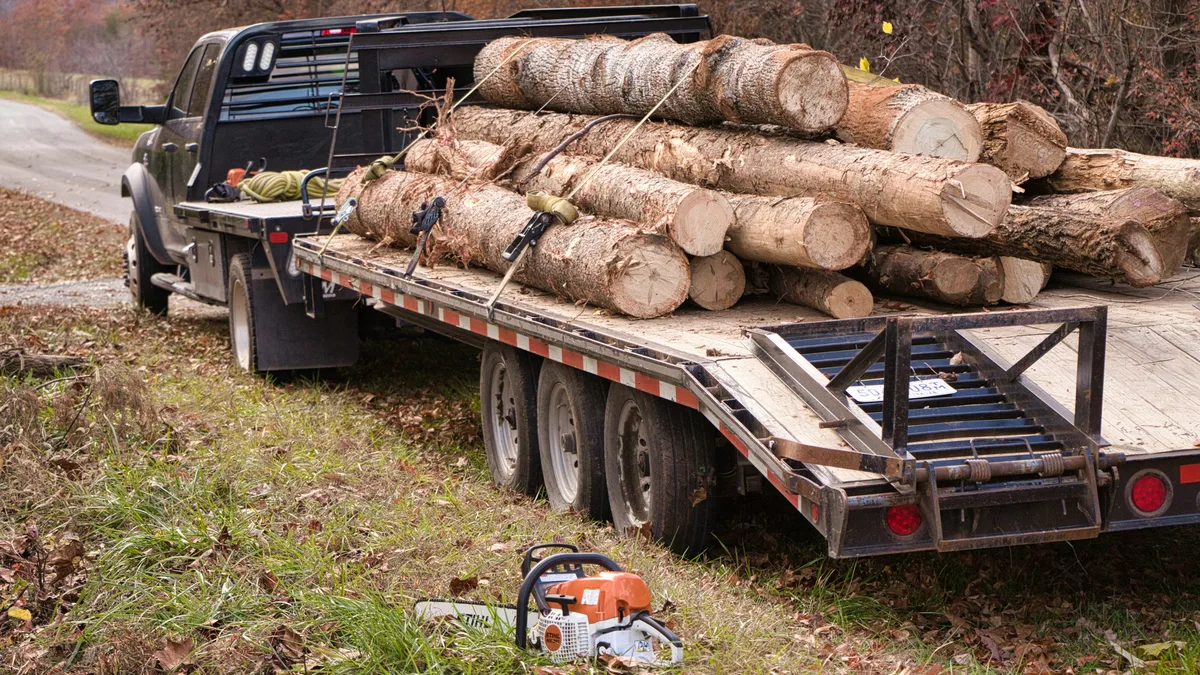
Flatbed dually towing a gooseneck flatbed trailer loaded with logs — Pennsylvania Hot Shot Trucking Insurance from Truck Guard Insurance

The features of light-combination freight that hold in every state — the securement duty across mixed loads, the value concentration that outruns a cargo limit set against an average load, the delivery window that is the reason the work exists — belong to the class rather than to the Commonwealth, and they are set out on the hot shot trucking insurance page instead of repeated here.

What Pennsylvania adds is a two-agency structure that produces a specific and repeatable mistake. An operator who researches this properly finds PennDOT’s intrastate safety chapter, reads its weight line, discovers the equipment sits under it, and concludes that Pennsylvania is a light-touch state for this configuration. Everything in that sequence is correct except the conclusion, because the chapter that was read is not the chapter that decides whether the truck may take a paid load.

The Public Utility Commission answers that question, and it answers it in the vocabulary of utility regulation rather than of trucking. A person who holds out transportation of property for compensation between points in the Commonwealth is a common carrier; a common carrier transporting property is a public utility; a public utility may not begin to render service without a certificate of public convenience. There is no weight anywhere on that path.

Every figure below is attributed to the instrument that sets it, with the effective date of the version read. The safety chapter and the insurance chapter run on different clocks — one last amended in 2013, the other in 2015 — and the two chapters do not cross-reference each other at all.

Running paid freight inside Pennsylvania on a rig that never reaches 17,001 pounds? The safety chapter may not reach you; the Commission almost certainly does, and its cargo rule bars operating the vehicle at all if the protection is not in force.

Send the gross combination weight rating, whether you hold out to the public or haul under specific contracts, and the commodities you take. Those three decide which Pennsylvania filings are live before any coverage question is reached.

Start a Pennsylvania quote

In Pennsylvania this operator is a public utility, and that is the doorway

The word is startling the first time an operator reads it, and it is the correct one. 66 Pa.C.S. § 102 defines “public utility” to include any person or corporation owning or operating in this Commonwealth equipment or facilities for “Transporting passengers or property as a common carrier.” Freight hauling for money is a utility service in Pennsylvania law, in the same list as gas, water and wastewater.

The same section defines “common carrier” as “Any and all persons or corporations holding out, offering, or undertaking, directly or indirectly, service for compensation to the public for the transportation of passengers or property, or both, or any class of passengers or property, between points within this Commonwealth”. It then defines “common carrier by motor vehicle” as any common carrier who holds out or undertakes that transportation “by motor vehicle for compensation, whether or not the owner or operator of such motor vehicle”. Neither definition contains a weight, a rating, an axle count or an equipment description.

66 Pa.C.S. § 1101 supplies the consequence: “Upon the application of any proposed public utility and the approval of such application by the commission evidenced by its certificate of public convenience first had and obtained, it shall be lawful for any such proposed public utility to begin to offer, render, furnish, or supply service within this Commonwealth.” The phrase “first had and obtained” sets the sequence — the certificate precedes the service, not the other way around.

The section adds a detail that matters to an operator who thinks of authority as a single yes: the certificate “shall include a description of the nature of the service and of the territory in which it may be offered, rendered, furnished or supplied.” Pennsylvania authority is scoped. It is not a general license to haul anything anywhere in the Commonwealth, and an operation that grows past the description on its own certificate has an authority question rather than a paperwork one.

Holding out to the public or hauling under contracts: two doors, two instruments

Pennsylvania splits for-hire carriage in two, and which side an operation falls on decides which instrument it needs. The dividing line is in the definitions themselves: the § 102 definition of “common carrier” expressly “shall not include contract carriers by motor vehicles, or brokers”.

66 Pa.C.S. § 2501(b) then defines the other side. A “contract carrier by motor vehicle” includes any person or corporation “who or which provides or furnishes transportation of passengers or property, or both, or any class of passengers or property, between points within this Commonwealth by motor vehicle for compensation, whether or not the owner or operator of such motor vehicle … other than as a common carrier by motor vehicle.” Again, no weight.

66 Pa.C.S. § 2503(a) is the requirement on that side: “No person or corporation shall render service as a contract carrier by motor vehicle unless there is in force with respect to such carrier a permit issued by the commission, authorizing such person or corporation to engage in such business.” Subsection (c) then has the Commission specify in the permit “the business of the contract carrier by motor vehicle covered thereby, and the route and area required in serving the customers in such business” — the same scoping the certificate carries.

66 Pa.C.S. § 2504 forecloses the obvious workaround: no person or corporation shall at the same time hold a certificate of public convenience as a common carrier by motor vehicle and a permit as a contract carrier by motor vehicle, unless for good cause shown the commission finds the two may be held consistently with the public interest. An operator cannot simply obtain both and stop worrying about the classification.

The exclusions from the contract-carrier definition are worth knowing because they are the closest Pennsylvania comes to letting a small freight operation out, and none of them is about size. They cover a lessor under a lease given on a bona fide sale of a motor vehicle who retains no responsibility for maintenance, supervision or control; a bona fide agricultural cooperative association hauling exclusively for its members on a nonprofit basis, and independent contractors hauling exclusively for such an association; a farm owner or operator transporting agricultural products from, or farm supplies to, the farm, and independent contractors hauling agricultural products or farm supplies exclusively for one or more farm owners or operators; and school-children transportation.

  • Holding out to the public for compensation — common carrier by motor vehicle, certificate of public convenience under 66 Pa.C.S. § 1101.
  • Serving specific customers under contract — contract carrier by motor vehicle, permit under 66 Pa.C.S. § 2503(a).
  • Both are scoped to a described service, route and area rather than granted at large.
  • Both are barred from being held at once absent a good-cause finding — 66 Pa.C.S. § 2504.
  • No limb of either definition contains a weight.

The insurance rule ladders at 10,000 pounds and the safety chapter starts at 17,001

This is the cross-field tension in the Pennsylvania material, and both halves of it are correct. 67 Pa. Code § 231.8(1) modifies the federal definition of commercial motor vehicle for intrastate purposes, and its weight limb reads: “Has a gross vehicle weight rating or gross combination weight rating, or gross vehicle weight or gross combination weight, of 17,001 pounds or more, whichever is greater.” A combination under that figure is outside PennDOT’s intrastate safety chapter.

52 Pa. Code § 32.12(a) ladders somewhere else entirely. It provides that the liability of the insurance company on each motor vehicle operated in common or contract carrier service “shall be in amounts not less than $300,000 per accident for a vehicle with a manufacturer’s gross vehicle weight rating of 10,000 pounds or less, in the case of a single vehicle, or a manufacturer’s gross combination weight rating of 10,000 pounds or less, in the case of an articulated vehicle”, and “not less than $750,000 per accident” for a vehicle over 10,000 pounds on the same two measures.

For this equipment the arithmetic is not close. A one-ton pickup rated to pull a loaded gooseneck has a gross combination weight rating well above 10,000 pounds, so the Commission’s higher tier applies — while the same rig, at anything under 17,001 pounds, is not a commercial motor vehicle for PennDOT’s safety chapter at all. The operator sits above one agency’s line and below the other’s at the same instant.

Two further details in § 32.12(a) decide how the requirement is satisfied. The certificate of insurance must be “filed with and approved by the Commission”, and it must come from “an insurer authorized to do business in this Commonwealth” — a Pennsylvania admission requirement rather than a general one. And the rule is expressed as a condition on the authority itself: no certificate “will be issued, or remain in force” without it, except as § 32.15 allows for an approved self-insurer.

Subsection (c) adds a layer an operator should not read past: insurance coverage of motor carriers of property and household goods in use “shall meet the requirements of 75 Pa.C.S. §§ 1701—1799.7 (relating to Motor Vehicle Financial Responsibility Law).” The Commission’s figures are a floor stated in the Commission’s rule; the Vehicle Code’s financial-responsibility scheme sits underneath them on its own terms.

Send the gross combination weight rating, whether the operation holds out to the public or serves customers under contract, and the commodities carried. Those three settle which Pennsylvania instrument governs before any coverage question is reached.

Get a Pennsylvania quote

Whichever is greater: the safety definition reads the rating and the scale both

The weight limb in 67 Pa. Code § 231.8(1)(i) is drawn more carefully than most state definitions, and the care is aimed squarely at combinations. It names four measures — gross vehicle weight rating, gross combination weight rating, gross vehicle weight and gross combination weight — and then closes with “whichever is greater.”

Two of those are ratings, which are properties of equipment as manufactured. Two are weights, which are properties of a particular load on a particular day. An operator whose ratings sit under 17,001 pounds cannot conclude they are outside the chapter, because the actual scale weight of the loaded combination is an independent route in, and “whichever is greater” means the highest of the four governs.

Read against how this work is dispatched, that is a live per-load question rather than a settled per-truck one. A combination that is outside the chapter empty and lightly loaded can be inside it on the day someone accepts a heavier load, and nothing in the definition announces the crossing. The same operator is subject to the driver-qualification, hours, parts-and-accessories and inspection requirements adopted at § 231.7 on that day and not on the day before.

The definition’s other limbs are passenger-side and hazardous-materials-side and do not reach this work: a vehicle designed or used to transport more than eight passengers including the driver for compensation, one designed or used for more than fifteen passengers not for compensation, a school bus, and a vehicle transporting placarded hazardous materials. The weight limb is the one that decides a freight operation.

It is worth noting what the chapter does not divide on. 67 Pa. Code § 231.2(b) states that the chapter “applies to motor carriers of property or passengers involved in intrastate commerce, whether common carriers, contract carriers or private carriers.” Several states relieve private carriage from their safety rules at a weight. Pennsylvania does not draw that line here at all — the only question is the number.

Cargo protection is a condition of moving the vehicle, and a tariff cannot bargain it away

52 Pa. Code § 32.13(a) requires a common carrier of property or household goods in use by motor vehicle to file with the Commission, in addition to the public liability and property damage certificate required under § 32.12, “certificates of insurance in an amount satisfactory to the Commission, but not less than $5,000, to provide payment for loss or damage to cargo carried on a motor vehicle.”

The sentence that follows is the operative one and it is stronger than a filing duty: “No motor vehicle may be operated unless the insurance policy or other approved method of protection is in effect at the time of operation.” The prohibition attaches to the movement of the vehicle, not to the paperwork status of the carrier. A lapse is not a compliance defect to be cured at the next renewal; it is a bar on operating that day.

Two more clauses in the same subsection change what the requirement is worth. “This section may not be modified or abrogated by tariff filings” — a carrier cannot publish its way out of the duty, which is the opposite of the arrangement in states where the cargo minimum is fully contractible. And “The Commission may approve another method of cargo protection in specific cases”, which leaves a route other than a policy but routes it through the Commission rather than through the parties.

The figure itself deserves a word of caution rather than reliance. It is expressed as a floor — “in an amount satisfactory to the Commission, but not less than $5,000” — which makes the Commission’s satisfaction, not the number, the standard. It is also a per-vehicle floor: the rule states no aggregate and no per-occurrence figure anywhere in the chapter. An operator who reads it as a statement of adequate cover for what actually rides on a hot shot deck has read a regulatory minimum as an underwriting answer, and the two are not the same thing.

One textual point should be carried precisely rather than smoothed over. Section 32.13(a) is written to “a common carrier of property or household goods in use by motor vehicle”. A contract carrier holding a § 2503 permit is not named in that sentence, while § 32.12(a) reaches “common carrier or contract carrier” expressly. That is what the rule says as served; what the Commission requires of a particular permit holder is a question for the Commission, and this page does not answer it.

The construction-materials carve-out does nothing until an affidavit is on file

52 Pa. Code § 32.13(b) carves an exception out of the cargo requirement, and operators who haul aggregate or low-value freight hear about it constantly. In full: “Requirements for cargo insurance do not apply to dump trucks or vehicles limited to the transportation of coal, earth, crushed stone, amesite and similar construction materials, or vehicles which are used for the transportation of property, the value of one load being not more than $500.”

Then the sentence that is almost always dropped when the exception is repeated: “This subsection applies only if an affidavit stating that the vehicle is limited to the type of transportation described in this subsection is first filed with the Commission.” The carve-out is not self-executing. A carrier that qualifies on the facts and has filed nothing has not qualified.

The conditions are also narrower than they sound. “Limited to” describes the vehicle’s whole use rather than a particular trip, so a truck that hauls stone most weeks and a machine occasionally is not a vehicle limited to the transportation of construction materials. And the low-value limb is written per load — “the value of one load being not more than $500” — which excludes most of what a light combination is actually hired to move, since the economics of this work depend on the freight being worth moving quickly.

For a mixed operation the practical answer is usually that the exception is unavailable, and reaching for it is the more expensive mistake of the two. An affidavit filed for a vehicle that is not in fact limited to the described transportation is a statement to the Commission about the operation, and it is the kind of statement that is read back after a loss.

  • The exception reaches dump trucks and vehicles limited to coal, earth, crushed stone, amesite and similar construction materials.
  • It also reaches vehicles used to transport property where the value of one load is not more than $500.
  • It applies only if an affidavit is first filed with the Commission stating the vehicle is so limited.
  • “Limited to” describes the vehicle’s use, not a single trip.

The liability certificate stops short of the freight, and the rule says so twice

Operators regularly assume that a filed liability certificate covers the load, and Pennsylvania forecloses the assumption in express terms rather than by implication. 52 Pa. Code § 32.12(b) reads, in its entirety: “The limitations in subsection (a) do not include insurance to cover damage to cargo.”

The Commission says the same thing on the passenger side at § 32.11(e) — “The limits in subsections (b)—(d) do not include the insurance of cargo” — which is what makes it a drafting position rather than a stray sentence. Read together with § 32.13, the chapter’s architecture is explicit: liability and property damage in one section, cargo in another, and a clause in each denying that either reaches the other.

That matters more here than it does on heavier equipment. The description in § 32.12(a) is “bodily injury to or the death of persons, or the loss or damage to property of others resulting from the operation, maintenance or use of a motor vehicle in the insured authorized service.” Freight riding on the deck is not property of others in the sense that description is doing work in — it is the subject of the carriage, and the chapter puts it in its own section for exactly that reason.

The chapter also names the person who can carry the exposure without a policy. 52 Pa. Code § 32.1 defines a self-insurer as “A common or contract carrier by motor vehicle which adjusts and is ultimately liable for payment of all or part of its bodily injury, property or cargo damage claims resulting from the operation, maintenance or use of a motor vehicle in certificated service”, and § 32.15 governs applications to self-insure. That definition names cargo damage claims alongside bodily injury and property — the one place in the chapter where the three sit in a single sentence.

Section 231.7 names no edition of the federal text, and has not moved since 2010

67 Pa. Code § 231.7 incorporates by reference “the following portions of 49 CFR (relating to transportation), subject to §§ 231.3 and 231.8”, and then lists them: Part 382, Part 385, Part 390, Part 391, Part 392, Part 393, Part 395 and Part 396.

What the section does not contain is any date. There is no “as they exist on” formulation freezing the federal text to an edition, and no “and amendments thereto” formulation making the adoption roll forward. The incorporation names the parts and stops. The section’s own source note records that it was “adopted April 23, 2010, effective April 24, 2010, 40 Pa.B. 2106”, and no amendment appears under it since.

The modifications section beside it has moved several times and its source note is the clock that actually ticks: § 231.8 was adopted with § 231.7 in 2010, then amended November 11, 2011 effective November 12, 2011 (41 Pa.B. 6086), amended January 6, 2012 effective January 7, 2012 (42 Pa.B. 25), and amended November 22, 2013 effective November 23, 2013 (43 Pa.B. 6893). An editor’s note on the chapter records that the 2012 amendments were final-omitted regulations.

The practical discipline is to check the two chapters separately rather than as one regime. The safety chapter’s last substantive movement was in 2013. The insurance chapter’s § 32.12 and § 32.13 were both “amended May 22, 2015, effective May 23, 2015, 45 Pa.B. 2468”. The Pennsylvania Code as served for this page reflects changes effective through 56 Pa.B. 3438 (June 6, 2026), which is the currency of the text read, not of the rules themselves.

The whole chapter rests on a narrow authority worth naming, because it explains the shape of everything in it: the provisions of chapter 231 are issued under the Vehicle Code, 75 Pa.C.S. §§ 4704 and 6103. It is a vehicle-safety rulemaking. It was never the place an insurance requirement was going to live.
Two federal parts are missing from the adoption list, for two different reasons

The list in § 231.7 has two conspicuous gaps, and reading them as the same kind of gap is a mistake. Part 383, the commercial driver licensing program, is absent — but a licensing requirement that reaches intrastate commerce by its own federal force does not need a state adoption to operate, so its absence from a state list changes nothing about whether it applies.

The financial-responsibility part is absent for a different reason: nothing in chapter 231 was ever going to carry an insurance requirement, because the chapter is a PennDOT vehicle-safety rulemaking under 75 Pa.C.S. §§ 4704 and 6103. Pennsylvania’s intrastate financial responsibility for a for-hire carrier sits with the Public Utility Commission at 52 Pa. Code §§ 32.12 and 32.13, under Public Utility Code authority, and it is stated in the Commission’s own figures rather than by pointing at a federal schedule.

That is the single most useful thing to know about researching this state. An operator or a broker who searches PennDOT’s safety chapter for the intrastate insurance minimum will find nothing and may reasonably conclude Pennsylvania sets none. The requirement is real; it is filed in a different building.

The consequence for a submission is procedural rather than theoretical. The Commission’s certificate of insurance goes to the Commission, on the form the Commission prescribes, from an insurer authorized to do business in the Commonwealth — three conditions in § 32.12(a) and § 32.2 that a filing routed by habit to a state transportation department satisfies none of.

  • Part 383 — absent from § 231.7; a federal licensing scheme that reaches intrastate commerce on its own terms.
  • The federal financial-responsibility part — absent from § 231.7; the duty lives at 52 Pa. Code §§ 32.12 and 32.13 instead.
  • Adopted at § 231.7: Parts 382, 385, 390, 391, 392, 393, 395 and 396, subject to the modifications in § 231.8.
  • Chapter 231 authority: 75 Pa.C.S. §§ 4704 and 6103 — a vehicle-safety rulemaking.

The minimum-age paragraph is deleted outright, and a 1995 medical grandfather still runs

67 Pa. Code § 231.8(9) is one line long: “49 CFR 391.11(b)(1) is deleted.” That is the general minimum-age qualification inside the adopted driver-qualification part, removed from the Pennsylvania intrastate version rather than modified or conditioned. A state that wanted to permit younger intrastate drivers with conditions would write conditions; Pennsylvania struck the paragraph.

It only reaches as far as the chapter does. The deletion operates inside chapter 231, which applies to intrastate commerce and to vehicles that meet the § 231.8(1) definition. It is not a permission that travels with a driver across a state line, and it says nothing at all about whether an insurer will accept a younger operator — youthful-operator loadings, minimum-experience conditions and named-driver restrictions are priced against loss experience rather than against a rule.

The more unusual provision sits at § 231.8(8), and it is a grandfather with a date on it. A driver regularly employed as of September 23, 1995 who cannot meet the physical qualification requirements of the adopted part “will be considered to be qualified to operate in intrastate commerce if certified by the medical examiner and motor carrier in accordance with this section”, and remains qualified “only until the existing unqualifying medical or physical condition significantly worsens or a new unqualifying medical or physical condition develops subsequent to September 23, 1995.”

The mechanics attached to it are specific and are the sort of thing that decides a file rather than a rule. The motor carrier’s certification must be based on a review of the driver’s past driving safety record and accident history, must be on a form prescribed by the Department, and is valid for a period commensurate with the medical examiner’s certificate. The initial certificate, the most current biannual medical examiner’s certificate and the most current carrier certification must be kept in the driver qualification file for the whole term of employment and for two years after it ends. And where the examiner qualifies the driver only on this route, the medical certificate “must display the statement ‘Medically qualified to operate in intrastate commerce only.’”

For an operator hiring an experienced driver in this Commonwealth, that annotation is a specific thing to look for on a specific document, and its presence answers a question about where that driver may lawfully be dispatched.

The federal identification report is struck out of the chapter entirely

67 Pa. Code § 231.8(4) provides that “49 CFR 390.19 (relating to motor carrier identification report) is deleted in its entirety.” Several states build an intrastate registration around exactly that provision, so that an intrastate-only carrier files a state-flavoured version of a federal form and receives a state-suffixed number. Pennsylvania removed the provision instead of adapting it.

Two neighboring paragraphs do adapt rather than delete, and the difference is instructive. Section 231.8(2) modifies the federal general-applicability rule by deleting one of its subsections; § 231.8(3) modifies another so that it no longer reaches transportation by a state or political subdivision. Section 231.1(c) then substitutes Pennsylvania offices for federal ones throughout the adopted text — references to the Department of Transportation mean PennDOT, references to the Secretary mean the Pennsylvania Secretary, and references to the FMCSA State Director or Division Administrator mean the Director of the Bureau of Driver Licensing.

Section 231.1(d) completes the pattern for paperwork: “References to forms in the Federal regulations incorporated by reference shall be replaced by the appropriate forms prescribed by the Department.” Pennsylvania takes the federal architecture and re-addresses it, rather than reproducing the federal filing apparatus.

The same instinct appears on the insurance side, which is why an operator looking for a numbered filing form here will not find one. 52 Pa. Code § 32.2(a) provides that endorsements for policies of insurance and surety bonds, certificates of insurance, applications to qualify as a self-insurer or for approval of other securities or agreements, and notices of cancellation “shall be in the form prescribed and approved by the Commission.” The whole of chapter 32 names no numbered form at all. What the Commission accepts is what the Commission has prescribed, and that is a question for the Commission rather than a form number to look up.

Two filings, two agencies, and the facts that price what sits on top

There is no table to quote for this class, and any figure produced without seeing the operation would be invented. What follows is not a rate; it is the set of facts a Pennsylvania submission is actually read on, in the order the two-agency structure forces.

The classification question comes first, because it decides which instrument the operation needs and therefore what a lapse costs. Holding out to the public for compensation puts the operation on the certificate side; serving named customers under contract puts it on the permit side; and § 2504 makes holding both a matter for a Commission finding rather than a choice. An operation whose commercial description does not match the scope on its own certificate or permit has an authority exposure that no policy limit addresses.

Gross combination weight rating comes second, and it does two different jobs here. Against the Commission’s 10,000 pound line in § 32.12(a) it decides which liability tier applies, and for this equipment it decides it in one direction. Against PennDOT’s 17,001 pound line in § 231.8(1)(i) it decides whether the safety chapter reaches the operation at all — with the further wrinkle that the definition reads actual weight as well as rating, on a “whichever is greater” basis, so the answer can change with the load.

Commodity is third, and in Pennsylvania it reaches further than usual because it interacts with a rule rather than only with an exposure. It sets the cargo exposure the § 32.13 protection has to answer; it decides whether the § 32.13(b) carve-out is even conceivable; and if it is, it puts an affidavit on file with the Commission describing the operation, which is a document with consequences of its own.

The contract stack sits underneath. Additional-insured and primary-and-non-contributory wording, waivers of subrogation, and the cargo limits a shipper requires by contract are all terms that change the program without changing anything about the truck. In Pennsylvania they sit on top of a cargo requirement the carrier cannot modify by tariff, which means the contract can raise the floor but the rule sets it.

Driver file closes it out, and the Commonwealth has two specifics worth naming: the deleted minimum-age paragraph at § 231.8(9), and the 1995 medical grandfather at § 231.8(8) with its “intrastate commerce only” annotation and its two-year post-employment retention duty.

  • Certificate of public convenience or contract-carrier permit, and whether the scope on it matches the work.
  • Gross combination weight rating against the Commission’s 10,000 pound line, and against PennDOT’s 17,001 pound line on a whichever-is-greater basis.
  • Commodity mix, the value of the heaviest load carried, and whether any § 32.13(b) affidavit has been filed.
  • Whether the insurer is authorized to do business in the Commonwealth, since § 32.12(a) requires it.
  • Driver ages, tenure and medical documentation, including any certificate annotated for intrastate commerce only.
  • Radius as a distribution, and whether any dispatch leaves Pennsylvania and takes the intrastate posture with it.

The Vehicle Code half and the Public Utility Code half never cite each other

No Pennsylvania statute or rule read for this page names this work. There is no defined term for it, no dedicated permit or certificate class, no separate insurance table and no endorsement the Commonwealth mandates for it by name. The vocabulary this trade uses does not appear in the instruments that govern it, and that is an established absence rather than an unfinished search.

What Pennsylvania has instead is two complete regimes that were written for different purposes under different authority and that do not reference one another. Chapter 231 is a PennDOT vehicle-safety rulemaking under the Vehicle Code, and its weight line is 17,001 pounds on a whichever-is-greater basis. Chapter 32 is a Public Utility Commission insurance rulemaking under the Public Utility Code, and its weight line is 10,000 pounds on the manufacturer’s ratings. Neither chapter tells a reader the other exists.

The failure mode this produces is specific and worth stating: an operator reads one chapter, finds a clean answer, and stops. The answer is clean and it is half. The question of whether this operation may take a paid load in Pennsylvania is not answered anywhere in the safety chapter, and the question of what safety rules apply once it does is not answered anywhere in the insurance chapter.

Two things this page does not establish, said plainly rather than smoothed over. Whether the Commission requires a cargo filing of a contract carrier holding a § 2503 permit is not settled by the text of § 32.13(a), which names common carriers; and what the Commission currently prescribes as the form of a certificate of insurance is not published as a numbered form in chapter 32 at all. Both are questions for the Commission, and neither is answered by reading the rule.

Coverage lines a Pennsylvania hot shot account usually carries

The state minimum is a licensing threshold. The program an operator actually needs is built from these lines:

  • Trucking Auto Liability — Primary liability coverage for bodily injury and property damage caused by your truck while under dispatch.
  • Physical Damage — Collision and comprehensive coverage for the tractor, trailer, and attached equipment you own or finance.
  • Motor Truck Cargo — Coverage for the freight you haul against loss or damage in transit.
  • Trailer Interchange — Coverage for non-owned trailers you pull under written interchange agreements.
  • General Liability — Coverage for premises and operations liability away from the truck — terminal yards, customer docks, and non-driving exposures.
  • Workers Compensation — Statutory coverage for driver and yard-employee injury, structured for trucking payrolls and interstate operations.
  • Non-Trucking (Bobtail) Auto Liability — Liability coverage for the tractor when operated off-dispatch — bobtailing home or running personal errands.
  • Pollution Liability — Coverage for cargo-related pollution events and upset/overturn spills not covered by standard auto liability.

Why Truck Guard Insurance for a Pennsylvania hot shot account

We write hot shot and expedited hauling as a named class rather than as an exception to general trucking, and we read each account against the weight and authority regime of the state it operates in. For a Pennsylvania operator that means starting from the rating of the power unit and the trailer separately rather than from the combination, sizing cargo against the heaviest load actually carried rather than the average one, and treating the state line as a rating fact because a single crossing can change which driver file the operation owes.

If the operation also runs freight under separate authority, the Pennsylvania trucking insurance page covers the state’s broader motor carrier picture, and the hot shot trucking insurance page covers the class mechanics that apply wherever the operator runs.

Pennsylvania hot shot trucking insurance questions

Does Pennsylvania require operating authority for intrastate freight under 17,001 pounds?

The weight is a PennDOT safety line and has nothing to do with authority. Under 66 Pa.C.S. § 102 a person holding out transportation of property for compensation between points in the Commonwealth is a common carrier, a common carrier transporting property is a public utility, and 66 Pa.C.S. § 1101 requires a certificate of public convenience “first had and obtained” before service begins. A carrier serving specific customers under contract needs a permit under 66 Pa.C.S. § 2503(a) instead. Neither definition contains a weight.

What are Pennsylvania’s intrastate liability minimums for a for-hire property carrier?

They are set by the Public Utility Commission, not by the safety chapter. 52 Pa. Code § 32.12(a) requires not less than $300,000 per accident for a vehicle with a manufacturer’s gross vehicle weight rating of 10,000 pounds or less, or a gross combination weight rating of 10,000 pounds or less for an articulated vehicle, and not less than $750,000 per accident above 10,000 pounds on the same measures. The certificate must be filed with and approved by the Commission and issued by an insurer authorized to do business in the Commonwealth. Read September 1, 2026; § 32.12 was amended May 22, 2015, effective May 23, 2015, 45 Pa.B. 2468.

Does Pennsylvania require cargo insurance?

Yes, and it is written as a bar on operating rather than only as a filing. 52 Pa. Code § 32.13(a) requires a common carrier of property or household goods in use to file certificates of insurance “in an amount satisfactory to the Commission, but not less than $5,000”, and provides that “No motor vehicle may be operated unless the insurance policy or other approved method of protection is in effect at the time of operation.” The same subsection states that the section “may not be modified or abrogated by tariff filings”, and allows the Commission to approve another method of cargo protection in specific cases.

Is there an exemption from the Pennsylvania cargo requirement for construction materials?

There is, and it does not work until an affidavit is filed. 52 Pa. Code § 32.13(b) removes the cargo requirement for dump trucks or vehicles limited to the transportation of coal, earth, crushed stone, amesite and similar construction materials, or vehicles used for the transportation of property where the value of one load is not more than $500. The subsection then provides that it “applies only if an affidavit stating that the vehicle is limited to the type of transportation described in this subsection is first filed with the Commission.” A carrier that qualifies on the facts but has filed nothing has not qualified.

Does the filed liability certificate cover the freight on the trailer?

No, and the rule says so directly. 52 Pa. Code § 32.12(b) reads: “The limitations in subsection (a) do not include insurance to cover damage to cargo.” The Commission states the same thing on the passenger side at § 32.11(e). Cargo is dealt with separately at § 32.13, which is why the chapter treats the two filings as distinct obligations rather than as one certificate.

What weight makes a vehicle commercial under Pennsylvania’s intrastate safety chapter?

67 Pa. Code § 231.8(1)(i) modifies the federal definition for intrastate purposes to reach a vehicle or combination that “Has a gross vehicle weight rating or gross combination weight rating, or gross vehicle weight or gross combination weight, of 17,001 pounds or more, whichever is greater.” Four measures, two of them ratings and two of them actual weights, with the highest governing — so a combination outside the chapter empty can be inside it loaded.

Which federal parts does Pennsylvania adopt for intrastate carriers?

67 Pa. Code § 231.7 incorporates 49 CFR Parts 382, 385, 390, 391, 392, 393, 395 and 396, subject to the definitions in § 231.3 and the modifications in § 231.8. The section names no edition date and no amendment clause in either direction. It was adopted April 23, 2010, effective April 24, 2010, 40 Pa.B. 2106, and has not been amended since; § 231.8 was last amended November 22, 2013, effective November 23, 2013, 43 Pa.B. 6893.

Can an eighteen-year-old drive an intrastate load in Pennsylvania?

The state deleted the general minimum-age paragraph from its adopted driver-qualification part: 67 Pa. Code § 231.8(9) reads, in full, “49 CFR 391.11(b)(1) is deleted.” That deletion operates inside chapter 231, which applies to intrastate commerce. It does not travel across a state line, and it does not bind an insurer, which prices youthful operators on its own terms. Other qualification requirements in the adopted part are unaffected.

How much does hot shot insurance cost in Pennsylvania?

There is no table to quote from and any number offered without seeing the operation would be invented. What sets it is whether the operation runs on a certificate of public convenience or a contract-carrier permit and whether the scope on it matches the work, the gross combination weight rating against the Commission’s 10,000 pound line and PennDOT’s 17,001 pound line, the commodity mix and the value of the heaviest load carried, whether the insurer is authorized to do business in the Commonwealth, driver ages and medical documentation, and the additional-insured and waiver terms flowing down from shipper agreements.

Sources

Every figure on this page was read at the source below on September 1, 2026, with the effective date of the version read. Treat each as current as of that date rather than as permanent.

  • 52 Pa. Code Chapter 32 — Motor Carrier Insurance (Pennsylvania Public Utility Commission) — All eight sections read in the served chapter document September 1, 2026, masthead “The Pennsylvania Code website reflects the Pennsylvania Code changes effective through 56 Pa.B. 3438 (June 6, 2026)”. § 32.1 (self-insurer definition), § 32.2(a) (forms prescribed and approved by the Commission), § 32.11(e) (passenger-side cargo exclusion), § 32.12(a)–(c) (the $300,000 and $750,000 per-accident tiers divided at 10,000 pounds GVWR or GCWR, the admitted-insurer and Commission-approval conditions, and the reference to 75 Pa.C.S. §§ 1701—1799.7), § 32.13(a)–(b) (the not-less-than-$5,000 cargo floor, the bar on operating without protection in force, the anti-tariff clause, and the construction-materials and $500-load carve-out conditioned on an affidavit), § 32.15 (self-insurance) and § 32.16. Source notes read on the page: § 32.12 and § 32.13 each adopted July 31, 1987, effective August 1, 1987, 17 Pa.B. 3217; corrected November 20, 1987, 17 Pa.B. 4726; amended May 22, 2015, effective May 23, 2015, 45 Pa.B. 2468..
  • 67 Pa. Code Chapter 231 — Intrastate Motor Carrier Safety Requirements (PennDOT) — Read in the served chapter document September 1, 2026. § 231.1(c)–(d) (Pennsylvania office and form substitutions), § 231.2(b) (the chapter applies to common, contract and private carriers alike), § 231.7 (the eight adopted parts, with no edition date and no amendment clause), § 231.8(1) (the modified commercial motor vehicle definition and its 17,001 pound whichever-is-greater limb), § 231.8(4) (the federal motor carrier identification report deleted in its entirety), § 231.8(8) (the September 23, 1995 medical grandfather, its certification mechanics, the two-year post-employment retention duty and the “Medically qualified to operate in intrastate commerce only” annotation), § 231.8(9) (49 CFR 391.11(b)(1) deleted), § 231.8(15) (the added snow-removal and roadway-maintenance hours provisions). Chapter authority: 75 Pa.C.S. §§ 4704 and 6103; chapter adopted March 10, 1989, effective May 10, 1989, 19 Pa.B. 1020. § 231.7 adopted April 23, 2010, effective April 24, 2010, 40 Pa.B. 2106; § 231.8 last amended November 22, 2013, effective November 23, 2013, 43 Pa.B. 6893..
  • 66 Pa.C.S. Chapter 1 — Definitions (Pennsylvania General Assembly) — Section 102 read September 1, 2026: the definitions of “common carrier” (including its exclusion of contract carriers by motor vehicles and brokers), “common carrier by motor vehicle”, and “public utility”, whose paragraph (1)(iii) reaches a person owning or operating equipment or facilities for “Transporting passengers or property as a common carrier”. None of the three definitions contains a weight element..
  • 66 Pa.C.S. Chapter 11 — Certificates of Public Convenience — Section 1101 read in full September 1, 2026, including the “first had and obtained” sequence and the requirement that the certificate “include a description of the nature of the service and of the territory in which it may be offered, rendered, furnished or supplied”. Section 1102(a) read for the acts requiring a certificate. Chapter added July 1, 1978, P.L.598, No.116, effective in 60 days..
  • 66 Pa.C.S. Chapter 25 — Contract Carrier by Motor Vehicle and Broker — Read September 1, 2026. § 2501(b) definitions of “contract carrier by motor vehicle” and “broker”, including the lessor, agricultural cooperative, farm and school-transportation exclusions; § 2503(a)–(c), the permit requirement and the Commission’s scoping of the business, route and area; § 2504, barring simultaneous holding of a certificate and a permit absent a good-cause public-interest finding; § 2505, the brokerage license and the bar on a broker employing an unauthorized motor carrier. Chapter added July 1, 1978, P.L.598, No.116..

Get a Pennsylvania hot shot trucking insurance quote

Send the power unit and trailer ratings separately, the radius distribution, and whether any dispatch crosses a state line. We will size the program against the work the trucks actually do rather than against a statutory floor.

Start a quote Call 317-942-0549