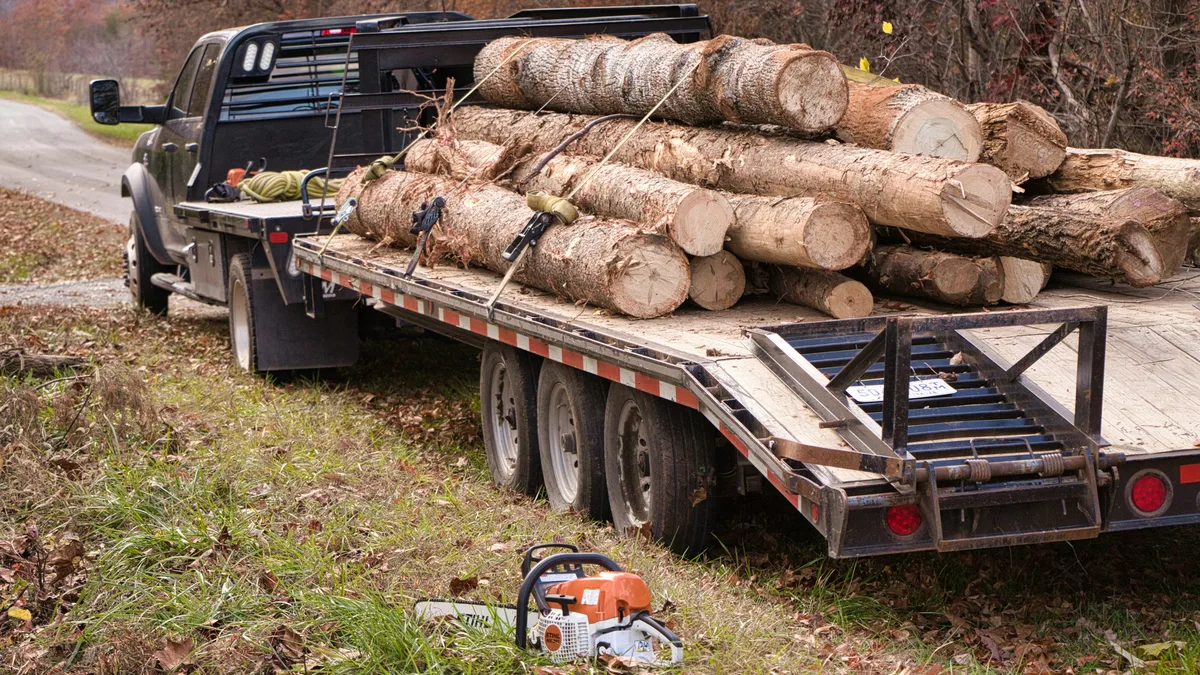
What moves a Texas hot shot submission
No Texas instrument sets a price and none can be quoted sight-unseen. The useful thing to publish is the sequence a Texas file gets read in, because that sequence is knowable even when the number is not.
The registered weight is the first thing, and Texas is one of the few states where it is a regulatory input rather than a fee input. It decides, alongside actual gross weight and rating, whether Chapter 643 registration is owed at all, and therefore whether the filing, the workers’ compensation condition and the out-of-service exposure are live. An operation that has never checked its cab card against § 548.001 has not established which side of the line it is on.
Registration status itself is the second, and it is close to binary. A carrier with a current Chapter 643 registration, a filed and accepted proof of insurance and no lapse reads differently from one that has been taking Texas intrastate loads without one — and the second is a compliance question before it is a pricing question, because of what § 4.11(c)(2) authorizes at the roadside.
Gross combination weight rating and the heaviest actual gross weight come next, and they do a different job here than in most states: they decide whether the safety regime applies, since § 4.11(c)(1)(A) tests only those two measures. A fleet whose heaviest configuration is genuinely under the line on both is answering a narrower set of questions than its registration suggests.
Commodity does all the work on cargo here, because the state has vacated the field for general freight. The mandatory filing writes cargo out by name and Texas substitutes nothing, so whatever limit exists is a limit somebody signed. This equipment tends to carry freight worth far more per pound than its weight implies, because the loads that justify paying for speed are usually the ones replacing something that has failed. A limit written for ordinary tonnage is exactly the wrong limit for that.
Fourth comes geography. Every rule described above is the intrastate answer; a load into Louisiana, Arkansas, Oklahoma or New Mexico is a different posture for that load, and the § 643.002(1) exemption for operations exclusively in interstate commerce does not help a carrier that also runs Texas intrastate freight. Radius is honestly a distribution, and the distribution is what gets priced.
The workers’ compensation question is the fifth, and it is more consequential in Texas than in most states because Texas is a state where coverage is generally elective. Section 218.16(c) makes it, or the named accidental-insurance alternative, a condition of registration for a carrier whose primary business is transportation for hire between two or more municipalities. Which of the two an operation carries, and whether the amounts match the rule, is a factual question with a documented answer.
Last comes the paperwork nobody photographs. Running under your own registration or someone else’s decides whose limits answer first. A shipper agreement that demands additional-insured status, primary and non-contributory wording, or a waiver of subrogation reshapes the program without touching a bolt on the equipment — and those demands are usually signed before anyone reads them.
- Registered weight on the cab card, against the 26,000 lb line in § 548.001(1)(A).
- Chapter 643 registration status, filing status, and whether the proof has ever been rejected or lapsed.
- Gross weight rating and heaviest actual gross weight, which is what § 4.11(c)(1)(A) tests.
- What rides on the deck and what the dearest shipment is worth, given that the filing Texas requires says “excluding cargo” in its own text.
- The real spread of the miles, and how many dispatches a month end up in Louisiana, Arkansas, Oklahoma or New Mexico.
- Workers’ compensation or the § 218.16(c) accidental-insurance alternative, and whether the amounts match the rule.
- Driver medical certificates against the two-year ceiling in § 4.11(c)(4).
- Downstream contract demands: additional-insured status, primary and non-contributory language, subrogation waivers, and a cargo figure Texas never imposed.