
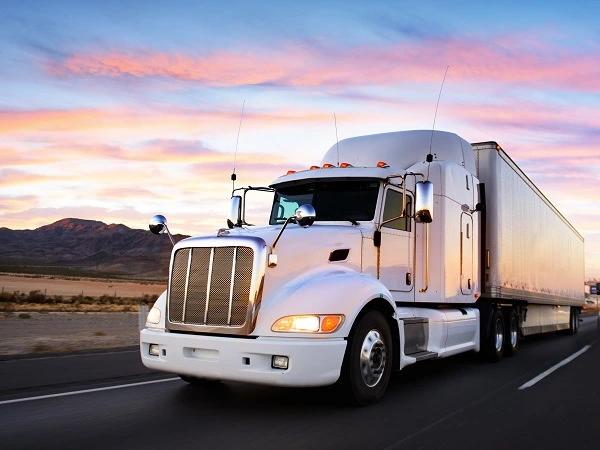

Auto hauler insurance, also sold as car hauler insurance and car carrier trucking insurance, is the program a motor carrier carries to move other people’s vehicles for pay. It pairs the federally required public liability coverage with a cargo form for the vehicles on the deck, physical damage for the rig and general liability for activity off the road. The cargo is what makes it different from general freight.
This article is for an owner-operator or small fleet pricing that program for the first time. It sticks to what the federal rules and the statute say, and it turns everything else into questions to put to an agent, because the answers that depend on a particular form cannot honestly be given in general. The liability side is the same table every motor carrier meets; the cargo side is where a car hauler needs to read more closely.
What is auto hauler insurance?
It is four coverages working together, each looking at a different piece of the operation.
- Auto liability pays for injury and property damage you cause to other people with the truck. It is the coverage the federal financial-responsibility filing is built on. The trucking auto liability page covers it.
- Motor truck cargo pays for the vehicles you are hauling when they are lost or damaged and the cause is one the form names. See the motor truck cargo page and the plain-English piece on what motor truck cargo insurance is.
- Physical damage pays for your own tractor and transporter trailer.
- General liability pays for third-party claims that arise from the business rather than from driving, and it is covered in the general liability for trucking operations article.
The first and third are the same in kind as for any heavy-truck operation. The second and fourth are where the car hauler’s particulars show up.
What does the federal rule require of a car hauler?
The same table every for-hire property carrier meets. The public liability minimums in 49 CFR 387.9 are set by what is carried and by the vehicle’s weight rating. Assembled vehicles are property carried for hire, so unless a particular load falls into one of the hazardous rows, the property row is the one that applies. If a load has an unusual feature, confirm which row it falls in with the agent before the load moves. For a city example, see auto hauler insurance in Memphis, TN.
What the table does not do is address the cargo you are carrying. Its amounts are public liability, which is injury and damage to other people. Federal rules do not set a cargo coverage requirement for most property carriers, and the cargo security rule in 49 CFR 387.303 is written for household goods carriers and carries a suspension note on eCFR. For a car hauler, the cargo requirement comes from the agreement with whoever tenders the vehicles.
Many brokers and customers ask for more than the federal floor, which is a contract question, not a regulatory one. The reasons are walked through in liability limits explained.
Why is the cargo the part that differs?
Because the cargo is assembled vehicles, and assembled vehicles behave differently from a pallet of boxes. The federal highway rules recognize the difference: 23 CFR 658.5 defines automobile transporters as vehicle combinations designed and used specifically for the transport of assembled highway vehicles. The equipment is purpose-built for one kind of load.
For insurance, three features of that load drive the questions you ask.
- Each unit is a separate piece of someone else’s property. A load is not one shipment of one commodity; it is several vehicles that may belong to different owners, each with its own condition and value.
- Units are loaded and unloaded individually. Loading and unloading is a distinct stage of the move, and a form that insures freight only in transit may treat it differently.
- Condition is the whole claim. A vehicle is delivered undamaged or it is not, and the arguments are about when a mark first appeared.
The first feature raises the question of how the form values each unit. The second raises whether loading and unloading are covered. The third is why documentation does most of the work in a claim, which is addressed below. None of these has a universal answer; each is a sentence in the form.
Who sets the cargo requirement for a car hauler?
The party that tenders the vehicles. That may be a broker, a dealer, a lender, a manufacturer’s logistics arm or an individual, and each can write its own insurance terms into the carrier agreement. Broker versus dispatcher versus factor explains who you are signing with, which tells you whose requirements you have to meet.
Take the agreement to the agent before you take the quote to the customer. An agreement that asks for a certificate showing cargo coverage for vehicles, or that names a particular endorsement, should be matched line by line to the form, because a certificate that does not match the agreement is a load you cannot haul.
What is the difference between a transporter, a towaway and a driveaway operation?
They are different ways of moving vehicles, and the federal rules treat them as different things. An automobile transporter, as defined in 23 CFR 658.5, carries assembled vehicles on a purpose-built combination. A driveaway-towaway operation, as defined in 49 CFR 390.5, is one in which an empty or unladen motor vehicle with one or more sets of wheels on the road is being transported, including between manufacturers, dealers and purchasers, and by saddle mount or tow bar. The eCFR carries a suspension note on part of 390.5, so confirm the current text.
The practical point is that the insurance form is written around an operation. A carrier that sometimes carries vehicles on a deck and sometimes drives or tows them to a destination has two operations to describe to the underwriter, not one. Tow-based exposures have their own considerations covered on the tow trucking insurance page, and a hybrid operation should say so up front.
How does a vehicle damage claim work?
The carrier is liable, then the claim arrives in writing, then the evidence decides it. Under 49 U.S.C. 14706, a carrier that issues a receipt or bill of lading is liable for the actual loss or injury to the property it receives. Under 49 CFR 370.3, a claim must identify the shipment, assert liability and claim a specified or determinable amount, and documents such as damage appraisals, notations on delivery receipts and inspection reports do not by themselves meet those minimums.
For a car hauler that means two records matter more than any others: the condition record at pickup, and the condition record at delivery. The notation at delivery is evidence and not yet a claim; the claim arrives later in writing. A carrier who photographed each unit at loading and noted existing marks on the bill of lading can show that a mark was already there. A carrier who did not has only the receiver’s account.
Real-World Scenario: A small car hauler loads several vehicles at an auction lot for delivery to a dealer. At loading the driver walks each unit, notes existing scratches and a cracked taillight on the condition report, and photographs each corner. At the dealer, the receiver notes a new dent on one unit and signs for the rest. The dealer’s claim arrives by letter, identifying the unit and stating an amount. The carrier sends the condition report and photographs from loading to the cargo carrier. The dent is not on the pickup photographs, so the claim proceeds as damage in transit; the taillight, noted at pickup, does not.
What is general liability insurance in auto hauling?
It is the coverage for third-party claims that come from the business and not from driving the truck. Driving is the job of auto liability. A car hauler that loads at a yard, a lot or a customer’s premises has activity that is not on the road, and a visitor injured or a customer’s property damaged during that activity is the kind of claim general liability exists to answer. The general liability coverage page lays out the line between the two.
Where that line falls for loading operations is one to put to the agent directly, because forms draw it differently. A car hauler who loads from the street, from a dealer’s lot, and from an auction yard has three different premises exposures, and the question is which policy answers each.
Do auto transport carriers need pollution liability?
It is a question to settle with the agent, not a requirement to assume. Hauled vehicles carry fuel and other fluids, and a release on a roadway or a lot raises a claim that is not a collision claim. An auto liability form may address pollution by exclusion, and the MCS-90 endorsement plays a narrow role, which is described in the article on when MCS-90 actually fires. The pollution liability page explains the coverage built for releases.
Ask two things: what the auto liability form says about a release from a hauled vehicle, and what coverage, if any, you have for cleanup on a lot or roadway. Then decide whether the answer fits the loads you carry.
What should you ask before you get a quote?
Bring the agent the details that decide which form is written, and ask these:
- How do the vehicles move: on a transporter deck, by driveaway, by tow, or a mix?
- Does the cargo form cover loading and unloading, or only freight in transit?
- How are individual units valued, and is there a limit on any one unit as well as on the load?
- What causes of loss does the form name, and what does it exclude?
- What does the carrier agreement require as proof of cargo coverage?
- What responds to a release of fuel or fluids from a hauled vehicle?
- Where does general liability stop and auto liability start for loading?
The state side sits on top of the federal rule. If you run out of the Carolinas or Tennessee, the regulatory sections of the state guides for South Carolina, North Carolina and Tennessee cover the state side. For a state-specific look, see car hauler insurance in South Carolina.
A hauler building a first program can send the details for a quote with the agreement and a description of how the vehicles move. The answer comes back in the terms of the contract you have to satisfy, not in a generic range.