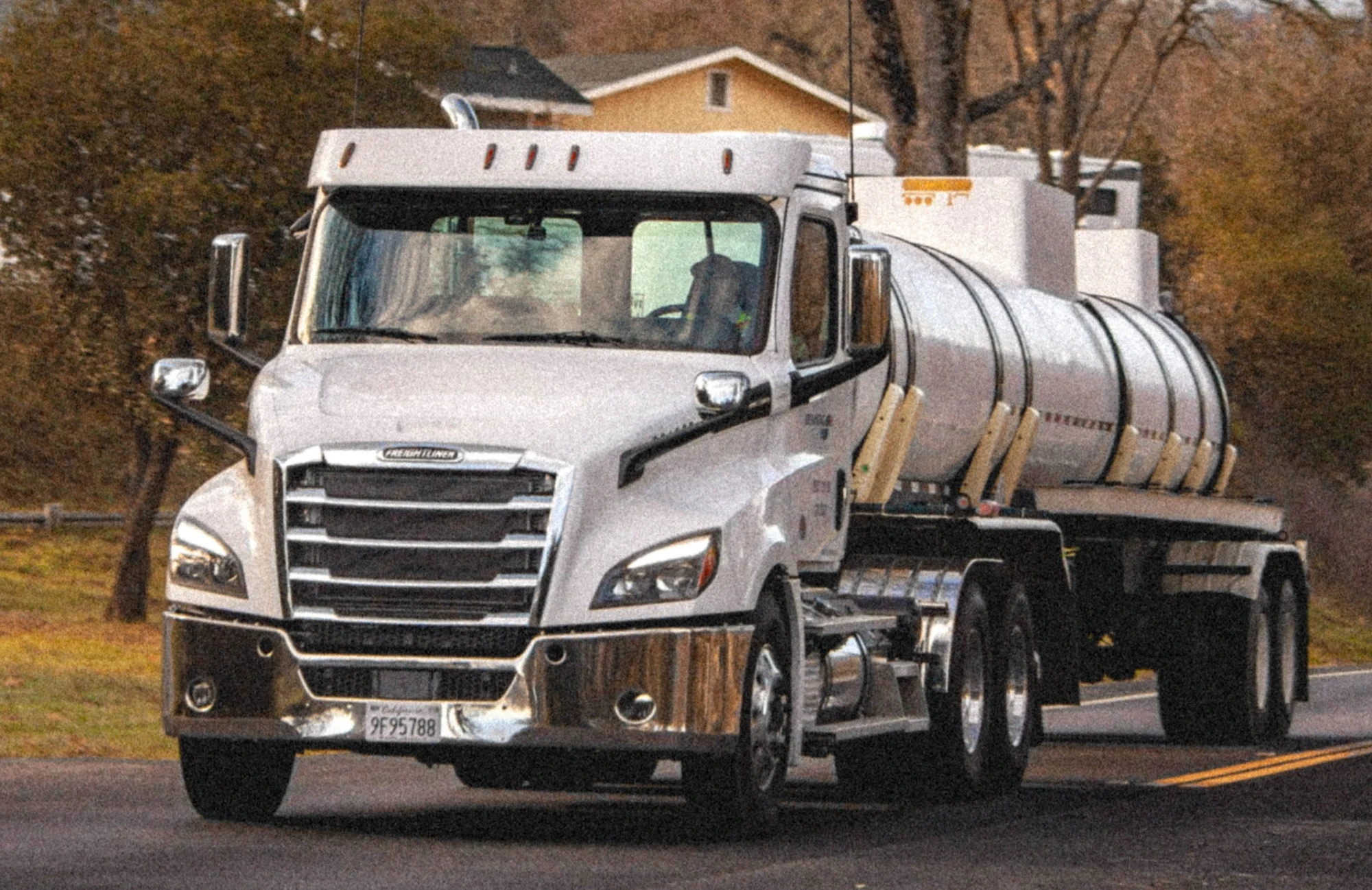

Hazmat truck insurance in Florida is auto liability at the federal hazardous materials level with the MCS-90 endorsement, plus a separate pollution liability policy for releases, physical damage on the tractor and tank, and general liability and workers’ compensation around them. The federal rules decide the minimums and the placards. Florida adds the ports, hurricane season and heavy enforcement corridors that shape how the program is written. For another state, see hazmat truck insurance in New Hampshire.
The Florida trucking insurance page covers the state’s regulators and its freight markets, and the hazmat trucking insurance page covers the class nationally. This article is about putting the two together for a Florida tanker or placarded carrier.
What insurance does a Florida hazmat truck need?
Five pieces, in most programs. Auto liability at the level the federal schedule sets for your commodity, with the MCS-90 endorsement and the federal filing if you have interstate authority. Pollution liability for releases, written for transportation. Physical damage on the tractor and the tank or trailer. General liability for premises and operations. Workers’ compensation for your employees.
The federal schedule at 49 CFR 387.9 has separate rows for hazardous materials and oil, and they are higher than the row for general freight. Which row applies depends on the commodity and how it is carried. Match your commodity list to the schedule with your agent; do not assume one limit fits every load.
Why does a Florida tanker need separate pollution coverage?
Because cleanup is where the cost is, and the auto form commonly limits or excludes it. The MCS-90 endorsement protects the public after a crash and lets the insurer seek reimbursement from the carrier afterward, as the article on when MCS-90 actually fires explains. It does not pay to clean a ditch or a waterway for the carrier’s benefit.
The Florida page puts it plainly: a Florida carrier hauling petroleum or placarded hazardous materials needs a separate pollution liability policy that responds to cargo-related releases, upset-and-overturn spills and environmental restoration costs the auto policy excludes. Read whether the form covers loading and unloading, because many releases happen at the rack or the receiving tank, not on the road.
How do Florida’s ports shape hazmat trucking?
They concentrate tank work. As the Florida page describes, Port Tampa Bay is a major petroleum and phosphate terminal on the west coast, and petroleum drayage off Port Everglades concentrates tank-truck exposure in Broward County. Tank carriers serving those terminals see pollution and MCS-90 questions on nearly every quote.
Terminal access agreements often set insurance requirements of their own, such as specific limits, pollution coverage and additional insured status. Read them before your first load, because a terminal can refuse a truck whose certificate does not match.
What do the federal placard and training rules require?
The hazardous materials table, placarding, shipping papers and training requirements are in 49 CFR Part 172. The rules for driving and parking a vehicle carrying hazardous materials, including attendance, are in 49 CFR Part 397. PHMSA explains who must register to transport hazardous materials on its registration information page.
These rules matter to insurance in two ways. A policy written for general freight may exclude placarded loads, which is the most common preventable gap in this class. And an underwriter will read your training records and inspection history as evidence of how your drivers handle the product.
Enforcement happens at the state level as well. Florida’s Office of Commercial Vehicle Enforcement, part of the Florida Highway Patrol, carries out vehicle safety inspections, crash investigations and weight and registration checks. The Florida page notes that inspection density on I-75, I-95 and I-10 is part of why a Florida carrier’s safety record can move quickly. For a hazmat carrier, a placarding or securement finding at roadside is a finding every underwriter will see.
The Florida Office of Insurance Regulation approves the policy forms used in the state, which is why the wording of a Florida pollution or auto form is worth reading closely rather than assuming it matches another state’s.
How does hurricane season change the risk?
It moves trucks and changes where they sit. Fuel demand rises before and after a storm, evacuation routes fill and terminals and yards can be damaged. The Florida page notes that evacuation-route coordination becomes operationally critical during hurricane season.
For insurance, the questions are practical. Physical damage covers your trucks for the causes of loss the policy lists, so check how wind and flood are treated. Property coverage protects the yard and buildings. And tanks parked loaded in a storm’s path are a pollution question as well as a physical damage one.
Real-World Scenario: Picture a hypothetical Florida tank carrier that hauls fuel from a port terminal to retail stations. Its auto policy was written years ago when it hauled only general freight, and the owner never told the insurer when the tankers were added. After a rollover on an interstate ramp, the auto insurer points to the placarded load, and the carrier learns it has no pollution policy for the cleanup. The MCS-90 protects the injured public, and the insurer then seeks reimbursement from the carrier.
How should the tank and its equipment be insured?
As the specialized equipment it is. A tank trailer is worth more than a dry van and costs more to repair, and the pump, hoses, meters and valves mounted on it may or may not be part of the scheduled unit. List each tank trailer with an accurate value, ask whether mounted equipment is included, and insure loose items such as spare hoses and spill kits separately if they matter to you.
Lenders on financed tank equipment will require physical damage and will name themselves on the policy. The article on physical damage coverage on a financed truck explains how the lienholder, the deductible and the claim payment fit together. Tank cleaning and decontamination after a loss can add cost that a general freight carrier never sees, so ask how the policy treats it.
What about workers’ compensation for Florida tank drivers?
Florida runs its system through the Division of Workers’ Compensation within the Department of Financial Services, as the Florida page explains. The page also notes that Florida treats driver status, employee or independent contractor, as a specific statutory test that turns on the working relationship rather than a tax form alone, and that a misclassification finding can produce retroactive premium and benefits.
Tank work adds exposures to the workers’ compensation underwriter’s list: climbing, hose handling, connecting and disconnecting at the rack and working around product. Training records help here as much as they help with the auto underwriter. The article on trucking workers’ compensation covers how interstate payroll is handled.
Do terminal and shipper contracts change the limits I need?
Usually, yes. The federal schedule is a floor. Terminals, refiners and shippers commonly require higher auto limits, pollution coverage with a specific limit, additional insured status and a waiver of the insurer’s right to recover from them. Some also ask the carrier to indemnify them broadly, and whether your policies respond to that depends on the forms and the exact wording. The article on liability limits explains why customer limits sit above the federal minimum. Collect every contract before you quote, because the strictest one usually sets the program.
What should a Florida hazmat carrier tell the underwriter?
Everything about the loads. Every commodity and placard class you haul, and how often. Whether you carry bulk or packages. Which ports and terminals you serve and where trucks park overnight. How drivers are trained, and your loss history, including small releases. The fuel hauling insurance page covers the tank side in more detail, and the article on hazmat trucking company insurance beyond auto liability covers the terminal, property and business interruption side.
What should you do next?
Write down every commodity you haul, the terminals you serve and the contracts you have signed. Then start a quote and send the list with your current policies. We will match your loads to the federal schedule and tell you where the pollution coverage starts and stops.