
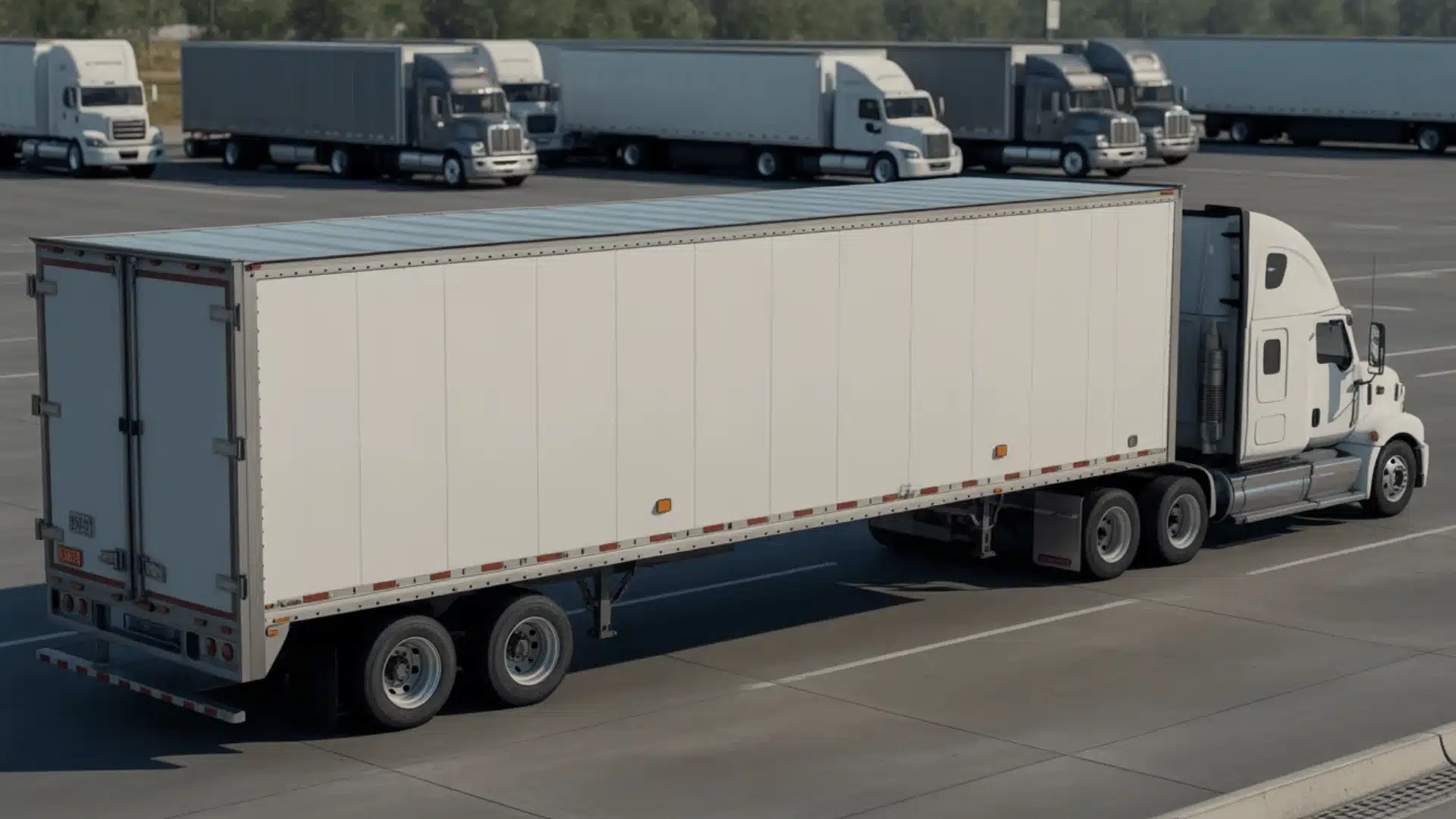

The most efficient way for a large fleet to add trailer interchange is to add it to the existing fleet policy as one blanket coverage for non-owned trailers held under written agreements, sized to the most valuable trailer the fleet regularly pulls, rather than scheduling trailers one at a time. The rest of the work is keeping a master list of every interchange agreement, so that the limit, the policy wording and the certificates always match what the agreements ask for.
This is the fleet version of a question owner-operators ask too. The basics of interchange, and why cargo does not cover the trailer, are in trailer interchange agreements: when you are liable and what pays. This article is about doing it at scale.
What is the most efficient way for a large fleet to add trailer interchange?
Treat it as a program decision, not a trailer decision. A fleet that pulls containers on chassis, customer trailers swapped at docks and power-only loads may handle many different non-owned units in a month. Adding each one to a policy as it arrives does not work. A blanket coverage that responds to any non-owned trailer held under a written agreement, up to a limit, does.
The steps below are the order we work in.
Blanket or scheduled: which fits a fleet?
Blanket fits most fleets. A scheduled approach lists specific trailers on the policy, and it suits trailers the fleet holds for a long time, such as units rented for months. Those are often added to the fleet’s own physical damage schedule with the lessor shown as loss payee.
A blanket interchange form does not depend on knowing which unit you will have next week. It responds to non-owned equipment held under a written agreement, within the limit and the form’s terms. Many fleets end up with both: blanket interchange for the changing pool of borrowed units, and scheduled physical damage for owned and long-term rented ones.
Ask your agent which forms your insurer writes for fleets. Some offer a non-owned trailer physical damage form as an alternative, and some equipment providers will only accept interchange by name.
What does the underwriter need from a fleet?
More than a trailer count. Expect to be asked for:
- The equipment providers you work with and copies of their agreements.
- The kinds of equipment: dry vans, reefers, flatbeds, containers, chassis.
- The value of the most expensive unit you regularly pull.
- How long non-owned units typically stay with the fleet, and where they are kept between moves.
- Whether owner-operators leased to the fleet also pull non-owned equipment.
- The fleet’s loss history on equipment damage.
Storage is the question fleets underestimate. A borrowed trailer parked at your terminal overnight is still in your care, and the article on trailer interchange at a drop yard explains how yards change the picture.
How do you size the limit for a large fleet?
Start with the agreements. Each one usually states the interchange coverage it requires. The fleet’s limit has to meet the strictest of them, because one policy is answering for all of them.
Then test the limit against the most valuable unit, not the average. Interchange claims are usually about one trailer, container or chassis at a time, and the limit has to cover the worst of those. Also ask how the form handles several units damaged in one event, such as a fire in a yard, because some forms apply the limit per unit and others per occurrence.
The trailer interchange coverage page explains the form’s structure in more detail.
How do you keep agreements and the policy in step?
With one register, kept by one person. For every equipment provider, record the date the agreement was signed, the coverages and wording it requires, whether the provider must be named on the policy, and the date of the last certificate sent. When a new provider is added, check its requirements against the policy before the first unit is picked up.
Intermodal fleets have a published starting point. IANA’s UIIA FAQ says trailer interchange is a coverage many equipment providers require, and that individual providers may add insurance requirements of their own on top of the agreement’s base auto and general liability. The page for UIIA intermodal trucking insurance covers that class, and what UIIA insurance is covers the endorsement.
What about owner-operators leased to the fleet?
Decide it in the lease. Federal lease rules in 49 CFR 376.12 require the lease to state the authorized carrier’s obligation for public liability coverage and to specify who provides any other insurance. Trailer interchange is one of those other coverages.
If the fleet’s blanket interchange is meant to cover trailers pulled by leased owner-operators under the fleet’s dispatch, say so in the lease and confirm it with the insurer. If it is not, the owner-operators need their own, and the fleet should collect their certificates. The federal rules on lease and interchange of vehicles cover both arrangements.
Real-World Scenario: Picture a hypothetical fleet that hauls dry van freight and adds a power-only contract mid-year. Dispatch starts pulling the shipper’s trailers the following week. Nobody tells the agent, and the fleet’s policy covers only its owned trailers. A shipper trailer is damaged backing into a dock. The power-only agreement made the fleet responsible for the equipment. The claim is the fleet’s to pay, because the coverage was never added when the work changed.
What slows the process down?
Missing paperwork, mostly. The most common delays we see are agreements nobody can find, a trailer pool nobody has described, and a dispatch team that started the new work before the policy changed. An underwriter cannot price interchange for equipment it has not been told about, and it will not cover work it did not know existed.
Two other things slow fleets down. The first is treating interchange as an endorsement to bolt on at the last minute, when an equipment provider is waiting for a certificate. Some insurers need time to review the agreements before they will add the coverage. The second is mixing up who is responsible for the trailer: some agreements hold the carrier responsible only while the unit is moving, others until it is returned. Read that clause before you size anything.
How does interchange fit with the rest of the fleet program?
It sits beside the lines the fleet already carries, and it should be read with them. Auto liability answers for injury and damage to others caused by the tractor and the trailer it pulls. Motor truck cargo answers for the freight in the borrowed trailer. Interchange answers for the borrowed trailer itself. A single accident can reach all three.
The comparison of the two trailer-side coverages is in trailer interchange vs. cargo coverage on leased trailers. Fleets running reefer equipment should also read the refrigerated hauling insurance page, because a borrowed reefer trailer brings its refrigeration unit into the interchange question.
When should a fleet review its interchange coverage?
At each renewal, and at every change in the work. A new equipment provider, a new power-only contract, a move into reefer or container work, or a higher-value class of trailer can each change the limit or the form the fleet needs. A short note from dispatch to the person keeping the register prevents most gaps.
At renewal, bring the register, the past year’s equipment claims and any agreements that changed. The underwriter will reprice on what the fleet actually pulled, and a register that matches the dispatch records makes that conversation short.
What should you do next?
Pull together every interchange agreement the fleet has signed and the list of trailer types it pulls. Then start a quote and send them. We will tell you whether a blanket interchange coverage fits, what limit the agreements call for, and how to keep the certificates current as providers change.