
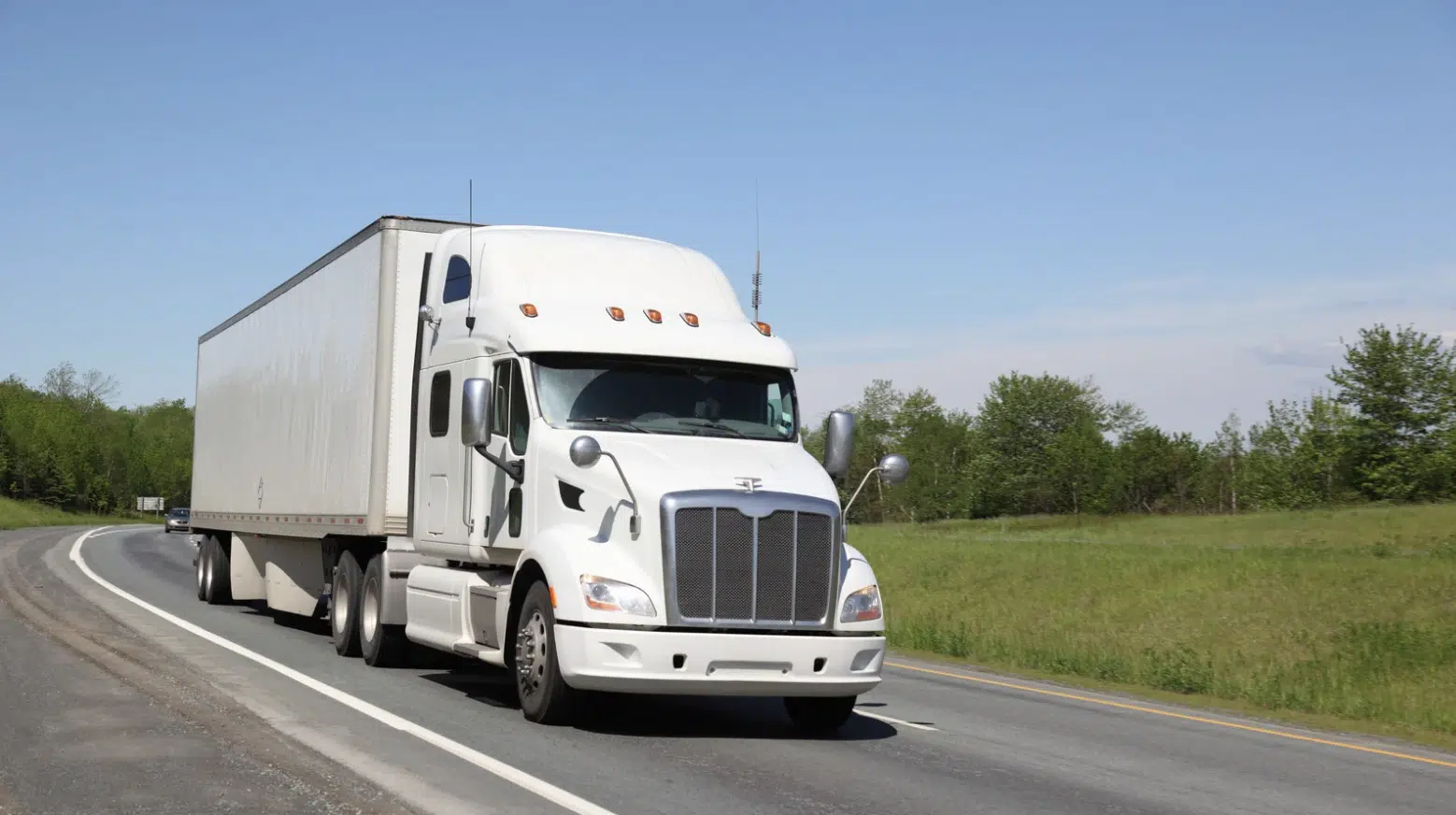

Reefer breakdown coverage is the cargo coverage that pays for a load spoiled after a refrigeration unit fails. It pays for the freight, not for the machine, and only when the failure fits the form’s own definition of breakdown. Whether a given loss qualifies is a question of wording, so the sentences that define breakdown matter more than the label on the quote. Bulk milk raises the same rejection question; see milk hauler insurance.
That is the short answer to the question refrigerated haulers search for, in several forms: reefer breakdown coverage, refrigeration breakdown coverage, reefer breakdown insurance. The rest of this article is about what sits behind those words, written for the operator who has to decide whether the coverage on a quote is the coverage a load needs. For the step-by-step handling of a claim once a unit has failed, see the companion piece on the reefer breakdown claim process.
What is reefer breakdown coverage?
Reefer breakdown coverage is a cargo coverage tied to one cause of loss: the mechanical or electrical failure of the refrigeration unit that keeps a load at temperature. A standard motor truck cargo form insures the freight a motor carrier hauls for others against the causes of loss the form names. Temperature loss from a failed unit is a cause a standard form may not name on its own, which is why refrigerated haulers often see breakdown written as an added coverage.
Three parts of that sentence carry the weight. The coverage is about the cargo, so the thing being valued is the load. It is about one peril, so a loss has to be traced to a failed unit. And it is bounded by the form, so the exact definition of breakdown controls the outcome. An operator who understands those three parts can read any quote for a refrigerated hauling program without needing the underwriter’s vocabulary.
What does reefer breakdown coverage pay for?
It pays for the cargo loss that follows a covered breakdown. In practice that means the value of the load, or the part of it that was damaged, measured the way the cargo form measures any loss: subject to the limit on the policy, the deductible, and whatever the form says about salvage and disposal. Those mechanics are the same as for any other cargo claim, and they are covered in the claims walkthrough rather than repeated here.
What changes with the breakdown peril is the trigger. A load can be correctly packed and loaded, moving on schedule, and still be lost because the unit stopped cooling on a hot day in a stretch of road with no service. If the form does not name that cause of loss, the claim can fail even though the loss looks like an ordinary cargo loss. If it does, the question becomes whether the failure was a breakdown as the form defines the word.
What reefer breakdown coverage leaves out
The most common misunderstanding is that the coverage protects the refrigeration unit. It does not. The unit is part of the trailer or the truck, and its repair is a question for the physical damage side of the program or for an equipment breakdown arrangement, depending on who owns the unit and how it is insured. A cargo form that pays for spoiled freight has no reason to pay for the compressor.
Other losses sit outside the coverage as well, unless the form says otherwise:
- the cost of the delay, such as missed delivery windows or the shipper’s own downstream losses
- the cost of roadside service to get the unit running again
- loss from a temperature excursion with no failed unit behind it
- loads of a commodity the form does not list as covered
The point is not that any one of these is always excluded. It is that each one is a separate sentence in the form, and the quote will not tell you which way the sentence goes. Read the form for each item above rather than assuming the endorsement’s name settles it.
Why does a spoiled load become the carrier’s claim at all?
Because the law places the loss on the carrier. Under 49 U.S.C. 14706, a carrier that issues a receipt or bill of lading for property it receives is liable for the actual loss or injury to that property. The liability does not depend on whether the carrier bought insurance. The policy is only the way the carrier pays what it already owes.
For food, a second layer applies, and it has its own exemptions, so check whether a given load is covered. The FDA’s rule on sanitary transportation, 21 CFR 1.908, has the shipper specify the operating temperature in writing, and where the carrier and shipper agree that the carrier is responsible for the transport conditions, the carrier must be able to show on request that it kept that temperature. The same section says that when anyone in the chain becomes aware of an indication of a possible temperature control failure, the food may not be sold or distributed unless a qualified individual determines it is not unsafe.
That last sentence is why a breakdown that was fixed within the hour can still end in a rejected load. The rule does not depend on how long the unit was down. It depends on whether there was an indication of failure and what a qualified person decides afterward. A claim file that holds the unit’s record and the written temperature instruction is the carrier’s answer to both the shipper and the adjuster.
The claim itself arrives separately from the evidence. Under 49 CFR 370.3, a claim filed with a carrier must identify the shipment, assert liability and claim a specified or determinable amount, and notations on a delivery receipt or an inspection report do not meet those minimums on their own. A rejection note at the dock is evidence; the shipper’s letter is the claim.
Is reefer breakdown insurance the same as equipment breakdown?
No, and mixing them up is how a reefer operator ends up with half the protection they thought they had. The two coverages look at different property.
If the trailer is leased, the lessor’s agreement may decide who insures the unit, which is a different document from the cargo form. If the trailer is financed, the lender’s requirements apply to the machine, not the load. Either way, the person who owns the cargo claim and the person who owns the equipment claim may not be the same, and neither is made whole by the other’s policy.
Which words in the form decide a reefer claim?
Five pieces of wording do most of the work. When you compare two quotes that both say reefer breakdown, compare these.
- The definition of breakdown. Does it name mechanical and electrical failure of the unit, and does it name fuel exhaustion or a failure of the power that runs the unit? A form that is silent on the cause leaves the adjuster to decide.
- The link between breakdown and spoilage. Some forms pay for spoilage only when a covered breakdown caused it. Others pay for spoilage from a temperature excursion more broadly. The difference decides the case where the unit ran but the load still warmed.
- The conditions. Forms can require that the unit be maintained, monitored or recorded in a particular way. A condition you cannot meet is an exclusion by another name.
- The exclusions. Look for language on improper loading, pre-cooling, pre-existing temperature problems and commodities the form does not insure.
- Limit, sublimit and deductible. Breakdown can carry its own deductible or its own limit, separate from the rest of the cargo form. The dollar amounts belong to your quote; the question is whether they exist as separate terms.
None of these is exotic. They are the places where two quotes with the same endorsement name diverge, and a refrigerated hauler who has read all five has read the coverage.
Real-World Scenario: A small refrigerated carrier hauls prepared foods for a regional distributor under a written agreement that names the required temperature. Mid-route the unit alarms, the driver gets it back to setpoint, and the load arrives with the alarm recorded in the unit’s log. The receiver, aware of the alarm, holds the load for review by a qualified person and does not accept it into inventory. The carrier’s cargo form carries a breakdown peril, but it also carries a condition about keeping the unit’s record. Because the carrier kept the record and the written temperature instruction, the claim is a documented breakdown with a clear cause. A carrier without them would have the same spoiled load and a much harder conversation.
What should you ask before you bind reefer breakdown coverage?
Put these to the agent in writing and keep the answers with the policy:
- Is breakdown endorsed on the cargo form, or built into a form written for refrigerated operations?
- Where is breakdown defined, and does the definition reach fuel exhaustion and the power that runs the unit?
- Does the form pay for spoilage from a temperature excursion with no failed unit, or only from a covered breakdown?
- What does the form require of the unit, such as maintenance or a temperature record, and what happens if the requirement is missed?
- Which commodities does the form list as covered, and does that match the loads you actually haul?
- Does breakdown carry its own deductible or limit?
- Who insures the unit itself, and does that arrangement sit in a different policy?
An agent who can answer all seven from the form has read the form. An agent who answers from the endorsement title has not.
How reefer breakdown fits the rest of a refrigerated program
Reefer breakdown coverage is one line in a program that also needs auto liability, the cargo form it sits on, general liability for the exposures that are not on the road, and physical damage for the equipment. What drives the cost of that program is walked through in the piece on what drives trucking insurance premiums. For a carrier building a refrigerated operation from a standing start, the new authority article explains why the first year of any program is priced the way it is.
Get the breakdown wording in front of you before the first load is tendered. The time to learn that a form does not name your cause of loss is not the morning after the unit fails. To compare refrigerated cargo forms side by side, start a quote and send the commodity list and the equipment details.