
Transportation pollution liability pays for cleanup and third-party claims when a pollutant escapes from a truck or its cargo while the load is moving. It exists because many trucking auto forms and nearly all general liability forms exclude pollution, or cover only a narrow slice of it, and a spill can bring cleanup demands that have nothing to do with the vehicle damage.
The pollution liability coverage page explains the form itself. This article answers a narrower question: which carriers actually need it, and where the other policies stop.
Who needs transportation pollution liability?
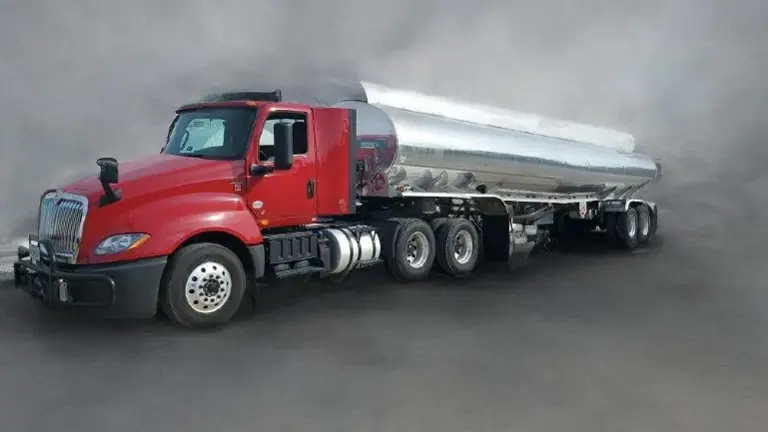
Tank, fuel and hazmat carriers need it first. Their cargo is the pollutant, and a spill turns into a regulatory cleanup the same day. The fuel hauling insurance and hazmat trucking insurance pages cover those programs.
After them comes a longer list that is easy to overlook. Carriers hauling liquid food products, fertilizer and agricultural chemicals, cleaning products, paint, and industrial liquids in drums or totes all carry something a regulator can call a pollutant. Refrigerated carriers are often asked about it because the reefer unit has its own fuel tank. And many shippers simply write pollution liability into the carrier contract, which settles the question whatever the freight.
What does it cover that auto liability doesn’t?
Three things, broadly. Cargo that escapes, whether in a crash or not. Releases that happen without a collision, such as a valve failure or a leaking drum during loading. And cleanup demanded by a government agency rather than claimed by an injured person.
Auto liability is written around the use of the truck. Many trucking auto forms exclude pollution and then give back a limited amount for fuel and fluids escaping from the vehicle’s own systems in a covered accident. That carve-back can help with a ruptured saddle tank after a crash. It does not usually help with a load of product in a ditch, which is the expensive case.
Where does the MCS-90 fit?
The federal endorsement attached to a regulated carrier’s auto policy promises payment of final judgments for bodily injury, property damage and environmental restoration. The definition in 49 CFR 387.5 describes environmental restoration as restitution for natural resources lost or damaged by the accidental release of a commodity a motor carrier transports, including the cost of removal.
That sounds like pollution coverage, and in one sense it is. But the MCS-90 protects the public, not the carrier. If the insurer pays under the endorsement for something the policy itself does not cover, it can seek repayment from you. The article on when the MCS-90 actually fires walks through that reimbursement. A carrier that relies on the endorsement as its pollution program has borrowed money, not bought insurance.
What about hazmat carriers specifically?
Hazmat carriers sit in higher rows of the federal schedule in 49 CFR 387.9, so their auto liability limit is already larger than a general freight carrier’s. A larger auto limit is not a pollution policy. The pollution exclusion still applies to whatever the limit is, and the cleanup of a released load may fall outside it entirely.
For that reason we treat pollution liability as part of a hazmat program, not an add-on. The article on hazmat trucking company insurance beyond auto liability lays out the whole set.
Do refrigerated carriers need it?
Often, and usually because a customer asked. The reefer unit carries its own diesel tank, and some refrigerated loads, such as liquid food products in bulk, can be treated as a pollutant if they reach a waterway. Pollution liability for refrigerated trucking companies is a common contract requirement for that reason.
If you run reefers and have never been asked, check the next shipper agreement you sign. The refrigerated hauling insurance page covers the rest of a reefer program.
Real-World Scenario: Picture a hypothetical carrier hauling totes of a liquid industrial cleaner on a flatbed. A strap fails on a curve, two totes come off, and one splits open beside a creek. Nobody is hurt and no other vehicle is involved. The state environmental agency orders cleanup of the bank and the water. The carrier’s auto policy has a pollution exclusion with a carve-back only for the truck’s own fuel, and its general liability excludes pollution. The cleanup invoice arrives with no policy to send it to.
How is the limit chosen?
Start with the contracts. Shippers that require pollution liability usually name a limit, and the strictest one you sign sets the floor. Then look at the commodity: a carrier hauling fuel or chemicals in bulk faces a different worst case from one hauling sealed drums on a mixed load.
Ask how the form treats cleanup ordered by a government agency, whether defense costs reduce the limit, and whether a release during loading or unloading is covered or excluded. The loading and unloading article explains why that boundary matters.
What does an underwriter want to see?
The commodity list, with hazmat classes where they apply. The equipment, especially tanks and reefer units. Your lanes, because routes near waterways and populated areas change the exposure. Your current auto policy, so the pollution form can be fitted to the exclusion it is filling. Your loss history and any past releases, however small.
The Insurance Information Institute’s background on commercial trucking gives context on the wider market these programs sit in.
What should you do next?
Pull your auto policy and find the pollution exclusion and any exception to it. Then list the commodities you haul and the customer contracts that mention pollution. Start a quote and send all three. We will tell you where your current program stops and what a pollution form would need to cover.