
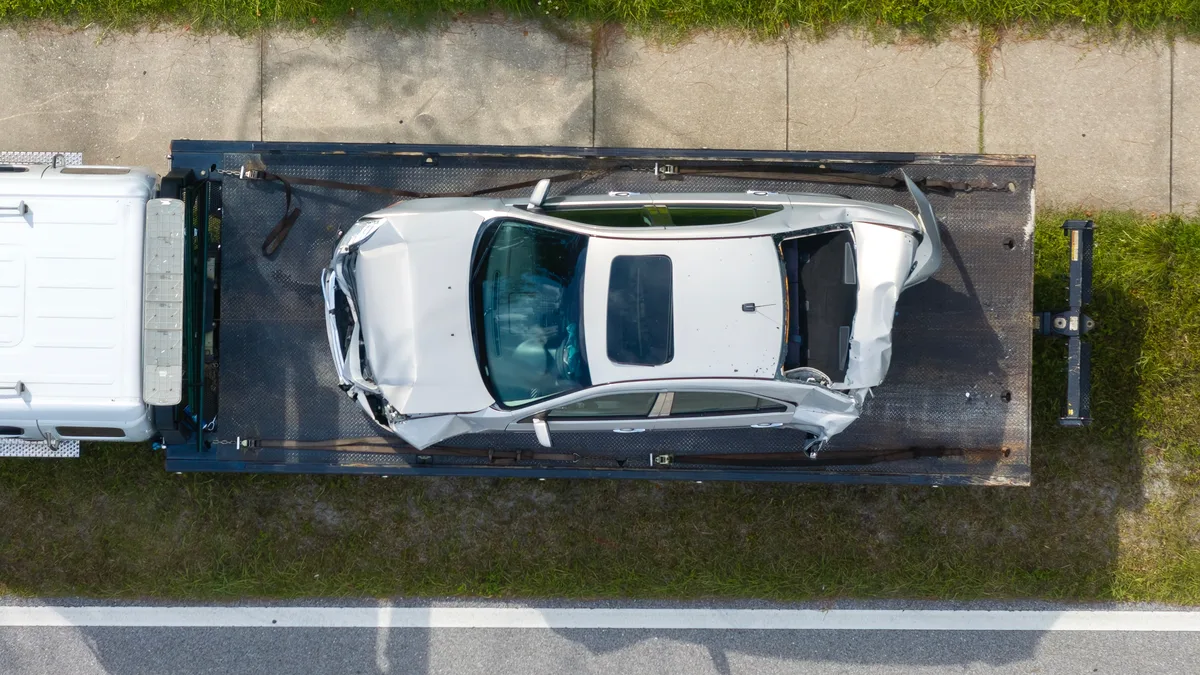

Wrecker insurance is the set of coverages a tow business carries: auto liability for the tow truck, on-hook coverage for the vehicle being towed, garagekeepers for vehicles stored at your lot, physical damage for your own trucks, general liability, and workers’ comp once you have employees. The common thread is that a tow operator is responsible for vehicles it does not own, and ordinary trucking forms are not written for that.
The tow trucking insurance page covers the program as a class. This article goes coverage by coverage, so you can see what each one answers and where the gaps tend to be.
What does auto liability cover for a wrecker?
Injury and damage to other people caused by operating your tow truck. A rollback that rear-ends a car at a light, a wrecker that swings into a lane while recovering a vehicle on the shoulder. The trucking auto liability page explains the form.
It does not cover the vehicle on your hook. That vehicle is in your care, custody and control, and auto liability forms exclude property in that position. This is the single most common misunderstanding new tow operators bring to a quote.
What is on-hook coverage?
On-hook pays for damage to a customer’s vehicle while it is attached to or carried on your truck. It is the tow version of motor truck cargo. A car that comes off a wheel-lift, a vehicle damaged when a rollback bed is lowered, a strap that scrapes a bumper: those are on-hook claims.
The limit matters more than operators expect. A wrecker that tows an older sedan one day and a new pickup or a high-end SUV the next needs a limit sized to the expensive one. Ask whether the form covers the vehicle only while it is being towed, or also while it is being winched or loaded.
What is garagekeepers coverage?
Garagekeepers covers customer vehicles you are holding at your lot. Impounds, accident vehicles waiting for an adjuster, cars waiting for a body shop. Theft, fire, vandalism, hail and flood at a storage yard are the claims it answers.
On-hook ends when the vehicle comes off the truck, and general liability forms commonly exclude property in your care. A tow company that stores vehicles without garagekeepers has a gap the size of its lot.
What do rotation and motor club agreements require?
Most tow work comes through an agreement: a police or highway patrol rotation list, a motor club, a dealer, a fleet account. Each one sets insurance terms, and the strictest one sets your limits.
California is a good example of how specific this gets. The CHP Rotation Tow Program runs on a Tow Service Agreement, accepts only a certificate of insurance as proof of coverage, and removes an operator from the rotation list if its policy is canceled. A lapse there costs you the calls, not just the coverage. The article on tow truck insurance in California goes further on that state.
Do tow drivers need workers’ comp?
If they are employees, yes, under state law. Workers’ comp for truck drivers usually runs around $1,500-$2,500+ per $50,000 in payroll. That is a typical range, not a quote or a guarantee, and the state, the job classification and your loss history move it.
Tow work is roadside work, and drivers hooking a vehicle on a live shoulder are exposed in a way a dock-to-dock driver is not. Underwriters will ask how you protect them, including lighting, vests and how calls on high-speed roads are handled. The workers’ compensation coverage page covers the line.
Real-World Scenario: Picture a hypothetical two-truck operator that joins a police rotation list and starts storing accident vehicles behind the shop. The policy has auto liability, physical damage and an on-hook limit set for ordinary sedans. A storm drops hail on the lot overnight, and twelve stored vehicles are damaged. On-hook ended when each car came off the truck, and the general liability form excludes property in the operator’s care. There is no garagekeepers coverage on the policy.
What about the tow trucks themselves?
Physical damage covers your own wreckers and rollbacks for collision, fire, theft and similar loss. Heavy wreckers and rotators are expensive, specialized units, so list each one at a value that would actually replace it, and ask whether mounted equipment like booms, winches and wheel-lifts is part of the insured unit.
The article on physical damage coverage on a financed truck explains how lenders shape that line if your trucks are financed.
What do underwriters ask a tow operator?
They start with the trucks: how many, what kind and how old. A light-duty wheel-lift, a rollback and a heavy rotator are three different risks, and the mix tells the underwriter what kind of calls you take. Then they ask about the work itself: police rotation, motor club, private property impounds, dealer and fleet accounts, and how much of it happens at night or on high-speed roads.
They will ask about your lot. Fencing, lighting, cameras, how vehicles are logged in and out, and how long vehicles usually stay. A lot that holds vehicles for weeks has a different garagekeepers exposure from one that clears in days.
Expect questions about drivers too. Motor vehicle records, years of tow experience, and how new drivers are trained before they work a highway scene. The federal driver qualification rules in 49 CFR Part 391 apply to many tow operations, and a clean driver file is part of a clean submission.
How do you keep claims down?
Most tow claims come from three places: damage while hooking or loading, damage at the lot, and crashes at roadside scenes. Photographing every vehicle before it is hooked settles many on-hook disputes before they start. Logging the condition of vehicles at check-in does the same for the lot. And training drivers to position the truck and themselves safely at a scene protects them and your loss history at once.
What should you do next?
List every tow truck you run, the most valuable vehicle you tow or store, and every rotation, motor club and dealer agreement you work under. Then start a quote and send the agreements with the list. We will tell you whether your on-hook and garagekeepers limits meet them and where the gaps are.