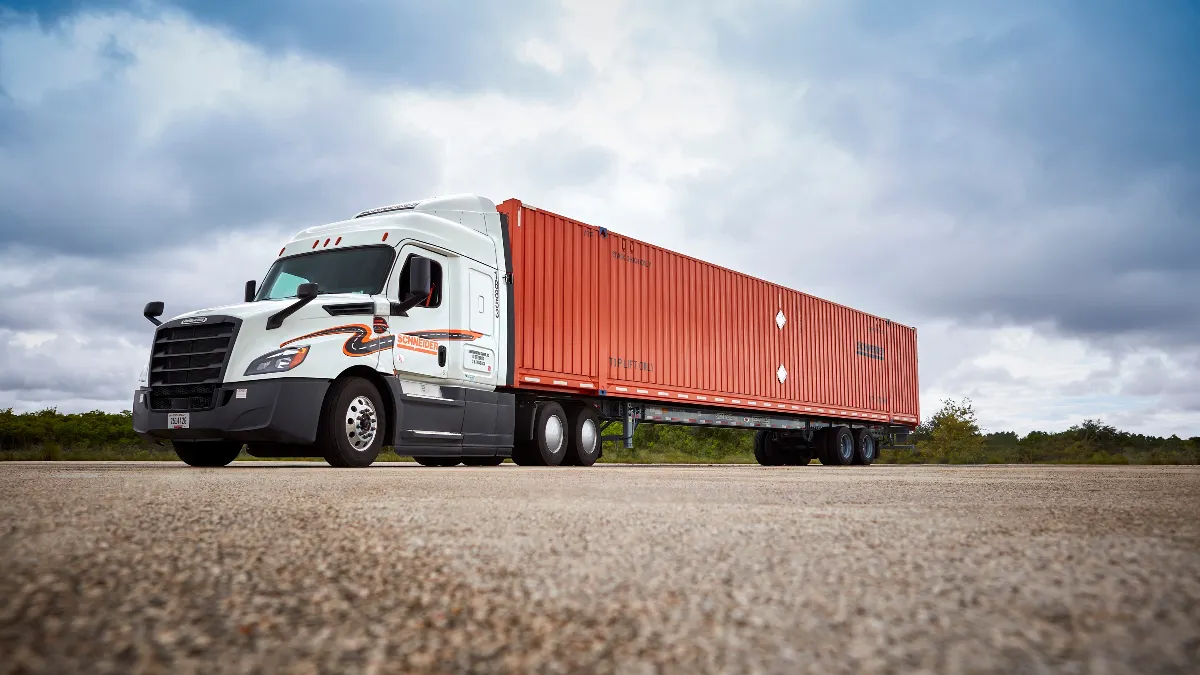

Intermodal transportation vehicle — Louisiana trucking operations

States we serve · Louisiana

Louisiana trucking insurance

Louisiana sits at the intersection of the Mississippi River refining belt, the Gulf hurricane-wind zone, and one of the largest US port systems by tonnage. The petrochemical corridor between Baton Rouge and New Orleans, the LNG export terminals around Lake Charles, the offshore-oilfield support base in Houma-Thibodaux, and the Port of South Louisiana drive an underwriting conversation distinct from any other Gulf state.

What Trucking Insurance Costs in Louisiana

We do not publish premium ranges for Louisiana trucking policies on this page. Per our numeric discipline, the cost discussion here is about the drivers, not the dollars — verified figures live on the quote itself, not on a marketing page that would be stale the week after it published.

The cost drivers that move Louisiana motor carrier premium the most:

  • Operating territory across the Louisiana corridor system. A motor carrier running high mileage through the Mississippi River refining belt between Baton Rouge and New Orleans — among the most concentrated US refining regions — carries a different exposure profile than a regional operator running the Shreveport I-20 northwest corridor or the Monroe I-20 northeast axis. Underwriters ask for percent-of-miles by corridor on larger accounts.
  • Hurricane-wind-zone garaging address. Yards and parked equipment in the Greater New Orleans, Houma-Thibodaux, and Lake Charles parishes sit inside named-storm wind zones. Physical damage and property carriers price the named-storm deductible structure into the policy, and the pre-storm relocation plan on the application is a meaningful underwriting variable. Inland Louisiana — Shreveport, Monroe, Alexandria — runs a different property profile dominated by interior severe weather rather than coastal wind.
  • Commodity mix and lane density. Hazmat tank-truck operations along the Baton Rouge refining belt and the Lake Charles LNG-and-petrochemical footprint route to a narrower panel with appetite for the class. Offshore-oilfield support out of Houma-Thibodaux sits in another panel slice. Refrigerated food-service freight into Acadiana and the New Orleans hospitality network is a third. Dry-van general freight on Shreveport, Monroe, and northwest Louisiana lanes is the most-quoted class and prices the most competitively.
  • Loss-run history over three to five years. The single most weighted variable on any Louisiana motor carrier renewal. Clean loss runs through the petrochemical corridor price meaningfully differently than mixed history with an at-fault liability claim or any pollution-event reserve in the most recent term.
  • Driver motor vehicle record and PSP profile. Underwriters pull motor vehicle records on every covered driver and pull PSP reports at the carrier level. Louisiana commercial enforcement density along I-10, I-12, I-20, I-49, I-55, and US-90 is steady, and out-of-service violations from Louisiana inspections do show up on PSP.
  • Liability limit selection and layered structure. The federal floor under 49 CFR § 387.9 is the minimum; Louisiana refinery and LNG-terminal access agreements, port-terminal drayage contracts, and large-shipper master agreements routinely specify limits well above the floor. The layered architecture above primary is how Louisiana operators reach the contracted number while keeping the BMC-91X filing aggregated cleanly.
  • Pollution-liability and MCS-90 structure on tank-truck programs. The MCS-90 endorsement is a public-protection backstop on the auto liability policy, not pollution coverage for the motor carrier. A separate pollution-liability policy — covering cargo-release and overturn events not covered by standard auto liability — is the line that responds to the motor carrier directly, and the language difference between two carrier forms changes the answer materially on a spilled-load claim.

Louisiana Trucking Regulatory Framework

Louisiana motor carriers operate under a layered federal-and-state regulatory framework. The pieces matter, and they do not always talk to each other.

The Louisiana Department of Transportation and Development, LADOTD or DOTD, is a dual-purpose agency combining transportation and development scope under one roof — unusual nationally and worth noting on first read. The agency administers the state highway system, manages oversize and overweight permitting, and coordinates inspection and enforcement work performed jointly with the Louisiana State Police commercial vehicle enforcement division. The LADOTD website documents the permit portal, the seasonal route restrictions, and the pilot-car requirements that scale with load size on heavy-haul permits.

The Louisiana Department of Insurance, LDI, regulates the private carriers writing commercial auto, motor truck cargo, physical damage, pollution liability, general liability, and the adjacent lines on Louisiana-domiciled motor carriers, oversees rate and form filings, and handles consumer complaints. The LDI website lists the licensed and surplus-lines-eligible carriers and the procedural rules for rate and form filings.

The Louisiana Office of Workers Compensation sits within the Louisiana Workforce Commission and regulates workers compensation across the state. Louisiana is not a monopoly-fund state — private insurance carriers write the standard workers compensation policy under Workforce Commission regulation. The offshore- oilfield support work running out of Houma-Thibodaux and the broader Gulf of Mexico support base raises Jones Act and Longshore and Harbor Workers Compensation Act questions that sit alongside the standard workers compensation policy.

The federal layer — FMCSA financial responsibility under 49 CFR § 387, the BMC-91 and BMC-91X filing forms, hours of service, driver qualification, drug and alcohol testing, PHMSA hazmat placarding for the petrochemical corridor, and vehicle maintenance — applies on top of the Louisiana state framework. The Federal Motor Carrier Safety Administration publishes the financial responsibility regulations and the BMC filing forms that every interstate Louisiana motor carrier holds.

Common Trucking Risks in Louisiana

The Louisiana motor carrier risk profile is shaped by the petrochemical corridor, the Gulf hurricane-wind exposure, the Port of New Orleans and Port of South Louisiana drayage footprint, and the offshore-oilfield support base. The risk categories that show up most often on Louisiana quotes:

  • Petrochemical-corridor pollution exposure. The Mississippi River refining belt and the Lake Charles LNG-and-petrochemical footprint produce hazmat tank-truck operations at volume. An upset or overturn event releasing refined product, crude, or finished chemicals onto the roadway or into a waterway is the event the MCS-90 endorsement responds to in a public-protection capacity, while a separate pollution-liability policy is what responds to the motor carrier directly. The structural relationship between the two is the conversation that drives the quote.
  • Gulf hurricane-wind property exposure. Yards, parked equipment, and terminals across Greater New Orleans, Houma-Thibodaux, Lake Charles, and the connecting parishes sit inside named-storm wind zones. Single-event property severity from a major landfall can be substantial, and the named-storm deductible structure on the property policy is meaningfully different from the all-perils deductible elsewhere.
  • Port-drayage trailer-interchange exposure. Drayage operations out of the Port of New Orleans container complex and the Port of South Louisiana — the largest US port by tonnage — pull non-owned trailers under UIIA agreements. The trailer-interchange policy is the line that responds when a chassis-pool or non- owned trailer is damaged under the carrier’s care, custody, and control, and the interchange-agreement language is what the carrier reads at claim time.
  • I-10 congestion-driven rear-end frequency. The I-10 corridor through Baton Rouge and New Orleans carries dense truck volume, and stop-and-go traffic around the refinery-access corridors and the urban interchanges produces rear-end events at a steady cadence. Bodily injury severity in the Louisiana plaintiff venues is a recurring concern that drives the layered-limits conversation.
  • Offshore-oilfield support and Jones Act exposure. Houma-Thibodaux motor carriers supporting the offshore drilling rotation interact with both road transportation and crew-rotation logistics into the Gulf support base. The Jones Act and Longshore and Harbor Workers Compensation Act apply to maritime workers, and the workers compensation classification on land-based drivers versus offshore-bound crews is one of the areas that needs to land cleanly on the application.
  • Multi-state interchange across the Texas, Mississippi, and Arkansas borders. The I-10 corridor west into Texas, the I-20 corridor across northern Louisiana, the I-49 corridor north into Arkansas, and the I-55 / I-59 interchange with Mississippi all pull Louisiana motor carriers into a regular multi-state pattern. The IRP base-state question, the multi-state workers compensation footprint with extraterritorial endorsements, and the broker- certificate variations between Texas, Mississippi, and Arkansas shippers all flow from that geography.
  • Cargo theft and freight-related theft exposure on the port-drayage corridor. Loaded containers and parked trailers staged at and around the Port of New Orleans and Port of South Louisiana intermodal yards face a theft exposure higher than interior Louisiana lanes. The protective-safeguards warranty inside the cargo policy form is the contractual hinge a denied theft claim along the corridor will turn on.

Common Louisiana Trucking Claims We See

The claim categories that drive the most Louisiana trucking severity — described qualitatively per our numeric discipline, no settlement figures:

  • Tank-truck upset or overturn releasing refined product along the I-10 petrochemical corridor. A tractor-trailer hauling refined petroleum, finished chemicals, or LNG-related cargo overturns or releases product. Multiple policies respond — auto liability for third-party injury, MCS-90 as the federal backstop, pollution liability for cargo-release and overturn cleanup, and physical damage on the tractor and trailer. The structural coordination between the four policies is what we work at quote and at claim.
  • Hurricane-wind damage to yards and parked equipment after a named-storm landfall. A coastal-parish yard with tractors and trailers parked outside during a hurricane produces wind damage to multiple units simultaneously. Physical damage and property coverages respond subject to the named-storm deductible structure; the pre-storm mitigation plan is the underwriting answer the file turns on at renewal.
  • Port-drayage trailer-interchange damage at the Port of New Orleans or Port of South Louisiana. A non-owned trailer or chassis is damaged while under the carrier’s care, custody, and control during drayage operations. Trailer-interchange coverage responds subject to the UIIA agreement and the interchange-agreement language, and the additional-insured language on the port certificate determines who pursues whom.
  • Rear-end collision in the Baton Rouge or New Orleans I-10 congestion zone. Stop-and-go traffic at the refinery-access corridor produces a rear-end event where the tractor strikes a passenger vehicle. Bodily injury severity in the Louisiana plaintiff venues is regularly high, and the layered-excess conversation is where the limit-adequacy question lands.

Why Louisiana Trucking Owner-Operators Choose Truck Guard Insurance

Louisiana is one of the most distinctive insurance jurisdictions in our quote desk for one reason — the petrochemical corridor between Baton Rouge and New Orleans, the Lake Charles LNG-and-petrochemical footprint, and the Port of South Louisiana together concentrate hazmat tank-truck and intermodal-drayage activity in a way few states do. The carrier panel that writes Louisiana petrochemical trucking is materially narrower than the panel that writes general dry-van freight, and the panel that writes coastal hurricane-wind property exposure narrower still.

We are an independent agency licensed in 48 states with a 16-carrier specialty trucking panel. The Lake Charles LNG terminals and the Baton Rouge refining belt route hazmat and pollution-liability accounts to us at one cadence; the Port of New Orleans and Port of South Louisiana route intermodal drayage and trailer-interchange accounts at another; the Houma- Thibodaux offshore-oilfield support base routes a third class with Jones Act overlay. We place each motor carrier class into the carriers with specific appetite for that class.

We handle BMC-91 and BMC-91X filings end-to-end, issue broker certificates day-of the request with the exact additional-insured language each refinery, LNG terminal, and port compliance system demands, walk through MCS-90 mechanics and pollution-liability structure on petrochemical operations, coordinate named-storm property structure for coastal-parish yards, and structure trailer-interchange against UIIA agreements at the major Louisiana ports. When the renewal cycle comes, we re-market the account against the panel — every term, not just when something has gone wrong.

Major Louisiana Trucking Markets

The Louisiana freight system runs across several distinct submarkets, each with its own underwriting profile. The corridors and metros where we place the most Louisiana motor carrier coverage:

  • New Orleans / Greater New Orleans. The Port of New Orleans container complex, the I-10 / I-510 convergence, the Louis Armstrong New Orleans International Airport cargo footprint, and the Mississippi River barge interchange anchor the densest freight gateway in southeast Louisiana. The Mardi Gras hospitality-logistics cadence adds seasonal inbound surge to a metro already running heavy port drayage and intermodal handoff. Underwriters read the Greater New Orleans garaging address as a hurricane-wind exposure flag and the port-drayage class designation simultaneously.
  • Baton Rouge. The state capital sits at the I-10 / I-12 / I-110 convergence with the Mississippi River refining belt anchored by the ExxonMobil Baton Rouge Refinery, one of the largest US refineries by capacity, plus the Port of Greater Baton Rouge and Louisiana State University. The petrochemical corridor running both directions out of the metro produces a tank-truck and hazmat-carrier concentration that drives MCS-90 mechanics and pollution-liability discussion on nearly every Baton Rouge motor carrier quote.
  • Shreveport. The I-20 / I-49 northwest Louisiana anchor with the Red River, Barksdale Air Force Base supporting Air Force Global Strike Command, the Caddo Parish industrial base, and the Shreveport-Bossier gaming footprint produces a freight profile separate from the petrochemical corridor downstate. The defense-logistics overlay raises additional-insured and certificate-holder questions on broker contracts that southern Louisiana operators do not face.
  • Lafayette. The I-10 / I-49 Acadiana freight axis with the dense oilfield-service base, the Cajun cultural-region inbound food-and-beverage cadence, and the regional oilfield equipment manufacturers anchors a class profile heavy on oilfield trucking and refrigerated food-service. The oilfield rotation between offshore-support operations to the south and Permian-extension lanes pulls Lafayette-domiciled motor carriers into a multi-state pattern that shapes the IRP and workers compensation footprint.
  • Lake Charles. The I-10 western Louisiana petrochemical anchor with the Port of Lake Charles, the Cheniere LNG export terminal, the Sasol production complex, and the Westlake petrochemical footprint produces the densest concentration of LNG and finished-product tank-truck activity in the state. The combination of LNG cryogenic-load classification, refined-petroleum hauling, and hurricane wind exposure on yards and terminals along the I-10 western corridor pulls the rating questions into a narrower carrier panel.
  • Monroe. The I-20 northeast Louisiana corridor along the Ouachita River with an agricultural distribution base and the legacy Lumen Technologies corporate footprint produces a freight mix heavier on general-freight broker-board volume and refrigerated agricultural product than the petrochemical pattern that dominates the south. The cross-state interchange with Mississippi and Arkansas matters for the IRP base-state and the multi-state workers compensation question on Monroe-based operators.
  • Houma-Thibodaux. The US-90 offshore-oilfield support corridor with the Port of Terrebonne and the Louisiana Universities Marine Consortium research footprint produces a freight profile uniquely tied to the offshore drilling rotation — service equipment, completion supplies, and crew rotations into the Gulf of Mexico support base. The combination of hurricane wind exposure, oilfield-specific commodity mix, and bayou-region geography drives a rating distinction underwriters read off the garaging zip on every Houma-area quote.
  • Alexandria. The I-49 central Louisiana corridor with the Fort Polk military installation adjacency and the Kisatchie National Forest perimeter anchors a freight mix combining defense-logistics inbound, regional forestry products, and Acadiana-to-Shreveport pass-through volume. The defense-contractor certificate-holder language and the timber-and-log hauling class profile both factor into the rating questions on Alexandria-domiciled motor carriers.

Related Reading

Coverage lines we structure for Louisiana motor carriers:

  • Trucking Auto Liability — the federally filed primary line, BMC-91X aggregated for the layered limits the refinery and port-terminal contracts demand
  • Motor Truck Cargo — covers the freight, with theft language tightened for the Port of New Orleans and Port of South Louisiana drayage corridor
  • Trailer Interchange — non-owned trailers under written interchange agreements at the major Louisiana ports
  • Pollution Liability — cargo-release and overturn events not covered by standard auto liability on the Baton Rouge refining belt and Lake Charles petrochemical corridor

Motor carrier classes we write that show up most often in Louisiana: The dominant freight on the Louisiana quote desk is HAZMAT trucking along the I-10 petrochemical corridor and the Mississippi River refineries — among the most concentrated US refining regions and the underwriting question that defines the state. The Lake Charles LNG export terminals, the refined-petroleum and crude distribution lanes, and the barge-to-truck transfer points along the Mississippi pull fuel hauling into volume on the quote desk. The Port of New Orleans container complex and the Port of South Louisiana extend port intermodal volume into the state, and UIIA intermodal drayage is a regular request on the port-drayage corridor. New Orleans and Baton Rouge broker boards anchor a steady cadence of general freight dry-van work running between Louisiana and the neighboring Gulf states.

Neighboring and adjacent states we are licensed in:

Primary regulatory and research sources:

Louisiana Trucking Insurance FAQs

How does Louisiana regulate motor carrier insurance and policy forms?

The Louisiana Department of Insurance, LDI, regulates the private carriers writing commercial auto, motor truck cargo, physical damage, pollution liability, general liability, and the adjacent lines on Louisiana-domiciled motor carriers, oversees rate and form filings, and handles consumer complaints. Workers compensation regulation runs through the Louisiana Office of Workers Compensation within the Louisiana Workforce Commission. The Louisiana Department of Transportation and Development, LADOTD or DOTD, administers the state highway system, oversize-overweight permitting, and the dual transportation-and-development scope that distinguishes the agency from a typical state DOT.

Why is the Louisiana petrochemical corridor a distinct underwriting concern?

The Mississippi River refining belt between Baton Rouge and New Orleans, the I-10 corridor running into Lake Charles, and the Cheniere LNG export terminals together produce one of the most concentrated US refining and petrochemical regions. The freight profile on Louisiana tank-truck operations involves refined petroleum, finished chemicals, LNG-related cargo, and crude pickup at volumes that drive MCS-90 mechanics, PHMSA hazmat-classification overlays, and pollution-liability exposure into nearly every quote. The carrier panel that writes Louisiana petrochemical trucking is materially narrower than the panel that writes interior dry-van freight.

How does hurricane wind exposure factor into Louisiana motor carrier insurance?

Yards and parked equipment across the Louisiana Gulf coast — New Orleans, Houma-Thibodaux, Lake Charles, and the connecting parishes — sit inside named-storm wind zones, and physical damage and property carriers price that exposure into the policy. The mitigation question on the application is direct: where are tractors and trailers parked during a storm warning, and is there a relocation plan inland to a non-wind-rated yard. Pre-storm relocation planning matters when the claim files, and the named-storm deductible structure on the property side is meaningfully different from the all-perils deductible.

How does Louisiana handle workers compensation for trucking operations?

Louisiana workers compensation runs through the Louisiana Office of Workers Compensation within the Louisiana Workforce Commission, with private insurance carriers writing the standard policy. Louisiana is not a monopoly-fund state — Louisiana motor carriers buy workers compensation from private carriers under Workforce Commission regulation. Multi-state interstate motor carriers with Louisiana-domiciled drivers and out-of-state drivers need the extraterritorial endorsements that carry coverage across state lines, and the offshore-oilfield support rotation out of Houma-Thibodaux raises Jones Act and Longshore Act questions that sit alongside the workers compensation policy.

What FMCSA filings does a Louisiana motor carrier need before authority activates?

Interstate Louisiana motor carriers register with FMCSA for a USDOT number and motor carrier authority, file BMC-91 or BMC-91X public-liability proof of insurance through the insurance carrier, and carry the MCS-90 endorsement on the auto liability policy. Hazmat carriers — and the Baton Rouge refining belt, the Lake Charles LNG and petrochemical corridor, and the New Orleans port drayage all produce hazmat motor carriers in volume — add PHMSA placarding, training, and routing requirements and the BMC-32 cargo financial responsibility filing where the commodity triggers it. The MCS-90 mechanics on Louisiana petrochemical operations come up on nearly every quote call.

Why does the Port of New Orleans and Port of South Louisiana drayage class need a separate underwriting conversation?

The Port of South Louisiana is the largest US port by tonnage, and the Port of New Orleans container complex anchors the Mississippi River container-handling network. Intermodal drayage out of these ports plus the inland barge-to-truck transfer points along the Mississippi produce a trailer interchange and chassis liability exposure that interior Louisiana operators do not face. Drayage motor carriers operating under UIIA agreements need the trailer-interchange coverage structured against the chassis pool agreement, and the additional-insured language on the port-terminal certificate is a regular request.

How long does it take to bind a Louisiana trucking insurance quote?

For straightforward general-freight operations with clean motor vehicle records, two-to-three years of verifiable interstate experience, and current FMCSA authority, we typically have quotes back within one to two business days and can bind the same day quotes come back if the paperwork is complete. Lake Charles and Baton Rouge petrochemical and LNG operations, New Orleans and South Louisiana port drayage, Houma-Thibodaux offshore-support accounts, and any operation crossing the hurricane-wind-zone garaging threshold take longer because fewer markets write those classes and the underwriting questions run deeper. Renewal premium jumping after one loss year is the conversation we are happy to have at the start, not at renewal.

Get a Louisiana trucking insurance quote

Send the basics on your authority, equipment, commodity, lane mix, driver state domicile mix, and the refinery, port, or broker certificate requirements that drive your limits. We pull the panel of specialty trucking markets quoting Louisiana motor carriers today, structure pollution liability and MCS-90 mechanics on petrochemical and LNG operations, build named-storm property structure for coastal-parish yards, handle the BMC-91X filing, and issue certificates the day each refinery, terminal, or broker asks.