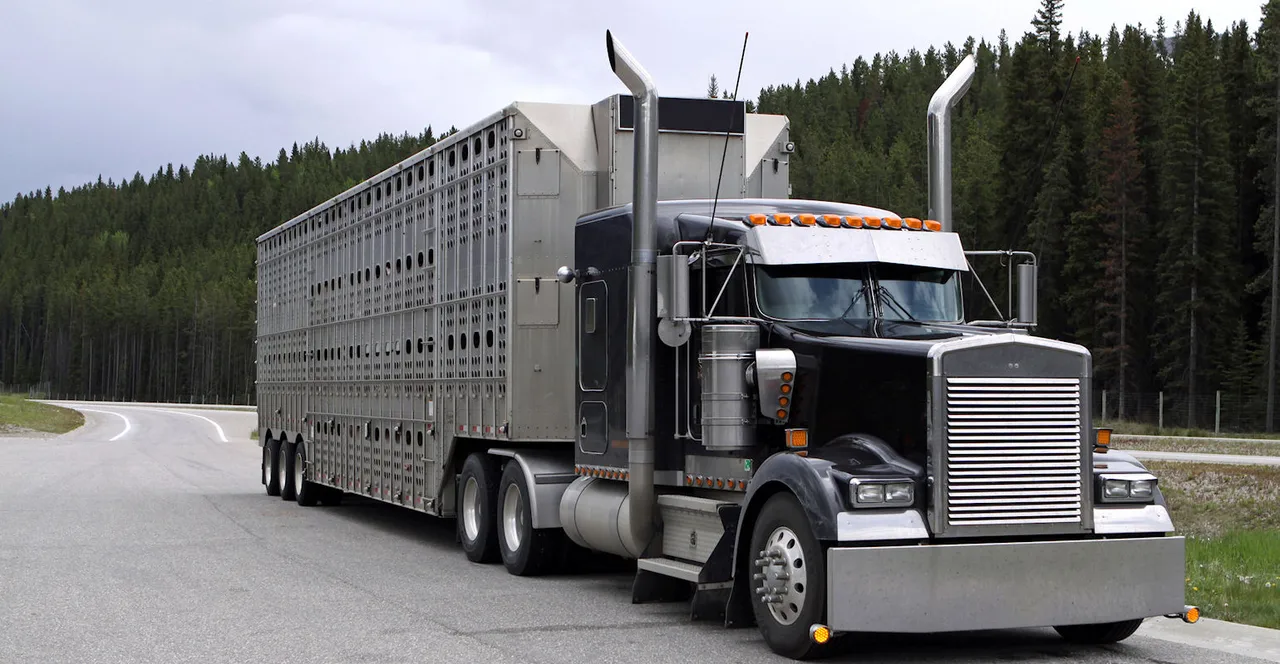
Livestock trucking — South Dakota trucking operations

States we serve · South Dakota

South Dakota trucking insurance

South Dakota sits at the intersection of the I-29 and I-90 corridors — Sioux Falls processing freight, Rapid City and the Black Hills tourism-and-defense gateway, the Aberdeen and Watertown agricultural belt, and the Pierre Missouri River capital node. The underwriting questions on a South Dakota motor carrier quote run distinctly because of the cold-chain commodity mix, the seasonal tourism-traffic exposure in the west, and the long line-haul mileage on the two intersecting interstates.

What Trucking Insurance Costs in South Dakota

We do not publish premium ranges for South Dakota trucking policies on this page. Per our numeric discipline, the cost discussion here is about the drivers, not the dollars — verified figures live on the quote itself, not on a marketing page that would be stale the week after it published.

The cost drivers that move South Dakota motor carrier premium the most:

  • Operating territory across the I-29 and I-90 corridors. A South Dakota motor carrier running heavy line-haul miles on the I-29 north-south spine between the Kansas City interchange and Fargo, or on the I-90 east-west belt between the Twin Cities interchange and Rapid City, carries a different exposure profile than a regional operator running shorter agricultural-service routes. Underwriters ask for percent-of-miles by corridor on every quote of meaningful size.
  • Commodity mix and processing-plant lane density. Dry van general freight on broker boards out of Sioux Falls prices the most competitively. Refrigerated freight outbound from the Smithfield Foods processing complex and the surrounding agricultural processing belt, livestock hauling for the Plains and Black Hills cattle and bison operations, granite-and-aggregate flatbed work out of the Black Hills, and grain hauling on the agricultural service routes all price distinctly and route to a narrower panel of carriers with appetite for the commodity.
  • Loss-run history over three to five years. The single most weighted variable on any South Dakota motor carrier renewal. Clean loss runs through the I-29 / I-90 corridor belt price meaningfully differently than mixed history with an at-fault liability claim or multiple cargo claims in the most recent term. A cargo claim with a shipper that disputes the loss value — particularly on a refrigerated outbound lane from the Sioux Falls processing belt — is one of the renewal patterns the South Dakota panel reads closely.
  • Driver MVR and PSP profile. Underwriters pull motor vehicle records on every covered driver and pull PSP reports at the carrier level. South Dakota commercial enforcement is steady but not as dense as the eastern crossroads states, and the long interstate exposure means drivers also pick up violations in other states that flow through to the PSP.
  • Seasonal exposure pattern between agricultural harvest and Black Hills tourism. The agricultural processing belt runs hardest at harvest peak; the Black Hills tourism economy runs hardest in late spring through early fall. Motor carriers with a mixed lane footprint across both submarkets carry a seasonal-exposure rating profile that pure single-submarket operators do not, and the percent-of-miles allocation by season is a meaningful underwriting variable on larger accounts.
  • Owner-operator versus small-fleet structure. A single-truck owner-operator leased to a motor carrier prices and structures differently than a five-truck independent authority. The non-trucking liability gap when the tractor is off-dispatch and the occupational accident versus workers compensation question both turn on the structure question.
  • Liability limit selection and layered structure. The federal floor under 49 CFR § 387.9 is the minimum; Sioux Falls, Rapid City, and the I-29 / I-90 broker contracts routinely specify limits well above the floor. The layered architecture above primary is how South Dakota operators reach the contracted number while keeping the BMC-91X filing aggregated cleanly.

South Dakota Trucking Regulatory Framework

South Dakota motor carriers operate under a layered federal-and-state regulatory framework. The pieces matter, and they do not always talk to each other.

The South Dakota Department of Transportation, SDDOT, administers the state highway system, manages oversize and overweight permitting through its permits office, and coordinates the inspection and enforcement work that SDDOT performs jointly with the South Dakota Highway Patrol Motor Carrier Services. The SDDOT website documents the permit portal, the seasonal frost-law route restrictions on rural roadways, and the pilot-car and escort requirements that scale with load size. SDDOT does not handle motor carrier operating authority — interstate authority routes through FMCSA, and intrastate authority is concentrated in size and weight rather than separate intrastate operating authority filings.

The South Dakota Division of Insurance — housed inside the South Dakota Department of Labor and Regulation — regulates the private carriers writing commercial auto, motor truck cargo, physical damage, general liability, workers compensation, and the adjacent lines on South Dakota-domiciled motor carriers, oversees rate and form filings, and handles consumer complaints. The Division of Insurance website lists the licensed and surplus-lines-eligible carriers and the procedural rules for rate and form filings. South Dakota does not operate a state-monopoly workers compensation fund — private carriers write workers compensation in the open market in South Dakota.

The South Dakota Division of Labor and Management — also housed inside the South Dakota Department of Labor and Regulation — handles benefit disputes, hearings, and the procedural side of contested workers compensation claims in South Dakota. The rate side is regulated by the Division of Insurance under standard NCCI loss-cost mechanics, and South Dakota-domiciled motor carriers buy workers compensation from private insurance carriers. The Division of Labor and Management structure matters most on disputed driver injury claims, where the procedural path runs through that office.

The federal layer — FMCSA financial responsibility under 49 CFR § 387, the BMC-91 and BMC-91X filing forms, hours of service, driver qualification, drug and alcohol testing, and vehicle maintenance — applies on top of the South Dakota state framework. The Federal Motor Carrier Safety Administration publishes the financial responsibility regulations and the BMC filing forms that every interstate South Dakota motor carrier holds.
Common Trucking Risks in South Dakota

The South Dakota motor carrier risk profile is shaped by the I-29 / I-90 corridor exposure, the cold-chain processing freight out of Sioux Falls, the Black Hills tourism-and-defense submarket in the west, and the winter operating environment. The risk categories that show up most often on South Dakota quotes:

  • Refrigerated cargo and processing-plant outbound exposure. Sioux Falls is anchored by the Smithfield Foods processing complex, and the surrounding agricultural processing belt produces high-volume refrigerated outbound freight. Refrigeration-breakdown events, temperature-deviation claims, and cold-chain commodity-schedule discipline all matter more on South Dakota quotes than they do in most states. We place refrigerated hauling insurance with the carriers that want cold-chain risks daily.
  • Winter weather and rural-interstate visibility events. South Dakota winters produce ground-blizzard, freezing-fog, and black-ice conditions on I-29, I-90, and the connecting US-highway corridors that can drop visibility to near zero in minutes. Single-event severity in a winter pileup on a rural interstate can exhaust primary limits quickly.
  • I-29 / I-90 transcontinental and north-south line-haul exposure. The two intersecting interstates carry a high share of through-traffic motor carrier mileage, and the high-speed rural-interstate sections produce a severity profile on at-fault collisions that runs ahead of urban-corridor frequency patterns. The line-haul exposure shapes the general freight trucking insurance rating on a meaningful share of South Dakota motor carriers.
  • Livestock and ranching cargo exposure. South Dakota carries a significant cattle and bison ranching base, with the Plains east of the Missouri River and the Black Hills west of it both producing livestock-hauling freight. Live-animal cargo coverage, the slip-and-fall yard exposure at processing plants and feedlots, and the rural lease-road physical damage exposure together drive the rating distinction on livestock hauling insurance quotes.
  • Black Hills granite, forestry, and flatbed exposure. The Black Hills granite quarrying operations, the regional forestry base, and the agricultural equipment outbound from the South Dakota manufacturers all produce flatbed and step-deck freight with cargo-securement underwriting questions distinct from dry-van line-haul. We structure flatbed trucking insurance for these operations against the cargo-securement and tarp-and-strap exposure patterns.
  • Cargo theft along I-29 and I-90 corridors. The two intersecting interstates carry elevated cargo theft frequency on parked trailers at truck stops along the long rural-interstate stretches. The cargo policy form has to address theft exposure cleanly, and the protective-safeguards warranty inside that form is the contractual hinge a denied theft claim will turn on.
  • Seasonal Black Hills tourism-traffic exposure. The peak-season tourism volume around Mount Rushmore, Crazy Horse, and the surrounding national park system produces a Rapid City and US-385 traffic pattern that runs heavily in late spring through early fall. The seasonal exposure pattern shapes the rating on Rapid City-domiciled motor carriers running that submarket.

Common South Dakota Trucking Claims We See

The claim categories that drive the most South Dakota trucking severity — described qualitatively per our numeric discipline, no settlement figures:

  • Rural-interstate at-fault collision on the I-29 or I-90 belt. A high-speed rural-interstate event in a winter visibility window or a fatigue- related lane-departure event produces a single-vehicle or multi-vehicle collision with the tractor striking a passenger vehicle. Bodily injury severity on rural interstate events is regularly high, and the limit-adequacy conversation runs sharper on the renewal that follows.
  • Winter pileup in a South Dakota ground-blizzard or black-ice event. A reduced-visibility winter event on I-29, I-90, or the connecting US-highway corridors produces a chain-reaction collision involving the tractor and multiple passenger vehicles. The combination of multiple plaintiffs and concentrated severity drives the MCS-90 conversation and the layered-excess question simultaneously.
  • Refrigeration breakdown on a Sioux Falls processing-plant outbound load. A reefer unit failure on an outbound load from the Smithfield Foods complex or the surrounding processing base produces a temperature-deviation event on a high- value perishable cargo. The motor truck cargo policy responds subject to the refrigeration-breakdown endorsement; the carrier-selection question on whether the operator carries the endorsement at the right limit drives the conversation on every reefer quote.
  • Cargo theft from a parked trailer along I-29 or I-90. A motor carrier stages a loaded trailer at a truck stop along the rural-interstate stretches overnight, and the trailer or its contents are taken. The cargo coverage responds subject to the protective-safeguards warranty; the broker relationship and the shipper claim handling do not always survive the dispute.
  • Livestock cargo event on a South Dakota pot-belly trailer. A live-animal cargo event — heat stress, transportation injury, or animal escape — produces a cargo claim that motor truck cargo carriers underwrite distinctly. The live-animal coverage form has narrower triggers than dry-cargo coverage, and the carrier panel on livestock hauling is a much narrower subset than the general-freight panel.

Why South Dakota Trucking Owner-Operators Choose Truck Guard Insurance

South Dakota is a steady-volume state on our quote desk. The Sioux Falls processing-and-distribution freight node, the I-29 north-south corridor through Brookings and Watertown, the I-90 east-west corridor through Mitchell and onward to Rapid City, and the western Black Hills gateway all route to us on a regular basis — and we have the panel depth to quote every freight class the state runs.

We are an independent agency licensed in 48 U.S. states with a 16-carrier specialty trucking panel. For South Dakota owner-operators that matters because the freight mix on a South Dakota account — refrigerated outbound from Sioux Falls processing, livestock hauling for the Plains and Black Hills, granite-and-aggregate flatbed work out of the Black Hills, grain hauling on the agricultural service routes, and general dry van on the I-29 / I-90 line-haul belt — runs across enough commodity categories that the right carrier for one operator is the wrong carrier for the operator running a different commodity mix.

We handle BMC-91 and BMC-91X filings end-to-end, issue broker certificates day-of the request with the exact additional-insured language each broker compliance system demands, place refrigerated, livestock, and flatbed coverage with the carriers that actually want those commodities, walk through MCS-90 mechanics on the quote call, and structure the layered limits against the Sioux Falls and Rapid City broker contracts so the policy you bind in South Dakota matches what the operation actually runs. When the renewal cycle comes, we re-market the account against the panel — every term, not just when something has gone wrong.

Major South Dakota Trucking Markets

The South Dakota freight system runs across several distinct submarkets, each with its own underwriting profile. The corridors and metros where we place the most South Dakota motor carrier coverage:

  • Sioux Falls. The I-29 / I-90 / I-229 convergence with the Smithfield Foods processing complex and a deep financial-services and corporate-services employment base produces eastern South Dakota’s densest freight node. The mix of outbound refrigerated processing freight, inbound retail and distribution, and the regional banking-and-services certificate-holder requirements drives a multi-commodity rating profile that ranges from cold-chain to commercial-fleet on a single Sioux Falls-domiciled motor carrier.
  • Rapid City. The I-90 / US-385 western gateway to the Black Hills and Ellsworth Air Force Base anchors a freight mix of tourism-and-recreation inbound, defense-logistics inbound, and granite-quarrying and forestry outbound from the Black Hills. The peak-season tourism volume around Mount Rushmore and the surrounding national park system drives a seasonal-traffic exposure pattern distinct from the eastern South Dakota corridor freight.
  • Aberdeen. The US-12 / US-281 north-central agricultural processing hub at Northern State University carries grain hauling, agricultural-input inbound, and food-processing outbound on a seasonal harvest cycle. The lighter regulatory enforcement density on rural state and US-highway corridors and the seasonal harvest peak both shape the lane mix and the percent-of-miles-on-rural-routes question on Aberdeen-domiciled motor carrier quotes.
  • Brookings. The I-29 corridor at South Dakota State University and the Daktronics electronic-display manufacturing base sits as a Sioux Falls extension submarket with a freight mix anchored in university logistics and electronics-and-manufacturing outbound. The high-value electronics commodity question on outbound Daktronics freight drives the cargo limit conversation and the certificate-holder language on broker contracts harder than a pure agricultural submarket would.
  • Watertown. The I-29 east-central agricultural and light-manufacturing corridor between Sioux Falls and Fargo carries grain hauling, agricultural-service freight, and through-traffic on the I-29 north-south spine. The mix of seasonal agricultural service and steady through-traffic creates a multi-commodity lane structure that prices distinctly from the heavier Sioux Falls processing freight.
  • Pierre. The state capital — the smallest state capital by population — sits at the US-14 / US-83 Missouri River crossing with inbound state-government logistics and regional distribution. The mix of capital-and-government certificate-holder requirements and the central-South-Dakota lane connection between the Sioux Falls eastern corridor and the Black Hills western gateway makes Pierre a distinct additional-insured-language submarket.
  • Mitchell. The I-90 south-central agricultural processing hub anchors a freight mix of grain hauling, agricultural-input inbound, and food-processing outbound on the transcontinental main line. The Corn Palace tourism-traffic overlay and the I-90 line-haul exposure together drive a percent-of-miles-by-corridor profile distinct from the I-29 north-south Brookings and Watertown corridor.
  • Yankton. The US-81 Missouri River crossing at Lewis and Clark Lake anchors agricultural-service, recreation-inbound, and cross-river freight with Nebraska. The mix of seasonal recreation-inbound and steady agricultural-service freight, combined with the cross-state lane structure into Nebraska, drives the multi-state workers compensation footprint question and the percent-of-miles-cross-state allocation on Yankton-domiciled motor carrier quotes.

Related Reading

Coverage lines we structure for South Dakota motor carriers:

  • Trucking Auto Liability — the federally filed primary line, BMC-91X aggregated for layered limits the Sioux Falls and Rapid City broker boards demand
  • Motor Truck Cargo — covers the freight, with refrigeration-breakdown endorsement language tightened for the Sioux Falls processing-plant outbound exposure
  • Physical Damage — covers the tractor and trailer through Dakota winter exposure and the long rural-interstate stretches
  • Workers Compensation — private-carrier coverage on the open market, structured for the multi-state driver-domicile mix on I-29 / I-90 line-haul operators

Motor carrier classes we write that show up most often in South Dakota:

Neighboring states we are licensed in:

Primary regulatory and research sources:

South Dakota Trucking Insurance FAQs

What does the South Dakota Department of Transportation require for motor carriers?

The South Dakota Department of Transportation, SDDOT, administers the state highway system, manages oversize and overweight permitting through its permits office, and coordinates inspection and enforcement work with the South Dakota Highway Patrol Motor Carrier Services. SDDOT does not handle motor carrier operating authority — interstate authority routes through FMCSA. SDDOT enforcement focuses on size, weight, and roadside inspection on South Dakota roads, with seasonal frost-law and harvest-season permitting concentrated in the agricultural processing belt.

How does the South Dakota Division of Insurance regulate trucking policies?

The South Dakota Division of Insurance — housed inside the South Dakota Department of Labor and Regulation — regulates the private carriers writing commercial auto, motor truck cargo, physical damage, general liability, workers compensation, and the adjacent lines on South Dakota-domiciled motor carriers, oversees rate and form filings, and handles consumer complaints. South Dakota does not operate a state-monopoly workers compensation fund — private carriers write workers compensation in the open market in South Dakota.

Does South Dakota have a state-monopoly workers compensation fund?

No. South Dakota does not operate a state-monopoly workers compensation fund. Private insurance carriers write workers compensation in South Dakota, and South Dakota-domiciled motor carriers buy coverage from the open market. The South Dakota Division of Labor and Management — also housed inside the Department of Labor and Regulation — handles benefit disputes, hearings, and the procedural side of contested claims. The rate side is regulated by the Division of Insurance under standard NCCI loss-cost mechanics.

What does Sioux Falls processing and refrigerated freight mean for motor carrier insurance?

Sioux Falls is the largest city in South Dakota and the densest freight node in the state, anchored by the Smithfield Foods processing complex and a deep agricultural processing base. The motor carrier insurance implications are concrete: refrigerated freight outbound from processing plants, cold-chain commodity-schedule discipline, refrigeration-breakdown endorsement language on reefer trailers, and a carrier panel that is narrower for refrigerated than for general dry van. We place refrigerated hauling coverage with the carriers that actually want cold-chain risks rather than running them through general-freight underwriters.

How does the I-29 and I-90 corridor exposure shape South Dakota motor carrier rating?

South Dakota sits at the intersection of two long-running interstate corridors — I-29 north-south between Kansas City and Fargo and the Twin Cities, and I-90 east-west between the Great Lakes and Seattle. A high share of South Dakota motor carriers run heavy line-haul miles on one or both corridors, and the percent-of-miles by corridor is one of the first underwriting questions on a South Dakota quote. The line-haul exposure also drives the cargo and physical damage limit discussion above the FMCSA financial responsibility floor.

What does Black Hills tourism and seasonal freight mean for Rapid City motor carriers?

The Black Hills tourism economy — Mount Rushmore, Crazy Horse, Custer State Park, and the surrounding national park system — produces a peak-season traffic pattern through the Rapid City area that runs heavily in late spring through early fall. Motor carriers running the Rapid City freight base face seasonal tourism-traffic exposure on I-90 and US-385, the granite-quarrying and forestry outbound freight from the Black Hills, and the Ellsworth Air Force Base defense-logistics inbound. The mix drives a multi-commodity rating profile and a different percent-of-miles allocation than the eastern South Dakota corridor freight.

Do South Dakota broker contracts require limits above the FMCSA financial responsibility floor?

Yes. Modern broker contracts and large-shipper master agreements out of the Sioux Falls processing belt, the I-29 / I-90 distribution corridors, and the Rapid City tourism-and-defense freight base all routinely specify primary auto liability limits well above the FMCSA financial responsibility floor under 49 CFR § 387.9. The layered-limits architecture — primary plus excess or umbrella — is how South Dakota motor carriers reach the contracted number while keeping the BMC-91X filing aggregated cleanly across multiple carriers. Renewal premium jumping after one loss year is the conversation we are happy to have at the start, not at renewal.

Get a South Dakota trucking insurance quote

Send the basics on your authority, equipment, commodity, lane mix on the I-29 / I-90 corridors versus the regional agricultural-service and Black Hills routes, and the broker certificate requirements that drive your limits. We pull the panel of specialty trucking markets quoting South Dakota motor carriers today, structure the layered limits against the Sioux Falls and Rapid City broker contracts, place refrigerated and livestock coverage with the carriers that actually want the commodity, handle the BMC-91X filing, and issue certificates the day each broker asks.