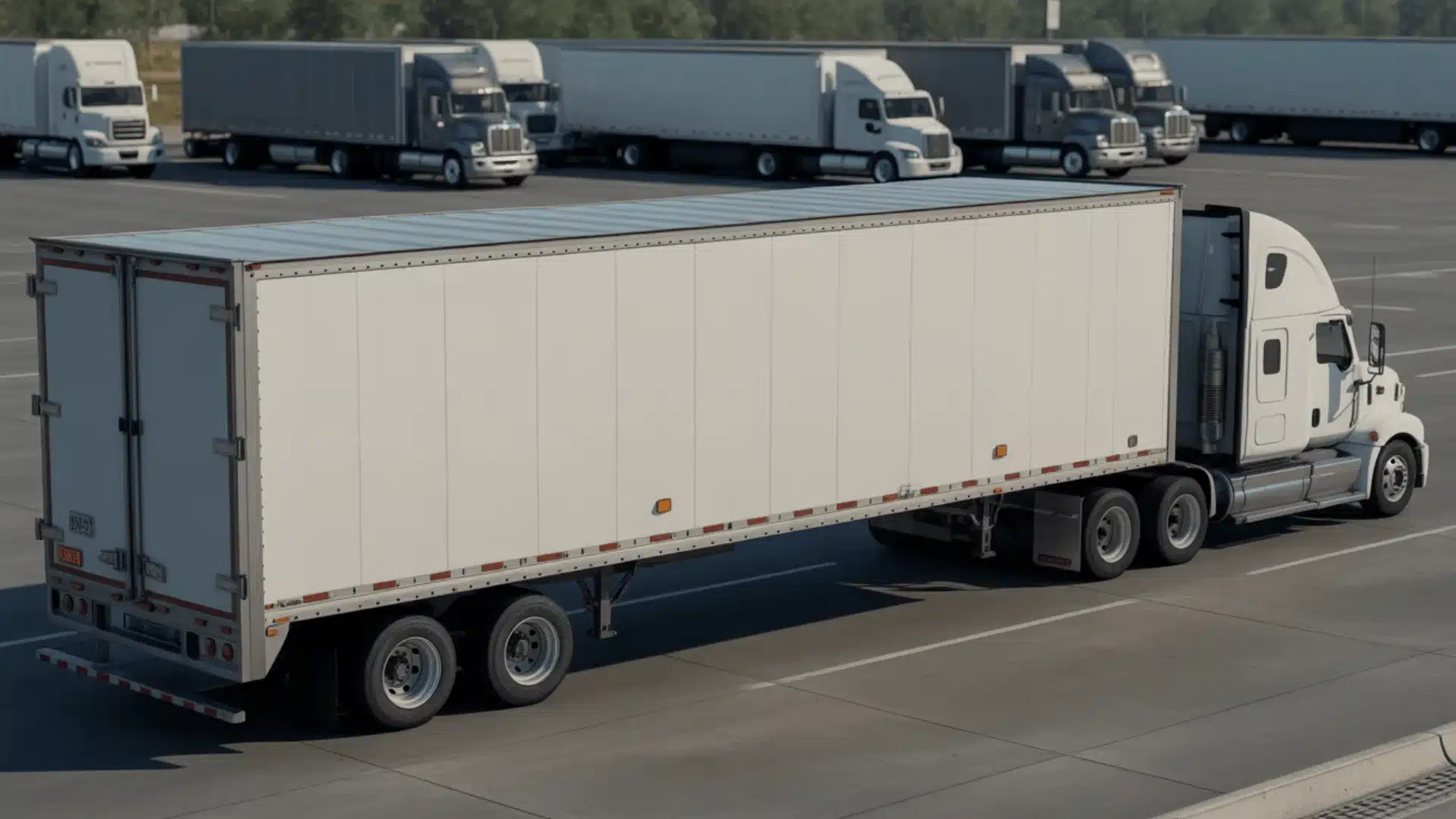
General freight trucking — North Dakota trucking operations

States we serve · North Dakota

North Dakota trucking insurance

North Dakota anchors the Bakken oilfield freight system, the I-94 / I-29 transcontinental and north-south corridors, the Pembina US-Canada commercial truck port, and the Mandan petroleum refinery feeder. The state-monopoly workers compensation fund administered by Workforce Safety & Insurance makes North Dakota one of only four jurisdictions in the country where private carriers cannot write standard workers compensation, and the structural implication for multi-state motor carriers shapes every quote we write here.

What Trucking Insurance Costs in North Dakota

We do not publish premium ranges for North Dakota trucking policies on this page. Per our numeric discipline, the cost discussion here is about the drivers, not the dollars — verified figures live on the quote itself, not on a marketing page that would be stale the week after it published.

The cost drivers that move North Dakota motor carrier premium the most:

  • The North Dakota Workforce Safety & Insurance state-monopoly fund. This is the single most distinctive North Dakota cost driver. North Dakota is one of only four monopolistic-fund states, which means a North Dakota-domiciled motor carrier pays its workers compensation premium directly to WSI rather than to a private insurance carrier. Multi-state interstate motor carriers also need a separate stop-gap employers liability policy from a private carrier to cover drivers domiciled outside North Dakota, and that second policy is rate-regulated by the North Dakota Insurance Department. The structural coordination between WSI and the stop-gap policy is one of the first conversations on a North Dakota motor carrier quote.
  • Bakken oilfield commodity mix and lease-road mileage. Crude pickup, produced-water hauling, frac-sand inbound, drilling-rig moves, and oilfield-chemical placarding all price distinctly from general dry van and route to a narrower panel of carriers with active oilfield appetite. The lease-road and off-highway mileage allocation drives the physical damage rating profile materially higher than interstate-line-haul norms — rollover and side-strike frequency on oilfield lease roads is a meaningful underwriting variable.
  • Operating territory across the I-94 and I-29 corridors. A North Dakota motor carrier running heavy line-haul miles on I-94 across the state or I-29 north-south carries a different exposure profile than a Bakken-only oilfield service operator or a Fargo-domiciled regional dry-van fleet. Underwriters ask for percent-of-miles by corridor on every quote of meaningful size.
  • Pembina cross-border drayage exposure. Motor carriers running the Pembina US-Canada commercial truck port handle customs-broker contracts, FAST-program certificate-of-origin documentation, and additional-insured language that interior North Dakota operators do not face. Broker contracts on cross-border lanes routinely specify primary auto liability limits well above the FMCSA financial responsibility floor.
  • Loss-run history over three to five years. The single most weighted variable on any North Dakota motor carrier renewal. Clean loss runs through the oilfield belt price meaningfully differently than mixed history with an at-fault liability claim or multiple physical damage claims in the most recent term.
  • Driver MVR and PSP profile, with frost-law and winter-route layering. Underwriters pull motor vehicle records on every covered driver and pull PSP reports at the carrier level. North Dakota commercial enforcement is steady, and the winter operating environment — black ice, ground blizzards, frost-law load restrictions — produces driver-decision events that flow through to the PSP.
  • Liability limit selection and layered structure. The federal floor under 49 CFR § 387.9 is the minimum; Fargo, Bismarck, and the Bakken broker contracts plus the Pembina cross-border lanes routinely specify limits well above the floor. The layered architecture above primary is how North Dakota operators reach the contracted number while keeping the BMC-91X filing aggregated cleanly.

North Dakota Trucking Regulatory Framework

North Dakota motor carriers operate under a layered federal-and-state regulatory framework with one nationally distinctive feature — the state-monopoly workers compensation fund. The pieces matter, and they do not always talk to each other.

North Dakota Workforce Safety & Insurance, WSI, is the state-monopoly fund administering workers compensation in North Dakota. Private carriers cannot write standard workers compensation in North Dakota — North Dakota-domiciled motor carriers buy coverage directly from WSI. The WSI website documents the rate structure, the classification system, and the reporting requirements that follow. The stop-gap employers liability policy that interstate motor carriers need for drivers domiciled outside North Dakota is written by private carriers under North Dakota Insurance Department regulation, sitting alongside the WSI policy. North Dakota joins Ohio, Washington, and Wyoming as one of only four monopolistic-fund states in the country — the structural coordination between WSI and the stop-gap policy is the most state-specific item on a North Dakota motor carrier program.

The North Dakota Department of Transportation, NDDOT, administers the state highway system, manages oversize and overweight permitting through its motor carrier services office, and coordinates the inspection and enforcement work that NDDOT performs jointly with the North Dakota Highway Patrol Motor Carrier Operations. The NDDOT website documents the permit portal, the seasonal frost-law route restrictions, and the pilot-car and escort requirements that scale with load size. NDDOT does not handle motor carrier operating authority itself — interstate authority routes through FMCSA, and intrastate authority is concentrated in size and weight rather than separate intrastate operating authority filings.

The North Dakota Insurance Department regulates the private carriers writing commercial auto, motor truck cargo, physical damage, general liability, and the adjacent lines on North Dakota-domiciled motor carriers, oversees rate and form filings, and handles consumer complaints. The North Dakota Insurance Department website lists the licensed and surplus-lines-eligible carriers and the procedural rules for rate and form filings. Workers compensation is the exception line — that one is regulated by WSI.

The federal layer — FMCSA financial responsibility under 49 CFR § 387, the BMC-91 and BMC-91X filing forms, hours of service, driver qualification, drug and alcohol testing, and vehicle maintenance — applies on top of the North Dakota state framework. The Federal Motor Carrier Safety Administration publishes the financial responsibility regulations and the BMC filing forms that every interstate North Dakota motor carrier holds. PHMSA placarding, training, and routing apply on top of FMCSA authority for the hazmat operations concentrated in the Bakken oilfield and the Mandan refinery feeder.
Common Trucking Risks in North Dakota

The North Dakota motor carrier risk profile is shaped by the Bakken oilfield freight system, the I-94 and I-29 corridor exposure, the winter operating environment, the WSI state-monopoly fund, and the Pembina cross-border interchange. The risk categories that show up most often on North Dakota quotes:

  • Bakken oilfield rollover and lease-road physical damage exposure. Lease-road grades, soft-shoulder events, frac-sand load shifts, and produced-water hauling all produce rollover and side-strike physical damage claims at frequency above interstate-line-haul norms. The carrier responds on the physical damage policy; deductible structure on oilfield programs matters more than on general- freight programs. We place fuel hauling insurance and hazmat trucking insurance with the carriers that actually write Bakken risks.
  • Winter ground-blizzard, freezing-fog, and black-ice exposure. North Dakota winters produce visibility events on I-94, I-29, and the western US-2 corridor that can drop visibility to near zero in minutes. Single-event severity in a winter pileup on a rural interstate can exhaust primary limits quickly, and the property and physical damage coverage on parked equipment at remote oilfield yards needs to address the winter exposure.
  • WSI state-monopoly fund coordination on multi-state driver injury. Multi-state motor carriers with North Dakota-domiciled drivers and out-of-state drivers need both the WSI policy and a stop-gap employers liability policy from a private carrier. Misalignment between the two — a driver classified incorrectly, a missing extraterritorial endorsement, an unmatched payroll allocation — is one of the most common North Dakota insurance failures, and it surfaces at claim time when the answer matters most.
  • Hazmat and oilfield-chemical placarding exposure. The Bakken oilfield chemicals, the produced-water hauling, the frac-sand inbound, and the Mandan refinery petroleum feeder all push PHMSA placarding into play for a meaningful share of North Dakota motor carriers. The pollution-liability and MCS-90 mechanics on those lanes need to land cleanly on the application, not after a placard-related event.
  • Oversize-overweight rig moves and wind-energy components. North Dakota motor carriers run a significant share of permitted oversize- overweight work — oilfield drilling-rig moves on lease-road routing, wind-turbine blade and tower-section transport, and heavy-haul agricultural equipment. The oversized and overweight trucking insurance structure and the NDDOT permit-and-pilot-car coordination both shape these quotes.
  • Pembina cross-border drayage exposure. Motor carriers running the US-Canada commercial truck port at Pembina face customs-broker contract language, FAST-program certificate-of-origin documentation, and additional-insured language that interior North Dakota operators do not. The certificate-of-insurance discipline on cross-border lanes runs sharper than interior lanes face.
  • General-freight I-94 / I-29 line-haul exposure. A meaningful share of North Dakota motor carriers run general freight trucking insurance programs on the I-94 transcontinental and I-29 north-south corridors between the Fargo distribution belt, Bismarck, and the Twin Cities or Sioux Falls interchange points. The line-haul exposure pattern is distinct from the oilfield service operations and routes to a different segment of the panel.

Common North Dakota Trucking Claims We See

The claim categories that drive the most North Dakota trucking severity — described qualitatively per our numeric discipline, no settlement figures:

  • Bakken oilfield rollover or side-strike on a lease road. A frac- sand load shift, a soft-shoulder event, or a lease-road grade event produces a rollover or side-strike physical damage claim on a tractor and a loaded trailer in the Williston, Watford City, or Dickinson area. The carrier responds on the physical damage policy; the deductible structure and the agreed-value-versus- actual-cash-value question on the tractor drives the conversation on the following renewal.
  • Winter pileup on I-94 or I-29 in a North Dakota ground-blizzard event. A reduced-visibility winter event on the transcontinental or north-south interstates produces a chain-reaction collision involving the tractor and multiple passenger vehicles. The combination of multiple plaintiffs and concentrated severity drives the MCS-90 conversation and the layered-excess question simultaneously.
  • North Dakota driver injury claim against the WSI fund. A driver injury claim filed against the WSI state-monopoly fund for a North Dakota-domiciled driver, with a separate stop-gap employers liability question on a related lawsuit involving an out-of-state component. The structural interaction between the WSI coverage and the private stop-gap policy is the issue that surfaces most often on North Dakota driver injury claims, and the misalignment cases are the ones that create the worst surprises.
  • Oilfield-chemical placarding and cargo-release event. A produced- water or oilfield-chemical placarded load is involved in an upset, overturn, or cargo-release event on a Bakken-area road. The pollution-liability coverage form and the MCS-90 endorsement mechanics both come into play, and the cargo-release- on-placarded-product structure of these claims drives the carrier-selection question on every following renewal.
  • Pembina cross-border cargo dispute. A cross-border load between US and Canadian shippers and consignees produces a cargo claim where the carrier disputes the loss value, the place-of-loss is contested, and the customs documentation comes into play. Motor truck cargo responds — and the contract terms decide the path from there.

Why North Dakota Trucking Owner-Operators Choose Truck Guard Insurance

North Dakota is a specialty-heavy state on our quote desk. The Bakken oilfield freight system through Williston, Watford City, and Minot, the I-94 / I-29 corridor freight through Fargo and Bismarck, the Mandan refinery feeder lanes, and the Pembina US- Canada commercial truck port all route to us on a regular basis — and we have the panel depth to quote every freight class the state runs.

We are an independent agency licensed in 48 U.S. states with a 16-carrier specialty trucking panel. For North Dakota owner-operators that matters more than it does in most states — the state-monopoly WSI fund means a North Dakota-domiciled motor carrier with multi-state operations needs both the WSI policy and a stop-gap employers liability policy from a private carrier, and the structural coordination between the two is exactly the kind of conversation our quote desk handles every working day. On the Bakken oilfield side, the carrier panel that actually writes oilfield risks is a narrow subset of the specialty market, and matching the right carrier to the operator on the first quote is what separates a competitive placement from a quote that gets bounced.

We handle BMC-91 and BMC-91X filings end-to-end, issue broker certificates day-of the request with the exact additional-insured language each broker compliance system demands, structure the stop-gap employers liability policy against the WSI classifications, place fuel-hauling, hazmat, and oversize-overweight coverage with the carriers that actually want the commodity and the operation, and walk through MCS-90 mechanics on the quote call so the policy you bind in North Dakota matches what the operation actually runs. When the renewal cycle comes, we re-market the account against the panel — every term, not just when something has gone wrong.

Major North Dakota Trucking Markets

The North Dakota freight system runs across several distinct submarkets, each with its own underwriting profile. The corridors and metros where we place the most North Dakota motor carrier coverage:

  • Fargo. The I-29 / I-94 convergence with the Microsoft Fargo campus, Sanford Health’s regional medical anchor, and the Red River Valley agricultural base produces eastern North Dakota’s densest freight node. The mix of inbound technology and healthcare logistics, outbound Red River Valley agricultural and sugar-beet freight, and the cross-river interchange with Minnesota drives a distinct multi-state workers compensation footprint conversation against the WSI state-monopoly fund on every Fargo-domiciled motor carrier quote.
  • Bismarck. The state capital and I-94 Missouri River crossing carries inbound state-government logistics, regional distribution, and the Mandan refinery feeder lanes. The mix of capital-and-government certificate-holder requirements and the western-North-Dakota lane connection back into the Bakken oilfield freight system makes Bismarck a meaningful additional-insured-language submarket distinct from the urban Fargo corridor.
  • Grand Forks. The I-29 corridor at the University of North Dakota and Grand Forks Air Force Base sits one step north of Fargo on the way to the Pembina port of entry — a major US-Canada commercial truck crossing. The cross-border drayage exposure to Manitoba, the FAST-program certificate-of-origin handling, and the customs-broker contract language on northbound and southbound lanes push the additional-insured and certificate-of-insurance discipline harder than interior North Dakota lanes face.
  • Minot. The US-2 / US-83 north-central rail-and-energy hub with Minot Air Force Base and the gateway position to the Bakken oilfield carries a freight mix of oilfield inbound chemicals, outbound crude and produced water, agricultural service, and military-logistics inbound. The combination of hazmat placarding, off-highway lease-road exposure, and federal-property certificate-holder language on Minot-domiciled motor carrier quotes runs in a distinct underwriting band.
  • Williston. The Bakken oilfield epicenter at the US-2 / Watford City extension is the densest oilfield freight node in the country outside the Permian Basin. Crude pickup, produced-water hauling, frac-sand inbound, drilling-rig moves, and oilfield-chemical placarding all run heavy on Williston-domiciled motor carrier quotes — the lease-road and off-highway mileage allocation, the rollover and side-strike physical damage frequency, and the hazmat exposure together drive a distinct rating profile and a narrower carrier panel.
  • Dickinson. The I-94 Bakken-support corridor between Bismarck and Williston carries oilfield-service freight, agricultural service, and through-traffic on the transcontinental main line. The mix of oilfield service yards and interstate line-haul creates a multi-commodity lane structure that drives the percent-of-miles-by-corridor and percent-of-miles-on-lease-roads questions sharper than a pure agricultural or pure oilfield submarket would.
  • Mandan. The I-94 Missouri River industrial belt across from Bismarck holds the Marathon refinery — the only operating petroleum refinery in North Dakota. The refinery-feeder lane structure, the petroleum-product outbound loadout, and the chemical-placarding exposure on inbound feedstocks drive the hazmat classification, pollution-liability, and fuel-hauling underwriting conversation on Mandan-domiciled tank operators.
  • Devils Lake. The US-2 central-North-Dakota corridor at Devils Lake — a closed-basin lake with periodic flood-cycle road and rail closures — anchors agricultural service, recreation-outbound, and through-traffic freight. The flood-cycle road-closure exposure on US-2 and the connecting state highways drives a route-flexibility question on quote that interior-fixed-corridor states do not face.

Related Reading

Coverage lines we structure for North Dakota motor carriers:

  • Trucking Auto Liability — the federally filed primary line, BMC-91X aggregated for layered limits the Fargo, Bakken, and Pembina broker boards demand
  • Motor Truck Cargo — covers the freight, with cross-border language tightened for the Pembina US-Canada exposure
  • Workers Compensation — the WSI state-monopoly fund makes this the most distinctive state-specific line, with stop-gap employers liability sitting alongside for multi-state motor carriers
  • Physical Damage — covers the tractor and trailer through Bakken lease-road exposure and Dakota winter ground-blizzard conditions

Motor carrier classes we write that show up most often in North Dakota:

Neighboring states we are licensed in:

Primary regulatory and research sources:

North Dakota Trucking Insurance FAQs

Why is North Dakota workers compensation different from most other states?

North Dakota operates a state-monopoly workers compensation fund administered by North Dakota Workforce Safety & Insurance, WSI. North Dakota is one of only four monopolistic-fund states in the country — private insurance carriers cannot write standard workers compensation in North Dakota, and North Dakota-domiciled motor carriers buy coverage directly from WSI. The implication for interstate motor carriers is significant: a North Dakota-based motor carrier with drivers domiciled in other states needs a separate stop-gap employers liability policy from a private carrier to cover the multi-state exposure, plus the WSI policy for North Dakota-domiciled drivers.

What does Workforce Safety & Insurance cover for North Dakota motor carriers?

WSI covers statutory workers compensation benefits — medical, indemnity, and survivor benefits — for North Dakota-domiciled employees including drivers, yard personnel, and office staff. WSI sets the rate, handles the underwriting, and administers the claim. North Dakota employers cannot opt out, and they cannot substitute a private carrier’s workers compensation policy. The WSI policy does not cover the employers liability portion of a multi-state operation outside North Dakota — that gap is filled by a separately purchased stop-gap employers liability policy from a private insurance carrier.

What does the North Dakota Department of Transportation require for motor carriers?

The North Dakota Department of Transportation, NDDOT, administers the state highway system, manages oversize and overweight permitting through its motor carrier services office, and coordinates inspection and enforcement work with the North Dakota Highway Patrol Motor Carrier Operations. NDDOT does not handle motor carrier operating authority — interstate authority routes through FMCSA. NDDOT enforcement focuses on size, weight, and roadside inspection on North Dakota roads, with seasonal frost-law restrictions and oilfield-route permitting concentrated in the western Bakken region.

How does the North Dakota Insurance Department regulate trucking policies?

The North Dakota Insurance Department regulates the private carriers writing commercial auto, motor truck cargo, physical damage, general liability, and the adjacent lines on North Dakota-domiciled motor carriers, oversees rate and form filings, and handles consumer complaints. Workers compensation is the exception — that line is administered by WSI under the state-monopoly fund structure. The North Dakota Insurance Department does regulate the stop-gap employers liability policies private carriers write to cover North Dakota-based motor carriers operating outside North Dakota, and the rate and form filings on those policies flow through the Insurance Department in the standard way.

What does Bakken oilfield exposure mean for North Dakota motor carrier insurance?

The Bakken oilfield is the densest oilfield freight system in the country outside the Permian Basin, and the Williston, Watford City, Dickinson, and Minot submarkets generate crude pickup, produced-water hauling, frac-sand inbound, drilling-rig moves, and oilfield-chemical placarding volume on a daily cycle. The motor carrier insurance implications are distinct: hazmat classification on a meaningful share of loads, off-highway and lease-road mileage allocation that runs above interstate-line-haul norms, rollover and side-strike physical damage frequency, and a narrower carrier panel of specialty markets with active oilfield appetite. We place fuel-hauling and hazmat coverage with the carriers that actually write Bakken risks rather than running them through general-freight underwriters.

How does the Pembina US-Canada border crossing factor into North Dakota motor carrier coverage?

Pembina is a major US-Canada commercial truck port of entry on I-29 north of Grand Forks. Motor carriers running northbound and southbound across Pembina handle customs-broker contracts, FAST-program certificate-of-origin documentation, and additional-insured language for Canadian and US shippers and brokers. The certificate-of-insurance discipline on cross-border lanes runs sharper than interior North Dakota lanes face, and broker contracts routinely specify primary auto liability limits well above the FMCSA financial responsibility floor. A broker refusing loads because of an insurance certificate issue is one of the cross-border service patterns the quote desk handles most often on Pembina-running operators.

Do North Dakota broker contracts require limits above the FMCSA financial responsibility floor?

Yes. Modern broker contracts and large-shipper master agreements out of the Fargo distribution belt, the Bakken oilfield service economy, the Mandan refinery feeder, and the Pembina cross-border lanes all routinely specify primary auto liability limits well above the FMCSA financial responsibility floor under 49 CFR § 387.9. The layered-limits architecture — primary plus excess or umbrella — is how North Dakota motor carriers reach the contracted number while keeping the BMC-91X filing aggregated cleanly across multiple carriers.

Get a North Dakota trucking insurance quote

Send the basics on your authority, equipment, commodity, lane mix on the I-94 / I-29 corridors versus the Bakken oilfield service routes, driver state-domicile mix, and the broker certificate requirements that drive your limits. We pull the panel of specialty trucking markets quoting North Dakota motor carriers today, structure the layered limits against the Fargo, Bakken, and Pembina broker contracts, coordinate the stop-gap employers liability against the WSI state-monopoly fund, handle the BMC-91X filing, and issue certificates the day each broker asks.