Log trucking — Montana trucking operations

States we serve · Montana

Montana trucking insurance

Montana trucking runs across three interstates — I-15 north-south through Great Falls and Helena, I-90 east-west through Billings, Bozeman, and Missoula, and I-94 east out of Billings toward the North Dakota Bakken — plus the Sweetgrass-Coutts Canadian crossing and a mountain-pass winter profile that does not look like flatland trucking. We place Montana motor carrier programs through specialty markets that actually write the corridor and the climate, not the generic commercial auto market that quotes them as an afterthought.

What trucking insurance costs in Montana

Montana trucking insurance pricing comes down to a handful of underwriting variables that carry more weight than the state-of-domicile field on the application. The biggest of them is freight mix: a dry-van operation hauling general freight on I-90 between Billings and Missoula prices differently from a log-hauling operation running self-loaders out of the Kootenai or Lolo forestry country, and both of those price differently from an oilfield-support operation running into the Bakken extension out of Glendive or Sidney. The Montana Commissioner of Securities and Insurance regulates the carriers and the forms, but rate adequacy on a specific risk runs through the specialty motor-carrier underwriter, not the regulator.

The second variable is corridor and climate. Lookout Pass on I-90 at the Idaho border, MacDonald Pass on US-12 west of Helena, and the I-15 climb out of the Missouri River valley each produce winter chain-up requirements and accident patterns that auto liability and physical damage carriers price differently than flat-state line-haul. Cross-border carriers running through Sweetgrass-Coutts face Canadian customs broker certificate requirements that often pull contracted limits above the FMCSA financial responsibility floor at 49 CFR section 387.9, which pulls auto liability premium upward on the northbound lane.

Third, claims history is the variable that does the most work on any individual renewal. One severity claim in the last three years — particularly a bodily-injury claim with reserves above the primary limit — changes the carrier appetite list materially. The right time to plan for that is before the renewal quote round, not after. Fourth, the owner-vs-driver structure: an owner-operator running a single tractor under their own authority prices differently than a small fleet with three drivers on payroll, even before workers compensation enters the picture. We work through each of these on the quote call rather than handing back a single number that hides the assumptions behind it.

Montana trucking regulatory framework

Montana trucking sits inside a four-agency regulatory framework: FMCSA at the federal level, the Montana Department of Transportation for state highway and intrastate authority, the Montana Commissioner of Securities and Insurance for carrier and policy regulation, and the Montana Department of Labor and Industry for workers compensation oversight — with the Montana Workers Compensation Court as a specialty adjudication body that is unusual nationally.

Federal authority — FMCSA, USDOT, and PHMSA

Interstate Montana motor carriers register with the Federal Motor Carrier Safety Administration for a USDOT number and motor-carrier authority, file BMC-91 or BMC-91X public-liability proof of insurance through their carrier, and carry the MCS-90 endorsement on the auto liability policy. Hazmat operations layer PHMSA placarding, training, and routing requirements on top of FMCSA authority — Billings refining lanes and Bakken-extension fuel hauling are the two Montana clusters where that layer matters most.

Montana Department of Transportation (MDT)

MDT maintains the state highway and interstate network — I-15, I-90, I-94, US-2, US-12, US-93, and the state-route grid — and administers oversize and overweight permits through Motor Carrier Services. Heavy-haul operators running permitted loads work directly with MDT on routing approvals; pilot-car and escort requirements vary by load dimension and corridor, and the mountain-pass corridors have dimensional restrictions that flatter routes do not.

Montana Commissioner of Securities and Insurance (CSI)

CSI regulates the property and casualty carriers that write Montana trucking auto liability, motor truck cargo, physical damage, and workers compensation programs. Montana is one of a small number of states where the insurance regulator is combined with the securities regulator in the same office, which is worth knowing when verifying a carrier’s standing or filing a consumer complaint.

Montana Department of Labor and Industry — workers compensation

The Montana Department of Labor and Industry Employment Relations Division oversees workers compensation administration, and the Montana Workers Compensation Court adjudicates disputed claims — a specialty court structure that is unusual outside Montana. WC coverage for Montana trucking employers runs through admitted carriers or through the Montana State Fund, the state-affiliated workers comp insurer.
Common trucking risks in Montana

The Montana risk profile splits into four distinct exposure regions that an underwriter reads off the garaging address and the lane disclosure before anything else on the application.

  • Mountain-pass and winter weather exposure. Lookout Pass, MacDonald Pass, Homestake Pass, and the I-15 climb out of the Missouri River valley produce chain-up requirements, low-speed slide-offs, and jackknife events that are uncommon on flatland line-haul programs. Auto liability and physical damage carriers ask about winter operating procedures on the application — and pass closures during heavy storms create dispatch and cargo-delay exposures that ripple into the policy mechanics.
  • Cross-border Canadian freight exposure. Sweetgrass-Coutts Canadian crossing volume exposes carriers to Canadian customs broker contract terms, CTPAT compliance language, and shipper certificate-of-insurance demands that often outrun the FMCSA financial responsibility floor. A broker refusing loads because of an insurance certificate issue is the typical cross-border symptom of mismatched limits or wrong additional-insured wording.
  • Bakken-extension oilfield off-road exposure. Eastern Montana fuel-hauling, water hauling, and rig-move operations that support the Bakken extending in from North Dakota run materially more lease-road and off-highway miles than general freight, with rollover frequency and physical damage severity to match. The carriers that write Bakken-support trucking are a different subset of the specialty market than the carriers that write general dry-van programs.
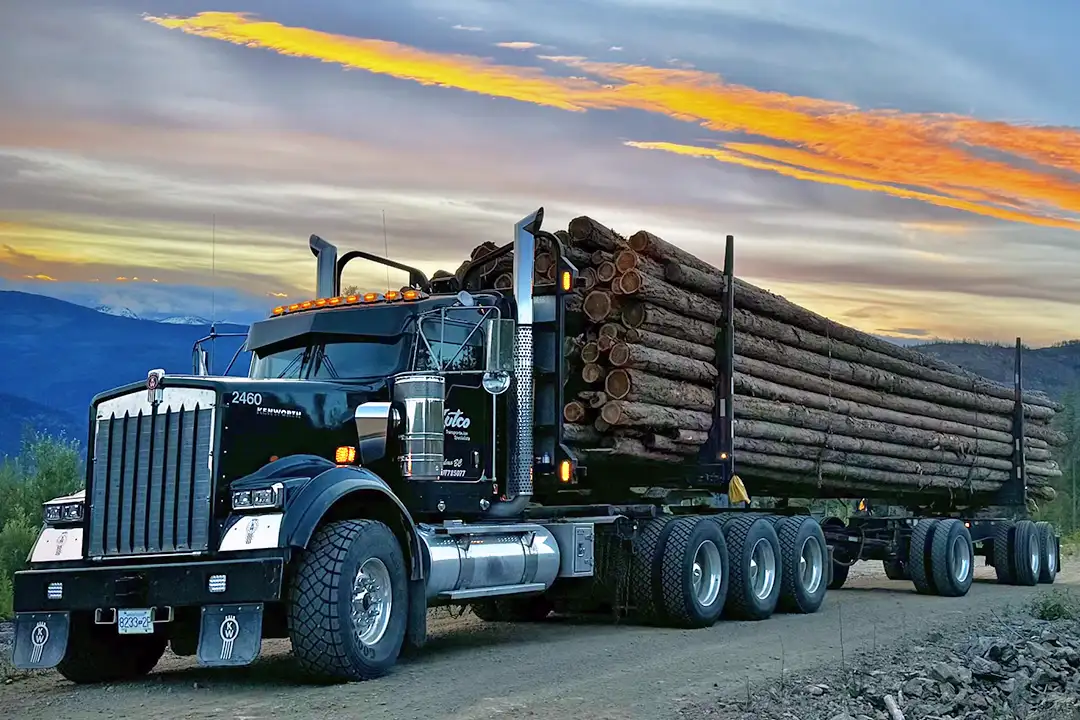
  • Forestry and log-hauling exposure. Western Montana log-hauling out of the Kootenai, Lolo, and Flathead National Forests carries self-loader-tractor and pole-trailer exposures that combine narrow forest-road operation with high-weight payloads — a claim profile that runs heavier on rollover, off-road physical damage, and load-shift incidents than highway freight.
  • Long-distance bobtail and off-dispatch exposure. Montana geography produces longer deadhead and personal-use legs than most states — an owner-operator garaged in Bozeman might bobtail to Billings, Great Falls, or Missoula on a single weekend across pass corridors. Non-trucking bobtail liability is the policy that responds when the tractor is off-dispatch, and the gap it covers is bigger in Montana than in compact states.

Common Montana trucking claims we see

The claim mix on Montana filings runs heavier on a few specific patterns than national averages would suggest. These are qualitative — no severity figures, because severity is a function of venue, jury composition, and limit adequacy that varies too widely to summarize honestly.

  • Winter pass slide-offs and jackknife incidents on I-90 and I-15. Chain-up zones, sudden weather changes, and grade-plus-curve combinations produce a steady run of low-speed slide-off, jackknife, and ditch-recovery claims in the December-through-March window. Physical damage responds on the tractor and trailer; the towing-and-recovery cost on a pass-closure event is the line item that drives the severity range.
  • Cross-border cargo damage and shortage disputes. Loads moving through Sweetgrass-Coutts between US shippers and Canadian consignees produce cargo claims where the carrier disputes the loss value, the place-of-loss is contested, and the customs documentation comes into play. Motor truck cargo responds — and the contract terms decide the path from there.
  • Bakken-extension rollover and off-highway physical damage events. Lease-road grades, soft-shoulder events, and frac-sand or water-tanker load shifts produce rollover and side-strike claims at higher frequency than highway-line-haul norms. Deductible structure on oilfield programs matters more than on general-freight programs.
  • Forest-road log-hauling rollover and load-shift incidents. Western Montana log-hauling claims center on narrow-road grades, switchbacks, and self-loader operation that produces equipment-damage and cargo-shift events the highway-freight underwriter does not see — which is why log-hauling sits with the carriers that write forestry trucking specifically.

Specific carriers are not named here per our coverage placement policy — appetite changes faster than a website can. The Truck Guard Insurance homepage lists the active panel quoting Montana motor carrier risks today.

Why Montana trucking owner-operators choose Truck Guard Insurance

We are a specialty trucking insurance agency, and Montana is one of the states where the difference between specialty and generic motor-carrier underwriting shows up most plainly. The four exposure regions — Sweetgrass cross-border, Billings refining and Bakken-extension, Western Montana forestry, and the mountain-pass winter corridor — each have their own subset of carriers that want them and their own subset of carriers that decline them. Knowing which is which up front saves the application from getting bounced through markets that were never going to bind it.

We handle BMC-91 and BMC-91X filings end-to-end, issue certificates for broker compliance, and walk through MCS-90 mechanics on the quote call so the policy you bind matches the policy you thought you were binding. Cross-border certificate requests — additional-insured wording, certificate holder structure, primary-and-non-contributory language — get handled the same day they come in when the underlying program is structured correctly at bind. When the issue is that the underlying program does not actually match what the Canadian broker is requiring, we tell you that on the quote call, not after the load gets refused at Sweetgrass.

On the regulatory side, we know which Montana freight needs interstate FMCSA authority, which needs intrastate MDT authority, and which needs both. We have placed Montana workers compensation programs through admitted carriers and walked through the Montana State Fund option as the alternative. And we work the 48 U.S. states we are licensed in, so a Montana-domiciled carrier running freight into North Dakota, Wyoming, Idaho, or South Dakota gets the same agency on the renewal whether the question is Montana or the lane.

Major Montana trucking markets

Montana trucking is regional. The metros and corridors below are the ones where we place the most motor carrier programs — each runs a distinct exposure profile that drives carrier selection.

  • Billings. Montana’s largest city sits at the I-90 and I-94 junction and hosts the ExxonMobil and Phillips 66 refineries along with the CHS Inc petroleum cooperative headquarters — a refining and petroleum-distribution cluster that pushes tank-truck, fuel-hauling, and chemical-cargo exposures into every Eastern Montana program quoted out of the metro.
  • Missoula. The Western Montana I-90 hub anchored by the University of Montana and the regional smokejumper base feeds a mixed freight profile — forestry, general distribution, and seasonal fire-support logistics — that combines mountain-pass winter exposure on Lookout Pass with the in-town arterial congestion underwriters price differently from line-haul lanes.
  • Great Falls. The I-15 corridor at Malmstrom Air Force Base — a nuclear-missile installation — plus the Missouri River agricultural belt produces a freight mix that combines defense-installation logistics (security-screened deliveries, escort requirements) with grain and equipment hauling, both of which raise the certificate-of-insurance scrutiny on shipper contracts.
  • Bozeman. The fastest-growing Montana metro — Montana State University, the Yellowstone northern-gateway tourism flow, and a tech-employer footprint with Oracle and AT&T regional offices — has built a high-value electronics and capital-equipment freight lane along I-90, with cargo limits running higher than commodity-haul programs because of single-load value concentration.
  • Helena. The state capital sits at the I-15 and US-12 junction and concentrates state-government logistics, courier-route freight, and the Capitol-complex delivery exposure that shows up on application schedules — a metro where the lane mix is short-haul intrastate rather than the long-haul interstate that dominates the Billings and Missoula filings.
  • Kalispell. The US-2 and US-93 hub at the Glacier National Park western gateway and the Flathead Valley agricultural belt drives a tourism-plus-agriculture freight pattern with strong seasonal swing — peak summer visitor traffic on US-2 layered on top of grain, cherry, and produce hauling — that physical damage and auto liability underwriters read as elevated tourist-corridor congestion exposure.
  • Butte. The historic Anaconda Copper Company city sits at the I-15 and I-90 interchange and carries a mining-industry legacy that includes the Berkeley Pit Superfund site — an environmental-legacy footprint that raises pollution-liability and contamination questions on every yard, terminal, and acquisition diligence for trucking operations garaged in the area.
  • Sweetgrass-Coutts. The I-15 northern terminus at the Sweetgrass-Coutts port of entry is the #1 Montana-Canada commercial truck crossing, with the Sweetgrass Hills feeding cross-border freight into the Calgary and Lethbridge corridors — a crossing where Canadian customs broker certificate scrutiny and CTPAT compliance shape the auto liability and cargo limit floors above the FMCSA minimum.

Related reading

Coverages most relevant to Montana trucking:

  • Trucking Auto Liability — the FMCSA-filed primary policy on the tractor, including Sweetgrass cross-border limits
  • Motor Truck Cargo — the freight you haul, including Canadian-bound lanes and forestry product
  • Physical Damage — collision and comprehensive on the tractor and trailer, with mountain-pass and winter exposure in view
  • Workers Compensation — admitted-carrier and Montana State Fund placements for trucking payrolls

Motor carrier classes that show up most often in Montana:

Neighboring states we serve:

Primary regulatory and research sources:

Montana trucking insurance FAQs

Does Montana require state-level motor carrier registration in addition to FMCSA authority?

Interstate Montana motor carriers register with FMCSA for a USDOT number and motor-carrier authority. Intrastate-only Montana carriers — freight that originates and terminates inside the state — register through the Montana Department of Transportation Motor Carrier Services Division. Many Montana owner-operators carry both because lane mix shifts across the year, particularly for fleets running into Sweetgrass-Coutts, Yellowstone gateway tourism, and Bakken-support freight that crosses state lines. The Montana Commissioner of Securities and Insurance regulates the carriers that write the auto liability and cargo policies in either case.

Why does Sweetgrass-Coutts cross-border freight change the underwriting questions on a Montana program?

Canadian-bound freight through the Sweetgrass-Coutts port of entry runs into Canadian customs broker certificate requirements and CTPAT compliance language that often calls for primary auto liability limits above the FMCSA financial responsibility floor at 49 CFR section 387.9. Cargo limits also climb on cross-border manufactured-goods lanes. Additional-insured wording, certificate holder structure, and the trailer-interchange language on the policy all get scrutinized at the crossing — fixable at bind when the underlying program is structured for cross-border, expensive to fix mid-load.

How does the Montana Commissioner of Securities and Insurance differ from a typical state insurance department?

Montana is one of the small set of states where the insurance regulator and the securities regulator are housed in the same office — the Commissioner of Securities and Insurance, or CSI. For a Montana trucking business, what that means in practice is that policy form approval, carrier rate filings, and consumer complaint processes run through the same agency that oversees securities licensing. The auto liability, cargo, and physical damage carriers writing Montana motor carrier risks are admitted or surplus-lines approved under CSI authority — and the agency’s website is the primary source for verifying a carrier’s standing.

What workers compensation rules apply to Montana trucking employers?

Montana workers compensation is administered by the Montana Department of Labor and Industry Employment Relations Division, with adjudication and disputes routed through the Montana Workers Compensation Court — a separate specialty court that is unusual nationally. Montana trucking employers carry WC through admitted carriers or through the Montana State Fund, the state-affiliated workers comp insurer. For an owner-operator running a single tractor under their own authority, the question of who counts as an employee for WC purposes — leased driver, family member on payroll, contracted driver — is the conversation we walk through before binding.
How does Montana mountain-pass and winter weather factor into physical damage underwriting?

Montana physical damage and collision pricing is sensitive to mountain-pass exposure — Lookout Pass on I-90 at the Idaho border, MacDonald Pass on US-12 west of Helena, and the I-15 climb out of the Missouri River valley all produce winter chain-up requirements, jackknife and rollover claim patterns, and deductible structures that look different from flat-state line-haul programs. Underwriters ask about winter operating procedures, chain inventory, and pass-closure protocols on the application — and a carrier that writes mountain-state trucking will quote the program differently than one writing only flatland freight.

Are Bakken-support and oilfield operations treated differently from general freight in Montana?

Yes. Eastern Montana trucking that supports the Bakken oilfield extending in from North Dakota — frac-sand, crude pickup, water hauling, and rig moves on the I-94 and US-2 corridors — has a distinct claim profile: more lease-road and off-highway miles, more rollover frequency, and physical damage severity that runs above interstate dry-van norms. A subset of specialty trucking carriers in the motor-carrier market writes oilfield risks and another subset declines them, so we sort the appetite question up front rather than running the application through general-freight underwriters who will return a polite decline.

What FMCSA filings does a Montana motor carrier need before authority activates?

Interstate Montana motor carriers need proof of public liability on file with FMCSA before authority goes active — a BMC-91 or BMC-91X submitted by the insurance carrier. Hazmat haulers add the BMC-32 (cargo financial responsibility) where the commodity triggers it. The MCS-90 endorsement attaches to the auto liability policy and is a federally-mandated public-protection backstop, not coverage for the carrier itself. Sweetgrass-Coutts cross-border lanes, Bakken-extension fuel hauling, and Western Montana log-hauling are the three Montana exposure clusters where MCS-90 mechanics come up most often on our quote calls.

How long does it take to get a Montana trucking insurance quote bound?

For straightforward general-freight operations with clean MVRs, two-to-three years of verifiable experience, and current FMCSA authority, we typically have Montana quotes in hand within one to two business days and can bind the same day quotes come back if the paperwork is complete. Cross-border Sweetgrass programs, log-hauling out of Western Montana forestry, and oilfield-support work running into the Bakken extension take longer because fewer markets write them and the underwriting questions run deeper. Renewal premium jumping after one loss year is a conversation we are happy to have at the start, not at renewal.

Get a Montana trucking insurance quote

Send the basics on your authority, equipment, commodity, and Montana lane mix. We pull the panel of specialty trucking markets quoting your class and corridor today and walk you through limit selection, MCS-90 mechanics, and Sweetgrass cross-border compliance before you bind.