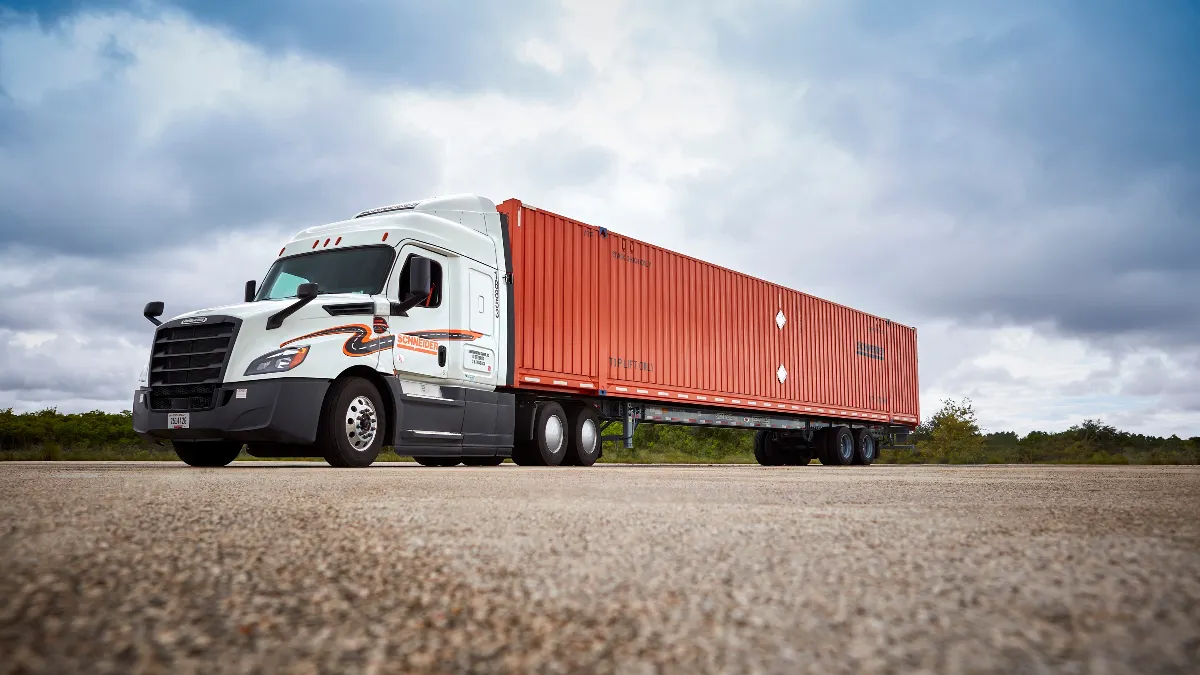
Intermodal transportation vehicle — Utah trucking operations

States we serve · Utah

Utah trucking insurance

Utah trucking runs across four interstates — I-15 north-south through the Wasatch Front, I-80 east-west through Salt Lake City and the Bonneville Salt Flats, I-70 across central Utah, and I-84 into the Ogden corridor — plus the Union Pacific Roper Yard intermodal terminal and the growing Utah Inland Port Authority footprint west of Salt Lake. Silicon Slopes tech-supplier dispatch and Hill Air Force Base military logistics layer on top of a Wasatch Front distribution profile that has expanded faster than most western metros. We place Utah motor carrier programs through specialty markets that write the corridor and the class, not the generic commercial auto market.

What trucking insurance costs in Utah

Utah trucking insurance pricing comes down to a handful of underwriting variables that carry more weight than the state-of-domicile field on the application. The biggest of them is freight mix: a dry-van operation hauling general freight along the I-15 Wasatch Front prices differently from an intermodal drayage operation running containers out of the Union Pacific Roper Yard, and both of those price differently from a high-value electronics operation hauling Silicon Slopes tech-supplier freight out of Lehi and Provo. The Utah Insurance Department regulates the carriers and the forms, but rate adequacy on a specific risk runs through the specialty motor-carrier underwriter, not the regulator.

The second variable is corridor and climate. Parley’s Summit on I-80, Soldier Summit on US-6, and the I-84 climb through Weber Canyon each produce winter chain-up requirements and accident patterns that auto liability and physical damage carriers price differently than line-haul freight on the I-15 valley corridor. Intermodal drayage programs running under Uniform Intermodal Interchange Agreement language need trailer-interchange written explicitly on the policy. The federal floor on auto liability for general freight sits at 49 CFR section 387.9, but the contracted limit on Silicon Slopes tech-supplier and Hill AFB military logistics lanes often runs materially above that floor.

Third, claims history is the variable that does the most work on any individual renewal. One severity claim in the last three years — particularly a bodily-injury claim with reserves above the primary limit — changes the carrier appetite list materially. The right time to plan for that is before the renewal quote round, not after. Fourth, the owner-vs-driver structure: an owner-operator running a single tractor under their own authority prices differently than a small fleet with three drivers on payroll, even before workers compensation enters the picture. We work through each of these on the quote call rather than handing back a single number that hides the assumptions behind it.

Utah trucking regulatory framework

Utah trucking sits inside a four-agency regulatory framework: FMCSA at the federal level, the Utah Department of Transportation for state highway and intrastate authority, the Utah Insurance Department for carrier and policy regulation, and the Utah Labor Commission Industrial Accidents Division for workers compensation oversight.

Federal authority — FMCSA, USDOT, and PHMSA

Interstate Utah motor carriers register with the Federal Motor Carrier Safety Administration for a USDOT number and motor-carrier authority, file BMC-91 or BMC-91X public-liability proof of insurance through their carrier, and carry the MCS-90 endorsement on the auto liability policy. Hazmat operations layer PHMSA placarding, training, and routing requirements on top of FMCSA authority — Wasatch Front industrial-chemical hauling and Hill AFB defense-installation controlled-shipment lanes are the two Utah clusters where that layer matters most.

Utah Department of Transportation (UDOT)

UDOT maintains the state highway and interstate network — I-15, I-70, I-80, I-84, I-215, US-6, US-40, US-89, and US-191 — and administers oversize and overweight permits through Motor Carrier Services. Heavy-haul operators running permitted loads work directly with UDOT on routing approvals; pilot-car and escort requirements vary by load dimension and corridor, and the mountain-pass corridors carry dimensional restrictions that flatter routes do not.

Utah Insurance Department (UID)

The Utah Insurance Department regulates the property and casualty carriers that write Utah trucking auto liability, motor truck cargo, trailer interchange, and physical damage programs. Policy form approval, carrier rate filings, and consumer complaint processes run through UID, and the department’s website is the primary source for verifying a carrier’s standing in the Utah market.

Utah Labor Commission — workers compensation

The Utah Labor Commission Industrial Accidents Division administers workers compensation requirements and dispute resolution. The Workers Compensation Fund of Utah — the state-affiliated insurer that competes with admitted private carriers — is the alternative placement option for trucking employers who cannot find admitted-carrier appetite. The owner-vs-employee question on leased drivers and family payroll matters here.
Common trucking risks in Utah

The Utah risk profile splits into four distinct exposure regions that an underwriter reads off the garaging address and the lane disclosure before anything else on the application.

  • Mountain-pass and winter weather exposure. Parley’s Summit, Soldier Summit, Weber Canyon, and the I-70 climb through southeastern Utah produce chain-up requirements, low-speed slide-offs, and jackknife events that are uncommon on flatland line-haul programs. Auto liability and physical damage carriers ask about winter operating procedures on the application — and pass closures during heavy storms create dispatch and cargo-delay exposures that ripple into the policy mechanics.
  • Intermodal trailer-interchange exposure. Salt Lake City intermodal drayage out of the Union Pacific Roper Yard and the Utah Inland Port Authority footprint runs under Uniform Intermodal Interchange Agreement language that requires trailer-interchange coverage written specifically. Programs running dry-van cargo policies on intermodal chassis usually find the coverage gap at claim time, not at bind.
  • Silicon Slopes high-value cargo exposure. The Lehi and Provo-Orem tech-supplier lanes feeding Adobe, Ancestry.com, and the surrounding software cluster carry cargo limits well above commodity-haul norms, and trailer-interchange and additional-insured language on the policy gets scrutinized by tech-supplier risk teams in a way that does not happen on grain or aggregate lanes.
  • Resort-corridor seasonal exposure. Park City ski-resort hospitality freight, St. George winter retirement-tourist flow, and the Zion National Park gateway produce sharp seasonal traffic peaks that change the claim-frequency profile in the December-through-March and June-through-September windows respectively. Underwriters reading the lane disclosure on a seasonal schedule price the risk differently than a 12-month line-haul program.
  • Long-distance bobtail and off-dispatch exposure. Utah geography produces longer deadhead and personal-use legs than most states — an owner-operator garaged in Salt Lake might bobtail to Logan, St. George, or Vernal on a single weekend across pass corridors. Non-trucking bobtail liability is the policy that responds when the tractor is off-dispatch.

Common Utah trucking claims we see

The claim mix on Utah filings runs heavier on a few specific patterns than national averages would suggest. These are qualitative — no severity figures, because severity is a function of venue, jury composition, and limit adequacy that varies too widely to summarize honestly.

  • Winter pass slide-offs and jackknife incidents on I-80 and US-6. Chain-up zones on Parley’s Summit and Soldier Summit, sudden weather changes, and grade-plus-curve combinations produce a steady run of low-speed slide-off, jackknife, and ditch-recovery claims in the December-through-March window. Physical damage responds on the tractor and trailer; the towing-and-recovery cost on a pass-closure event is the line item that drives the severity range.
  • Intermodal chassis and container-handoff cargo claims. Drayage out of the Union Pacific Roper Yard produces cargo claims where the place-of-loss is contested between the rail terminal, the chassis pool, and the carrier — and the trailer-interchange policy language decides which entity’s coverage responds. Quoting intermodal without trailer interchange written explicitly leaves the carrier exposed at claim time.
  • Silicon Slopes high-value cargo claims. Tech-supplier server hardware, silicon-chip equipment, and capital-equipment loads moving in and out of the Lehi and Provo corridor produce cargo claims where single-load value materially exceeds commodity-haul limits and the tech-supplier contract scrutiny on certificates and additional-insured wording is markedly stricter than general freight.
  • Wasatch Front urban arterial collisions. Stop-and-go congestion along the I-15 Wasatch Front corridor between Ogden, Salt Lake, and Provo produces a steady run of low-severity property-damage claims with occasional bodily-injury claims where soft-tissue allegations layer on. Auto liability responds; the question is whether the limit holds on the loads moving high-value freight through the corridor.

Specific carriers are not named here per our coverage placement policy — appetite changes faster than a website can. The Truck Guard Insurance homepage lists the active panel quoting Utah motor carrier risks today.

Why Utah trucking owner-operators choose Truck Guard Insurance

We are a specialty trucking insurance agency, and Utah is one of the states where the difference between specialty and generic motor-carrier underwriting shows up most plainly. The four exposure regions — Salt Lake intermodal, Silicon Slopes high-value, Ogden defense-and-intermodal, and the resort-corridor seasonal markets — each have their own subset of carriers that want them and their own subset of carriers that decline them. Knowing which is which up front saves the application from getting bounced through markets that were never going to bind it.

We handle BMC-91 and BMC-91X filings end-to-end, issue certificates for broker compliance, and walk through MCS-90 mechanics on the quote call so the policy you bind matches the policy you thought you were binding. Certificate requests for the Roper Yard, Stratford intermodal, Hill AFB security docks, and Silicon Slopes tech-supplier risk teams — additional-insured wording, certificate holder structure, primary-and-non-contributory language — get handled the same day they come in when the underlying program is structured correctly at bind.

On the regulatory side, we know which Utah freight needs interstate FMCSA authority, which needs intrastate UDOT authority, and which needs both. We have placed Utah workers compensation programs through admitted carriers and walked through the Workers Compensation Fund option as the alternative. And we work the 48 U.S. states we are licensed in, so a Utah-domiciled carrier running freight into Nevada, Idaho, Colorado, or Arizona gets the same agency on the renewal whether the question is Utah or the lane.

Major Utah trucking markets

Utah trucking is regional. The metros and corridors below are the ones where we place the most motor carrier programs — each runs a distinct exposure profile that drives carrier selection.

  • Salt Lake City. The I-15, I-80, and I-215 convergence at the Union Pacific Roper Yard, the Utah Inland Port Authority footprint west of the city, the SLC International cargo terminal, and the state capitol — with the Church of Jesus Christ of Latter-day Saints headquartered downtown — produces the densest intermodal-truck handoff in the Mountain West, where trailer-interchange agreements and chassis liability dominate the underwriting questions on filings garaged in the metro.
  • Provo-Orem. The I-15 corridor through Brigham Young University and the Silicon Slopes tech footprint anchored by Adobe and the Vivint Smart Home legacy operations carries a high-value electronics and capital-equipment freight lane — single-load value concentration pulls cargo and trailer-interchange limits above commodity-haul norms, and tech-supplier certificate scrutiny is markedly stricter than general freight.
  • Ogden. The I-15 and I-84 junction at the Union Pacific intermodal terminal and Hill Air Force Base — a major US Air Force logistics installation supporting the western military distribution network — combines container drayage with defense-installation security-screened deliveries, creating a dual exposure profile that an underwriter prices differently from line-haul dry-van.
  • Park City. The US-40 corridor at the Park City ski resort and Sundance Film Festival hospitality freight pattern drives a sharply seasonal exposure: peak winter destination-resort traffic on Parley’s Summit and US-40 produces narrow-window arterial congestion and weather-related claim spikes that the off-season filings do not show — which physical damage underwriters watch closely.
  • West Jordan. The I-15 corridor southwest of Salt Lake at the Rio Tinto Kennecott copper mine adjacency, the SL metro distribution belt, and the West Valley industrial corridor combines mining-industry-related freight with last-mile distribution — a profile where the underwriter reads both heavy-haul mining exposure and dense urban-arterial congestion in the same submarket.
  • Lehi. The I-15 corridor at the Silicon Slopes tech corridor north of Provo — Adobe, Ancestry.com, and the surrounding software cluster — drives a high-value electronics freight lane where cargo limits and the supplier-contract certificate scrutiny run materially higher than the general-freight market and read distinctly from the manufacturing-heavy Provo profile.
  • St. George. The I-15 corridor in southern Utah at the Las Vegas-bound traffic flow, the regional retirement-community distribution belt, and the Zion National Park gateway produces a freight mix that combines tourist-corridor congestion with cross-state distribution into Nevada and Arizona — an underwriting profile that combines elements of three state markets in a single submarket.
  • Logan. The US-89 and US-91 hub at Utah State University and the Cache Valley dairy belt produces a refrigerated and agricultural freight pattern — dairy processing inputs and university supply chain combined with rural state-highway operation — where the lane mix is regional rather than long-haul interstate and the cargo questions look different from the I-15 mainline programs.

Related reading

Coverages most relevant to Utah trucking:

Motor carrier classes that show up most often in Utah:

Neighboring states we serve:

Primary regulatory and research sources:

Utah trucking insurance FAQs

Does Utah require state-level motor carrier registration in addition to FMCSA authority?

Interstate Utah motor carriers register with FMCSA for a USDOT number and motor-carrier authority. Intrastate-only Utah carriers — freight that originates and terminates inside the state — register through the Utah Department of Transportation Motor Carrier Division. Many Utah owner-operators carry both because lane mix shifts across the year, particularly for fleets running into Salt Lake City intermodal, Silicon Slopes tech-supplier dispatch, and southern Utah resort traffic. The Utah Insurance Department regulates the carriers that write the auto liability and cargo policies in either case.

Why does the Utah Inland Port Authority change the underwriting questions on a Utah program?

The Utah Inland Port Authority footprint west of Salt Lake City and the Union Pacific Roper Yard intermodal operations produce trailer-interchange and chassis-liability exposures that general-freight underwriters do not price the same way as intermodal-specific underwriters. Programs running container drayage out of Roper or Stratford need trailer interchange written explicitly on the policy, and the Uniform Intermodal Interchange Agreement language on the application changes carrier appetite. Quoting an intermodal program as flat dry-van usually creates coverage gaps the carrier finds at claim time.

How does the Utah Labor Commission handle workers compensation for trucking employers?

Workers compensation in Utah is administered through the Utah Labor Commission Industrial Accidents Division, which oversees coverage requirements and dispute resolution. The Workers Compensation Fund of Utah — the state-affiliated insurer that competes with admitted private carriers — is the alternative placement option for trucking employers who cannot find admitted-carrier appetite. The owner-vs-employee question on leased drivers and family payroll matters before binding because the structure decides which carrier appetite list applies.

What FMCSA filings does a Utah motor carrier need before authority activates?

Interstate Utah motor carriers need proof of public liability on file with FMCSA before authority goes active — a BMC-91 or BMC-91X submitted by the insurance carrier. Hazmat haulers add the BMC-32 (cargo financial responsibility) where the commodity triggers it. The MCS-90 endorsement attaches to the auto liability policy and is a federally-mandated public-protection backstop, not coverage for the carrier itself. Salt Lake City intermodal drayage, Hill AFB military logistics, and Silicon Slopes high-value electronics runs are the three Utah exposure clusters where the FMCSA filings and certificate-of-insurance mechanics come up most often on quote calls.

How does Utah mountain-pass and winter weather factor into physical damage underwriting?

Utah physical damage and collision pricing is sensitive to mountain-pass exposure — Parley’s Summit on I-80 east of Salt Lake, Soldier Summit on US-6, the I-70 climb through southeastern Utah, and the I-84 grades through Weber Canyon all produce winter chain-up requirements and accident patterns underwriters price differently from flatland line-haul. Carriers ask about winter operating procedures and chain inventory on the application, and the mountain-state physical damage market quotes differently from the line-haul-only market — which is why we sort the appetite question before sending the application out.

Are intermodal and Silicon Slopes high-value freight treated differently from general freight in Utah?

Yes. Salt Lake City intermodal drayage out of Roper Yard and the Ogden Stratford terminal runs under Uniform Intermodal Interchange Agreement language that requires trailer-interchange coverage written specifically — not bolted onto a dry-van program. Silicon Slopes capital-equipment and electronics lanes carry cargo limits well above commodity-haul norms, and tech-supplier certificate-of-insurance scrutiny is sharper than general freight. Both classes sit with specialty carriers that write them specifically; quoting them through general-freight underwriters typically returns either decline or a quote with coverage gaps that show up at claim time.

Does Utah accept out-of-state UCR registration, or is separate filing required?

Utah participates in the Unified Carrier Registration program along with every other UCR state, so interstate motor carriers based outside Utah do not file a separate Utah UCR — the home-state UCR fee covers operation in Utah. Utah-based interstate carriers file their UCR through Utah and the fee covers nationwide operation. UDOT handles UCR administration in coordination with the multi-state UCR Plan. Intrastate-only Utah operations are a separate licensing path through UDOT Motor Carrier Division and do not satisfy interstate UCR.

How long does it take to get a Utah trucking insurance quote bound?

For straightforward general-freight operations with clean MVRs, two-to-three years of verifiable experience, and current FMCSA authority, we typically have Utah quotes in hand within one to two business days and can bind the same day quotes come back if the paperwork is complete. Intermodal drayage programs, Silicon Slopes high-value electronics runs, and southern Utah resort-corridor seasonal fleets take longer because fewer markets write them and the underwriting questions run deeper. Renewal premium jumping after one loss year is a conversation we are happy to have at the start, not at renewal.

Get a Utah trucking insurance quote

Send the basics on your authority, equipment, commodity, and Utah lane mix. We pull the panel of specialty trucking markets quoting your class and corridor today and walk you through limit selection, MCS-90 mechanics, and trailer-interchange language before you bind.