Motor carrier classes by state

Louisiana dump trucking insurance for aggregate and construction haulers

In 2024 the Louisiana Legislature did something few states have done: it took a twelve percent overload — an ordinary penalty event — and turned it into a purchasable condition. Eight hundred dollars per truck per year, for single unit dump trucks, “with no limitation as to the material being hauled.” The overage did not become legal. It became priced.

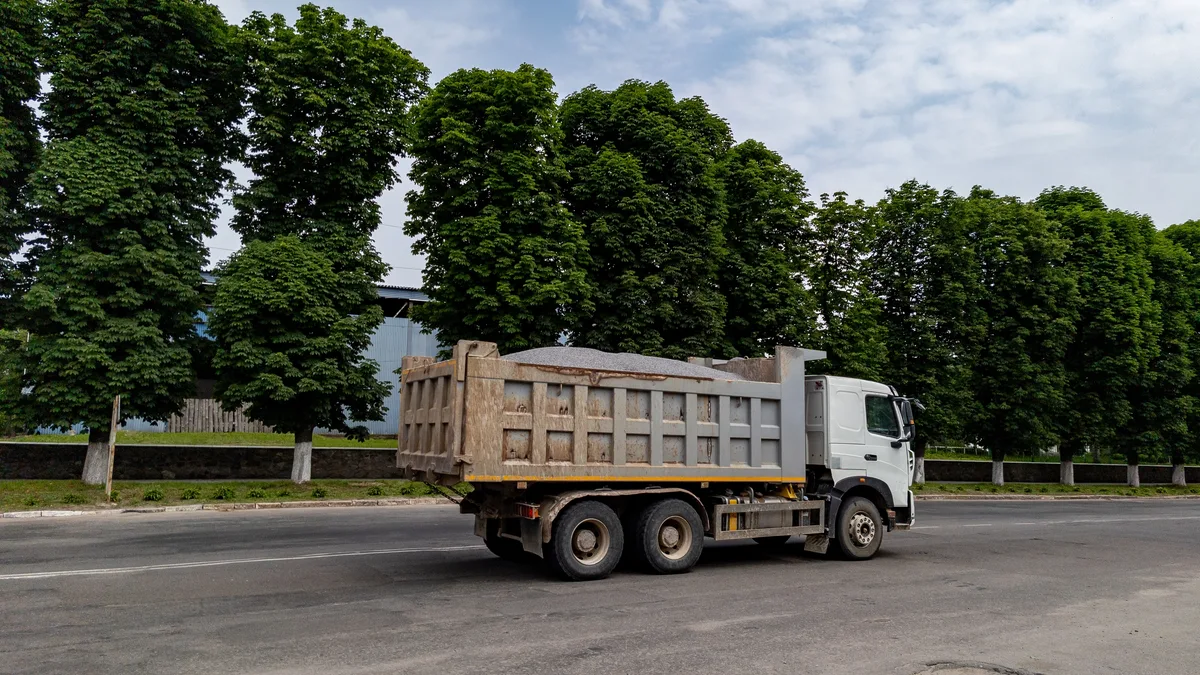
Loaded dump truck on a paved road — Louisiana Dump Trucking Insurance from Truck Guard Insurance

Almost every state answers the question of what a dump truck may weigh with a limit and a penalty. Louisiana added a third answer. Act 631 of the 2024 Regular Session created a special permit that prohibits both gross weight and axle weight penalties where the total excess weight is twelve percent or less of the truck’s maximum permissible gross weight — for a fee, for a year, for one named body style.

The statute is short enough to read in a minute and precise enough that each clause changes something. It names single unit dump trucks specifically rather than dump operations generally. It removes the commodity question entirely. It prohibits penalties rather than raising a limit. And it withholds one thing explicitly, in a sentence that survives everything else in the section.

Around that statute sits a permit shelf the Department of Transportation and Development prices by commodity, and dump work shows up on it more than once — under earthen materials, under concrete raw materials, under ready-mix, under refuse, and under the dump truck permit itself. The prices are not proportional to the weight involved. They are a policy statement about which hauls the state wants to see permitted.

One recent operational change belongs alongside all of it, because it altered how a permitted move begins rather than what it may weigh, and it took effect in September 2025.

Running single unit dump trucks in Louisiana? Send the unit count and which DOTD annual permits are on file — the twelve percent permit is priced per truck and renews per truck.

Start a Louisiana quote

Act 631 of 2024 put a price on twelve percent

La. R.S. 32:387.23 carries a section heading that states its own subject with unusual directness: “Special permit; twelve percent weight variance for single unit dump trucks.” It was added by Acts 2024, No. 631, § 1.

The operative sentence reads in full: “Notwithstanding any provision of law to the contrary, relating only to single unit dump trucks and with no limitation as to the material being hauled, the secretary shall issue annual special permits for a fee of eight hundred dollars per truck that prohibit both gross weight and axle weight penalties for the operation of dump trucks on state-maintained highways when the total excess weight is twelve percent or less of the truck’s maximum permissible gross weight as provided by law.”

Take the clauses one at a time, because each does distinct work. “Notwithstanding any provision of law to the contrary” places the section above the general weight provisions rather than inside them. “Relating only to single unit dump trucks” confines it to a body style — a single unit, not a tractor-trailer dump combination. “With no limitation as to the material being hauled” removes the commodity question that structures nearly every other state’s relief provision: stone, sand, spoil, millings, demolition debris, it does not matter.

Then the mechanism. The permits “prohibit both gross weight and axle weight penalties” — both, which matters, because an aggregate truck is far more often out of tolerance on an axle than on gross. The section does not raise a limit; it forecloses a penalty. And the shelter covers the same twelve percent whether the excess presents as gross weight or as axle weight.

The threshold is stated as a proportion rather than a figure: twelve percent or less of the truck’s maximum permissible gross weight as provided by law. Because it is a percentage of that truck’s own permissible gross, the shelter scales with the unit. A truck with a higher permissible gross carries a larger absolute cushion, and the arithmetic is done per vehicle rather than once for a fleet.

Finally, the duty is mandatory on the department. The secretary “shall issue” the permits. This is not a discretionary program the department may decline to run; the statute directs it, at the stated fee, annually, per truck.

It is worth being clear about what this is not. The permit does not make a twelve percent overload lawful in some general sense, and it does not reach beyond state-maintained highways. It is a penalty shelter with a price, and understanding it that way is the difference between using it and over-relying on it.

The one thing the statute keeps back

Section 387.23 ends with a single sentence, and it is the sentence that keeps the permit from being a general license: “The permit shall not authorize any truck described in this Part to exceed load posted weight limits on any bridge.”

A posted bridge is outside the permit entirely. Not reduced, not conditioned, not subject to notice — simply not authorized. The twelve percent that is sheltered on a state-maintained highway is not sheltered across a structure carrying a posted limit, and the permit in the cab has nothing to say about it.

That carve-out is the operationally significant half of the statute for an aggregate hauler in south Louisiana in particular, where the road network is dense with structures. A truck running at eleven percent over its permissible gross is inside the permit on the highway and outside it on the bridge that highway crosses, and the transition happens without a scale, a stop or a warning.

It also changes what the permit means for planning. A permit that shelters a percentage on the open road but not on a posted structure does not let an operator load to the shelter as a matter of routine. It lets an operator absorb variance — a wet load, a heaped bucket, a moisture change between the pit and the scale — without a penalty, provided the route does not include a structure that resets the question.

That is the honest framing to carry into a discussion about how the permit affects an operation. It is a variance absorber, and variance is exactly what an aggregate load produces. The material a dump truck carries changes weight with rain, with compaction and with how the loader operator filled the last bucket. A shelter sized as a percentage of permissible gross is well matched to that problem and poorly matched to a plan that treats it as extra payload.

The scope limit is worth naming too. The statute authorizes the permit for “the operation of dump trucks on state-maintained highways.” Parish and municipal roads are not state-maintained highways, and the statute does not speak to them.

Where the dump truck permit sits on a priced shelf

The twelve percent permit is one entry on a list, and reading the list is how the state’s priorities become visible. The Department of Transportation and Development publishes its annual permit types and fees, and the ones touching earthmoving, concrete and waste work sit at very different price points.

The Single Unit Dump Truck permit is listed at $800 per year, matching the statute, and DOTD notes that it “allows a 12% variance on weight.” The Earthen Materials permit is $1,000 per year. The Refuse permit is $1,000 per year. Concrete Raw Materials and Products is $400 per year, and DOTD notes a “10% variance on weight” against it. Ready-Mix Concrete Truck is priced by rear axle group: $800 per year for a rear tandem, $400 per year for a rear tridem or quadrum. And the general Oversize/Overweight annual permit is $2,500 per year, with Oversize Only at $500.

The spread is instructive. A general oversize and overweight annual permit costs more than three times the dump truck permit, which is what one would expect. But the concrete raw materials permit costs half the dump truck permit and carries a smaller variance, and the ready-mix permit is cheaper for a truck with more axles under the back of it than for one with fewer. Louisiana is pricing the axle configuration, not just the commodity.

For a contractor running mixed work — hauling base to a site in the morning and running spoil to a disposal site in the afternoon, or operating both dump bodies and mixers — the practical question is which permits the fleet actually holds, per unit, and whether the permit on a given truck matches the work that truck does. These are annual, per-vehicle instruments, and a fleet that has grown or re-tasked equipment mid-year can easily have units doing work their permits were not bought for.

The lighter end of the shelf is worth knowing for the same reason. Forest Products and Forest Management Equipment are $10 per year each, as are Harvest Season or Natural Forest Products, Refuse/Waste and Waste Vehicle; Escort Vehicle is $10; Steering Axle is $15; Cotton Module, Containerized Cargo Class 1 and Solid Waste are $50; Agronomic and Horticulture, Timber Cutting/Logging Equipment and Timber Harvest Season are $100. Where a nominal fee exists for an activity a fleet performs, there is rarely a reason not to hold it.

None of these is a substitute for the others. They are separate authorizations with separate scopes, and holding an Earthen Materials permit does not confer the twelve percent variance the dump truck permit carries, any more than the dump truck permit confers the oversize authority of the general permit.

  • Single Unit Dump Truck — $800 per year, allowing a 12% variance on weight.
  • Earthen Materials — $1,000 per year.
  • Refuse — $1,000 per year (a separate Refuse/Waste permit is listed at $10 and Waste Vehicle at $10).
  • Concrete Raw Materials and Products — $400 per year, allowing a 10% variance on weight.
  • Ready-Mix Concrete Truck — $800 per year for a rear tandem, $400 per year for a rear tridem or quadrum.
  • Oversize/Overweight — $2,500 per year; Oversize Only — $500 per year; Non-Critical Off Road — $1,000 per year.
  • Steering Axle — $15 per year; Escort Vehicle — $10 per year, expiring each December 31.

We place Louisiana aggregate and dump accounts, including single unit dump fleets running the twelve percent variance permit and contractors holding multiple DOTD annual permits.

Get a Louisiana quote

Twelve percent, ten percent, and what the difference implies

Louisiana has published two different variance percentages against two different permits, and set them against two different bodies of work. The comparison is more informative than either number alone.

Concrete raw materials — the aggregate, sand and cementitious material moving into a batch plant — carries a ten percent variance at $400 per year. A single unit dump truck carries twelve percent at $800. Two percentage points of additional shelter, at twice the annual price, for a body style rather than a commodity.

That the dump truck permit is commodity-blind is the reason for the difference, and the statute says so: “with no limitation as to the material being hauled.” The concrete permit is scoped to a material stream with a known origin and destination. The dump truck permit follows the truck wherever it goes and whatever is in it, and Louisiana has priced that flexibility.

For a mixed operation this creates a genuine choice rather than a formality. A unit that only ever runs raw material into a batch plant may be adequately served by the cheaper, narrower permit. A unit that runs base, spoil, millings and demolition debris across a week is doing exactly what the dump truck permit was written for, and the narrower permit would leave most of its work outside the shelter.

The ready-mix pricing points the same direction from another angle. A rear tandem mixer costs $800 and a rear tridem or quadrum costs $400 — half as much for the configuration that spreads the same load over more axles. Louisiana is charging less where the truck does less damage per axle, which is internally consistent with a weight regime whose whole purpose is pavement preservation.

The practical implication for a fleet is that permit selection is an equipment question as much as a commodity question, and it is settled per unit. That is the level at which a Louisiana permit file should be readable — a line per truck, showing the body style, the axle configuration, the permits held and their renewal dates.

Since September 2025, the route is approved before the move

DOTD posted a change to how its heavy equipment permits operate, and it is stated on the department’s permit pages as taking effect on a specific evening: “Effective Tuesday evening, September 2, 2025 - All New Annual Oversize/Overweight Heavy Equipment Permits will require a Registered Route to be approved prior to each move.”

Read the two qualifiers. It applies to new annual oversize and overweight heavy equipment permits, and it requires the registered route to be approved prior to each move — not once at issuance for the life of the permit. An annual permit under that regime authorizes a class of movement; the specific movement still requires a route that has been registered and approved before it happens.

That is a meaningful change in tempo for a contractor whose work is dispatched short-notice. A same-day call to move a piece of equipment to a job is now a call that includes a route approval step, and the lead time on that step is part of the job’s schedule rather than an administrative afterthought.

It also creates a compliance artifact worth having in a file. A registered, approved route is a document that shows where the department agreed the load would travel. Where a loss occurs off that route, the divergence is visible in a way it would not be under a general annual authorization, and that visibility cuts in both directions depending on whose route discipline is being examined.

The department publishes two further operational notes on the same pages that are easy to miss. Insurance for permits has been entered by customers or their permitting services since December 4, 2019, which places the accuracy of the insurance information on the applicant rather than on the department. And escort vehicle permits expire each year on December 31 regardless of when they were purchased, so an escort permit bought in November is a two-month permit.

Those are the kinds of details that produce a gap without producing a warning — the escort permit that quietly expired at year end, the insurance record entered once and never updated, the annual permit whose route registration was assumed rather than obtained. On a Louisiana account they are worth checking specifically.

Reading a Louisiana dump file

The distinctive thing about Louisiana, from an underwriting standpoint, is that a well-run operation here leaves a paper trail that a well-run operation in most states does not. Because the state sells variance rather than merely policing it, the permits a fleet holds are a direct statement about how it intends to load.

That makes a permit schedule a genuinely useful document. A fleet of single unit dump trucks each carrying an $800 annual variance permit is a fleet that has decided to operate with a shelter and has paid for it, per truck, on the record. A fleet running the same work without those permits is exposed to gross and axle penalties on the same variance the permit would have absorbed. Neither is wrong, but they are different risk postures and they are visible.

The second thing worth reading is the mismatch between permit scope and work performed. The twelve percent permit reaches single unit dump trucks on state-maintained highways. A fleet whose heavy work is done by tractor-trailer dump combinations, or whose routes run substantially on parish roads, holds a permit that does not reach much of what it does — and it may hold it in the belief that it does.

The third is the bridge. The statute’s closing sentence withholds posted bridges from the permit entirely, and posted structures are where the permit’s protection ends most abruptly. How an operator identifies posted bridges on its routes, and how that information reaches a driver, is a dispatch control with a direct statutory consequence behind it.

And the fourth is the part of a dump operation that never touches a weight statute at all. Pit and job-site work — spotting, backing, dumping with a raised body, working alongside a customer’s crew and equipment — is where a large share of aggregate losses originate, and it sits at the boundary between a highway auto form and a general liability program. Raised-body contact with overhead lines and structures is its own recurring loss type, and it is a physical damage and liability event simultaneously.

The questions that follow are the ones a Louisiana aggregate account answers differently from an account across the state line, and they are worth asking in this order.

  • Which units are single unit dump trucks, since R.S. 32:387.23 is written to that body style and not to dump combinations.
  • Which units hold the $800 annual twelve percent permit, and whether the renewal dates are tracked per truck rather than per fleet.
  • Route mix between state-maintained highways and parish or municipal roads, since the statute authorizes the permit for operation on state-maintained highways.
  • How posted bridges are identified and communicated, given that the permit expressly does not authorize exceeding a posted bridge limit.
  • Whether the fleet also holds Earthen Materials, Concrete Raw Materials, Ready-Mix or Refuse permits, and whether each matches the work its unit actually performs.
  • Route registration practice for annual heavy equipment permits, which since September 2, 2025 requires an approved registered route prior to each move for new permits.
  • Escort vehicle permit currency, since those permits expire each December 31 regardless of purchase date.
  • Pit, stockpile and job-site procedures, including raised-body discipline, which is where much of the loss on an aggregate account originates.

Coverage lines a Louisiana dump and aggregate account usually carries

The state minimum is a licensing threshold. The program an operator actually needs is built from these lines:

  • Trucking Auto Liability — Primary liability coverage for bodily injury and property damage caused by your truck while under dispatch.
  • Physical Damage — Collision and comprehensive coverage for the tractor, trailer, and attached equipment you own or finance.
  • Motor Truck Cargo — Coverage for the freight you haul against loss or damage in transit.
  • Trailer Interchange — Coverage for non-owned trailers you pull under written interchange agreements.
  • General Liability — Coverage for premises and operations liability away from the truck — terminal yards, customer docks, and non-driving exposures.
  • Workers Compensation — Statutory coverage for driver and yard-employee injury, structured for trucking payrolls and interstate operations.
  • Non-Trucking (Bobtail) Auto Liability — Liability coverage for the tractor when operated off-dispatch — bobtailing home or running personal errands.
  • Pollution Liability — Coverage for cargo-related pollution events and upset/overturn spills not covered by standard auto liability.

Why Truck Guard Insurance for a Louisiana dump and aggregate account

We write dump and aggregate hauling as a named class rather than as an exception to general trucking, and we read each account against the weight and permit regime of the state it operates in. For a Louisiana operator that means starting from what the trucks are actually licensed and configured to carry, sizing physical damage to bodies and hoists rather than to a chassis value, and treating pit, stockpile and job-site work as its own exposure rather than an extension of the highway auto form.

If the operation also runs freight under separate authority, the Louisiana trucking insurance page covers the state’s broader motor carrier picture, and the dump trucking insurance page covers the class mechanics that apply wherever the operator runs.

Louisiana dump trucking insurance questions

How does Act 631 change what an overloaded dump truck owes?

It is a statutory penalty shelter. La. R.S. 32:387.23, added by Acts 2024, No. 631, § 1 and titled “Special permit; twelve percent weight variance for single unit dump trucks,” directs the secretary to issue annual special permits at eight hundred dollars per truck that prohibit both gross weight and axle weight penalties for the operation of dump trucks on state-maintained highways when the total excess weight is twelve percent or less of the truck’s maximum permissible gross weight as provided by law.

Does the Louisiana permit limit what material can be hauled?

No, and the statute says so expressly. R.S. 32:387.23 applies “relating only to single unit dump trucks and with no limitation as to the material being hauled.” That is what distinguishes it from most weight relief provisions, which are scoped to a named commodity. It is scoped to a body style instead, which means the same permit covers base, spoil, millings, demolition debris and anything else the truck carries.

Does the twelve percent permit apply on a posted bridge?

No. The closing sentence of R.S. 32:387.23 provides that “The permit shall not authorize any truck described in this Part to exceed load posted weight limits on any bridge.” A posted structure is outside the permit entirely. A truck operating inside the twelve percent shelter on a state-maintained highway is not sheltered crossing a bridge with a posted limit below its total weight.

What does the Louisiana single unit dump truck permit cost?

Eight hundred dollars per truck per year, stated in the statute itself and confirmed on DOTD’s published annual permit list, where the Single Unit Dump Truck permit is shown at $800 per year and noted as allowing a 12% variance on weight. It is a per-vehicle annual instrument, so a fleet holds one per truck and renews them per truck rather than collectively.

How does the dump truck permit compare with the concrete permit?

Different scope, different variance, different price. DOTD lists Concrete Raw Materials and Products at $400 per year with a 10% variance on weight, and the Single Unit Dump Truck permit at $800 per year with a 12% variance. The concrete permit is scoped to a material stream; the dump truck permit follows the body style regardless of the load, and Louisiana has priced that flexibility at twice the fee for two additional percentage points.

What are the other Louisiana annual permits an aggregate hauler might need?

DOTD’s published list includes Earthen Materials at $1,000 per year, Refuse at $1,000, Ready-Mix Concrete Truck at $800 for a rear tandem or $400 for a rear tridem or quadrum, Non-Critical Off Road at $1,000, Oversize Only at $500, and the general Oversize/Overweight annual permit at $2,500. These are separate authorizations with separate scopes; holding one does not confer the variance or authority of another.

What changed for Louisiana permits in September 2025?

Route approval moved ahead of each move. DOTD posts that “Effective Tuesday evening, September 2, 2025 - All New Annual Oversize/Overweight Heavy Equipment Permits will require a Registered Route to be approved prior to each move.” The requirement attaches to new annual heavy equipment permits and applies before each individual movement rather than once at issuance, which adds a lead-time step to short-notice equipment moves.

Does the permit cover parish and city roads?

The statute does not reach them. R.S. 32:387.23 authorizes the permit for “the operation of dump trucks on state-maintained highways,” and parish and municipal roads are not state-maintained highways. A fleet whose routes run substantially on local roads holds a permit that does not reach much of what it does, which is worth checking before the shelter is relied on in planning.

Sources

Every figure on this page was read at the source below on August 11, 2026, with the effective date of the version read. Treat each as current as of that date rather than as permanent.

Get a Louisiana dump trucking insurance quote

Send the declared or registered weights alongside the axle configurations, and tell us where the material moves from. We will size the program against the work the trucks actually do rather than against a statutory floor.

Start a quote Call 317-942-0549