Motor carrier classes by state

Utah dump trucking insurance for aggregate and construction haulers

Utah wrote the aggregate hauler’s commodity into its statute by name. “Dirt, sand, gravel, rock fragments, pebbles, crushed base, aggregate” — the legislature listed them, then set a covering requirement with a measurable escape: six inches of clearance between the top of the load and the top inside edge of the sideboards. That six inches is the whole compliance test, and it is checked by looking.

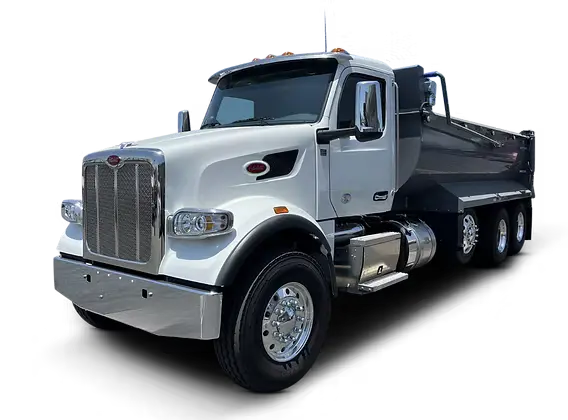
Dump truck raising its bed to unload gravel — Utah Dump Trucking Insurance from Truck Guard Insurance

Most states regulate a dump operation primarily through what the truck weighs. Utah does that too, and its weight rules have one figure that sits above the regional norm. But the provision that touches a Utah aggregate operation most often is not about weight at all. It is about whether the load is covered, and it is unusually specific about what covered means.

The reason it matters commercially is that Utah has attached consequences to it that escalate by what happens rather than by what was hauled. The same uncovered load is an infraction, a class B misdemeanor or a class A misdemeanor depending on whether it merely created a hazard, led to a collision, or led to a collision that seriously injured or killed someone. A driver who lost a shovelful of gravel and a driver who caused a fatality can start from the identical act.

Utah also added a new enforcement point in its 2025 session, and it is not a scale or a port of entry. It is the landfill gate. A statute enacted that year requires landfills to begin collecting a minimum fine on uncovered loads, and it phrases the start in a way worth reading carefully rather than paraphrasing.

Utah’s condition-based restriction power works differently from the seasonal calendars used elsewhere, and it is set out at the end of this page. It publishes no zones, no dates and no percentages, and the reason it does not is written into the statute.

Running aggregate in Utah? Send the body configuration and the tarp practice alongside the fleet schedule — in Utah the covering rule is a graded criminal exposure, not a housekeeping item.

Start a Utah quote

The statute lists the commodity, then measures the load

Utah Code § 72-7-409, amended by Chapter 393 of the 2025 General Session, defines an “unsecured load” as the contents of a vehicle operated on a highway not sufficiently covered, confined, fastened or otherwise secured in a way to prevent the contents from escaping. Then subsection (1)(b)(ii) makes the definition concrete for exactly the class of work a dump operator does: “‘Unsecured load’ includes materials such as dirt, sand, gravel, rock fragments, pebbles, crushed base, aggregate, any other similar material, or scrap metal or other loose material on any portion of the vehicle not designed to carry the material.”

That closing clause is easy to skip and worth pausing on. It reaches loose material on any portion of the vehicle not designed to carry it — the frame rails, the catwalk, the fifth wheel area, the top of the tarp, the tailgate ledge. Material a driver would never call a load is inside the definition, and it escapes at highway speed just as readily.

Subsection (2) then states the prohibitions: a person may not operate a vehicle with an unsecured load on any highway, or operate a vehicle carrying trash or garbage without a covering over the entire load. Trash and garbage get an absolute covering requirement with no measurement attached. Aggregate gets a conditional one.

The condition is in subsection (3)(a), and it is the provision to know. A vehicle carrying dirt, sand, gravel, rock fragments, pebbles, crushed base, aggregate, any other similar material, or scrap metal “shall have a covering over the entire load unless: (i) the highest point of the load does not extend above the top of any exterior wall or sideboard of the cargo compartment of the vehicle; and (ii) the outer edges of the load are at least six inches below the top inside edges of the exterior walls or sideboards of the cargo compartment of the vehicle.”

Both conditions have to hold. The peak of the load must sit below the sideboard top, and the outer edges must sit at least six inches below the top inside edges. A heaped center with material riding up against the sideboards fails the second test even where the peak clears the first. In practice that means the exemption belongs to a deliberately underfilled body, and any load built to the rails is a load that has to be covered.

That is a loading-practice rule as much as a driving rule, and it is decided at the pit by whoever is running the loader — which makes it one of the few compliance controls on an aggregate account that sits with a third party rather than with the operator’s own driver.

Four exemptions, and one of them is a chemical

Subsection (3)(b) carves four categories out of the covering requirement, and each is drawn narrowly enough that an operator should check against the text rather than the general idea.

Hot mix asphalt is exempt outright, by name. Construction debris or scrap metal is exempt “if the debris or scrap metal is a size and in a form not susceptible to being blown out of the vehicle” — a condition rather than a category, and one that turns on the actual material in the actual body on the day. Material being transported across a highway between two parcels of property that would be contiguous but for the highway being crossed is exempt, which covers the short shuttle across a road inside a single site. And material otherwise covered by the subsection is exempt if it is enclosed on all sides by containers, bags or packaging.

The fourth route is not an exemption but an alternative form of compliance, and it is the most distinctive line in the section. Subsection (3)(c) provides that “a chemical substance capable of coating or bonding a load so that the load is confined on a vehicle, may be considered a covering for purposes of Subsection (3)(a) so long as the chemical substance remains effective at confining the load.”

Utah is expressly recognizing a topical bonding agent as a legal covering, with a durability condition attached. The substance counts as a cover only for as long as it remains effective at confining the load — so a treatment applied at the pit that has broken down by the third leg of a hot afternoon has stopped being compliance somewhere along the route, at a point nobody observed.

Two further categories sit outside the section. Subsection (4) removes agricultural products from the prohibition where they are transported in a manner that is not a hazard or potential hazard to safe operation and are loaded so that only minimal spillage occurs. Subsection (5) exempts an authorized vehicle performing snow removal services, and clarifies that the section does not prohibit the necessary spreading of any substance connected with highway maintenance, construction, securing traction or snow removal.

That last clause is worth noting for a contractor whose dump fleet does winter work under a municipal or state contract. Spreading is not spilling under this section, but the exemption is written around highway maintenance, construction and traction rather than around the operator, so it follows the activity and not the truck.

The charge depends on what happened, not on what was hauled

Subsection (6) is where Utah departs most sharply from how other states handle a spilled load, and it is the reason this belongs in an insurance conversation rather than a safety memo.

The section grades the offense by outcome. A person who violates it is guilty of an infraction if the violation creates a hazard but does not lead to a motor vehicle accident; a class B misdemeanor if the violation creates a hazard that leads to a motor vehicle accident; and a class A misdemeanor if the violation creates a hazard that leads to a motor vehicle accident that results in the serious bodily injury or death of a person.

One act, three charging levels, and the level is fixed by what happened downstream of the truck rather than by anything the driver did differently. A driver who leaves the pit with an uncovered body has not chosen between an infraction and a class A misdemeanor; the choice is made later, by traffic behind him.

The fines sit on top of that and are stated as floors rather than ranges. A person who violates the section shall be fined not less than $200 for a violation, or $500 for a second or subsequent violation within six years of a previous violation of the section. Where the violation is committed while operating a commercial vehicle as defined in § 72-9-102, the figures rise: not less than $500 for a violation, or $1,000 for a second or subsequent violation within six years.

The six-year lookback is what makes this a fleet issue rather than a driver issue. A repeat violation is measured against a window long enough to span multiple drivers, multiple trucks and multiple seasons of work, and the doubled commercial floor applies to the operator’s vehicles across it.

Subsection (6)(a) does provide that any person suspected of operating a vehicle with an unsecured load may be issued a warning, which gives an officer a lower rung. And subsection (7) directs that, as resources and opportunities allow, the department shall implement programs or activities that increase public awareness on the importance of properly securing loads — a signal that Utah intends this section to be visible rather than technical.

For an aggregate account this is one of the clearest places where a documented procedure earns its keep. Tarp condition, loader instructions, freeboard checks and a record of them are the difference between an infraction and a defensible position after a windshield claim, and they belong in the same file as the auto liability and general liability discussion.

  • Infraction — the violation creates a hazard but does not lead to a motor vehicle accident.
  • Class B misdemeanor — the violation creates a hazard that leads to a motor vehicle accident.
  • Class A misdemeanor — the violation creates a hazard that leads to a motor vehicle accident resulting in serious bodily injury or death.
  • Not less than $200, or $500 for a second or subsequent violation within six years.
  • Not less than $500 for a commercial vehicle as defined in § 72-9-102, or $1,000 for a second or subsequent violation within six years.

We place Utah aggregate and dump accounts, including operators running landfill and spoil disposal work alongside pit-to-site delivery.

Get a Utah quote

A landfill gate becomes an enforcement point, no later than July 1, 2026

The 2025 General Session added § 72-7-410, enacted by the same Chapter 393 that amended the securement section. It is short, and it moves enforcement to a place no scale or port of entry sits.

The section defines a landfill as a landfill or transfer station permitted by the Department of Environmental Quality, and defines “securely covered” to mean that the content of a load is completely covered by a solid barrier which will prevent the load from blowing, spilling or falling from the vehicle. Subsection (2) then places the duty on the driver: a driver utilizing a landfill “shall ensure that the vehicle’s load is securely covered from the destination of origin until the driver deposits the load at the landfill.”

The mechanism is in subsection (3)(a), and the wording is worth carrying exactly rather than summarized: “A landfill shall collect a $10 minimum fine for a vehicle in violation of Subsection (2), beginning no later than July 1, 2026.”

Read “no later than” literally. It is a deadline by which landfills must have begun collecting, not a uniform start date on which they all begin. A permitted facility may start earlier, and different facilities may start at different times, so the date on which a given gate begins charging is a fact about that facility rather than about the state.

The rest of the section explains where the money goes and what it does not foreclose. Five dollars of the fine is collected by the Department of Environmental Quality and deposited into the Litter Abatement Expendable Special Revenue Fund created in § 72-2-135, and the remainder is retained by the collecting landfill. The Department may retain its associated administrative costs from the funds it receives. A landfill must provide an annual report to the Department on or before March 1 regarding violations.

Two clauses keep the $10 from being the ceiling. Subsection (3)(d) states that the minimum fine does not preclude a landfill from imposing an additional or higher fine or fee for an unsecured load, and (3)(e) allows a landfill to impose an additional penalty for a driver who repeatedly violates the covering duty. So the statutory figure is a floor a facility may build on, and the effective cost at a given gate is set by that facility’s posted schedule.

For an operator running demolition, cleanup or spoil disposal work alongside aggregate delivery, this is a new recurring touchpoint with a compliance consequence and a reporting trail behind it. The covering duty under this section also runs the full trip — from the destination of origin until deposit — rather than only on the highway.

Utah prices its axles at 10,500 pounds per wheel

Utah’s weight limits sit in § 72-7-404, last amended by Chapter 251 of the 2019 General Session, and one of the three figures in subsection (2)(a) runs above what neighboring states allow.

The section prohibits operating or moving a vehicle on any highway with a gross weight in excess of 10,500 pounds on one wheel, a single axle load in excess of 20,000 pounds, or a tandem axle load in excess of 34,000 pounds, and subject to the bridge formula caps gross vehicle weight for any vehicle or combination at 80,000 pounds.

The per-wheel figure is the one to notice, because most weight discussions never reach it. Utah regulates the wheel as well as the axle, which gives an enforcement officer a check that does not depend on how the load is distributed across an axle group. Subsection (1)(a)(i) defines axle load as the total load on all wheels whose centers may be included between two parallel transverse vertical planes 40 inches apart, and (1)(a)(ii) defines a tandem axle as two or more axles spaced not less than 40 nor more than 96 inches apart with at least one common point of weight suspension.

Subsection (1)(b) then adds a rule that overrides everything above it: the tire load rating shall appear on the tire sidewall, and a tire, wheel or axle may not carry a greater weight than the manufacturer’s rating. A statutory maximum does not authorize loading beyond what the equipment is rated for, so on a truck fitted with lower-rated tires the sidewall is the operative limit rather than the statute.

The bridge formula in subsection (3) takes the standard form, with the familiar exception that two consecutive sets of tandem axles may carry 34,000 pounds each where the overall distance between the first and last axles of the consecutive sets is 36 feet or more. Subsection (4) provides a narrow agricultural relief — an implement of husbandry carrying a raw agricultural commodity such as corn, wheat or hay may exceed the single axle limit by up to 2,000 pounds, provided total gross stays within the limit and the vehicle is not on the interstate system. Aggregate has no equivalent.

The penalty structure in subsection (6) is a cents-per-pound schedule rather than a flat fine, and it climbs in bands. The department may require a violator to pay $50 plus the sum of the overweight axle fines, or $50 plus the gross vehicle weight fine. The axle rate runs at 0 cents per pound for the first 2,000 pounds over, then 4, 5, 6, 7, 9, 11 and 13 cents per pound as the overage crosses 2,000, 5,000, 8,000, 12,000, 16,000, 20,000 and 25,000 pounds. The gross vehicle weight rate is a flat 5 cents per pound at every band above 2,000 pounds. A grossly overloaded axle is therefore the expensive failure, not a grossly overloaded truck.

Permits, and the department’s power to require more insurance

Section 72-7-406 governs oversize and oversize-and-overweight permits, and two of its provisions reach an aggregate fleet even though the program is built around other freight.

The first is a registration interlock. Subsection (4) provides that the department may not issue a permit, and a permit is not valid, unless the vehicle or combination is properly registered for the weight authorized by the permit — or registered for a gross laden weight of 78,001 pounds or over, if the gross laden weight authorized by the permit exceeds 80,000 pounds. A permit does not repair an under-registered truck, and buying one against a unit registered too low produces an invalid permit rather than an authorized move.

The second is written directly into the department’s discretion, and it is unusual to find it stated this plainly in a size-and-weight statute. Subsection (1)(d) lets the department deny or condition a permit to protect the traveling public and to protect highway foundation, surfaces or structures from undue damage by, among other means, limiting the number of trips, establishing seasonal or other time limits, otherwise limiting the conditions of operation — and by “requiring insurance in addition to the permit to compensate for any potential damage by the vehicle to any highway.”

That is a state agency with statutory authority to require additional insurance as a permit condition, keyed to potential highway damage rather than to third-party bodily injury. An operator whose Utah work runs through the permit office should expect that authority to be live, and should have the conversation about it before the application rather than after.

Subsection (1)(e) adds that the department shall approve the route of any vehicle or combination before granting a permit, and subsection (2) requires the application to state proposed maximum wheel loads, maximum axle loads and all axle spacings, the proposed maximum load size and vehicle size, the specific roads requested, and whether the permit is for a single trip or subject to seasonal or other time limits. Subsection (3) requires the permit to be present in the vehicle and available for inspection by a peace officer, special function officer, port of entry agent or other authorized department personnel, and expressly allows an electronic copy.

The fee schedule runs by duration and by weight band. A single trip oversize permit is $30 and valid for not more than 96 continuous hours; a semiannual oversize permit is $75 for not more than 180 continuous days; an annual oversize permit is $90 for not more than 365 continuous days. On the oversize-and-overweight side, a single trip permit is $60; a semiannual permit is $180 at a gross vehicle weight of 84,000 pounds or less, $320 above 84,000 but not exceeding 112,000, and $420 above 112,000 but not exceeding 125,000; the annual equivalents are $240, $480 and $540. Those programs sit on the oversized and overweight side of a mixed fleet rather than on the aggregate side.

A restriction here starts with an engineering inspection

Utah does have the power to restrict weight for climatic damage, and it exercises it in a way that produces no table for a dispatcher to consult. Understanding why is more useful than looking for a table that does not exist.

Section 72-7-408 lets a highway authority prescribe by rule or ordinance procedures and criteria prohibiting the operation of any vehicle or imposing weight restrictions on any highway under its jurisdiction. But subsection (1)(b) attaches a precondition to using that power: a highway authority may impose restrictions “if an engineering inspection concludes that, due to deterioration caused by climatic conditions, a highway will be seriously damaged or destroyed unless certain vehicles are prohibited or vehicle weights are restricted.”

An engineering inspection is a finding about a specific highway. It is not a seasonal declaration, a regional forecast or a calendar, and it cannot be made in advance for a network. That is the structural reason Utah publishes no statewide restriction schedule with dates and percentages the way states with hard frost cycles do — its authority is inspection-triggered and segment-specific by design.

The second condition governs when a restriction actually binds. Subsection (2) requires the highway authority imposing restrictions to erect signs citing the provisions of the rule or ordinance at each end of the affected portion of any highway, and states that “the restriction is effective only when the signs are erected and maintained.” Both verbs carry weight. A sign that goes up makes the restriction effective; a sign that is not maintained is a gap in the condition the statute sets.

Subsection (3) makes a person who violates any restriction imposed under the section guilty of an infraction. And notably, the section carries no outer time limit on how long a restriction may run — nothing corresponding to the fixed-duration caps some western states place on their equivalents. A Utah restriction lasts as long as the authority that imposed it maintains it.

The practical consequence for an aggregate operator is that route knowledge substitutes for a published schedule, and that the knowledge is local. A restriction may be imposed by the state or by any highway authority with jurisdiction over the road, which means the relevant authority for a pit approach may be a county or a city rather than the department. The questions worth asking on a Utah account follow from that, and from the covering rules above:

  • How loads are built at the pit, given that the § 72-7-409(3)(a) exemption requires the peak below the sideboard top and the outer edges at least six inches below the top inside edges.
  • Tarp condition and replacement practice, and whether any bonding agent used as a covering is being checked for continued effectiveness across the trip.
  • Whether any prior unsecured-load violation falls inside the six-year window, which doubles the commercial fine floor from $500 to $1,000.
  • Landfill and transfer station use, since the § 72-7-410 covering duty runs from the destination of origin until deposit and facilities set their own schedules above the $10 minimum.
  • Wheel and tire specification, because § 72-7-404 caps one wheel at 10,500 pounds and the sidewall rating overrides the statute where it is lower.
  • Registered gross laden weight, since a permit above 80,000 pounds is invalid unless the unit is registered at 78,001 pounds or over.
  • How drivers learn a segment is posted, given that restrictions are inspection-triggered, segment-specific and effective only while signs are erected and maintained.

Coverage lines a Utah dump and aggregate account usually carries

The state minimum is a licensing threshold. The program an operator actually needs is built from these lines:

  • Trucking Auto Liability — Primary liability coverage for bodily injury and property damage caused by your truck while under dispatch.
  • Physical Damage — Collision and comprehensive coverage for the tractor, trailer, and attached equipment you own or finance.
  • Motor Truck Cargo — Coverage for the freight you haul against loss or damage in transit.
  • Trailer Interchange — Coverage for non-owned trailers you pull under written interchange agreements.
  • General Liability — Coverage for premises and operations liability away from the truck — terminal yards, customer docks, and non-driving exposures.
  • Workers Compensation — Statutory coverage for driver and yard-employee injury, structured for trucking payrolls and interstate operations.
  • Non-Trucking (Bobtail) Auto Liability — Liability coverage for the tractor when operated off-dispatch — bobtailing home or running personal errands.
  • Pollution Liability — Coverage for cargo-related pollution events and upset/overturn spills not covered by standard auto liability.

Why Truck Guard Insurance for a Utah dump and aggregate account

We write dump and aggregate hauling as a named class rather than as an exception to general trucking, and we read each account against the weight and permit regime of the state it operates in. For a Utah operator that means starting from what the trucks are actually licensed and configured to carry, sizing physical damage to bodies and hoists rather than to a chassis value, and treating pit, stockpile and job-site work as its own exposure rather than an extension of the highway auto form.

If the operation also runs freight under separate authority, the Utah trucking insurance page covers the state’s broader motor carrier picture, and the dump trucking insurance page covers the class mechanics that apply wherever the operator runs.

Utah dump trucking insurance questions

Does Utah require a tarp on a gravel load?

Only if the load fails a measurable test. Utah Code § 72-7-409(3)(a), as amended by Chapter 393 of the 2025 General Session, requires a covering over the entire load unless the highest point of the load does not extend above the top of any exterior wall or sideboard, and the outer edges of the load are at least six inches below the top inside edges of the exterior walls or sideboards. Both conditions must hold, so a body loaded to the rails must be covered.

Which materials does Utah’s unsecured load statute name?

Section 72-7-409(1)(b)(ii) states that an unsecured load includes materials such as dirt, sand, gravel, rock fragments, pebbles, crushed base, aggregate, any other similar material, or scrap metal or other loose material on any portion of the vehicle not designed to carry the material. That last clause reaches loose material riding on frame rails, catwalks and ledges — material a driver would not describe as part of the load at all.

What are the penalties for an uncovered load in Utah?

They escalate by outcome. Under § 72-7-409(6)(b) a violation is an infraction if it creates a hazard but does not lead to a motor vehicle accident, a class B misdemeanor if it creates a hazard that leads to an accident, and a class A misdemeanor if it creates a hazard leading to an accident that results in serious bodily injury or death. Commercial vehicle fines are not less than $500, or $1,000 for a second or subsequent violation within six years.

Can a spray-on coating count as a cover in Utah?

Yes, conditionally. Section 72-7-409(3)(c) provides that a chemical substance capable of coating or bonding a load so that the load is confined on a vehicle may be considered a covering for purposes of the covering requirement, “so long as the chemical substance remains effective at confining the load.” The durability condition is part of the rule, so a treatment that has broken down during the trip has stopped satisfying it.

What is Utah’s new landfill fine for uncovered loads?

Section 72-7-410, enacted by Chapter 393 of the 2025 General Session, provides that a landfill “shall collect a $10 minimum fine for a vehicle in violation of Subsection (2), beginning no later than July 1, 2026.” The wording sets a deadline for facilities to begin collecting rather than a uniform start date. Five dollars goes to the Department of Environmental Quality’s Litter Abatement fund, and a landfill may impose an additional or higher fine.

What are Utah’s axle and wheel weight limits?

Section 72-7-404(2)(a), last amended by Chapter 251 of the 2019 General Session, prohibits a gross weight in excess of 10,500 pounds on one wheel, a single axle load in excess of 20,000 pounds, or a tandem axle load in excess of 34,000 pounds, with gross vehicle weight capped at 80,000 pounds subject to the bridge formula. Subsection (1)(b) adds that no tire, wheel or axle may carry more than the manufacturer’s rating shown on the sidewall.

Where can a Utah driver look up which segments are posted?

No, and the statute explains why. Section 72-7-408(1)(b) permits a highway authority to impose weight restrictions only where an engineering inspection concludes a highway will be seriously damaged or destroyed by climatic deterioration unless vehicles are prohibited or weights restricted. That is a segment-specific finding rather than a seasonal declaration. Subsection (2) then makes any restriction effective only when signs are erected and maintained at each end of the affected portion.

Can Utah require extra insurance as a permit condition?

Yes. Section 72-7-406(1)(d) lets the department deny or condition an oversize or overweight permit to protect the traveling public and highway foundations, surfaces and structures, including by limiting trips, setting seasonal or other time limits, and “requiring insurance in addition to the permit to compensate for any potential damage by the vehicle to any highway.” Separately, a permit above 80,000 pounds is invalid unless the unit is registered at 78,001 pounds or over.

Sources

Every figure on this page was read at the source below on August 11, 2026, with the effective date of the version read. Treat each as current as of that date rather than as permanent.

Get a Utah dump trucking insurance quote

Send the declared or registered weights alongside the axle configurations, and tell us where the material moves from. We will size the program against the work the trucks actually do rather than against a statutory floor.

Start a quote Call 317-942-0549