Motor carrier classes by state

California new venture trucking insurance for first-year motor carriers

California prices a new carrier in pieces, and the pieces are not where the code says they are. The statute that tells you to pay the permit fee points at a section containing no dollar figures whatsoever; the schedule that actually sets the amount sits four sections further on and splits one number into three. The same pattern runs through the rest of the state layer here — a formation fee with no paper option, a corporate filing that recurs every second year rather than every year, and a processing page that publishes the date the office has reached rather than the time you will wait.

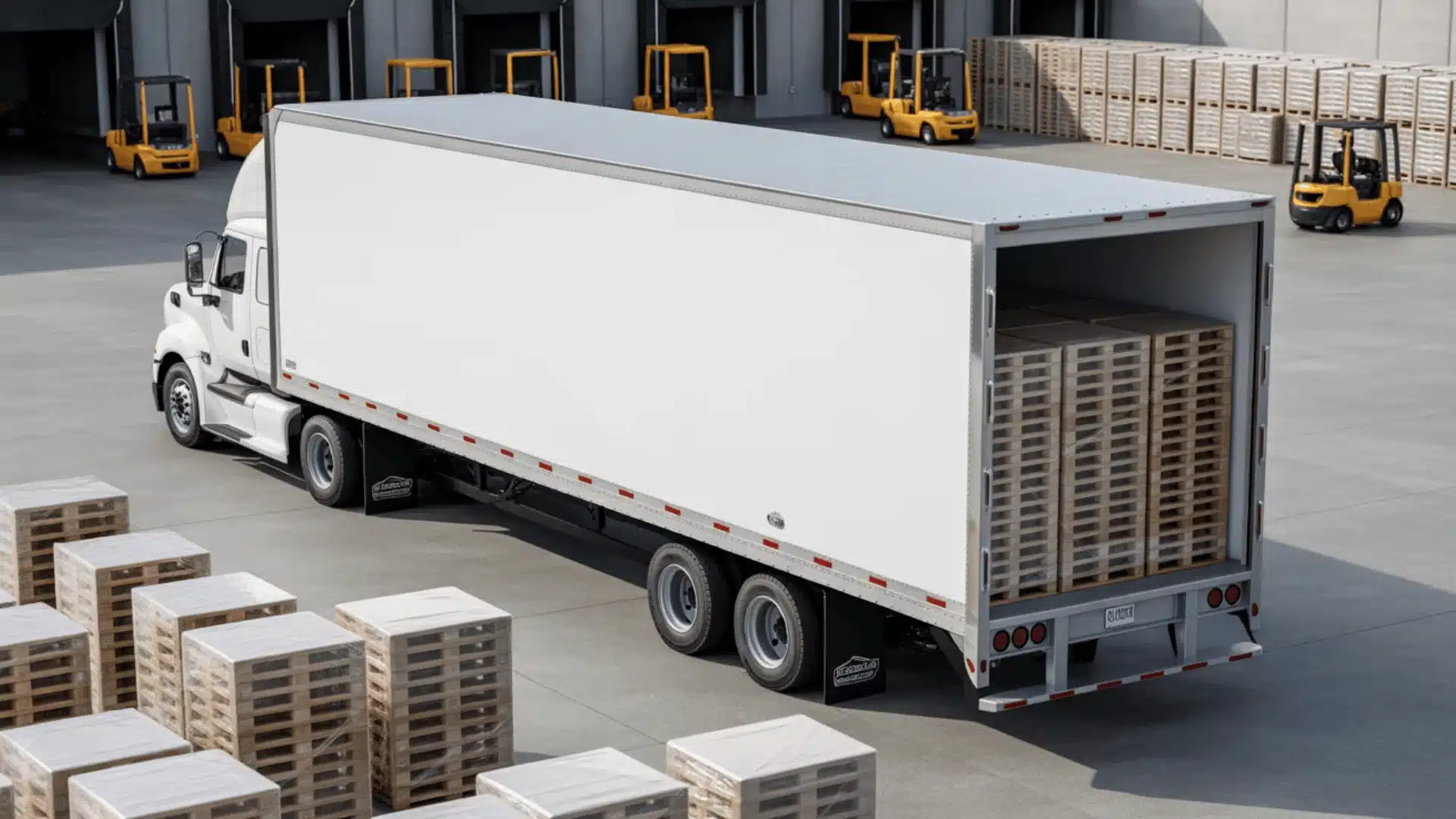
Tractor and dry van trailer on a highway — California New Venture Trucking Insurance from Truck Guard Insurance

A new venture is an authority applicant with no operating history, and the federal half of that first year looks the same in every state. This page is about the California half. Everything below was read at primary source on September 2, 2026, and each figure carries the date it was read, because one of them changes twenty-nine days later and the citation that currently holds it moves on the same day.

California is unusually dense at the state layer and unusually easy to mis-cite. Three of the numbers on this page live somewhere other than where a reasonable reader would look for them: the permit fee is not in the section the Vehicle Code names, the recurring corporate filing is not annual, and the office that reviews your formation document publishes a receipt date rather than a turnaround. None of that is hidden. It is simply arranged in a way that punishes a summary.

Nothing here is a sequence. California makes the grant of one credential conditional on several other things being true, and we say so in those terms. A conjunction of prerequisites is not an order among the prerequisites, and we do not assert one.

A California startup file is thick with state credentials and thin on the assumptions most quotes are built on.

Tell us the equipment, the commodity and whether any load crosses the state line, and we will work out which of these actually reach you.

Start a California quote

One price, one channel, and the schedule prints the channel in its own column

Entity formation runs through the California Secretary of State, and its published fee table for a domestic limited liability company answers two questions in one row. The Articles of Organization are $70.00, read on September 2, 2026.

The second answer is in a column most fee tables do not have. The schedule runs Item, then a column for online submissions, then a column for the equivalent PDF form, then the fee. On the formation row that PDF column reads “Online Only”, which is the schedule’s way of saying no printable form exists for this document. There is no paper price for a California formation because there is no paper route to it, and a packet quoting a mail-in figure for a domestic limited liability company here is quoting something the schedule does not contain.

The neighbouring rows on the same table are worth carrying for calibration, because they are the filings a new venture actually reaches for in its first year. A Certificate of Amendment, form LLC-2, is $30.00. Restated Articles of Organization, form LLC-10, are $30.00. A name reservation is $10.00. A Resignation of Agent for Service of Process is marked Online Only and “No Fee”, and so is a termination.

The termination row carries a notice that a new operator should read even though termination is the last thing on the list. Verbatim: “Full Access Required, Effective July 1, 2026: Terminations must be filed online and require Full Access to your entity within bizfile Online.” The notice continues by telling the reader that Full Access must be established before the action can be completed online. That date has already passed as of this reading, so it describes present practice rather than a scheduled change — but it tells you something about the account structure you are creating on day one and will need control of later.

One access note belongs on the record. The portal where the filing is actually made was not used for these figures; the Secretary of State’s own www.sos.ca.gov site carries the schedule and served it cleanly, and that is where every number in this section came from.

  • Articles of Organization — $70.00, and the schedule’s PDF-form column reads Online Only. Read September 2, 2026.
  • Certificate of Amendment (LLC-2) — $30.00, and a name-change-only amendment is also $30.00. Restated Articles (LLC-10) — $30.00.
  • Name reservation — $10.00.
  • Resignation of Agent for Service of Process — Online Only, no fee.
  • Termination — Online Only, no fee, and gated behind Full Access to the entity since July 1, 2026.

The office publishes the day it has reached, and that is not a waiting time

California does not tell you how long a formation filing takes. It tells you which day’s mail it is currently working on, and the difference matters enough that the page says so in its own column header.

The current processing dates page sets out its table under the sentence “We are reviewing requests received via the following methods on the date indicated:”. That is a backlog frontier. It is the receipt date the office has advanced to, not a promised number of days, and subtracting it from today produces an estimate the Secretary of State has not made.

Read on September 2, 2026 the limited liability company rows were: Formations and Registrations — Online 08/31/2026, In Person 08/27/2026, Mail 08/26/2026. Amendments — 08/31/2026, 08/27/2026, 08/26/2026. Terminations — 09/01/2026, 08/27/2026, 08/26/2026. Statements of Information — 08/31/2026, 08/26/2026, 08/26/2026. The page carried a “Last updated: September 2, 2026” stamp on the day it was read.

Two notes on how those figures were obtained, because they bear on whether you can reproduce them. The address most often cited for this page redirects: a request for the processing-times path returns a permanent redirect to the processing-dates path, and it is the second one that should be written down. And the page ships a superseded copy of its whole table set inside an HTML comment — a four-column version, including a filing method the office no longer offers, with every cell dated 2021. Because it is commented out it does not render, so a person reading the page sees only current figures; a tool that parses the markup can pick up the wrong table with nothing looking wrong. The dates above are from the rendered table.

The page also states its own limits, and we quote rather than paraphrase them: “Processing dates vary depending on the type of request submitted, how the request is submitted, and when the request is received by the California Secretary of State’s office”, and “As significantly more requests are submitted at the end of the fiscal and calendar years, the processing time for all requests takes longer.”

  • The column header is a receipt frontier: “We are reviewing requests received via the following methods on the date indicated:”.
  • Formations and Registrations on September 2, 2026 — online 08/31/2026; in person 08/27/2026; mail 08/26/2026.
  • Statements of Information — online 08/31/2026; in person and mail 08/26/2026.
  • The processing-times address redirects to processing-dates; cite the second.
  • A superseded 2021 copy of the table sits in the page markup inside an HTML comment and does not render.
  • None of these dates is a turnaround, and none of them should be subtracted into one.

Buying a completion time costs several times what the filing itself costs

Where the ordinary queue is a frontier, the expedited queue is a guarantee with a price, and California publishes four of them on its service options page. All four were read on September 2, 2026.

The 24-Hour Filing Service, Class C, is $350.00, available online or by drop-off in Sacramento, with the guarantee stated by example: “Filing response guaranteed within 24 hours (e.g., submitted Wednesday at 11:00 a.m., filing confirmation or filing response available Thursday by 11:00 a.m.), excluding weekends and holidays.”

The Same Day Filing Service, Class B, is $750.00, and it carries a receipt cutoff rather than a duration: “The document must be received by the Secretary of State by 9:30 a.m., and a filing confirmation or filing response will be available the same day by 4:00 p.m.”

Two drop-off-only services complete the ladder. The 4-Hour Filing Service, Class A, is $500.00 and is conditional in a way the others are not — “A document must be precleared and approved to be eligible for the 4-Hour Filing Service.” The 24-Hour Preclearance Service is itself $500.00. A carrier that wants the four-hour tier is therefore buying two services, not one.

A drop-off also attracts a $15 special handling fee “applicable for each filing request”, and the page states what it does not touch: “The special handling fee does not apply to Statements of Information, Statements by Common Interest Development Association, or any request submitted online or by mail.”

Put beside the $70.00 filing fee, the arithmetic is stark. The cheapest guarantee costs five times the document it accelerates. For a one-truck venture with no fixed start date, the ordinary queue at a five-day frontier is usually the better trade; for one with a contract that begins on a named Monday, it is not.

  • 24-Hour Filing Service (Class C) — $350.00, online or Sacramento drop-off.
  • Same Day Filing Service (Class B) — $750.00, document in by 9:30 a.m., response by 4:00 p.m.
  • 4-Hour Filing Service (Class A) — $500.00, drop-off only, and only for a document already precleared.
  • 24-Hour Preclearance Service — $500.00, drop-off only.
  • Drop-off special handling — $15 per filing request; it does not apply to online or mail requests, or to Statements of Information.

New venture pricing turns on the operation, not on how thick the state file is.

Send the equipment list, the radius, the commodity and whether any load leaves California, and we will fit the state-specific pieces into the submission.

Get a California quote

The person who receives your lawsuits has a different title here than in your paperwork

California requires the office almost every other state calls a registered agent, and calls it something else. The distinction is not cosmetic: the phrase controls which form you file, which fee applies and which statute governs the appointment.

California Corporations Code 17701.13 provides that a limited liability company “shall designate and continuously maintain in this state both of the following: (1) An office, which need not be a place of its activity in this state. (2) An agent for service of process.” Subsection (c) governs who may serve, verbatim: “An agent for service of process of a limited liability company or foreign limited liability company shall be an individual who is a resident of this state or a corporation that has complied with Section 1505 and whose capacity to act as an agent has not terminated. If a limited liability company or foreign limited liability company designates a corporation as its agent for service of process in an instrument filed with the Secretary of State, no address for that agent for service of process shall be set forth in that instrument.”

That last clause is a drafting detail with a practical consequence. If the appointee is a corporate agent that has filed under section 1505, the entity does not put an address in the instrument at all; if the appointee is an individual, the residency requirement bites and the address goes in. One choice changes what the filing looks like.

Subsection (b) extends the same duty to a foreign limited liability company holding a certificate of registration: it “shall designate and continuously maintain in this state an agent for service of process.” The word doing the work is “continuously”. This is not a one-time appointment; it is a standing condition, and the Secretary of State publishes a Resignation of Agent for Service of Process filing precisely because agents do resign.

The reason to insist on the terminology is search failure. A new operator looking for the California registered agent form finds guidance written for other states; the California instrument, and the fee row for changing it, are indexed under the phrase the Corporations Code actually uses.

  • The statutory office is an agent for service of process, not a registered agent.
  • An individual agent must be a resident of this state.
  • A corporate agent must have complied with Corporations Code section 1505, and then no address is set out in the instrument.
  • A foreign limited liability company must designate and continuously maintain one.
  • The resignation filing is published at no fee, which tells you the office turns over.

The corporate filing that keeps you in good standing lands every second year, not every year

This is the single most mis-stated California fact in startup guidance, and it costs money in both directions — an operator who budgets annually overpays in attention, and one who assumes it is annual for the wrong reason can miss the first deadline entirely, because the first one is not on an annual clock at all.

The filing is the Statement of Information, form LLC-12. The Secretary of State fee table states the duty and the price in one row, verbatim: “Statement of Information: Due within 90 days of initial registration and every two years thereafter. | Online Only | $20.00”. Both parts of that sentence matter. The first filing is keyed to registration and falls due inside ninety days; every filing after it is biennial.

The same row carries a companion document — “Attachment to Statement of Information: Use if the limited liability company has more than one manager or member” — which is the case for most ventures with a partner, and which is easy to omit from a first filing.

There is a second recurring obligation and it belongs to a different agency, a different filing and a different cadence. A California limited liability company also answers to the Franchise Tax Board on an annual basis. We flag it because a page that describes only the Secretary of State’s biennial filing leaves an operator believing the state wants something from them once every two years, which is not true. No Franchise Tax Board figure is stated here, because no Franchise Tax Board page was opened in this reading, and a number we did not read at its own source does not go on this page.

The practical shape of the first year, then, is one $70.00 formation, one $20.00 Statement of Information inside ninety days, and a separate tax relationship that runs on its own calendar.

  • Statement of Information (LLC-12) — $20.00, Online Only.
  • First filing due within 90 days of initial registration.
  • Every filing after that is due every two years, not every year.
  • An Attachment is required where the company has more than one manager or member.
  • The Franchise Tax Board obligation is annual, separate, and no figure for it is asserted here.

Three statutory charges add up to the one number on the renewal notice

California charges a motor carrier of property an annual permit fee, and the amount is not a single line item. It is three separate statutory components banded by fleet size, and knowing that they are three is what lets you check the total instead of accepting it.

Revenue and Taxation Code 7236(a)(1) states the structure: “For-hire motor carriers of property shall pay, according to the schedule in subdivision (c), fees indicated as the safety fee, Carrier Inspection Fee, and uniform business license tax fee, based on the size of their motor vehicle fleet.”

Subdivision (c)(1) is the schedule. At the smallest fleet size — one commercial vehicle — the three components read $60 safety fee, $60 uniform business license tax, and $130 carrier inspection fee. For a single-truck for-hire operation that is $250.00 a year, due on initial application and again on each annual renewal. Read September 2, 2026.

The Department of Motor Vehicles publishes the same total from the opposite direction, and the agreement between the two is the cross-check. The permit application and the department’s own motor carrier permit handbook both print a full-year intrastate chart giving, at fleet size 1, base fees of $120, a carrier inspection fee of $130, and a total of $250, with the footnote that base fees include the safety fee and the uniform business license tax. Sixty and sixty make the hundred and twenty.

The for-hire and private figures are not the same, and a new venture should know which side of the line it sits on before comparing quotes. At fleet size 1 a private carrier pays $35 in base fees against the same $130 inspection fee, for $165. The for-hire premium is $85 a year.

One hedge belongs beside the schedule rather than under it, because it limits how far the codified table can be trusted as a price. Subdivision (h) of the same section directs the department to readjust the carrier inspection fee every five years, beginning July 1, 2017 and every five years thereafter. The $130 component is therefore a statutory figure subject to a periodic administrative adjustment, and the department chart is where to confirm what is actually being charged. On September 2, 2026 the chart and the codified table agreed.

A shorter-term option exists in the same subdivision for an operation that does not run twelve months. Subdivision (c)(1) provides for a seasonal permit valid “for a period of not less than six months”, renewable “upon payment of a five-dollar ($5) fee” together with a monthly fraction of the uniform business license tax; the department prices a six-month seasonal permit for one vehicle at the $130 inspection fee plus $90.

  • Safety fee — $60 at fleet size 1.
  • Uniform business license tax — $60 at fleet size 1.
  • Carrier inspection fee — $130 at fleet size 1.
  • For-hire total for one power unit — $250.00, on application and on each annual renewal. Read September 2, 2026.
  • Private carriage at fleet size 1 — $165.00, an $85 difference.
  • Seasonal permit — not less than six months, $5 to renew plus a monthly fraction of the license tax.
  • Subdivision (h) requires the carrier inspection fee to be readjusted every five years from July 1, 2017.

The section the Vehicle Code names for that fee contains no dollar figures

This is a finding rather than a description, and it is the reason the previous section had to be assembled from two sources.

Vehicle Code 34621(a) provides that “The fee required by Section 7232 of the Revenue and Taxation Code shall be paid to the department upon initial application for a motor carrier permit and for annual renewal.” A reader following that pointer arrives at Revenue and Taxation Code 7232, which opens by confirming that a fee is owed — “Every motor carrier of property shall annually pay a permit fee to the Department of Motor Vehicles” — and closes subdivision (a) with the statement that the fee “shall be based on the number of commercial motor vehicles operated in California by the motor carrier of property.”

Then it moves on to subdivision (b). Section 7232 as published carries no fee table, no ladder and no dollar sign anywhere in it, and subdivision (e) compounds the problem by referring back to “the fees set forth in subdivision (a)” — fees that subdivision (a) describes but does not state. The section was read from the Legislature’s own site, from that site’s print view, and from a second publisher, and all three render it the same way.

The operative schedule is at 7236(c)(1), four sections later, and nothing in 7232 says so. Anyone who reads the cited section and stops has read a genuine, current, correctly identified statute and come away with no number. Anyone who reads only the department’s chart has the total without knowing it is three components banded by fleet size, and therefore cannot tell whether a renewal notice is right.

We state the chain rather than the conclusion because the chain is the usable part. The Vehicle Code names 7232; 7232 describes the charge; 7236 sets the amount; the department’s chart totals it. All four were read on September 2, 2026.

  • Vehicle Code 34621(a) points at Revenue and Taxation Code 7232 for the fee.
  • Section 7232 states that a fee is owed and that it varies with vehicle count. It states no amount.
  • Subdivision (e) of 7232 refers to “the fees set forth in subdivision (a)”, which sets out none.
  • The schedule that governs is 7236(c)(1).
  • The department chart and the statutory schedule agree at $250 for one for-hire power unit.

Being late is priced as a percentage, and for a first permit the clock can start at a citation

Most annual fees carry a flat late charge. California carries a proportional one, written into the statute itself, and it escalates with the length of the delay rather than with the number of notices.

Revenue and Taxation Code 7236(d) provides: “(1) For a delinquency period of more than 30 days and less than one year, the penalty is 60 percent of the required fee. (2) For a delinquency period of one to two years, the penalty is 80 percent. (3) For a delinquency period of more than two years, the penalty is 160 percent.”

Applied to the $250 for-hire figure, a delinquency of two months adds $150; of eighteen months, $200; of three years, $400. Those are arithmetic on the statutory percentages, not separate published figures.

There is a second edge that applies specifically to a venture that started operating before it was permitted. The department’s motor carrier permit handbook states that delinquency commences from the date of citation for an original application. An operator who ran unpermitted, was stopped, and then applied is not treated as filing a first application on the day the paperwork arrives; the delinquency period is measured from the citation.

One protection runs the other way and is worth knowing about because it is invisible unless you look for it. Subdivision (c)(2) provides that, except for the carrier inspection fee, motor carriers of property with ten or fewer trucks shall not pay fees higher than they would have paid under the fee schedule applicable as of January 1, 1996. A small fleet therefore sits under a statutory ceiling that was fixed thirty years ago and that the schedule cannot rise above for it.

A separate, flat charge exists for reinstatement after suspension. Vehicle Code 34623.5 sets it at $150.

  • More than 30 days and under a year late — 60 percent of the fee.
  • One to two years — 80 percent.
  • More than two years — 160 percent.
  • For an original application, delinquency runs from the date of citation.
  • Ten or fewer trucks — a statutory ceiling pegged to the schedule in force on January 1, 1996, except for the inspection fee.
  • Reinstatement after suspension — $150 under Vehicle Code 34623.5.

Counting the vehicles that drive the fee runs through a definition with a limb that has no weight in it

The permit fee is banded by the number of commercial motor vehicles operated in California. Which of your vehicles count is decided by a definition that reaches further down than a weight-first reader expects.

Revenue and Taxation Code 7232(d) provides, verbatim, that “commercial motor vehicle” means “any self-propelled vehicle listed in subdivisions (a), (b), (f), (g), and (k) of Section 34500 of the Vehicle Code, any motor truck of two or more axles that is more than 10,000 pounds gross vehicle weight rating, and any other motor vehicle used to transport property for compensation.”

Read the three limbs separately. The first is a cross-reference to a list of vehicle classes. The second is a weight test, and its floor is 10,001 pounds — well below the fifteen-to-twenty-six-thousand-pound band a light freight venture usually occupies, which means an operator who has confirmed the equipment is under twenty-six thousand pounds has established nothing about this charge. The third limb has no weight in it at all: any other motor vehicle used to transport property for compensation. For-hire status is itself sufficient.

Two figures of 26,001 pounds do appear in the same subsection, and both of them sit inside exclusions rather than thresholds. The definition does not include “two-axle daily rental trucks with gross vehicle weight ratings less than 26,001 pounds when operated in noncommercial use”, nor a motor truck or two-axle truck trailer “operated in noncommercial use” under that rating and used solely to tow a camp trailer, trailer coach, fifth wheel travel trailer or utility trailer. Both carve-outs depend on noncommercial use, so neither is available to a freight operation. Reading either as a threshold on the charge inverts what the section says.

The excluded classes that do bite are narrow and specific: vehicles operated by household goods carriers as defined in the Public Utilities Code, and pickup trucks as defined in Vehicle Code section 471.

Subdivision (e) then tells you what counting means: “The ‘number of commercial motor vehicles operated by the motor carrier of property’ as used in this section means all of the commercial motor vehicles owned, registered to, or leased by the carrier.” Leased units count. A venture that leases its second truck has a fleet of two for banding purposes.

  • Weight limb — a motor truck of two or more axles over 10,000 pounds gross vehicle weight rating.
  • Catch-all limb — any other motor vehicle used to transport property for compensation, with no weight stated.
  • Class limb — vehicles listed in Vehicle Code 34500(a), (b), (f), (g) and (k).
  • The two 26,001 pound figures in the subsection are inside noncommercial-use exclusions, not thresholds.
  • Counting includes vehicles owned, registered to, or leased by the carrier.

This charge stops at the state line in the direction most of them do not

State motor carrier taxes are usually instruments of interstate commerce — a fuel-use agreement, an apportioned registration, a reciprocity arrangement. California’s is the mirror image, and a new venture planning its first year should know which side of that line its work falls on.

Revenue and Taxation Code 7232(g)(1) provides that “Fees contained in this chapter shall not apply to a motor carrier of property while engaged solely in interstate or foreign transportation of property by motor vehicle.” A carrier whose every load crosses a state line is outside the charge entirely.

The chapter that houses it says the same thing in its caption. Revenue and Taxation Code Division 2, Part 1.55 is headed “Motor Carriers of Property Permit Fee” and runs from section 7231 to 7236, keyed by 7232(a) to the permit act in Vehicle Code Division 14.85. It is a permit charge on intrastate carriage, not a distance tax and not a fuel tax.

Mixed operations are handled by apportionment rather than by an all-or-nothing test. Subdivision (e) provides that “For interstate and foreign motor carriers of property the fees set forth in subdivision (a) shall be apportioned based on the percentage of fleet miles traveled in California in intrastate commerce.” The measure is the intrastate share of California miles.

The same subdivision (g)(1) also directs an interstate carrier to register under the federal Unified Carrier Registration Act with the Department of Motor Vehicles or with its base registration state, which is the hinge between this section and the next one on this page.

The planning consequence is concrete. A venture that intends to run interstate from day one and never take an intrastate load has no exposure to this fee. A venture that takes one intrastate backhaul a month does, on the apportioned share.

  • The fee does not apply to a carrier engaged solely in interstate or foreign transportation.
  • Mixed operations apportion on the percentage of California fleet miles run in intrastate commerce.
  • The chapter is Revenue and Taxation Code Part 1.55, sections 7231 to 7236.
  • It is a permit charge, not a fuel tax and not a weight-distance tax.
  • Interstate carriers are pointed to the federal registration instead.

Nine dollars more from October, under a section number that will not be the same one

California is a participating state in the Unified Carrier Registration plan; that was read on the plan’s own participating states list on September 2, 2026. The administering agency here is the Department of Motor Vehicles — not the transportation department and not the utilities commission, which is a common mis-assignment for a state whose transport regulation is split across three bodies.

The fee is not California’s to set. It is fixed nationally by the Unified Carrier Registration Plan board and adopted by federal rule, and California collects it.

For a one- or two-truck venture the practical answer is short. Register in September and the bracket costs $46.00. Register in October and the same bracket costs $55.00. Neither figure is wrong; the date is the operative fact.

  • Scheduled — $55.00, effective October 1, 2026, for registration year 2027 and subsequent years.
  • Authority — FMCSA final rule 91 FR 56063, published September 1, 2026, Docket FMCSA-2025-0655, RIN 2126-AC72.
  • The whole ladder moves: $138 to $167, $276 to $333, $963 to $1,163, $4,592 to $5,548, $44,836 to $54,165.
  • The California collecting agency is the Department of Motor Vehicles.

Apportioned registration is stated here as a duty owed on the way out of the state

Most jurisdictions describe apportioned registration by reciting the plan’s definition of an apportionable vehicle. California describes it as something you must have before you leave, which changes where a reader has to look for the threshold.

The Department of Motor Vehicles motor carrier services material states it this way: “Most California based commercial vehicles operating at a gross vehicle weight (GVW) or combined gross weight (CGW) of 26,001 pounds or more must have either IRP registration or alternative commercial trip permits from the appropriate foreign jurisdictions when operating outside California. Vehicles weighing 26,000 pounds or less and operating strictly interstate may be exempt from IRP or temporary commercial trip permits under reciprocal agreements.”

Two hedges in that passage are load-bearing and we carry them rather than smoothing them out. “Most” is not “all”. And “may be exempt” is not “are exempt” — the relief for lighter equipment is described as available under reciprocal agreements, which means it depends on the jurisdictions actually being entered.

Now the part that matters for a light combination, and it is a scoped negative rather than a conclusion. Elsewhere in this network of rules the plan’s definition reaches a vehicle with three or more axles regardless of weight, and several states recite that limb in their own published material. California’s own pages, as read on September 2, 2026, state the weight prong and do not recite the axle prong. We therefore do not assert that California publishes an axle route into the fifteen-to-twenty-six-thousand-pound band, and we do not assert that no such route exists — only that the California text read here does not contain it.

The department also runs a remote-processing program for carriers that qualify, described as allowing qualified businesses to process apportioned registration transactions remotely. That is an access convenience rather than a threshold.

  • The department states the duty at 26,001 pounds gross or combined gross weight, for operation outside California.
  • Lighter vehicles operating strictly interstate “may be exempt” under reciprocal agreements — a conditional, not a rule.
  • The word “most” qualifies the whole sentence and is carried here deliberately.
  • The three-or-more-axles limb is not recited in the California material read on September 2, 2026.
  • That is a limit on what was read, not a finding that no such provision exists.

The federal audit program does not arrive here through an adoption clause, because there is no adoption clause

The federal new entrant safety assurance program is the defining experience of a first year under interstate authority. Whether anything of that shape reaches a purely intrastate California carrier turns on a question that is usually answered by reading an incorporation-by-reference list. California does not have one.

Vehicle Code 34501(a)(1) provides that “The department shall adopt reasonable rules and regulations that, in the judgment of the department, are designed to promote the safe operation of vehicles described in Section 34500, regarding, but not limited to, controlled substances and alcohol testing of drivers by motor carriers, hours of service of drivers, equipment, fuel containers, fueling operations, inspection, maintenance, recordkeeping, accident reports, and drawbridges.”

That is a grant of power to write rules, not an adoption of federal ones. The California Highway Patrol writes its own intrastate motor carrier safety text, and in at least one place that text expressly displaces the federal provision rather than importing it. Title 13 of the California Code of Regulations, section 1213(a)(4), read on September 2, 2026, opens by setting the federal provision aside — “Notwithstanding Title 49, CFR, Section 395.20(a)” — and then sends the reader to state law in its place: “intrastate drivers, as defined by Section 1201 of this chapter, shall comply with hours-of-service regulations pursuant to Section 1212 and 1212.5, of this chapter.” Its own history line records an amendment filed October 30, 2023 and operative January 1, 2024, at Register 2023, No. 44.

That subdivision is also a citation hazard, and it is worth flagging because the wrong version reads perfectly plausibly. At least one widely surfaced mirror of the California regulations is frozen at an August 2014 update, and its text for the same subdivision is not a displacement at all but a deeming provision about interstate drivers. Two documents at one citation say opposite things. The one carrying a 2023 history line is the current one.

The consequence for a startup is that a search for “Part 385” in California law returns nothing because there is nothing to return, and the absence is structural rather than an omission. There is no state-adopted new entrant safety assurance program, no state-adopted twelve-month audit deadline, and no incorporated federal edition to be frozen or rolling.

What California has instead is a terminal inspection regime, and it is not a clock. It is the subject of the next section.

  • Vehicle Code 34501(a)(1) grants rulemaking power; it does not incorporate the federal parts by reference.
  • 13 CCR 1213(a)(4) displaces 49 CFR 395.20(a) for intrastate drivers; amended October 30, 2023, operative January 1, 2024.
  • No new entrant safety assurance program is extended to intrastate California carriage.
  • There is no frozen federal edition for intrastate safety here, because there is no incorporation to freeze.
  • A mirror of the regulations frozen at 2014 serves a different and opposite text at the same citation.

Selection for a terminal inspection runs on performance data, and a carrier nobody has visited is near the front of the queue

California substitutes a terminal inspection program for the audit shape other states import, and the substitution changes the timing question completely. There is no deadline to miss; there is a priority list to be near the top of.

Vehicle Code 34501.12(c)(2) provides that the department “shall establish a performance-based truck terminal inspection selection priority system”, incorporating “methodologies consistent with those used by the Federal Motor Carrier Safety Administration, including those related to the quantitative analysis of safety-related motor carrier performance data … in categories, including, but not limited to, driver fatigue, driver fitness, vehicle maintenance, and controlled substances and alcohol use.”

The nearest thing California has to a new-entrant trigger sits in the same subdivision and is a priority rather than a deadline: the department “shall prioritize for selection those motor carrier terminals never previously inspected by the department, those identified by the inspection priority selection system, and those terminals operating vehicles listed in subdivision (g) of Section 34500.” A carrier that has never been inspected is, by that sentence, prioritized. Nothing read imposes a twelve-month or any other clock.

How much of the fleet gets looked at is tabulated. Subdivision (b)(1) sets the sample by fleet size: a fleet of one or two is inspected in full; three to eight yields three vehicles; nine to fifteen, four; sixteen to twenty-five, six; twenty-six to fifty, nine; fifty-one to ninety, fourteen; ninety-one or more, twenty — applied separately to power units and to trailers. A one-truck venture has a sample size of everything it owns.

The failure path has its own clocks. An unsatisfactory rating brings a reinspection “within 120 days after the issuance of the unsatisfactory compliance rating”. A carrier has five business days to request review of an unsatisfactory rating and the department is to evaluate the request within ten business days. And failing to make vehicles and records available on request produces the unsatisfactory rating on its own.

One date belongs in a diary rather than a file, and it reads as worse news than it is. Subdivision (j) provides that the section “shall remain in effect only until January 1, 2031, and as of that date is repealed, unless a later enacted statute, that is enacted before January 1, 2031, deletes or extends that date.” Read alone that looks like the program expiring. It is not. A successor version of the same section was enacted alongside it by the same 2025 chapter and becomes operative on January 1, 2031, carrying the same body with one change in its opening subdivision, which drops the agricultural-vehicle exclusion. What happens on that date is a version handoff, and a page describing it as a sunset would be promising a carrier relief that is not coming.

  • Selection is performance-based, not periodic.
  • Terminals never previously inspected are expressly prioritized.
  • Sample size — a fleet of one or two is inspected in full; the ladder rises to twenty vehicles at ninety-one or more.
  • An unsatisfactory rating triggers reinspection within 120 days.
  • Five business days to request review; ten business days for the department to evaluate it.
  • January 1, 2031 is a version handoff — the current section is repealed and a successor enacted by the same chapter becomes operative that day.

Two enrolment certifications are application content, and the subsections they point at do not contain the enrolment rule

Two of the things a California permit application must contain have no federal twin at the point of registration, and both are certifications rather than approvals — you certify enrolment, you do not wait for a decision.

Vehicle Code 34621(b)(8) requires “Carrier certification of enrollment in the biennial inspection of terminals (BIT) program under subdivisions (e) and (h) of Section 34501.12, unless otherwise exempted.” Paragraph (b)(9) requires “Carrier certification of enrollment in a controlled substance and alcohol use and testing (CSAT) program required under Section 34520, unless otherwise exempted.”

Two defects sit in that cross-reference, and we record what we read rather than a legal conclusion about it. The first is a name disagreement between two live sections. Section 34621(b)(8) calls the program “the biennial inspection of terminals (BIT) program”. Section 34501.12(i) — the subdivision that actually names it — reads “This section shall be known, and may be cited, as the Basic Inspection of Terminals program or BIT program.” Both texts were current when read. Because the selection mechanism in 34501.12(c)(2) is performance-based, the defining section’s word is the operative one, and there is no two-year cycle to report to anybody.

The second is a pointer that does not land. Both 34620(a) and 34621(b)(8) condition the permit on “subdivisions (e) and (h) of Section 34501.12”. Read at source, subdivision (e) is the prohibition on contracting with a non-compliant motor carrier together with its written certification requirement, and subdivision (h) directs the department to publish performance-based inspection completion data for public review. Neither is an enrolment provision. A packet asserting that (e) and (h) are the enrolment subdivisions is asserting something the current text does not say. Section 34621 was last amended in 2019; the section it points into has been amended since.

There is a jurisdictional split behind all of this that explains why the paperwork feels disjointed. Vehicle Code 34623(a) gives the Highway Patrol exclusive jurisdiction over the regulation of safety of operation of motor carriers of property, while the Department of Motor Vehicles issues the permit. The safety certification is made to one agency and enforced by another.

  • Paragraph (b)(8) — certification of enrolment in the terminal inspection program.
  • Paragraph (b)(9) — certification of enrolment in a controlled substance and alcohol use and testing program under section 34520.
  • The two sections disagree on the program’s name: “biennial” in 34621(b)(8), “Basic” in the defining section 34501.12(i).
  • Subdivisions (e) and (h) of 34501.12, as read, are a contracting prohibition and a data-publication duty. Neither is an enrolment provision.
  • The Highway Patrol holds exclusive safety jurisdiction; the Department of Motor Vehicles issues the permit.

Many conditions converge on a single act, and the statute never says which comes first

California carries the strongest set of prerequisites of any state layer on this network, which makes it the state where the temptation to write a numbered list is greatest and where doing so would be most wrong.

The department’s duty to issue is conditional on a set of things being true: registration of the carrier identification number, the filing of proof of financial responsibility, compliance with a further named section, the two enrolment certifications where the carrier is listed, and payment of the fee. Vehicle Code 34630(a) independently bars the grant of a permit until proof of financial responsibility is filed.

Read carefully, that is a conjunction of prerequisites attached to one act, not an order among the prerequisites themselves. Nothing in the text read says that the identification number must be registered before the insurance is filed, or that either must precede the fee. Presenting them as steps one through five would assert a sequence the statute does not impose, and the assertion would be wrong in the specific sense that a carrier who did them in a different order would still be entitled to the permit.

One genuine time relationship does exist and runs after issuance rather than before it. Vehicle Code 34621(c) lets a carrier continue to operate for thirty days past the expiration date of its permit, but only where four conditions all hold: it applied for renewal before expiry; it holds a valid permit for the previous year; it maintains carrier identification compliance for those thirty days; and it is not rated unsatisfactory for any of its terminals inspected by the Highway Patrol under the terminal inspection or testing sections for the thirty days past expiration.

That last condition is the one that surprises people. The grace period is contingent on a safety rating, so a carrier with an unsatisfactory terminal rating does not get the thirty days at all — the same fact that produces an inspection problem also removes the cushion that would have absorbed a late renewal.

  • The prerequisites are a set attached to one act of issuance, not a sequence among themselves.
  • Proof of financial responsibility must be on file before the permit is granted.
  • The fee must be paid; the enrolment certifications are application content.
  • A thirty-day post-expiry grace exists under 34621(c) and depends on four conditions holding together.
  • One of those four is the absence of an unsatisfactory terminal rating.

The permit itself, its limits and its cancellation clock live on a neighbouring page

Three of the largest questions a California carrier asks are handled in detail on our California hot shot page rather than repeated here, and the separation is deliberate.

The permit requirement itself — who must hold one, on what trigger, and the unusual provision that also binds the person who hires you — is set out there. So are the liability limits, including the combined single limit that governs a light combination and the narrower figure that does not, and the certificate mechanics: who files, the notice period an insurer must give before cancellation, and what happens to the permit on the day coverage lapses.

If you are working out whether California requires something of you before you begin, the California hot shot cell is the page to read next. It carries that analysis with the sections quoted in full.

What this page covers is the layer that sits around the permit: forming the entity, the charge the permit costs and how that charge is built, which of your vehicles the charge counts, the federal registration California collects but does not price, apportioned registration, and the federal safety machinery California did not adopt. Restating the permit analysis here would add length without adding anything a reader could act on.

  • The permit requirement, its trigger and the contracting provision — on the hot shot page.
  • The liability limits and which one reaches a light combination — on the hot shot page.
  • Certificate filing, the insurer notice period and the suspension mechanics — on the hot shot page.
  • Formation, the fee build, vehicle counting, the federal registration, apportioned registration and the absent adoption — here.

Four calendar entries, one of which changes a citation rather than a cost

Several numbers above have a date attached that changes them, and collecting those dates is more useful than repeating the numbers.

January 1, 2031 is the other, and it is a change of text rather than the loss of one. The terminal inspection section as it now reads is repealed that day, and a successor version enacted by the same 2025 chapter becomes operative in its place with a narrower opening subdivision. A citation to the current section stops matching the operative text, without the program itself going anywhere.

July 1, 2026 has already passed and is recorded because its effect is present: termination filings must be made online and require Full Access to the entity within the Secretary of State’s filing system.

The processing dates carry a different kind of date. They are a receipt frontier that moves daily, so the figures above describe September 2, 2026 and nothing else.

Every remaining figure here was taken from its own source on September 2, 2026. None of them carried a scheduled change in the text we read. That is a statement about what the text said, not an assurance that no change is coming.

  • October 1, 2026 — bracket B1 of the national registration rises from $46.00 to $55.00.
  • October 1, 2026 — the federal section numbers holding those tables are redesignated.
  • January 1, 2031 — the current text of Vehicle Code 34501.12 is replaced by an already-enacted successor version.
  • July 1, 2026 — already in force; terminations are online-only and require Full Access.
  • The processing dates are a frontier that moves daily and describe September 2, 2026 only.
  • All figures read at primary source September 2, 2026.

Unified Carrier Registration: the fee changes on October 1, 2026

Unified Carrier Registration is federal in structure and collected by the participating states, so the fee is the same wherever a carrier registers and no state sets it. It is changing, and both figures are current for their own period.

For the 2026 registration year, bracket B1 — an exempt or non-exempt motor carrier, motor private carrier or freight forwarder operating zero to two commercial motor vehicles — is $46.00 per entity. From October 1, 2026, for the 2027 registration year and each subsequent year, that bracket is $55.00 per entity, under FMCSA final rule 91 FR 56063, published September 1, 2026. The larger fleet brackets rise on the same date; the full schedule is in the rule rather than restated here.

One trap is worth naming, because no ordinary check catches it. The same rule renumbers the sections: it redesignates the current 49 CFR §367.50 as §367.40 and adds a new §367.50 carrying the 2027 table. Until October 1, 2026 the citation “49 CFR 367.50” names the $46 schedule; from that date the identical citation names the $55 schedule, and the section carries no repeal marker to signal the change. A document citing §367.50 for $46 becomes wrong without being edited.

UCR figures read at the Federal Register on September 2, 2026.

Coverage lines a California new venture account usually carries

The state minimum is a licensing threshold. The program an operator actually needs is built from these lines:

  • Trucking Auto Liability — Primary liability coverage for bodily injury and property damage caused by your truck while under dispatch.
  • Physical Damage — Collision and comprehensive coverage for the tractor, trailer, and attached equipment you own or finance.
  • Motor Truck Cargo — Coverage for the freight you haul against loss or damage in transit.
  • Trailer Interchange — Coverage for non-owned trailers you pull under written interchange agreements.
  • General Liability — Coverage for premises and operations liability away from the truck — terminal yards, customer docks, and non-driving exposures.
  • Workers Compensation — Statutory coverage for driver and yard-employee injury, structured for trucking payrolls and interstate operations.
  • Non-Trucking (Bobtail) Auto Liability — Liability coverage for the tractor when operated off-dispatch — bobtailing home or running personal errands.
  • Pollution Liability — Coverage for cargo-related pollution events and upset/overturn spills not covered by standard auto liability.

Why Truck Guard Insurance for a California new venture account

We write new ventures as a named class rather than as an unpriced version of an established fleet, and we read each account against the state layer the operator actually meets rather than against the federal floor alone. For a California operator that means starting from what the state does and does not require of a carrier with no operating history, separating the credentials the state issues from the ones it merely asks you to hold, and treating the absence of a filing regime as a fact about the submission rather than a gap in it.

If the operation also runs freight under separate authority, the California trucking insurance page covers the state’s broader motor carrier picture, and the new venture trucking insurance page covers the class mechanics that apply wherever the operator runs.

California new venture trucking insurance questions

What does it actually cost to form a limited liability company in California?

The Articles of Organization are $70.00, and the Secretary of State’s fee table marks the method as Online Only — there is no paper price for this document. A Statement of Information follows within ninety days at $20.00. Both figures were read on the agency’s own schedule on September 2, 2026.

How long will the Secretary of State take to process my formation?

The office does not publish a turnaround. It publishes the receipt date it has reached, under the header “We are reviewing requests received via the following methods on the date indicated:”. On September 2, 2026 online formations were being reviewed at an August 31 frontier, in person at August 27 and mail at August 26. Subtracting those into a number of days produces an estimate the agency has not made.

Is the California annual report really biennial?

For a limited liability company, yes. The filing is the Statement of Information, and the fee table states the cadence in the row itself: due within ninety days of initial registration and every two years thereafter, at $20.00. A separate annual obligation runs to the Franchise Tax Board — a different agency and a different filing, and no figure for it is stated on this page because no Franchise Tax Board page was opened in this reading.

How much is the California motor carrier permit fee for one truck?

For a for-hire operation with one commercial vehicle it is $250.00, on initial application and on each annual renewal. That is three statutory components under Revenue and Taxation Code 7236(c)(1): a $60 safety fee, a $60 uniform business license tax and a $130 carrier inspection fee. Private carriage at the same fleet size is $165.00. Read September 2, 2026.

Why does the code section cited for the permit fee have no numbers in it?

Because the fee schedule is somewhere else. Vehicle Code 34621(a) points at Revenue and Taxation Code 7232, and section 7232 as published states that a fee is owed and that it varies with vehicle count, but contains no dollar figure anywhere. The operative schedule is at 7236(c)(1). The section was read from the Legislature’s own site, its print view and a second publisher, and all three render it the same way.

What happens if I pay the California permit fee late?

The penalty is proportional and escalates. Revenue and Taxation Code 7236(d) sets it at 60 percent of the required fee for a delinquency of more than thirty days and less than a year, 80 percent for one to two years, and 160 percent beyond two years. For an original application the department states that delinquency commences from the date of citation, so an operator who ran unpermitted and was stopped does not start the clock on the day the application is filed.

My combination is under 26,000 pounds. Does the California permit fee still reach it?

The weight is not the whole test. Revenue and Taxation Code 7232(d) defines a commercial motor vehicle by three alternatives: a listed vehicle class, a motor truck of two or more axles over 10,000 pounds gross vehicle weight rating, and any other motor vehicle used to transport property for compensation. The second limb has a floor of 10,001 pounds and the third has no weight in it at all.

I only run interstate. Do I owe the California permit fee?

Revenue and Taxation Code 7232(g)(1) provides that the fees do not apply to a motor carrier of property while engaged solely in interstate or foreign transportation. Mixed operations do not escape it; subdivision (e) apportions the fee on the percentage of California fleet miles run in intrastate commerce.

Does the federal new entrant safety audit reach a purely intrastate California carrier?

Not through any adoption clause, because California has none. Vehicle Code 34501(a)(1) grants the Highway Patrol power to write its own rules rather than incorporating the federal parts by reference, and the state hours-of-service regulation expressly displaces 49 CFR 395.20(a) for intrastate drivers. There is no state-adopted new entrant program and no incorporated federal edition to be frozen.

Is there a deadline for a California terminal inspection after I start?

No deadline was found. Vehicle Code 34501.12(c)(2) establishes a performance-based selection priority system and directs the department to prioritize terminals never previously inspected, which puts a new carrier near the front of a queue rather than on a clock. A fleet of one or two vehicles is inspected in full when selected. On January 1, 2031 the current section is replaced by a successor version already enacted by the same 2025 chapter, which is a change of text rather than the end of the program.

Does California impose an order on the steps of starting a carrier?

Not in the text read. The department’s duty to issue is conditional on several things being true together — the carrier identification number, the insurance filing, the enrolment certifications where applicable, and payment of the fee — but nothing says which must be done first. That is a set of prerequisites attached to one act, and no numbered order is asserted here.

Sources

Every figure on this page was read at the source below on September 2, 2026, with the effective date of the version read. Treat each as current as of that date rather than as permanent.

Get a California new venture trucking insurance quote

Send the equipment list, the operating radius and the commodity, and tell us the date authority was granted. We will size the program against the first year the operation will actually have rather than against a statutory floor.

Start a quote Call 317-942-0549