Motor carrier classes by state

Delaware new venture trucking insurance for first-year motor carriers

Delaware does not license freight carriers, so a new venture here expects a short list. What it actually meets is a chain: an annual tax that decides good standing, good standing that decides whether the Division of Motor Vehicles will open an account, and an insurance rule on the DMV’s own checklist that rules out two whole segments of the market a startup is most likely to be quoted from.

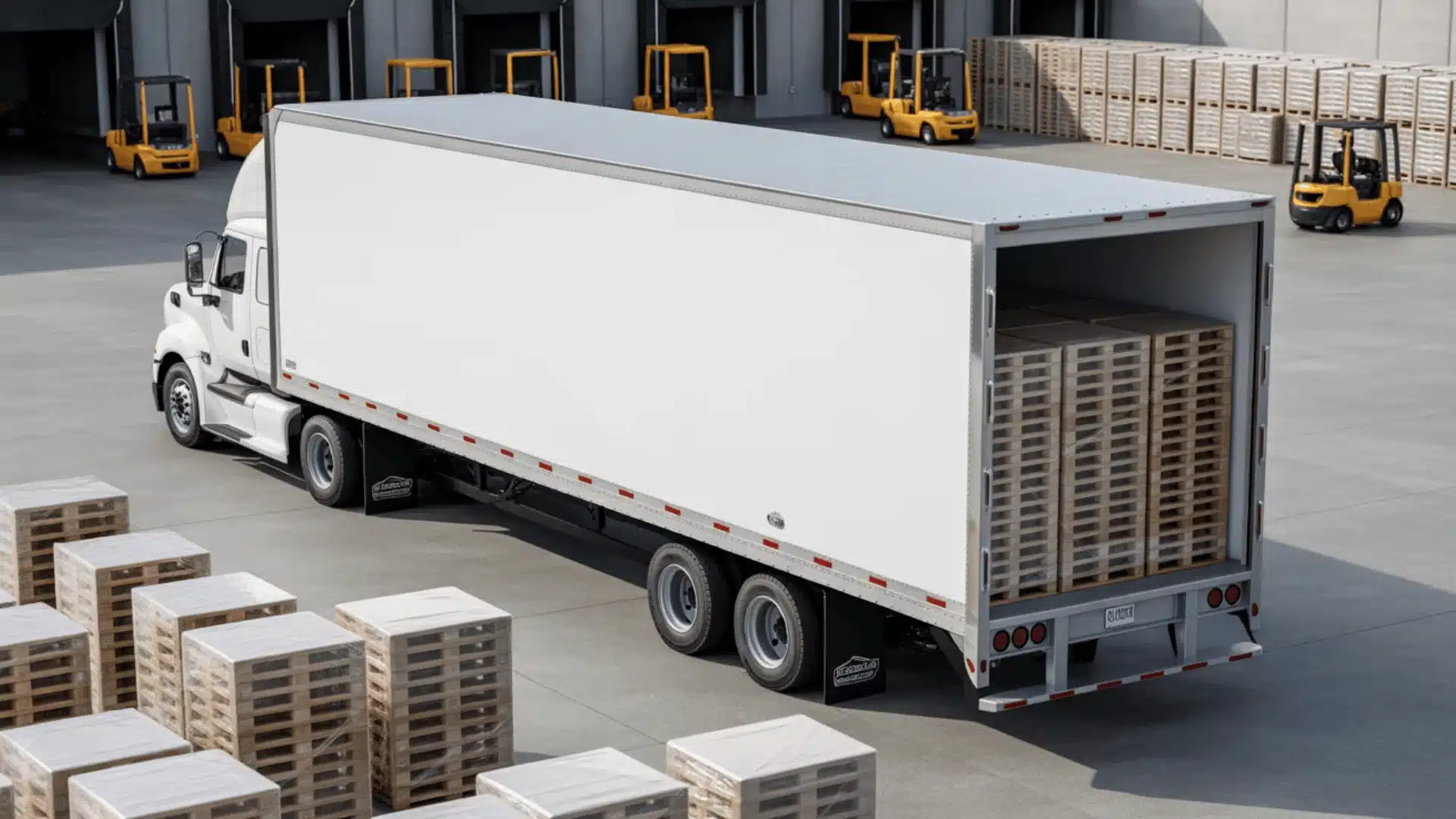
Tractor and dry van trailer on a highway — Delaware New Venture Trucking Insurance from Truck Guard Insurance

The general problem of insuring a brand-new authority — no loss history, no experience credit, a book of business that does not exist yet — is set out on the type page rather than repeated here. See new venture trucking insurance.

Delaware’s specific contribution begins with a document that is not a statute at all. The Division of Motor Vehicles publishes a “New Carrier Application/Checklist — IRP/IFTA”, dated 4/24/2026 in its own footer, and that checklist is where the real ordering lives. Nothing in the Delaware Code read this run conditions one startup step on another. The checklist does, and it does so in terms.

The single most consequential line on it, for a new venture shopping coverage, is this one: “Risk Retention Group or Surplus Lines insurance is not accepted for proof of insurance.” That is a genuine constraint on the market a startup can buy from, imposed by the credentialing agency rather than by an insurance regulator, and it is the sort of rule that is discovered at the worst possible moment.

The second is quieter and compounds annually. Delaware charges a limited liability company an annual tax rather than an annual report fee, and the statute attaches a consequence to non-payment that reaches well past the Division of Corporations. Both chains are traced below, from the statutory text on one end to the DMV counter on the other.

Been quoted by a risk retention group or on a surplus lines basis for a Delaware operation? The DMV checklist says that paper will not be accepted as proof of insurance when you go to open the motor carrier account, and the account cannot even be scheduled without it.

Send us the entity name, where the trucks are physically kept, and the registered weight of each unit. We will tell you what the DMV will accept before anything is bound.

Start a Delaware quote

Four hundred dollars on June 1, and what stops being true if it is not paid

Delaware does not ask a limited liability company for an annual report. It asks for money. 6 Del. C. §18-1107(b) provides: “Every domestic limited liability company and every foreign limited liability company registered to do business in the State of Delaware shall pay an annual tax, for the use of the State of Delaware, in the amount of $400.”

Subsection (c) fixes the date and the interest. The tax “shall be due and payable on the first day of June following the close of the calendar year or upon the cancellation of a certificate of formation”, and “If the annual tax remains unpaid after the due date, the tax shall bear interest at the rate of 1½% for each month or portion thereof until fully paid.” Subsection (e) adds a flat penalty on top: an entity that neglects, refuses or fails to pay by June 1 “shall pay the sum of $200”.

Subsection (d) is a small mercy and a trap at once. The Secretary of State must, “at least 60 days prior to June 1 of each year”, mail an annual statement — but it goes “in care of its registered agent in the State of Delaware”. A new venture that appointed an agent, never checked in, and let the correspondence sit will have been notified in the eyes of the statute.

The consequence that actually matters to a carrier is in subsection (h), and it is stated in a single line: “A domestic limited liability company that neglects, refuses or fails to pay the annual tax when due shall cease to be in good standing as a domestic limited liability company.” Not dissolved, not canceled — subsection (k) is explicit that the company “shall remain a domestic limited liability company formed under this chapter”. It simply stops being in good standing.

Two further effects sharpen it. Under subsection (k) the Secretary of State “shall not accept for filing any certificate” for an entity in arrears and “shall not issue any certificate of good standing”. Under subsection (l) the company “may not maintain any action, suit or proceeding in any court of the State of Delaware” until restored. And under §18-1108(a), if the tax goes unpaid “for a period of 3 years from the date it is due”, the certificate of formation is canceled outright on the third anniversary.

Restoration is straightforward and unforgiving in equal measure: subsection (i) restores good standing “upon the payment of the annual tax and all penalties and interest thereon for each year” missed. Nothing is forgiven for a first offence and there is no proration for a company that formed in November.

  • 6 Del. C. §18-1107(b): the annual tax is $400 for a domestic LLC; $100 per registered series.
  • §18-1107(c): due June 1 following the close of the calendar year, then interest at “1½% for each month or portion thereof”.
  • §18-1107(e): a further “$200” where the tax is not paid on or before June 1.
  • §18-1107(h): the company “shall cease to be in good standing” — while §18-1107(k) confirms it remains an LLC.
  • §18-1108(a): unpaid for three years, and the certificate of formation is canceled on the third anniversary of the due date.
  • All read at delcode.delaware.gov on September 3, 2026, verified against the in-body chapter heading.

The DMV will not schedule an appointment until four separate things are true

The Delaware Division of Motor Vehicles does not simply take an application for an IRP or IFTA account. It reviews a documents package first, and its checklist says so at the top: “Once we have reviewed and accepted all required documents below, we will contact you to schedule an appointment”. Everything on that list is therefore upstream of the credential, by agency practice rather than by statute.

Corporate good standing is one of the items, and this is where the previous section lands. The checklist reads: “If your legal business structure type is anything other than a Sole Proprieter, the company must be in Good Standings with the Division of Corporations.” An LLC that missed the June 1 tax has, by §18-1107(h), ceased to be in good standing — and has therefore failed a DMV requirement without anyone at the DMV needing to look at a truck.

A Delaware business license is the second. The checklist requires an “Active or Temporary Delaware Division of Revenue business license” and adds that “Temporary licenses are valid for 60 days.” The governing rate is in the Code rather than on the checklist: 30 Del. C. §2301(a)(7) sets it at “Drayperson or mover, $75”, and defines the term as including “every person operating a business of transporting for profit tangible personal property of other persons.” Section 2301(a) adds “$25 for each additional branch or business location”.

Unified Carrier Registration is the third, listed simply as “Unified Carrier Registration paid for current year”. Proof of insurance is the fourth, and its wording is unambiguous about sequence: “Proof of Insurance will be required before an appointment is scheduled”.

It is worth being precise about what kind of ordering this is. Read in full this run, 2 Del. C. ch. 18, 30 Del. C. ch. 52, 30 Del. C. §2301 and 21 Del. C. §§4701–4704 contain no provision conditioning one startup credential on another. The sequence above is real, it is published, and it will stop an application — but it is an agency intake practice on a form dated 4/24/2026, and calling it Delaware law would be wrong.

  • The DMV contacts an applicant to schedule only “Once we have reviewed and accepted all required documents”.
  • Good standing with the Division of Corporations is required for any structure other than a sole proprietorship.
  • An “Active or Temporary” Division of Revenue business license is required; temporary licenses “are valid for 60 days.”
  • 30 Del. C. §2301(a)(7): the drayperson or mover license rate is $75, plus $25 for each additional location.
  • “Proof of Insurance will be required before an appointment is scheduled” — quoted verbatim from the checklist.
  • No statute read this run imposes this order; the checklist does.

Two whole classes of paper the counter will not take

The insurance requirements on the DMV checklist are more specific than most states publish, and two of them will decide which quotes a Delaware startup can actually use.

The exclusion comes first: “Risk Retention Group or Surplus Lines insurance is not accepted for proof of insurance.” For a new venture that is a significant narrowing. Operations with no loss history are frequently quoted by exactly those markets, and a carrier that binds on that basis will arrive at the appointment with paper the Division will not take.

The positive requirements are equally exact. The checklist calls for an “Original Insurance Card - with Delaware issued property & casualty policy only, expiration not more than 12 months, NAIC listed, complete and accurate vin number, card must list Delaware.” Four separate conditions are packed into that sentence: the policy must be Delaware-issued, the term no longer than twelve months, the insurer NAIC-listed, and the vehicle identification number both complete and correct on the card.

Identity matching is the third layer: “Name on the insurance card matches both title name and account name.” This is the requirement that catches an operator who titled the truck personally before forming the company. The checklist addresses that case directly — “If your title is assigned in your personal name AND there is a lien on the title AND the account is being set up in an LLC or INC, both your personal name and business name must appear on the insurance card.”

One structural point separates Delaware from states that operate a filing regime. This is a presented original card, examined at a counter — not a certificate filed by an insurer with a regulator. There is no Form E or Form H analogue for Delaware property carriage on any page read this run. The obligation runs to the carrier producing a document, not to the insurer transmitting one, and the practical consequence is that nobody upstream will catch a defect before the appointment does.

  • Quoted verbatim: “Risk Retention Group or Surplus Lines insurance is not accepted for proof of insurance.”
  • The card must evidence a “Delaware issued property & casualty policy only”, with expiration “not more than 12 months”, an NAIC-listed insurer, and a complete and accurate VIN.
  • The name on the card must match both the title name and the account name.
  • Personal title plus a lien plus an LLC account: both the personal and business names must appear on the card.
  • Delaware presents a card; it does not take an insurer-filed certificate for property carriage on anything read this run.

Formed the LLC last year and not thought about June 1 since? If the $400 went unpaid, the company has ceased to be in good standing by statute — and good standing is a line item on the DMV checklist before a motor carrier appointment can even be scheduled.

Give us the entity’s formation date, the Delaware physical address, and the axle count on each unit. We will map which of these Delaware layers you are actually inside.

Get a Delaware quote

Three axles puts a truck inside the road tax with no weight test to argue about

Delaware runs a motor carrier road tax of its own, and it lives somewhere a reader would not think to look. 30 Del. C. ch. 51, titled Motor Fuel Tax, contains four subchapters — Gasoline, Special Fuel, State Aid to Municipalities for Streets, and Aviation Jet Fuel — and no motor carrier subchapter at all. The carrier tax is in the next chapter over.

30 Del. C. ch. 52, the Motor Carriers Fuel Purchase Law, states the charge at §5203: “Every motor carrier shall pay a road tax equivalent to the rate per gallon of the Delaware liquid fuels tax which is currently in effect, calculated on the amount of motor fuel used in its operations on highways within this State.” Section 5204 gives a credit for Delaware fuel tax already paid at the pump, so the mechanism captures fuel burned in Delaware rather than fuel bought there.

Reach is set by the definition at §5202(5), which captures a vehicle used, designed or maintained to carry persons or property and then offers three alternative tests. Limb a is a two-axle test, satisfied by a registered weight above 26,000 pounds. Limb c is a combination test, satisfied when the coupled weight passes the same figure. Limb b sits between them and is the one this section is about: it reaches a vehicle “Having 3 or more axles regardless of weight”.

Limb b is the one to read twice. It contains no weight element whatsoever. A three-axle power unit registered at 18,000 or 24,000 pounds is a “motor vehicle” for this chapter and is inside the road tax, while a two-axle unit at the same weight is outside it. The distinction is drawn on axle count, not on scale weight, and a new venture choosing between configurations is choosing between tax regimes without necessarily realizing it.

The marker is the visible half of the obligation. Section 5211(a) requires the Department of Transportation to provide “an identification marker and registration card to every motor vehicle operated within this State by the motor carrier”, at “a fee of $5.00 each”, issued “on a 12-month basis effective January 1 of each year”. It also provides an escape valve: for a period “not exceeding 72 hours”, the Department may authorize operation without the marker, and “The fee for this authorization shall be $15 for each motor vehicle.”

A drafting quirk in §5202(5) is worth noting for anyone comparing Delaware to the interstate agreements. The definition is captioned “Motor vehicle”, but its closing sentence reads “Qualified motor vehicle does not include recreational vehicles” — borrowing the IFTA term. The same three-limb structure, including the axle limb, appears in Delaware’s IRP and IFTA materials, which is why the axle prong shows up repeatedly across otherwise unrelated Delaware credentials.

  • The carrier tax is in 30 Del. C. ch. 52, not ch. 51 — ch. 51 has no motor carrier subchapter.
  • 30 Del. C. §5202(5)b brings in any vehicle “Having 3 or more axles regardless of weight”.
  • §5203 pegs the road tax to the Delaware liquid fuels rate on fuel used on Delaware highways; §5204 credits tax already paid at the pump.
  • §5211(a): identification marker and registration card at “$5.00 each”, on a 12-month basis effective January 1.
  • §5211(a) also: a 72-hour authorization to run without the marker at “$15 for each motor vehicle”.
  • Read in full at delcode.delaware.gov on September 3, 2026.

The gross-receipts fee bites intrastate hauls and lets interstate ones through

The $75 drayperson license is the visible part of Delaware’s business license. The part that scales with the business is in 30 Del. C. §2301(d), and it treats interstate and intrastate revenue completely differently.

Subsection (d)(1) imposes, in addition to the license fee, “a license fee at the rate of 0.3983% of the aggregate gross receipts paid to such person attributable to activities licensable under this chapter”, payable monthly “on or before the twentieth day of each month”. Against that there is “a deduction of $100,000” each month, and the statute adds that “all branches or entities comprising an enterprise with common ownership or common direction and control shall be allowed only 1 monthly deduction”.

Subsection (d)(2) moves a smaller business to quarterly filing. Where taxable gross receipts during the lookback period “do not exceed the applicable threshold of $1,500,000”, the return and payment are due “on or before the last day of the first month following the close of the quarter”, and the deduction becomes “$300,000” per quarter. The statute notes that this threshold “is subject to annual adjustment as more fully set forth in § 515 of this title”, which is a hedge worth carrying rather than resolving.

Then subsection (g) does something unusual and directly relevant to a trucking startup: “The additional license fee imposed by subsection (d) of this section shall not apply to those receipts of draypersons or movers if such receipts are derived from interstate transports”. The percentage fee reaches intrastate hauling revenue and expressly does not reach interstate hauling revenue.

For a new venture the consequence is concrete rather than theoretical. Two Delaware carriers of identical size can face materially different Delaware license obligations purely on the interstate–intrastate mix of their freight, and the split is drawn by the statute rather than by an apportionment formula. It is also a reason to keep that split documented from the first month rather than reconstructing it later.

For most first-year operations the monthly $100,000 deduction, or the quarterly $300,000, will absorb the fee entirely. The obligation to be aware of is therefore less the payment than the classification: knowing which receipts are interstate, and being able to show it.

  • 30 Del. C. §2301(d)(1): 0.3983% of aggregate gross receipts, payable by the twentieth of each month, with a $100,000 monthly deduction.
  • §2301(d)(2): quarterly filing where lookback taxable gross receipts do not exceed $1,500,000, with a $300,000 quarterly deduction.
  • The statute’s own hedge: that threshold “is subject to annual adjustment as more fully set forth in § 515 of this title.”
  • §2301(g): the subsection (d) fee does not apply to drayperson or mover receipts “derived from interstate transports”.
  • One monthly or quarterly deduction per enterprise under common ownership or common direction and control — not one per branch.

Delaware is a base state twice over, and neither role costs a startup anything extra

Delaware appears on the UCR Plan’s participating-states list, read at the source on September 3, 2026, and it appears in the Plan’s base-state hierarchy in two distinct capacities. Both are worth separating because they answer different questions.

The first is the ordinary one. The Plan’s FAQ provides that “If your principal place of business state as completed in Section 1 of the form is AK, AL, AR, CA, CO, CT, DE, GA, …” — the list continues through the participating states — “you must use that state as your base state.” Delaware is on it, and the verb is “must”. A Delaware-based interstate carrier has no election to make: it registers through Delaware.

The second is less obvious. Delaware also appears among the states an operator based elsewhere may choose. The FAQ provides that where a principal place of business is in “DC, MD, NJ or VT or the Canadian Province of ON, NB, NL, NS, PE, or QC”, the registrant “may select one of the following states: CT, DE, MA, ME, NH, NY, PA, RI, VA, or WV.” Delaware is a designated base state for carriers headquartered across a good deal of the mid-Atlantic and eastern Canada.

The practical point for a new venture is what does not follow from any of this. The Plan states that base state has no bearing on cost: the fee level “for a fleet of a given size will stay the same.” Delaware’s dual role is an administrative fact, not a rate advantage, and an operator should not select or relocate on the strength of it.

The Delaware side of the obligation shows up not in a Delaware office but on the DMV checklist, which lists “Unified Carrier Registration paid for current year” among the documents that must be accepted before an appointment is scheduled, and points the applicant to the national payment page. On the pages read this run, no Delaware agency is named as the administrator of the program; the state’s own materials route the applicant to the national system. That gap is recorded rather than filled.

The boundary is the usual one and it is easy to get wrong in Delaware precisely because the state licenses no freight authority. UCR reaches interstate operation. A carrier working only inside Delaware pays no UCR fee — but still meets the business license, the good-standing requirement and, above 26,000 pounds or on three axles, the road tax marker.

  • Delaware sits among the forty-one entries on the Plan’s roster, checked September 3, 2026.
  • A Delaware-based registrant “must use that state as your base state” — no election.
  • Delaware is also selectable by registrants based in DC, MD, NJ, VT and several eastern Canadian provinces.
  • The Plan’s own words on whether the choice matters: the fee level “for a fleet of a given size will stay the same.”
  • UNVERIFIED: which Delaware agency administers UCR. The DMV checklist and the state’s contacts page route to the national system instead.

A physical Delaware address, two envelopes, and an inspection the federal one will not satisfy

Three more checklist requirements are strict enough to reshape how a Delaware operation is set up, and none of them is obvious from the statute book.

The first is presence. The checklist requires two proofs of mail “from 2 different sources”, each envelope “postmarked date stamped not more 60 days”, and states the standard in terms: “The physical address must be the physical location in Delaware that must be owned or leased to the business”, followed by “No virtual offices, shared offcies or agent offices will be accepted”. The Division also excludes “Solicitations/junk mail or mail marked Pre-Paid or Bulk” from counting as proof.

That rule sits alongside a parallel one in the Code, aimed at a different problem but pointing the same way. 6 Del. C. §18-104(e)(2) provides that “A registered agent may not perform its duties or functions solely through the use of a virtual office, the retention by the agent of a mail forwarding service, or both.” Delaware’s reputation as a formation state does not extend to letting a motor carrier operate from a mailbox.

The second is a driving license. The checklist requires “A color copy of your valid Delaware driver’s license”, and specifies who must hold it: “Required for at least one: Sole Member, Member, Sole Proprieter, President, Partner.” One principal with a Delaware license, not merely a Delaware entity.

The third is an inspection, and its wording forecloses the obvious workaround: “Delaware Division of Motor Vehicles safety inspection. Must list tare/unladen weight on the report. Federal DOT inspections are NOT acceptable. Inspections can be obtained at any Delaware DMV- no appointment needed.” A current federal periodic inspection does not satisfy it. The report must also carry the tare weight, which is why it cannot simply be a pass certificate.

One more document is worth flagging because it is easy to leave until too late. Registering above 26,000 pounds triggers the checklist’s reference to “Proof of Manufacturers Gross Vehicle Weight Rating (MGVWR) Title 21§ 2105”, under which “Every person applying to register a vehicle at a registered gross vehicle weight in excess of 26,000 pounds shall provide to the Department … documentation of the manufacturer’s gross vehicle weight rating for such vehicle.” Where the plate is missing and no documentation can be obtained, the checklist states that the DMV “shall assign a MGVWR for the vehicle based on the federal bridge formula” — an assignment the operator does not control.

  • Two proofs of mail from two different sources, each postmarked within 60 days; junk, pre-paid and bulk mail excluded.
  • Quoted verbatim: “No virtual offices, shared offcies or agent offices will be accepted”.
  • 6 Del. C. §18-104(e)(2) bars a registered agent from operating solely by virtual office or mail forwarding.
  • A color copy of a valid Delaware driver’s license for at least one principal.
  • A Delaware DMV safety inspection listing tare weight — “Federal DOT inspections are NOT acceptable.”
  • Above 26,000 lb registered weight, documentary proof of the manufacturer’s GVWR under 21 Del. C. §2105, or the DMV assigns one.

Bonding at entry, and the two Delaware bonds that do not reach a freight startup

Bonding is a common first-year worry and in Delaware it is largely misplaced, though for reasons that need stating precisely rather than waving away.

On the fuel-tax side the answer is published and unambiguous. The Delaware IFTA Manual states: “Bonds are not required of first-time applicants.” It then sets out when one can arise later — “A bond may be required when a carrier fails to file a timely report, when tax has not been remitted, or when an audit indicates severe problems” — and how it is sized: “Security required is a $500.00 minimum or twice the amount of the liability, whichever is greater.” So the bond is a consequence of conduct, not a cost of entry.

The manual also carries the credential detail that a startup budgets for instead. Decals are issued per qualified vehicle, two per set, and the manual’s own order line reads “Number of decal sets @ $5.00 per set”.

The second bond a reader might expect is in the public carrier chapter, and it does not reach freight. 2 Del. C. §1802(e)(1)b allows that “the Department may require that an applicant post a bond to secure its performance for the first 2 years of its operation in this State” — a genuine new-entrant bonding power, and one confined to the passenger side. The chapter’s certification duty attaches only to a “public carrier” as defined at §1801(5), an enumeration of passenger modes that does not include the carriage of freight.

No property-carrier bond was located in any Delaware chapter read this run — 2 Del. C. ch. 18 in full, 30 Del. C. ch. 52 in full, 30 Del. C. §2301 and 21 Del. C. §§4701–4704. That is a negative reported on the strength of having read the chapters where such a requirement would live, which is a different and stronger claim than not having found one.

One live gap remains and is recorded rather than papered over. Specific dollar amounts for intrastate property financial responsibility above 26,000 pounds were not stated on any Delaware source read this run, and whether Delaware runs an intrastate new entrant audit distinct from the federal program was likewise not established. Both are left as unread.

  • Delaware IFTA Manual, quoted: “Bonds are not required of first-time applicants.”
  • Where one is later required: “a $500.00 minimum or twice the amount of the liability, whichever is greater.”
  • IFTA decals are ordered by the set — “Number of decal sets @ $5.00 per set”.
  • The two-year new-entrant bonding power at 2 Del. C. §1802(e)(1)b is a passenger-side power and does not reach property carriage.
  • UNVERIFIED: intrastate property financial-responsibility dollar amounts above 26,000 lb, and whether Delaware runs its own intrastate new entrant audit.

Unified Carrier Registration: the fee changes on October 1, 2026

Unified Carrier Registration is federal in structure and collected by the participating states, so the fee is the same wherever a carrier registers and no state sets it. It is changing, and both figures are current for their own period.

For the 2026 registration year, bracket B1 — an exempt or non-exempt motor carrier, motor private carrier or freight forwarder operating zero to two commercial motor vehicles — is $46.00 per entity. From October 1, 2026, for the 2027 registration year and each subsequent year, that bracket is $55.00 per entity, under FMCSA final rule 91 FR 56063, published September 1, 2026. The larger fleet brackets rise on the same date; the full schedule is in the rule rather than restated here.

One trap is worth naming, because no ordinary check catches it. The same rule renumbers the sections: it redesignates the current 49 CFR §367.50 as §367.40 and adds a new §367.50 carrying the 2027 table. Until October 1, 2026 the citation “49 CFR 367.50” names the $46 schedule; from that date the identical citation names the $55 schedule, and the section carries no repeal marker to signal the change. A document citing §367.50 for $46 becomes wrong without being edited.

UCR figures read at the Federal Register on September 2, 2026.

Coverage lines a Delaware new venture account usually carries

The state minimum is a licensing threshold. The program an operator actually needs is built from these lines:

  • Trucking Auto Liability — Primary liability coverage for bodily injury and property damage caused by your truck while under dispatch.
  • Physical Damage — Collision and comprehensive coverage for the tractor, trailer, and attached equipment you own or finance.
  • Motor Truck Cargo — Coverage for the freight you haul against loss or damage in transit.
  • Trailer Interchange — Coverage for non-owned trailers you pull under written interchange agreements.
  • General Liability — Coverage for premises and operations liability away from the truck — terminal yards, customer docks, and non-driving exposures.
  • Workers Compensation — Statutory coverage for driver and yard-employee injury, structured for trucking payrolls and interstate operations.
  • Non-Trucking (Bobtail) Auto Liability — Liability coverage for the tractor when operated off-dispatch — bobtailing home or running personal errands.
  • Pollution Liability — Coverage for cargo-related pollution events and upset/overturn spills not covered by standard auto liability.

Why Truck Guard Insurance for a Delaware new venture account

We write new ventures as a named class rather than as an unpriced version of an established fleet, and we read each account against the state layer the operator actually meets rather than against the federal floor alone. For a Delaware operator that means starting from what the state does and does not require of a carrier with no operating history, separating the credentials the state issues from the ones it merely asks you to hold, and treating the absence of a filing regime as a fact about the submission rather than a gap in it.

If the operation also runs freight under separate authority, the Delaware trucking insurance page covers the state’s broader motor carrier picture, and the new venture trucking insurance page covers the class mechanics that apply wherever the operator runs.

Delaware new venture trucking insurance questions

Does a Delaware LLC file an annual report?

No. It pays an annual tax instead. 6 Del. C. §18-1107(b) sets it at $400 for a domestic LLC, due June 1 following the close of the calendar year under subsection (c), with interest at “1½% for each month or portion thereof” and a further $200 under subsection (e) if it is late.

What actually happens if I miss the Delaware June 1 tax?

By §18-1107(h) the company “shall cease to be in good standing”. It remains an LLC under subsection (k), but the Secretary of State will not accept filings for it or issue a certificate of good standing, and under subsection (l) it cannot maintain an action in a Delaware court until restored. If the tax stays unpaid for three years, §18-1108(a) cancels the certificate of formation on the third anniversary of the due date.

Why would an unpaid Delaware franchise tax stop me getting an apportioned plate?

Because the DMV checks it. The Division’s New Carrier Application/Checklist requires that any structure other than a sole proprietorship “must be in Good Standings with the Division of Corporations”, and the Division will only contact an applicant to schedule an appointment once all required documents have been reviewed and accepted.

Will Delaware accept a surplus lines or risk retention group policy?

Not as proof of insurance at the motor carrier counter. The DMV checklist states: “Risk Retention Group or Surplus Lines insurance is not accepted for proof of insurance.” It also requires an original card evidencing a Delaware-issued property and casualty policy, with an expiration not more than twelve months out, an NAIC-listed insurer, and a complete and accurate VIN.

Does Delaware require an operating authority for intrastate freight?

No state property-carrier authority was found in Title 2. The certification chapter reaches a “public carrier” as defined at 2 Del. C. §1801(5), an enumeration of passenger modes, and freight is absent from it. What Delaware does require of a freight startup is the business license, the DMV motor carrier account and, where the vehicle qualifies, the road tax marker.

My truck weighs well under 26,000 pounds. Am I outside Delaware’s road tax?

Only if it has two axles. 30 Del. C. §5202(5) reaches a vehicle “Having 2 axles and a gross registered vehicle weight exceeding 26,000 pounds”, or “Having 3 or more axles regardless of weight”, or a combination over 26,000 pounds. The three-axle limb carries no weight element at all, so a light three-axle unit is inside the chapter and inside the $5.00 marker requirement.

What does the Delaware business license cost a trucking company?

30 Del. C. §2301(a)(7) sets the drayperson or mover rate at $75, plus $25 for each additional branch or location. On top of that, §2301(d) imposes 0.3983% of aggregate gross receipts, with a $100,000 monthly deduction or a $300,000 quarterly deduction for smaller filers.

Does the Delaware gross-receipts fee apply to my interstate freight?

No. 30 Del. C. §2301(g) provides that the subsection (d) fee “shall not apply to those receipts of draypersons or movers if such receipts are derived from interstate transports”. It reaches intrastate hauling revenue only, which is a reason to document the split from the first month.

Can I run a Delaware motor carrier account from a registered agent’s address?

No. The DMV checklist requires a physical Delaware location “owned or leased to the business” and states that “No virtual offices, shared offcies or agent offices will be accepted”, proven by two envelopes from different sources postmarked within 60 days. Separately, 6 Del. C. §18-104(e)(2) bars a registered agent from performing its functions solely through a virtual office or mail forwarding.

Will a current federal inspection satisfy Delaware?

No. The checklist requires a Delaware Division of Motor Vehicles safety inspection that lists tare or unladen weight, and states plainly that “Federal DOT inspections are NOT acceptable.” Inspections can be obtained at any Delaware DMV without an appointment.

Does Delaware make a first-time carrier post a bond?

Not at entry on the fuel-tax side. The Delaware IFTA Manual states that “Bonds are not required of first-time applicants”, and that a bond may later be required for late filing, unremitted tax or audit findings, at “a $500.00 minimum or twice the amount of the liability, whichever is greater.” The two-year bonding power in the public carrier chapter is a passenger-side power and does not reach freight.

Which state collects UCR for a Delaware carrier?

Delaware itself. The UCR Plan’s FAQ puts Delaware in the group where “you must use that state as your base state”, with no election. Delaware is also one of the states that registrants based in DC, MD, NJ, VT and several eastern Canadian provinces may select. Which Delaware agency administers the program was not established on any page read — the state’s materials route applicants to the national system.

Sources

Every figure on this page was read at the source below on September 3, 2026, with the effective date of the version read. Treat each as current as of that date rather than as permanent.

Get a Delaware new venture trucking insurance quote

Send the equipment list, the operating radius and the commodity, and tell us the date authority was granted. We will size the program against the first year the operation will actually have rather than against a statutory floor.

Start a quote Call 317-942-0549
