Motor carrier classes by state

Utah new venture trucking insurance for first-year motor carriers

Two of the questions a new Utah carrier asks have no Utah answer at all, and the third has one nobody quotes. There is no intrastate property operating authority to apply for and no state insurance filing to make — Utah asks you to hold coverage, not to file proof of it. What Utah does write for itself is a fuel-tax definition, and that definition reaches a vehicle with three or more axles regardless of weight. A small combination that clears no weight threshold in this state can still be a qualified motor vehicle on an axle count alone.

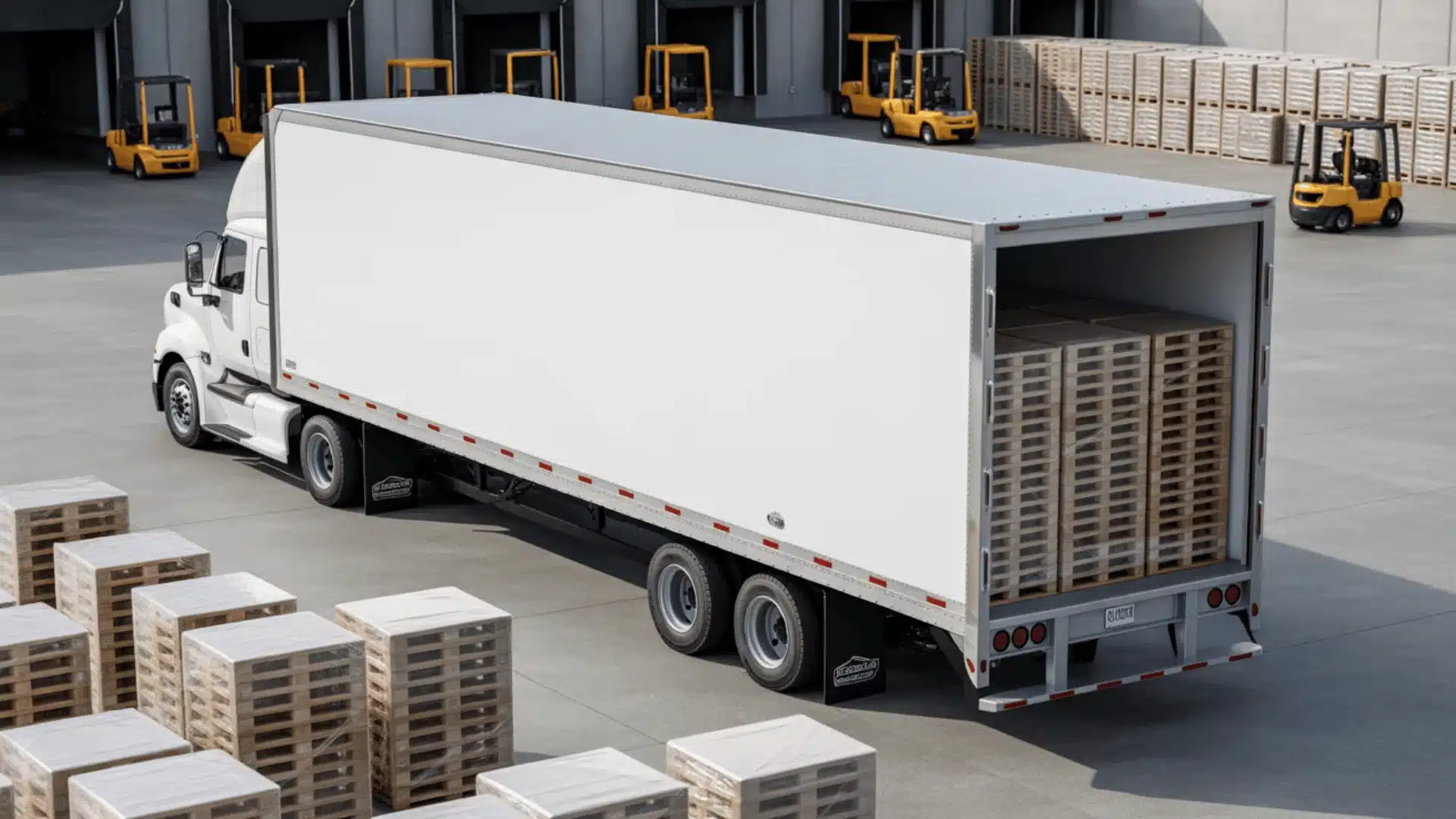
Tractor and dry van trailer on a highway — Utah New Venture Trucking Insurance from Truck Guard Insurance

A new venture is an authority applicant with no operating history, and most of what governs the first year is federal and identical in every state. This page is about the part that is not. Everything below was read at primary source on September 2, 2026, and every figure carries the date it was read, because several of them change on October 1, 2026 — twenty-nine days after this page was researched.

Utah is an unusual starting point for a state page because so much of the usual state layer is absent here. The Transportation Code puts motor carriers in a safety chapter and nowhere else. The Public Utilities title holds no motor carrier chapter at all. What remains is a formation layer, a federal registration Utah participates in, a fuel-tax permit with a definition worth reading closely, a size-and-weight permit regime, and one adoption-by-reference clause whose punctuation decides whether a federal audit program reaches you.

Nothing on this page is a sequence. Utah conditions one thing on another in exactly one place we read, and we state it as the condition the statute states. It does not follow that the state imposes an order on the steps of starting a carrier, and we do not assert one.

A Utah startup file is short on state credentials and long on federal ones, which changes what an underwriter asks for.

Tell us what you are hauling and where, and we will tell you which of these actually touch your operation.

Start a Utah quote

The registered agent requirement outlives the section that proves it

Utah requires a registered agent for a limited liability company, and on September 2, 2026 the two sections that establish it are both live. Both are also scheduled to move in twenty-nine days.

Utah Code 48-3a-201(2) states that a certificate of organization must state “the name of the limited liability company”, “the street and mailing address of the limited liability company’s principal office”, and “the information required by Subsection 16-17-203(1)”. That cross-reference is where the agent requirement lives. Utah Code 16-17-203(1) requires a registered agent filing to state “the name of the represented entity’s commercial registered agent”, or, if the entity has none, “the name and address of the entity’s noncommercial registered agent”, or the title of an office within the entity to which service of process is to be sent, with that person’s business address. Subsection (2) adds that appointing an agent “is an affirmation by the represented entity that the agent has consented to serve as such”.

Here is the part that matters for anyone writing this down. As of September 2, 2026, 48-3a-201 carries the stamp “(Renumbered 10/1/2026)” and 16-17-203 carries “(Repealed 10/1/2026)”, both by Chapter 93 of the 2026 General Session. The neighbouring sections of the same chapter go with them: 16-17-201, on fees, and 16-17-202, on addresses in filings, were fetched on the same day and both read “(Repealed 10/1/2026)”.

The requirement is being recodified, not abolished. An agent will still be required on October 2, 2026. But any document that cites 16-17-203 for Utah will be citing a repealed section from October 1, 2026, and a reader who checks the citation after that date will find nothing where the rule used to be. We state the current status and the scheduled change together because stating only one of them is wrong within the month.

  • Current on September 2, 2026: 48-3a-201 and 16-17-203 are both in force and both establish the requirement.
  • Scheduled October 1, 2026: 48-3a-201 renumbered and amended; 16-17-203 repealed; both by Chapter 93, 2026 General Session.
  • Also repealed the same day: 16-17-201 (fees) and 16-17-202 (addresses in filings).
  • The substantive obligation survives the citation that currently proves it.

What the Division of Corporations charges, and what its own page says about waiting

Entity formation runs through the Utah Division of Corporations and Commercial Code, part of the Department of Commerce. The figures below come from the Division’s published fee schedule, which identifies itself as the “Fiscal Year 2026 Fee Schedule, Effective July 1, 2025”, and were read on September 2, 2026.

A limited liability company certificate of organization is $59. For contrast, a limited liability partnership statement of qualification is $70 — a difference worth knowing only because the two are easy to confuse when a filing service quotes one price for “registering the business”.

The renewal is smaller and annual. A domestic or foreign limited liability company renewal, which the schedule also calls the annual report, is $18. The schedule marks that figure with an asterisk and explains that the asterisked amounts “include a $5 surcharge”, so the underlying fee and the surcharge are not separate line items you will be billed twice for. A late renewal adds $10.

Reinstatement is where the arithmetic changes shape. The schedule provides that “reinstatement filings incur a $18 charge for each year the renewal/annual report filing was missed”, on top of a domestic limited liability company reinstatement fee of $54. A carrier that lapses for three years is therefore looking at the reinstatement fee plus three years of missed renewals, not a single flat charge.

On timing, the Division does not publish a processing-time guarantee, and we quote what it does publish rather than paraphrasing it into one. Its own home page states: “Most filings are instantly processed and approved. All others, please allow 2-4 business days from receipt for processing.” That sentence was read verbatim on September 2, 2026. It is a description of typical behavior, not a commitment, and it is the only timing statement the Division makes.

  • LLC certificate of organization — $59 (FY2026 schedule, effective July 1, 2025; read September 2, 2026).
  • LLC renewal / annual report — $18, a figure that includes a $5 surcharge.
  • Late renewal — $10.
  • Domestic LLC reinstatement — $54, plus $18 for each year a renewal was missed.
  • Timing, verbatim: “Most filings are instantly processed and approved. All others, please allow 2-4 business days from receipt for processing.”

A third axle at any weight makes the truck a qualified motor vehicle

This is the Utah provision most likely to catch a new operator by surprise, and it is a definition rather than a rule, which is why it rarely appears in summaries.

Utah runs a special fuel tax with a motor carrier permit layer under the Motor and Special Fuel Tax Act, Utah Code chapter 59-13. Section 59-13-303(1)(a) requires a user operating a qualified motor vehicle to “apply to the commission on forms prescribed by the commission for a special fuel user permit”, and provides that “when the application is approved by the commission, a single special fuel user permit shall be issued to the user”. There is a trip alternative at 59-13-303(1)(b)-(c): “In place of the special fuel user permit issued under Subsection (1)(a), a user may purchase a special fuel user trip permit. A special fuel user trip permit is valid for 96 hours… The fee for the special fuel user trip permit is $25.” Both figures were read on September 2, 2026.

Everything then turns on what counts as a qualified motor vehicle, and Utah writes that test into its own statute instead of delegating it. Utah Code 59-13-102(17)(a) provides that a “qualified motor vehicle” means a special fuel-powered motor vehicle used, designed, or maintained for transportation of persons or property which “(i) has a gross vehicle weight or registered gross vehicle weight exceeding 26,000 pounds; (ii) has three or more axles regardless of weight; or (iii) is used in a combination of vehicles when the weight of the combination of vehicles exceeds 26,000 pounds gross vehicle weight”. Subsection (b) excludes a recreational vehicle not used in connection with any business activity.

Read the three limbs as alternatives, because the statute joins them with “or”. The first and third are weight tests at 26,000 pounds. The second is not a weight test at all. A three-axle vehicle is a qualified motor vehicle at any weight, which means a small three-axle combination well under 26,000 pounds sits inside the definition on axle count alone.

The practical consequence for a startup is narrow but real: an operator who has checked the weight of the equipment and concluded the fuel-tax layer does not apply has answered only two of the three limbs. The Utah State Tax Commission administers this — 59-13-303(1)(a) directs the application “to the commission on forms prescribed by the commission”, and 59-13-501(1) places the interstate agreement power in the same commission.

  • Weight limb — over 26,000 lb gross or registered gross vehicle weight.
  • Axle limb — three or more axles, regardless of weight. No pounds figure appears in this limb.
  • Combination limb — a combination whose weight exceeds 26,000 lb gross.
  • Excluded — a recreational vehicle not used in connection with any business activity.
  • Special fuel user trip permit — $25, valid 96 hours (read September 2, 2026).

New venture pricing turns on the operation, not the paperwork.

Send us the equipment list, the radius and the commodity, and we will work the Utah-specific pieces into the submission.

Get a Utah quote

The federal registration fee that changes on October 1, 2026

Utah participates in the Unified Carrier Registration plan; that was read on the plan’s own participating states list on September 2, 2026. The Utah Department of Transportation is the administering agency on the plan’s per-state contact record.

The fee is not set by Utah. It is set nationally by the UCR Plan Board and adopted by rule, which is why it moves for every state at once — and it is moving.

For the 2026 registration year, bracket B1, covering zero to two commercial motor vehicles, is $46.00 per entity for an exempt or non-exempt motor carrier, motor private carrier or freight forwarder. That is the current figure as of September 2, 2026.

The scheduled figure is $55.00, effective October 1, 2026, for the 2027 registration year and each subsequent year, under FMCSA final rule 91 FR 56063, published September 1, 2026. The rest of the ladder moves with it: B2 from $138 to $167, B3 from $276 to $333, B4 from $963 to $1,163, B5 from $4,592 to $5,548, and B6 from $44,836 to $54,165.

We state both numbers because a page carrying only the first is wrong from October 1 and a page carrying only the second is wrong until then. A carrier registering in September pays $46; the same carrier registering in October pays $55. Neither figure is a mistake — the date is the operative fact, and a figure without its date is not usable.

  • Current — B1 (0–2 vehicles), $46.00 per entity, 2026 registration year. Read September 2, 2026.
  • Scheduled — $55.00, effective October 1, 2026, for the 2027 registration year and each subsequent year.
  • Authority — FMCSA final rule 91 FR 56063, published September 1, 2026 (49 CFR part 367).
  • Higher brackets move on the same date: $138→$167, $276→$333, $963→$1,163, $4,592→$5,548, $44,836→$54,165.
  • The fee is national. Utah collects it; Utah does not set it.

Utah adopts one section of Part 385 and skips the rest

The federal new entrant safety assurance program is the defining federal experience of a first year under MC authority. Whether it reaches a purely intrastate Utah carrier depends on a list, and the list has to be read character by character.

Utah Admin. Code R909-1-3(1) provides, verbatim: “Safety Regulations for Motor Carriers, 49 CFR Parts 350 through 384, Part 385.4, Parts 387 through 399, and Part 40, as amended by the Federal Register through June 22, 2023, are incorporated by reference, except for 49 CFR Parts 391.11(b)(1) and 391.49 as they apply to intrastate drivers only. Therefore, these requirements apply to a motor carrier as defined in 49 CFR Part 390.5, and intrastate commercial motor carriers as defined in Subsection 72-9-102(3), excluding passenger vehicles designed to transport 12 or fewer passengers, including the driver, and have a manufacturer’s gross vehicle weight rating or gross combination weight rating of less than 13,000 pounds.”

The list runs “through 384, Part 385.4, Parts 387 through 399”. Utah incorporates a single section of Part 385 and nothing else of that part. Subpart D of Part 385 — sections 385.301 through 385.337, the New Entrant Safety Assurance Program — is not incorporated, so that program is not extended to Utah intrastate commerce by this rule. The same jump also drops Part 386, the rules of practice for motor carrier proceedings, in its entirety: the list goes from 385.4 straight to 387.

The intrastate extension itself is real and explicit. The word “Therefore” introduces a clause applying the incorporated requirements to “intrastate commercial motor carriers as defined in Subsection 72-9-102(3)”. What is narrow is the content extended, not the extension.

The edition is frozen. The rule incorporates the federal text “as amended by the Federal Register through June 22, 2023”. Federal amendments published after that date are not carried in by this clause until Utah amends it, so the intrastate text and the interstate text can drift apart.

One hedge belongs on the record rather than in a footnote: 49 CFR 385.4 is itself the incorporation-by-reference housekeeping section of Part 385, and it was not separately opened when this rule was read. What Utah gains by adopting that one section was not independently characterized here, and we do not claim it was.

  • Incorporated — Parts 350 through 384; Part 385.4 only; Parts 387 through 399; Part 40.
  • Not incorporated — the rest of Part 385, including Subpart D (§§385.301–385.337), and the whole of Part 386.
  • Edition frozen at the Federal Register through June 22, 2023.
  • Driver carve-outs — 49 CFR 391.11(b)(1) and 391.49, as they apply to intrastate drivers only.
  • Vehicle carve-out — passenger vehicles for 12 or fewer including the driver and under 13,000 lb GVWR or GCWR.

Every place a bond would sit holds something else

Utah imposes no surety bond on an intrastate for-hire property motor carrier. That is a negative, and a negative is only worth stating if the places it would have appeared were actually opened. They were.

Utah Admin. Code R909-1 was enumerated section by section, eight of eight. The only financial-security instrument anywhere in the rule is an insurance endorsement rather than a bond: R909-1-4(3) requires a carrier within its scope to “have a $1,000,000 minimum level of financial responsibility, and an MCS-90 endorsement maintained at the principal place of business”.

The oversize and overweight permit statute was read in full and swept for the words “bond”, “surety” and “insur”. It returned zero occurrences of bond or surety. Its one security condition is insurance: Utah Code 72-7-406(1)(d)(iii) lets the department condition a permit by “requiring insurance in addition to the permit to compensate for any potential damage by the vehicle to any highway”.

Utah Code Title 72 chapter 9, the Motor Carrier Safety Act, was enumerated part by part, seven of seven: General Provisions; Motor Carrier Advisory Board; Department Duties; Motor Carrier Liability - Duties; Ports-Of-Entry; Tow Truck Provisions; and Penalties, Fines, and Fees. None of them is a bond or security part.

Two limits on that sweep are worth carrying. Part 6, Tow Truck Provisions, was not opened — a tow-truck bond, if one exists there, sits outside a property carrier startup. And Utah’s fuel-tax and fuel-tax-agreement licensing was not enumerated for a bond requirement. The negative above is scoped to what was read.

  • R909-1 — 8 of 8 sections enumerated. No bond; one insurance endorsement requirement.
  • Utah Code 72-7-406 — read in full. Zero occurrences of “bond” or “surety”.
  • Utah Code Title 72 ch. 9 — 7 of 7 parts enumerated. No bond or security part.
  • Not swept — Part 6 tow truck provisions, and fuel-tax licensing.

Registration conditions the oversize permit, and that is a condition rather than an order

Utah runs oversize and oversize-and-overweight permits through a single issuer. Utah Code 72-7-406(1)(a) provides that “the department may, upon receipt of an application and good cause shown, issue in writing an oversize permit or an oversize and overweight permit”. No local-authority co-issuer appears in the section, which distinguishes Utah from the states that run a dual-issuer regime.

There is one genuine conditioning relation here, and we state it as the statute states it. Utah Code 72-7-406(4): “The department may not issue a permit under this section, and a permit is not valid, unless the vehicle or combination of vehicles is: (a) properly registered for the weight authorized by the permit; or (b) registered for a gross laden weight of 78,001 pounds or over, if the gross laden weight authorized by the permit exceeds 80,000 pounds.” Registration conditions the permit both at issuance and as to continuing validity.

That is a condition on a permit, not a sequence for starting a business. Utah does not tell a new carrier to do one thing and then another; it says a permit will not issue and will not remain valid unless a registration fact is true. We report it in those terms deliberately, because turning a condition into a numbered order would assert something the statute does not.

The permit fees were read on September 2, 2026 from the same section. Oversize alone, under 72-7-406(5): $30 for a single trip permit valid for not more than 96 continuous hours; $75 semiannual, not more than 180 continuous days; $90 annual, not more than 365 continuous days. Oversize and overweight up to 125,000 pounds gross, under 72-7-406(6): $60 single trip for 96 hours; semiannual at $180 for 84,000 pounds or less, $320 above 84,000 up to 112,000, and $420 above 112,000 up to 125,000; annual at $240, $480 and $540 across the same three bands.

Two further terms are worth knowing before the first oversize move. Route approval comes first as a matter of the department’s own process — 72-7-406(1)(e): “Prior to granting a permit under this section, the department shall approve the route.” And the permit has to travel with the vehicle: 72-7-406(3)(a)-(b) require the driver to ensure the permit is present and available for inspection by “any peace officer, special function officer, port of entry agent, or other personnel authorized by the department”, and allow proof “by showing an electronic copy”.

The divisibility bar limits what the overweight permit can be used for at all: under 72-7-406(1)(b) the department “may not issue an oversize and overweight permit under this section to allow the transportation of a load that is reasonably divisible”, subject to the exceptions in subsections (5) and (8).

  • Oversize — $30 single trip (96 hours), $75 semiannual (180 days), $90 annual (365 days).
  • Oversize and overweight to 125,000 lb — $60 single trip; semiannual $180 / $320 / $420; annual $240 / $480 / $540.
  • Registration conditions issuance and continuing validity (72-7-406(4)).
  • Route approval precedes the grant as a matter of departmental process (72-7-406(1)(e)).
  • Reasonably divisible loads are barred from the overweight permit, subject to subsections (5) and (8).
  • All permit figures read September 2, 2026.

The fuel-tax agreement threshold sits above a light combination

The Utah DMV Motor Carrier Services page states that the division “maintains the International Registration Plan (IRP) for the Jurisdiction of Utah”, and that the IRP application is form TC-852.

On the fuel-tax agreement side, the department states the qualifying threshold in the course of a sales-tax rule rather than as a standalone definition: “Sales tax is due on any vehicle purchased for intrastate travel regardless of weight. However, if a vehicle is IFTA qualified (over 26,000 pounds) and registered for IRP (interstate travel), it may be exempt from sales tax.”

That sentence is the department’s own restatement, not the governing text of the agreement, and we mark it as such. What it tells a startup is directional: a combination in the fifteen-to-twenty-six-thousand-pound range sits below the threshold as the department states it.

Note the contrast with the special fuel tax definition earlier on this page. The fuel-tax agreement threshold as restated here is a weight test. Utah’s own qualified-motor-vehicle definition in 59-13-102(17) is not — its second limb turns on axle count with no weight at all. Two thresholds that sound similar do different work, and a vehicle can fall outside one and inside the other.

  • IRP is maintained by Utah DMV Motor Carrier Services; the application is form TC-852.
  • Fuel-tax agreement qualification is stated by the department as “over 26,000 pounds”.
  • That restatement appears inside a sales-tax exemption rule, not in the agreement’s governing text.
  • A 15,000–26,000 lb combination is below the threshold as stated.

What Utah did not write, and where the rest of the answer lives

Two of the largest questions a new carrier asks have no Utah instrument behind them, and both are covered in detail on the Utah hot shot page rather than repeated here.

There is no intrastate operating authority for general property to apply for. The Public Utilities title holds no motor carrier chapter, and the Transportation Code places motor carriers in a safety chapter whose only licensure regime is for tow trucks. There is likewise no Utah insurance filing: the state prescribes amounts and an endorsement to be held, and prescribes no state form, no filing office and no filing event.

Both findings are proved negatives rather than gaps, and the reading that establishes them — including the chapter-by-chapter enumeration and the private-carrier figure that is easy to misapply to a for-hire startup — is set out on our Utah hot shot page. If you are trying to work out whether Utah requires something before you begin, that is the page to read next.

The reason to keep them separate is simple. This page is about the layer a first-year carrier meets that is specifically Utah’s: forming the entity, the registration Utah participates in, the fuel-tax definition Utah wrote itself, the size-and-weight permits Utah issues, and the federal parts Utah chose to adopt. Restating the authority and insurance analysis here would add length without adding anything a reader could use.

  • No intrastate property operating authority — Public Utilities title has no motor carrier chapter.
  • No Utah insurance filing — a hold-and-maintain obligation, not a filing obligation.
  • Both are covered on the Utah hot shot page, with the enumeration that proves them.

Dates to put in the calendar rather than in the file

Several figures on this page have a known expiry, which is unusual enough to collect in one place. This is not a schedule of steps — it is a list of dates on which something already written down stops being true.

October 1, 2026 is the significant one. On that date the Unified Carrier Registration bracket fees rise for every participating state, including Utah. On the same date, Utah Code 16-17-203 is repealed and 48-3a-201 is renumbered and amended, both by Chapter 93 of the 2026 General Session, which means the citations that currently establish the registered agent requirement stop resolving.

The formation fees carry a different kind of date. The Division’s schedule identifies itself as effective July 1, 2025 for fiscal year 2026, so it is current on September 2, 2026 but sits inside an annual cycle and should be re-read rather than assumed at the next one.

Everything else on this page was read at primary source on September 2, 2026. Where a figure is stated without a scheduled change, none was found in the text read — which is not the same as a guarantee that none exists.

  • October 1, 2026 — UCR bracket fees rise ($46 to $55 at B1).
  • October 1, 2026 — Utah Code 16-17-203 repealed; 48-3a-201 renumbered and amended.
  • Fiscal year cycle — the Division of Corporations fee schedule runs from July 1, 2025.
  • All figures read at primary source September 2, 2026.

Unified Carrier Registration: the fee changes on October 1, 2026

Unified Carrier Registration is federal in structure and collected by the participating states, so the fee is the same wherever a carrier registers and no state sets it. It is changing, and both figures are current for their own period.

For the 2026 registration year, bracket B1 — an exempt or non-exempt motor carrier, motor private carrier or freight forwarder operating zero to two commercial motor vehicles — is $46.00 per entity. From October 1, 2026, for the 2027 registration year and each subsequent year, that bracket is $55.00 per entity, under FMCSA final rule 91 FR 56063, published September 1, 2026. The larger fleet brackets rise on the same date; the full schedule is in the rule rather than restated here.

One trap is worth naming, because no ordinary check catches it. The same rule renumbers the sections: it redesignates the current 49 CFR §367.50 as §367.40 and adds a new §367.50 carrying the 2027 table. Until October 1, 2026 the citation “49 CFR 367.50” names the $46 schedule; from that date the identical citation names the $55 schedule, and the section carries no repeal marker to signal the change. A document citing §367.50 for $46 becomes wrong without being edited.

UCR figures read at the Federal Register on September 2, 2026.

Coverage lines a Utah new venture account usually carries

The state minimum is a licensing threshold. The program an operator actually needs is built from these lines:

  • Trucking Auto Liability — Primary liability coverage for bodily injury and property damage caused by your truck while under dispatch.
  • Physical Damage — Collision and comprehensive coverage for the tractor, trailer, and attached equipment you own or finance.
  • Motor Truck Cargo — Coverage for the freight you haul against loss or damage in transit.
  • Trailer Interchange — Coverage for non-owned trailers you pull under written interchange agreements.
  • General Liability — Coverage for premises and operations liability away from the truck — terminal yards, customer docks, and non-driving exposures.
  • Workers Compensation — Statutory coverage for driver and yard-employee injury, structured for trucking payrolls and interstate operations.
  • Non-Trucking (Bobtail) Auto Liability — Liability coverage for the tractor when operated off-dispatch — bobtailing home or running personal errands.
  • Pollution Liability — Coverage for cargo-related pollution events and upset/overturn spills not covered by standard auto liability.

Why Truck Guard Insurance for a Utah new venture account

We write new ventures as a named class rather than as an unpriced version of an established fleet, and we read each account against the state layer the operator actually meets rather than against the federal floor alone. For a Utah operator that means starting from what the state does and does not require of a carrier with no operating history, separating the credentials the state issues from the ones it merely asks you to hold, and treating the absence of a filing regime as a fact about the submission rather than a gap in it.

If the operation also runs freight under separate authority, the Utah trucking insurance page covers the state’s broader motor carrier picture, and the new venture trucking insurance page covers the class mechanics that apply wherever the operator runs.

Utah new venture trucking insurance questions

Does Utah require an intrastate operating authority to haul property for hire?

No. Utah Code Title 54, the Public Utilities title, contains no motor carrier chapter, and Title 72 places motor carriers in a safety chapter whose only licensure regime is for tow trucks. Both chapter indexes were read in full on September 2, 2026. The Utah hot shot page sets out the enumeration behind that negative.

Is there a Utah insurance filing to make before operating?

No. Utah prescribes minimum amounts and a federal endorsement to be held, and prescribes no state form, no filing office and no filing event. The obligation is to hold and maintain coverage, not to file proof of it with a Utah agency.

What does the UCR registration cost for a small Utah fleet?

For bracket B1, covering zero to two commercial motor vehicles, the fee is $46.00 per entity for the 2026 registration year, read on September 2, 2026. It rises to $55.00 effective October 1, 2026 for the 2027 registration year and each subsequent year, under FMCSA final rule 91 FR 56063 published September 1, 2026. Both figures are current for their own period.

My combination is under 26,000 pounds. Does Utah’s fuel tax reach me?

Possibly, and the weight is not the whole test. Utah Code 59-13-102(17)(a) defines a qualified motor vehicle by three alternatives joined by “or”, and the second is “has three or more axles regardless of weight”. A three-axle vehicle qualifies on axle count alone, whatever it weighs.

Does the federal new entrant safety audit apply to a purely intrastate Utah carrier?

Not by the incorporating rule. Utah Admin. Code R909-1-3(1) incorporates 49 CFR Parts 350 through 384, Part 385.4, Parts 387 through 399, and Part 40. Only section 385.4 of Part 385 is incorporated, so Subpart D — sections 385.301 through 385.337, the New Entrant Safety Assurance Program — is not extended to Utah intrastate commerce by that rule.

Does Utah require a surety bond from a new for-hire property carrier?

No bond was found, and the places one would sit were opened: R909-1 was enumerated across all eight sections, Utah Code 72-7-406 was read in full with zero occurrences of “bond” or “surety”, and Title 72 chapter 9 was enumerated across all seven parts. Tow truck provisions and fuel-tax licensing were not swept, so the negative is scoped to what was read.

What does it cost to form an LLC in Utah, and how long does it take?

The certificate of organization is $59 and the annual renewal is $18, including a $5 surcharge, on the Fiscal Year 2026 schedule effective July 1, 2025 and read September 2, 2026. On timing the Division states only that “Most filings are instantly processed and approved. All others, please allow 2-4 business days from receipt for processing.” That is a description of typical behavior rather than a commitment.

Why do two Utah sections about registered agents say they are being repealed?

Because they are, on October 1, 2026, by Chapter 93 of the 2026 General Session. Utah Code 16-17-203 is stamped “(Repealed 10/1/2026)” and 48-3a-201 “(Renumbered 10/1/2026)”, and both are live as of September 2, 2026. The agent requirement is being recodified rather than removed, but the citations that currently prove it will not resolve after that date.

Does Utah impose an order on the steps of starting a carrier?

Not in what was read. The one conditioning relation found is in the size-and-weight layer: Utah Code 72-7-406(4) provides that an oversize or overweight permit may not issue, and is not valid, unless the vehicle is properly registered for the weight authorized. That is a condition on a permit, not a sequence for the startup, and no numbered order is asserted.

Is there an oversize permit fee schedule published in the statute?

Yes. Utah Code 72-7-406(5) sets oversize fees at $30 single trip for up to 96 continuous hours, $75 semiannual for up to 180 days, and $90 annual for up to 365 days. Subsection (6) sets oversize-and-overweight fees to 125,000 pounds gross at $60 single trip, semiannual $180, $320 or $420 by weight band, and annual $240, $480 or $540. Read September 2, 2026.

Sources

Every figure on this page was read at the source below on September 2, 2026, with the effective date of the version read. Treat each as current as of that date rather than as permanent.

Get a Utah new venture trucking insurance quote

Send the equipment list, the operating radius and the commodity, and tell us the date authority was granted. We will size the program against the first year the operation will actually have rather than against a statutory floor.

Start a quote Call 317-942-0549