
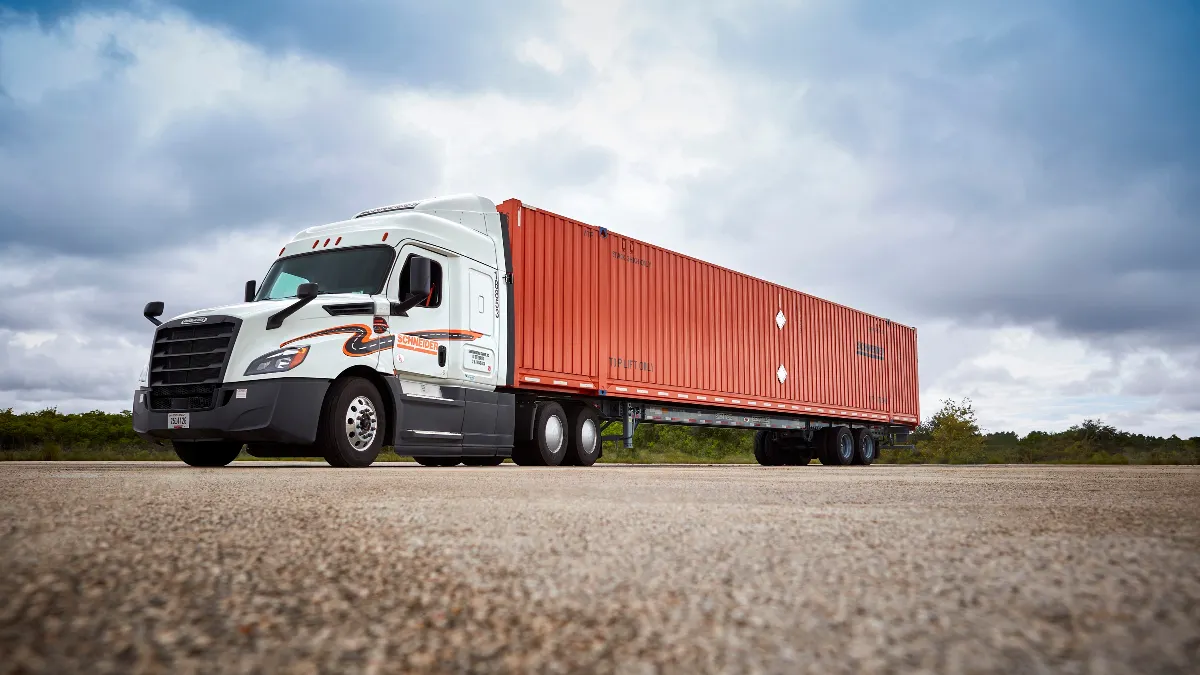

Drayage trucking insurance in Savannah is a for-hire motor carrier program built around the container: auto liability and cargo for the move, plus trailer interchange for the chassis and box you pull but do not own. Most port operators also need participation in the Uniform Intermodal Interchange and Facilities Access Agreement, known as the UIIA, before an equipment provider will release equipment to them. For a northern port, see New Jersey trucking insurance for port and warehouse freight.
The Georgia trucking insurance page covers the whole state, and the class page for UIIA intermodal trucking insurance covers the program in depth. This article is about the Savannah end of that map: what a drayage operator working the port lanes needs, and where the policies most often fall short.
What is drayage trucking insurance?
It is ordinary motor carrier insurance arranged for short moves of containers between a port, a rail ramp and nearby warehouses or distribution centers. The work is local, but the equipment rarely belongs to the carrier. A drayage driver hooks to a chassis and a container owned by a steamship line, a leasing company or a chassis pool, moves it a short distance, and drops it. Every one of those moves puts somebody else’s equipment in the carrier’s care.
That is why a drayage program has more pieces than a dry van program. The core lines are trucking auto liability, motor truck cargo and physical damage on the tractors you own. The intermodal pieces sit on top.
What does a Savannah drayage carrier need beyond the basics?
Two things, and they are where most port problems start. The first is trailer interchange coverage, which answers for physical damage to non-owned containers, chassis and trailers you pull under a written interchange agreement. The second is UIIA participation, which equipment providers commonly check before they interchange equipment.
The UIIA insurance article explains the endorsement and how a carrier gets covered. The Intermodal Association of North America, which administers the agreement, describes motor carrier participation in the UIIA on its own site.
How does the UIIA fit into a Savannah drayage policy?
The UIIA is a contract, not a policy. It sets the terms on which a motor carrier takes equipment from an equipment provider, and one of those terms is insurance. A carrier that participates agrees to carry coverages the agreement specifies and to show them in the form the program requires.
The practical point for a Savannah operator is timing. An equipment provider that cannot confirm your participation and insurance may not release the box, and a load that cannot be picked up is a load you do not get paid for. Have the agent confirm the requirements against the current agreement before the first move, and again at renewal.
Who owns the chassis, and why does it matter?
It matters because the answer decides which policy pays when the chassis is damaged. If you own the chassis, it belongs on your physical damage schedule. If a pool or a steamship line owns it and you pull it under an interchange agreement, it is a trailer interchange question, and your own physical damage policy does not reach it.
Federal rules separate the duties too. 49 CFR Part 390, Subpart C sets out responsibilities for intermodal equipment providers and for motor carriers operating intermodal equipment. Drivers should inspect the chassis they hook to and report what they find, because a defect noticed at the gate is a different conversation from one discovered after a roadside stop.
The three trailer interchange articles go further. Trailer interchange coverage explained covers the form, the drop yard article covers equipment staged away from the terminal, and the agreement article walks through the clauses.
What does the cargo policy need to say for container freight?
It needs to say how it treats a sealed load. A drayage driver usually picks up a container that was loaded and sealed by someone else, and cannot see what is inside. The value of the contents can be far higher than the paperwork suggests. A cargo form written for open freight that the driver can count and inspect may treat a sealed container differently, so ask the agent to point to the wording.
The carrier’s liability for the freight is set by law as well as by contract. Under 49 U.S.C. 14706, a carrier that issues a receipt or bill of lading is liable for the actual loss or injury to the property. Ask whether the cargo form covers theft from a parked chassis and whether it has conditions for unattended equipment, because port loads often sit between moves.
Who regulates trucks at the Port of Savannah?
Several bodies, each for its own piece. FMCSA sets the federal rules for interstate motor carriers, including the financial responsibility minimums in 49 CFR 387.9. Georgia’s roadside enforcement runs through the Department of Public Safety, whose motor carrier division was renamed Commercial Vehicle Enforcement in 2025.
The terminals themselves are run by the Georgia Ports Authority, which publishes gate and access information for the Garden City Terminal. Gate rules are the port’s business, not your insurer’s, but a policy that does not match the work you do inside the gate is your business.
What happens when a container is damaged between moves?
The claim usually starts with paperwork, not with the insurer. When you return a container or chassis, the equipment provider records its condition, and damage found at that point is charged back to the motor carrier that last had it. If the driver did not record the condition at pickup, the carrier has little to argue with.
So the habit that protects a drayage account is simple: inspect the equipment at the gate or the yard where you take it, and write down or photograph what you see before you leave. Do the same when you drop it. A dated photo of a dent that was already there is often the difference between a dispute you win and a charge you pay.
Next comes the policy question. Damage to the container or chassis itself is a trailer interchange claim, if the equipment is on the schedule and the move was under a written agreement. Damage to the freight inside is a cargo claim. Injury or damage to somebody else on the street is auto liability. A single incident at a warehouse dock can touch all three, and they may have different deductibles. Knowing that in advance keeps a small chargeback from turning into a long argument between policies.
Finally, keep the agreements themselves in order. If you pull for more than one equipment provider, each may have its own terms, and the trailer interchange agreement article explains the clauses that decide who pays. File them where the agent can see them at renewal.
What do underwriters ask a Savannah drayage operation?
They ask about the radius and the equipment first. A carrier running short moves between the port and nearby warehouses is rated differently from one that also runs longer lanes up I-95 or west on I-16, and the Georgia page explains why radius carries extra weight on Georgia accounts. Expect questions about who owns each chassis you pull, how many interchange agreements you sign, and where loaded containers sit overnight.
They will also ask about the drivers and the loss runs. A new authority starting in drayage is placed differently from a seasoned one, and the page for new venture trucking insurance in Georgia covers the first-year side.
Real-World Scenario: Picture a hypothetical drayage carrier that pulls a loaded container from the port to a warehouse and drops it in the customer’s yard overnight. By morning the chassis has a damaged landing gear and the seal on the box is broken. The carrier’s physical damage policy lists only its own tractors. Its trailer interchange schedule lists dry van trailers but not chassis. The cargo form has an unattended equipment condition the owner never read. Three policies are involved, and none of them answers cleanly.
What should a Savannah drayage carrier check before the first gate move?
Four things. Confirm your UIIA participation and that the insurance shown matches what the agreement requires. Get the trailer interchange schedule written for the containers and chassis you actually pull. Read the cargo form for sealed loads, theft and unattended equipment. And make sure the auto liability limit matches the strictest contract you have signed, since many customers set limits above the federal floor, as the liability limits article explains.
What should you do next?
Gather your interchange agreements, your equipment list showing who owns each chassis, and your customer contracts. Then start a quote and send them. We will tell you whether the interchange schedule, the cargo form and the UIIA requirements line up with the moves you actually make in Savannah.