
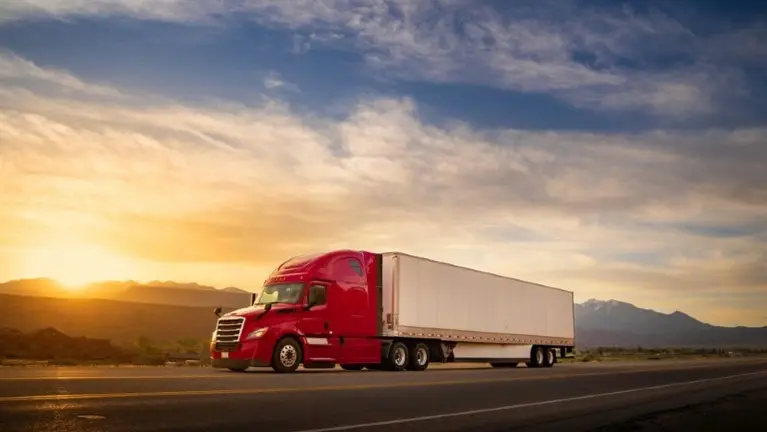

Dry van trucking insurance in Asheville is a standard general freight program of auto liability, motor truck cargo and physical damage, placed around one local fact: the mountain grades on I-40 and I-26. Underwriters look hard at brakes, winter operations and loss history on western North Carolina accounts, so the records you keep matter as much as the coverage you choose.
The class page for general freight trucking insurance covers dry van and mixed freight nationally, and the North Carolina trucking insurance page covers the state. This article is about running dry van freight out of the mountains.
What does dry van trucking insurance include?
Three core lines. Trucking auto liability answers for injury and damage to other people from operating the tractor and trailer. Motor truck cargo answers for the freight in the van. Physical damage covers your own tractor and trailer for collision and other losses.
Most dry van carriers add general liability for exposures away from the truck, and workers’ compensation once they have employees. Brokers and shippers set most of the limits in their contracts.
How do mountain grades change a dry van policy?
They change how the account is underwritten, not what the policy is. The North Carolina page describes the mountain corridor around Asheville, the I-40 west grade and the I-26 corridor, and says Blue Ridge descents produce a pattern of brake-system, downhill-control and runaway-truck claims. It also notes that the carrier panel can narrow in winter for operators who run those grades regularly.
A dry van running a loaded descent puts heavy demand on the brakes, and a brake failure on a grade tends to produce a severe claim: damage to the equipment, damage to the freight, and liability to others. That is why an Asheville account is read with the brakes in mind.
What records should an Asheville carrier keep?
The ones federal rules already require, kept so an underwriter can find the brake work quickly. Under 49 CFR 396.3, motor carriers must systematically inspect, repair and maintain the vehicles they control and keep records of it. For a mountain account, organize those records by unit and date, with brake inspections, adjustments and repairs easy to see.
The North Carolina page puts it plainly: brake-maintenance documentation matters more in the mountains than in the flatlands, and it is the standard question after a grade-related loss. Having the file ready before renewal turns that question into a short conversation.
How does winter affect a dry van account in the mountains?
It raises the frequency of claims, and claims drive renewals. Freeze-thaw cycles and icy grades produce seasonal road-condition losses in the mountain corridor. Underwriters may ask whether you run the grades in winter, how drivers are trained for descents in bad conditions, and whether you have a policy for holding a load when the road is closed or icy.
A written rule that drivers may stop and wait, without penalty, when a grade is unsafe is worth having. It protects the driver and the freight, and it gives the underwriter something concrete to weigh.
Winter also tests the paperwork around delays. A load held at the top of a grade for a day may arrive late, and some shipper contracts set penalties or allow a load to be refused for lateness. Those consequences are usually not cargo losses under the policy, so read the contract terms on delay before you agree to tight delivery windows in the mountain season. A delay clause you cannot meet in bad weather is a business risk you carry yourself.
Driver training belongs in the same file. Record who has been trained on mountain descents, when, and by whom. A carrier that can show training and a stop-when-unsafe policy presents a very different winter risk from one that cannot, even if both have clean loss runs so far.
What should the cargo policy cover for dry van freight?
The freight in the van, for the causes the form lists, with a limit that fits your most valuable load. Dry van loads are often sealed by the shipper, so record seal numbers and note on the bill of lading anything you could not inspect. Under 49 U.S.C. 14706, a carrier that issues a receipt or bill of lading is liable for the actual loss or injury to the property, whether or not the policy pays.
The exclusions that catch carriers most often, such as unattended vehicles and theft conditions, are covered in motor truck cargo insurance in Charlotte. The same reading applies to a dry van out of Asheville.
Which rules apply when you run interstate out of Asheville?
The federal ones, as soon as the freight moves between states. Interstate commerce is defined in 49 CFR 390.5, and the federal liability schedule is in 49 CFR 387.9, whose first row sets a minimum of $750,000 for for-hire carriage of nonhazardous property in interstate commerce by vehicles at or above the weight rating it names. Brokers usually ask for more, as the liability limits article explains.
An Asheville carrier running west on I-40 is often in another state within a single run, so the line between in-state and interstate work matters. The interstate trucking insurance article explains what changes at a state line. State registration, permits and other trucking matters run through NCDOT, which publishes its commercial trucking resources.
Real-World Scenario: Picture a hypothetical small dry van fleet based near Asheville that runs loaded freight west over the I-40 grade several times a week. One tractor loses braking on a winter descent and the driver uses the runaway ramp. No one is hurt, but the tractor, trailer and freight are damaged. At renewal the underwriter asks for the brake records on that unit. The fleet’s records are scattered across invoices and a notebook, and the renewal takes weeks longer than it should have.
Does a dry van carrier need trailer interchange coverage?
Sometimes. If you only pull trailers you own, your physical damage policy covers them when they are listed on the schedule. But many dry van carriers pull trailers owned by shippers, brokers or other carriers, swap trailers at a drop yard, or take a customer’s trailer for a single move. Damage to that trailer is not covered by your own physical damage policy. It is a trailer interchange or non-owned trailer question, and the answer depends on the agreement you pull it under.
Tell your agent every arrangement where you pull a trailer you do not own. The drop yard article explains what changes when equipment is staged and swapped away from your terminal.
What if you are an owner-operator leased to a carrier?
Then the lease decides who insures what. The motor carrier you lease to usually provides auto liability while you are under its dispatch, and the lease should say who provides the other coverages. That often leaves the owner-operator responsible for physical damage on the truck and for liability when the truck is used off dispatch. The article on non-trucking liability and bobtail coverage explains that gap. Read the lease before you buy anything, and send it to your agent with your quote request.
What should an Asheville dry van carrier check before renewal?
Four things. Gather brake maintenance records by unit and date. Write down which lanes cross the mountain grades and how often. Check the cargo limit against your most valuable load and your broker requirements. And confirm the auto liability limit matches your strictest contract. If you are a new carrier, the page for new venture trucking insurance in North Carolina explains how a first-year dry van operation is placed.
What should you do next?
Pull your maintenance records for the last year, your lane list and your broker contracts. Then start a quote and send them. We will tell you how an underwriter will read your mountain lanes and whether your cargo and liability limits fit the freight you haul out of Asheville.