
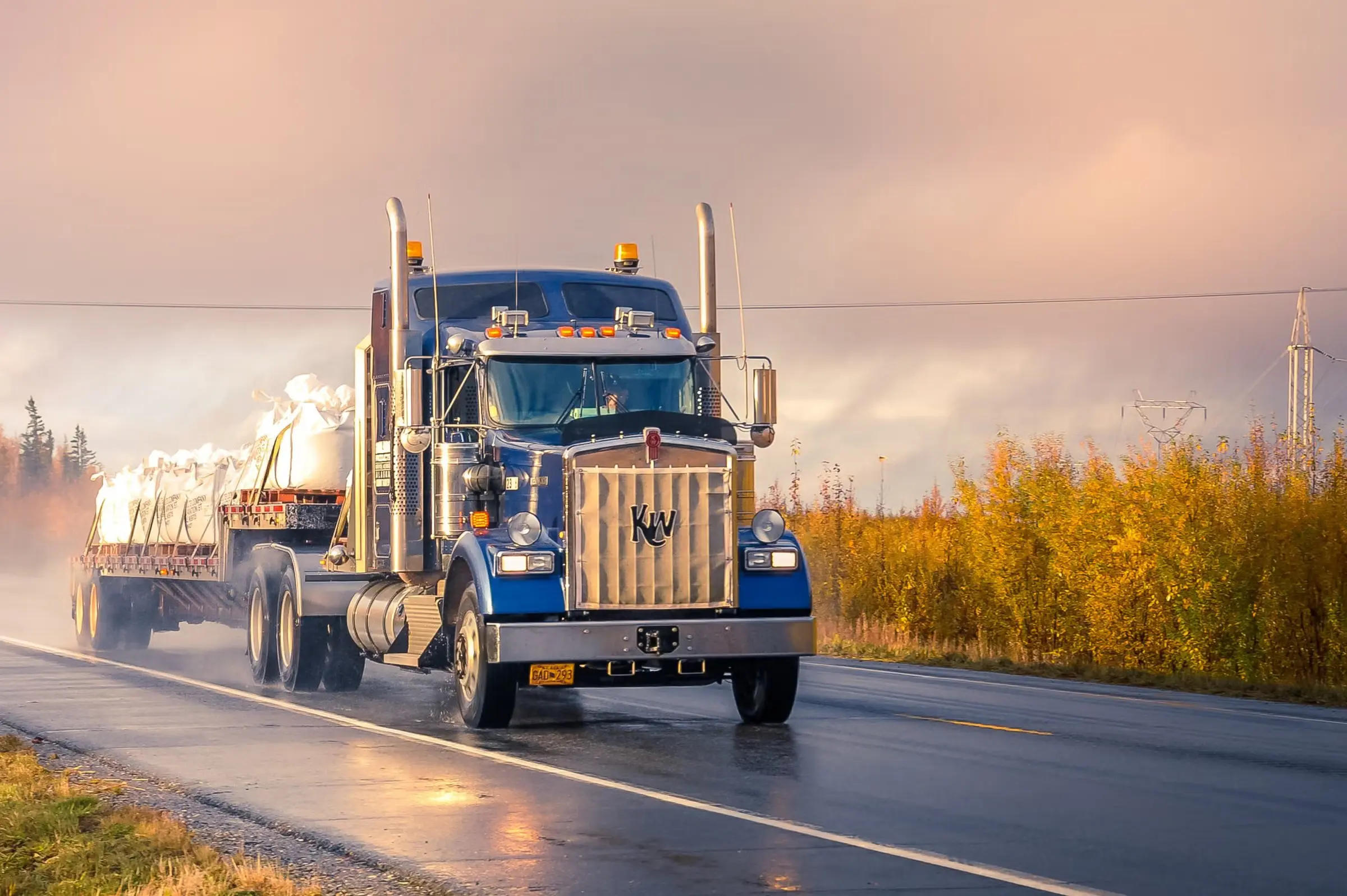

General liability for flatbed trucking pays for injury or property damage you cause away from driving the truck, such as at a shipper’s yard, a job site or a customer’s dock. It does not cover the road, the freight on the deck or injuries to your own employees. Those belong to auto liability, cargo and workers’ compensation, and a flatbed operation needs all four to line up.
The class page for flatbed trucking insurance covers the whole program. This article is about one line of it: what general liability does for an open-deck carrier and where it hands off to another policy.
What does general liability cover for a flatbed carrier?
It covers your legal liability for bodily injury or property damage to other people that comes from your business operations and not from operating the truck. For a flatbed carrier, that is mostly the work around a delivery. A chain or a stack of dunnage left where someone trips over it. A tarp or an edge protector that blows off a parked trailer in your yard and damages a neighbor’s property. A visitor hurt at your terminal. Advice or direction your driver gives on a site that someone later says caused an injury.
The general liability coverage page explains the form itself, and the article on general liability for trucking operations covers it for every class of carrier. Flatbed work is different in degree. A dry van driver backs to a dock and waits. A flatbed driver is often out of the cab, on the deck or on the ground, in the middle of somebody else’s work site.
Why do shippers and job sites ask flatbed carriers for it?
Because open-deck freight is delivered to places where people are working. Steel goes to mills and fabrication shops, lumber goes to yards, and machinery and building materials go to construction sites. The owner of that site usually has a contract that requires every company coming through the gate to carry general liability and to show a certificate.
That is why the requirement tends to arrive from a customer and not from a regulator. Many site contracts also ask to be named as an additional insured and ask for specific limits. Collect those requirements before you ask for a quote, because the strictest contract you sign usually sets the limit you need.
Where does general liability stop and auto liability start?
At the truck, roughly. Auto liability answers for injury and damage that arise from owning, maintaining or using the truck, and general liability forms commonly exclude that same exposure. Using a truck includes more than driving it, and that is where the boundary gets argued. The Insurance Information Institute’s overview of business vehicle insurance covers the auto side.
Loading and unloading is the hardest part of that line, and it has its own article: loading and unloading insurance coverage and which policy pays. The short version is that the wording of both forms decides it, so they need to be read together.
Does general liability cover a load that falls off the deck?
Usually not. If a coil, a beam or a bundle comes off the trailer on the road and injures someone, that is a claim arising from the use of the truck, and it goes to auto liability. The damage to the freight itself is a motor truck cargo question. General liability is not the policy for either one.
Securement also has a regulatory side. The federal cargo securement rules are in 49 CFR Part 393, Subpart I, and a securement violation written on a roadside inspection report can follow the carrier into its safety data. The article on whether a written warning affects your CSA score explains how that record works. For the freight, federal law at 49 U.S.C. 14706 makes a carrier that issues a receipt or bill of lading liable for the actual loss or injury to the property, which is why the cargo form matters more than the general liability form when a load shifts.
Does general liability cover a driver hurt while tarping?
No. General liability is for injury to other people, and forms commonly exclude injury to your own employees. A driver who falls from a load while tarping is a workers’ compensation claim if that driver is your employee. Tarping and securement put a flatbed driver on top of the freight, often in bad weather, and the falls are a pattern we see in this class. OSHA’s page on loading and unloading in the trucking industry covers the safety side.
An owner-operator is a different case. The article on workers’ comp for truck drivers explains who needs the coverage and what an owner-operator can use instead.
What about cranes, forklifts and riggers at the job site?
This is where flatbed general liability earns its place. At a job site the load is usually lifted off by someone else’s crane or forklift, and your driver is nearby, removing chains, pulling tarps, sometimes directing the lift. If someone is hurt, the first questions are who was operating the equipment and what your driver was doing.
The second question is the contract. Site agreements often ask the carrier to defend and indemnify the site owner, to name the owner as an additional insured and to waive rights of recovery. Whether your general liability policy responds to an obligation you took on by contract depends on the form and on the exact wording of the contract. Send the insurance and indemnity sections to your agent before you sign. Once a claim has happened, it is too late to find out that the certificate promised something the policy does not do.
Real-World Scenario: Picture a hypothetical flatbed carrier delivering structural steel to a construction site. The site’s crane lifts the last bundle, and the driver stacks his chains and dunnage beside the access path while he rolls his straps. A subcontractor’s employee trips over the stack and is injured. The truck was not moving and the load was already off the deck, so the auto insurer questions whether the claim arose from using the truck. The claim that remains is a general liability claim, and the site’s contract asked for additional insured status that was never added.
What do underwriters ask a flatbed operation?
They ask how much of the work happens outside the cab. Expect questions about the commodities you haul, the kinds of sites you deliver to, whether your drivers help with loading or unloading, and whether anyone on your payroll operates a forklift or other equipment. They will ask about your yard or terminal, since premises are part of the exposure, and about the contracts you sign.
If you run oversize or heavy loads, tell the underwriter. Escorts, permits and rigging change the job-site picture, and the page for oversized and overweight trucking insurance covers that class. If you hand freight to other carriers, they will also ask how you collect certificates from them.
What should you check before you sign a customer contract?
Four things. The required coverages and limits, including whether general liability is listed separately from auto. The additional insured wording, and whether it has to be on a specific endorsement. The indemnity clause, meaning what you agree to pay for if someone is hurt. And any waiver of your insurer’s right to recover from the customer. Each one is a request your agent has to take to the insurer, and some take time.
The carriers that have trouble are usually the ones that signed first and asked afterward. The article on what drives trucking insurance premiums explains how these requirements feed into the price.
What should you do next?
Gather your three strictest customer contracts and your current certificate, and write down where your drivers get out of the cab. Then start a quote and send them. We will tell you whether your general liability, auto and cargo forms meet at the edges or leave a gap between them.