
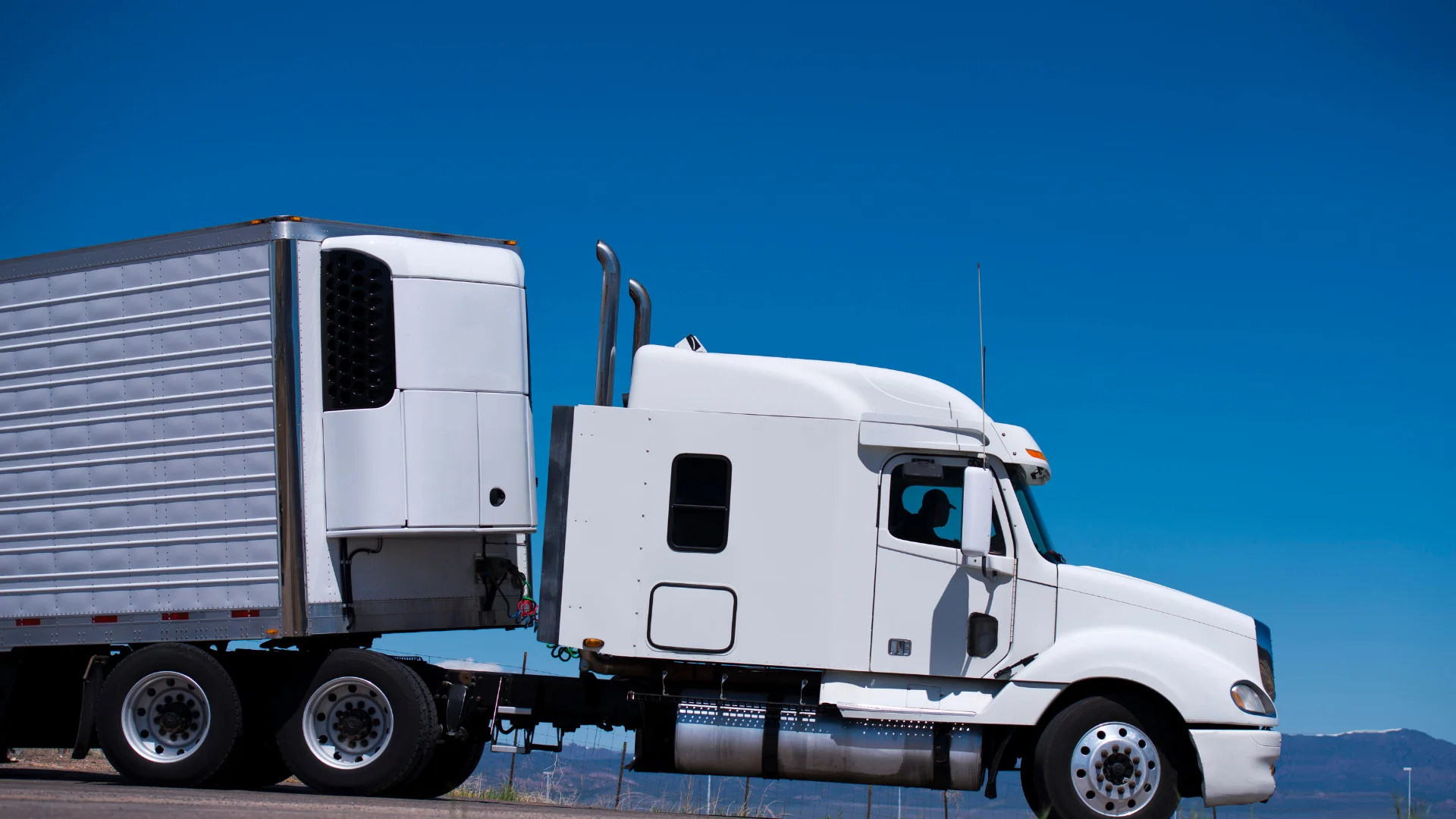

Refrigerated truck insurance for a large fleet is the same set of coverages a single reefer truck carries, built into one program that works across many trucks, many shippers and many temperature-sensitive loads at once. The parts that need the most attention are the cargo form, the reefer breakdown wording and the records that prove each load stayed at temperature.
If you run one or two trucks, start with reefer truck insurance explained. This article is for fleets, where the questions are about structure and consistency more than about what each coverage is.
What does a large refrigerated fleet need to insure?
The core lines are the same ones every for-hire carrier buys. Auto liability covers injury and damage to others from operating your trucks. Motor truck cargo covers the freight, and for a reefer fleet it needs breakdown wording for the refrigeration unit. Physical damage covers the tractors and the trailers, including the unit mounted on each trailer. General liability covers your operations away from the road, such as yards and customer docks.
A fleet adds workers’ compensation for its drivers and often an excess or umbrella layer above auto liability. The refrigerated hauling insurance page covers the full class.
How is a fleet reefer program different from a single-truck policy?
It has to work the same way on every truck and every load. With one truck, a gap in the cargo form shows up on one load. With many trucks, the same gap shows up across the whole operation, sometimes on several loads in the same week.
Three things change at fleet scale. The cargo form has to fit the commodities and contracts of every shipper you serve, not just one. The schedule of equipment has to keep up with trucks and trailers that come and go, so that a newly added unit is covered from the day it runs. And the records have to be consistent enough that an underwriter, or a claims adjuster, can see how the fleet controls temperature without asking each driver.
What should the cargo form say for a reefer fleet?
It should say clearly what happens when temperature goes wrong. Most cargo forms are written around causes of loss such as collision, fire and theft. A reefer fleet needs to know, in writing, whether the form covers spoilage caused by a breakdown of the refrigeration unit, and what it does not cover.
Ask about the common exclusions. Many forms exclude spoilage caused by a wrong setpoint, a door left open, a load that was not precooled, or a unit that was not maintained. Others require the breakdown to be sudden and accidental. The article on reefer breakdown coverage and what it pays goes through that wording in detail, and the reefer claim process explains what happens after a load is lost.
Then compare the form to your shipper contracts. Federal law at 49 U.S.C. 14706 makes a carrier that issues a receipt or bill of lading liable for actual loss or injury to the property, and many food shippers add their own terms on top. The contract decides what you owe. The form decides what your insurer pays. A fleet with dozens of shippers should know where those two diverge before a claim tests them.
Which food rules shape a reefer fleet’s claims?
The FDA’s rule on sanitary transportation of human and animal food applies to carriers that move food in the United States by motor vehicle. It addresses temperature control during transport and the condition of the vehicles that carry food. Shippers commonly write those duties into their carrier agreements.
That matters for insurance because claims on food loads are decided on records. If a shipper says a load arrived out of temperature, the fleet that can download and produce the unit’s temperature history is in a far better position than the fleet that cannot. Treat your temperature records as part of your insurance program, not just your compliance program.
What do underwriters ask a large refrigerated fleet?
They ask about operations, not just trucks. Expect questions about the commodities you haul and their values, your largest shipper contracts, your lanes and how long loads are on the road, how you maintain reefer units, how you monitor temperature during transit and how you train drivers on setpoints and pretrip checks.
They will also read your loss runs closely for cargo claims, because a pattern of spoilage claims tells them more about a fleet than any single crash. The article on what drives trucking insurance premiums explains how these factors feed into price. A fleet that can answer these questions with documents, not just descriptions, is a better risk to quote.
How should a fleet handle trailers and units on the schedule?
Keep the schedule current and make the unit part of the description. A reefer trailer is two pieces of equipment that can fail separately: the trailer and the refrigeration unit mounted on it. Ask whether the unit is covered as part of the trailer under physical damage, or needs to be listed on its own, and get the answer in writing.
Fleets also add and retire equipment often. Ask how newly acquired units are handled between the day they start running and the day they are added to the schedule. If you pull trailers you do not own, such as a shipper’s trailer or a leased unit, that is a trailer interchange or non-owned trailer question, not a physical damage one.
Real-World Scenario: Picture a hypothetical refrigerated fleet that hauls for several food shippers. One shipper’s contract holds the carrier responsible for any load that arrives out of temperature, whatever the cause. A driver sets the wrong temperature on a load and it arrives warm. The unit worked as designed, so the cargo form’s breakdown wording does not apply. The fleet owes the shipper under its contract and has no coverage for the loss. The same contract term sits in agreements with other shippers, so the exposure is fleet-wide, not a one-off.
How do liability limits work for a refrigerated fleet?
The federal floor is set by the freight, not the fleet size. Under 49 CFR 387.9, for-hire carriage of nonhazardous property in vehicles of 10,001 or more pounds carries a $750,000 minimum, and most refrigerated food falls in that row. Large shippers and brokers commonly require more, and a fleet with many trucks on the road at once usually looks at an excess or umbrella layer above the primary policy.
The question for a fleet is not only how high, but how the limit is shared. A single primary limit applies per accident, and an excess layer usually sits above all the trucks together. Ask how a bad year with more than one serious accident would play out against the structure you buy, and read the liability limits article for how carriers layer coverage to meet contract requirements.
What can a fleet do to make reefer claims easier to win?
Treat every load as if it may be disputed. Precool trailers and record that you did. Record the setpoint the shipper gave you on the paperwork, and have drivers confirm it at pickup. Download unit data after any delay, breakdown or rejection, and keep it with the bill of lading. Repair records for each unit, kept by unit number, show an adjuster that the breakdown was sudden and not a known problem left alone.
None of this changes the policy wording, but it changes how claims under that wording are decided. Cargo adjusters ask for exactly these records, and a fleet that can hand them over the same day usually settles faster and with fewer arguments.
What does a fleet need for a refrigerated insurance quote?
Bring loss runs for every line, a current schedule of tractors, trailers and units, your commodity list with typical load values, your largest shipper contracts, and a short description of how you monitor and record temperature. If you have a written driver procedure for setpoints and pretrip checks, include it. If you also run dry freight, list those trucks separately, since a general freight truck rates differently from a reefer.
What should you do next?
Pull your three largest shipper contracts and find the clause on rejected or out-of-temperature loads. Then start a quote and send those clauses with your equipment schedule and loss runs. We will read the cargo form against the contracts and tell you where the fleet is exposed.