
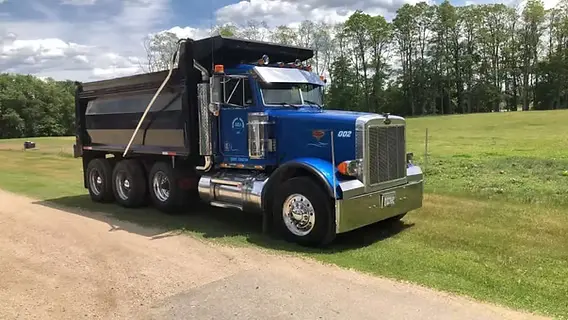

Sand and gravel hauler insurance is a dump truck program built around three pressure points: material that comes off the load onto other vehicles, the quarry and job-site contracts that set your limits, and equipment that works harder than almost any other truck on the road. The coverages are auto liability, physical damage, general liability and workers’ comp once you have employees.
The dump trucking insurance page covers the class as a whole. This article is specific to aggregate: sand, gravel, crushed stone and similar loads.
What coverages does an aggregate hauler need?
Auto liability for injury and damage to others from operating the truck. Physical damage on the truck, the body and any trailer. General liability for work at quarries, plants and job sites. Workers’ comp for employees.
Cargo is usually a small question for aggregate. The material is low in value per load and is often owned by the quarry or the contractor. Some contracts ask for a cargo limit anyway. If yours does, carry it.
Who pays when stone comes off the load?
Damage to another vehicle from material falling off your truck is usually an auto liability claim, because it arises from operating the truck. Cracked windshields from loose stone are the most common, and they add up over a year.
Whether you are actually liable depends on the facts and on state law, including covered-load or secured-load rules in the state where it happened. Those rules differ, so confirm them with your state’s transportation agency. Tarping consistently is the cheapest claim prevention an aggregate hauler has.
What do quarry and contractor agreements require?
Most aggregate work runs under an agreement: a quarry access agreement, a contractor subcontract, a supply contract with a plant. Many ask for auto and general liability at stated limits, additional insured status for the quarry or contractor, and a waiver of subrogation.
Collect those terms before you buy. The strictest contract usually sets the limit, and endorsements like additional insured take time to add. The article on who insures a contractor’s dump trucks and lowboy trailers covers how contractor-owned trucks differ from for-hire haulers.
What about the truck itself?
Aggregate work is hard on equipment. Dump bodies, hoists and tailgates take a beating, and tipping over while dumping on uneven ground is a known loss pattern. Physical damage should be set to what the truck and body would actually cost to replace, not what they were worth when bought.
Ask whether the body and hoist are part of the insured unit or need to be scheduled separately.
Real-World Scenario: Picture a hypothetical three-truck aggregate hauler working a highway project. One truck lifts its bed on a soft shoulder at the job site, the load shifts and the truck rolls onto its side. Nobody is hurt. The truck is a total loss, and it was listed on the physical damage schedule at the value it carried when the owner bought it used years ago, well below what a replacement costs today. The settlement pays the scheduled value, and the owner covers the difference.
Is aggregate hauling priced differently?
Yes. Underwriters treat dump and aggregate hauling as its own class. The radius, how much time trucks spend on job sites and unpaved roads, the age of the equipment and the drivers’ experience all weigh heavily. Some markets do not write the class at all, which makes placement as important as price.
The dump truck insurance in Knoxville and gravel truck insurance in Mississippi articles show how that plays out in specific states. The federal liability minimum for for-hire carriers is in 49 CFR 387.9, though contracts usually set a higher limit.
What do underwriters ask an aggregate hauler?
They ask about the radius and the work: how far from home you run, how many loads a day, and how much time trucks spend on job sites, pit roads and unpaved surfaces. They ask about the equipment: truck age, body type, and whether you pull trailers such as end dumps or belly dumps.
They ask about drivers, especially experience with dump work and with dumping on uneven ground. And they read your loss history for patterns, such as frequent windshield claims, which point to tarping practices.
Is aggregate hauling intrastate or interstate?
It depends on where the material starts and ends up, not only on whether the truck crosses a state line. Material moved from a pit to a site in the same state is usually intrastate. The definitions are in 49 CFR 390.5, and the answer changes your filings and which liability minimum applies. The article on interstate trucking insurance covers the difference.
What should you do next?
Gather your quarry and contractor agreements and your equipment list with current replacement values. Then start a quote and send both. We will tell you what the contracts require and whether your schedule matches what the trucks would cost to replace.