
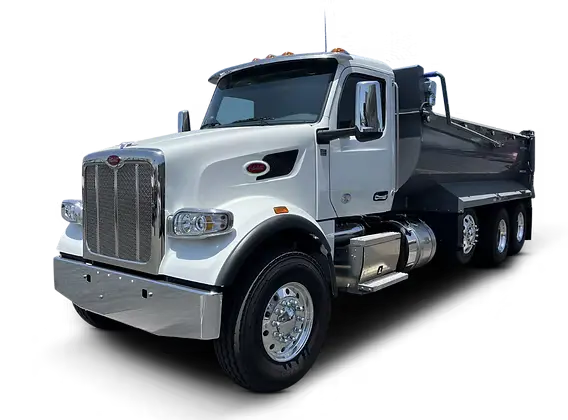

Dump truck insurance in Knoxville, TN starts with auto liability for injury and damage you cause on the road, and most contractors add physical damage, general liability and workers’ compensation. What makes Knoxville different is the work around the policy: mountain grades, a heavy interstate interchange and Tennessee’s overweight permit rules, which carry their own insurance requirements.
The Tennessee trucking insurance page covers the state’s regulators and the statewide picture, and the Tennessee dump trucking insurance page covers Tennessee’s weight permits and fees in detail. This article is for the Knoxville contractor deciding how to insure the trucks it runs to its own jobs and, sometimes, for others.
What insurance does a dump truck in Knoxville need?
Four policies cover most of it. Auto liability answers for injury and damage to other people caused by operating the truck. Physical damage repairs or replaces the truck itself, and your lender will usually require it on a financed unit. General liability covers your operations on the job site. Workers’ compensation covers your employees, under Tennessee’s rules.
Which insurer writes the trucks depends on how you use them. A contractor that hauls only its own materials can often keep its dump trucks on a contractor’s commercial auto policy. A contractor that hauls for other people for pay is in the for-hire trucking market, which the statewide dump trucking insurance page covers. The article on who insures a contractor’s dump trucks and lowboy trailers explains how to tell the two apart.
Why do Knoxville’s roads matter to the underwriter?
Because they shape how claims happen. As the Tennessee page explains, Knoxville sits where I-40, I-75 and I-81 meet, and that interchange carries a heavy mix of through freight and local traffic. A loaded dump truck merging onto those interstates, or working the arterials around them, faces a lot of other vehicles in a small space.
The mountains add a second exposure. The Tennessee page notes that the I-40 grade through the Tennessee River Gorge and into the Smokies raises descent-grade brake exposure that operators in flat states do not face. A loaded dump truck on a long downgrade puts heavy demands on brakes, and underwriters ask how trucks are maintained and how drivers are trained for it.
Does a Tennessee overweight permit require insurance?
Yes. Tennessee’s rules for overweight and over-dimensional movements require liability insurance with an insurer acceptable to the permit office, evidenced by a certificate furnished to the office, and the certificate must provide that the insurer give the office written notice before the insurance terminates. The Tennessee dump trucking page quotes the rule, including the required amounts.
Annual permits are issued for a specific truck, not a whole fleet, according to the same page. That matters when you replace a truck mid-year: the permit and the certificate both have to follow the new unit. Confirm each move with the permit office through TDOT’s permit FAQ.
What travel rules apply to permitted loads in Knox County?
TDOT states that escorted loads must observe weekday rush-hour curfews in several counties, and Knox County is one of them. Loads that do not require an escort are allowed continuous travel. If your equipment moves need escorts, schedule them outside those windows.
TDOT also states that only state and federal roads are covered by its permit, although the office asks for the full route, including local roads, so it can evaluate the movement. A dump truck or lowboy that leaves the state system for a county road should have that part of the route checked with the local authority.
When does a Knoxville contractor need for-hire trucking insurance?
When it starts hauling for others for pay. A contractor with trucks that sit between its own jobs often fills the gaps with loads for other companies. That is for-hire carriage, and once the loads cross a state line it brings federal operating authority, insurance filings and the federal liability schedule at 49 CFR 387.9. Knoxville is close enough to several neighboring states that this happens more easily than a contractor might expect.
The article on interstate trucking insurance explains what changes at the state line. Tell your agent before the first for-hire load, not after the first claim.
What does general liability add on a Knoxville job site?
It covers your operations rather than your driving. Spreading material, directing traffic on a site, leaving a stockpile where someone trips over it: these are general liability exposures. A truck that backs into someone on the site is usually an auto claim. The boundary between the two forms is where claims get argued, and the article on loading and unloading insurance coverage explains how it is drawn.
Job contracts usually set the terms. General contractors and project owners commonly ask for additional insured status, specific limits and a waiver of the insurer’s right to recover from them. Send those requirements to your agent before you sign.
Real-World Scenario: Picture a hypothetical Knoxville site contractor with two dump trucks on its contractor’s auto policy. A neighboring builder asks it to haul fill for a project just across the state line, and the owner agrees because the trucks are idle that week. On the second trip a truck is in a crash on the interstate. Now the questions are whether the policy was rated for for-hire hauling, whether the trip required federal authority and filings, and whether the insurer knew the trucks ever left Tennessee.
Who pays when material falls from a dump truck?
Usually the auto policy. Rock, gravel or debris that comes off a moving truck and damages another vehicle is a claim that arises from operating the truck, so it generally falls to auto liability. These claims are small one at a time and frequent in aggregate, and underwriters notice a pattern of them. For a neighboring state, see gravel truck insurance in Mississippi.
Prevention is cheaper than the claims. The federal cargo securement rules in 49 CFR Part 393, Subpart I require cargo to be contained or secured so it does not leak, spill, blow or fall from the vehicle. Tarps that are in good repair, tailgates that close properly and a habit of sweeping loose material off the rails before leaving a site all reduce the claims and the inspection findings that follow them.
How does workers’ compensation work for a Tennessee contractor?
Tennessee administers its own system through the Tennessee Bureau of Workers’ Compensation, as the Tennessee page explains, and the Bureau also decides classification questions such as whether a driver is an employee or an independent contractor. A misclassified driver can produce retroactive premium and benefits that outweigh the original savings. If you use owner-operators, the article on workers’ comp for truck drivers explains the options.
What do underwriters ask a Knoxville dump truck owner?
Expect questions about the trucks, the drivers and the work. The weight rating and age of each truck. Who drives, what licenses they hold and what their records show. What you haul, how far you run from the yard and whether any of it is for other people. Your loss history, and any roadside inspection findings. The article on the 26,001-pound line explains the federal licensing thresholds that apply to heavier trucks.
If any of your trucks have had roadside inspections, pull the reports before you apply, since the underwriter will see them either way. Maintenance records carry extra weight here because of the grades. Brake inspections and repairs, with dates, are the best evidence you can give an underwriter that the trucks are ready for the mountains.
What should you do next?
List your trucks with their weight ratings, your drivers, the jobs you run and any hauling you do for others. Add your permit history and your job contracts. Then start a quote and send it all. We will tell you whether your trucks belong on a contractor’s policy or a trucking policy, and what Tennessee’s permit office will need to see.