
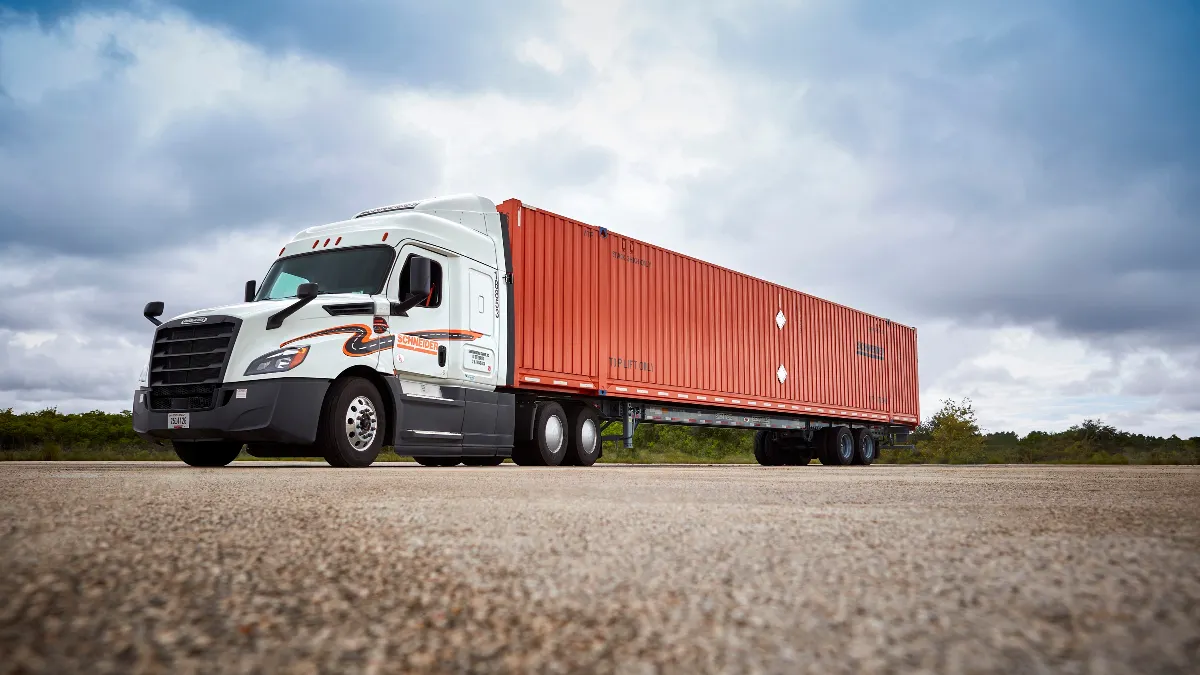

Massachusetts motor carriers need trailer interchange insurance when they pull a trailer, container or chassis they do not own under a written agreement that makes them responsible for it. In this state that most often means Port of Boston container drayage at Conley Terminal, where intermodal interchange agreements ask for the coverage by name. Interchange pays for physical damage to the borrowed equipment; it does not cover the freight, which is a cargo question.
The Massachusetts trucking insurance page covers the state as a whole. This article stays on interchange.
Who requires trailer interchange insurance in Massachusetts?
The equipment provider, through its agreement. In our experience the requirement does not come from a Massachusetts rule aimed at trailers. It comes from the shipping line, chassis pool, railroad or shipper that owns the equipment and will not hand it over without proof of coverage.
The state still matters for the policy itself. The Massachusetts Division of Insurance regulates the property and casualty insurers that write trucking auto liability, motor truck cargo, physical damage and related programs in the state, and it sits inside the Office of Consumer Affairs and Business Regulation. If you want to confirm whether any state requirement applies to your operation, that is the agency to ask.
How does Port of Boston drayage use trailer interchange?
Conley Terminal at the Port of Boston runs marine container drayage, and that work pulls intermodal interchange agreement language into the carrier’s policy. Containers and chassis move between the terminal, shipping lines and the carrier, and the carrier is responsible for the equipment while it has it.
IANA’s UIIA FAQ says motor carriers in the Uniform Intermodal Interchange and Facilities Access Agreement carry auto liability and commercial general liability, and that individual equipment providers may require more, such as cargo and trailer interchange, and may ask to be named as additional insured. Chassis per-diem exposure and shipper-required additional insured wording sit on top of that.
The most common problem we see on Boston drayage lanes is a general-freight policy applied to drayage work without the intermodal endorsements the chassis pool and shipping line require. The UIIA intermodal trucking insurance page and what UIIA insurance is cover the endorsement side.
What does trailer interchange cover for a Massachusetts carrier?
Physical damage to a trailer, container or chassis you do not own while you hold it under a written interchange agreement. It answers the equipment owner’s claim for collision, overturn, fire, theft and similar loss, depending on the form. Each equipment provider sets the form it accepts, so check whether yours asks for more than named perils such as fire and theft.
It does not cover the freight, which belongs to motor truck cargo. It does not cover injury or damage to other people, which belongs to auto liability. The trailer interchange coverage page explains the form, and trailer interchange vs. cargo coverage on leased trailers explains the split between the two trailer-side coverages.
Which Massachusetts agencies and federal rules matter?
Three layers. Interstate carriers register with FMCSA for a USDOT number and operating authority, and the federal rules on lease and interchange of vehicles govern how equipment moves between carriers. The Massachusetts Department of Transportation maintains the state highway network, including the Massachusetts Turnpike on I-90, I-93 and I-95, administers oversize and overweight permits and handles intrastate motor carrier registration through the Registry of Motor Vehicles. The Division of Insurance regulates the insurers.
None of those agencies sets your interchange limit. That still comes from the agreements you sign and the equipment you pull.
What about carriers hauling only inside Massachusetts?
They need interchange on the same terms if they pull non-owned equipment under a written agreement. A carrier whose freight starts and ends inside the state registers with MassDOT for intrastate authority rather than relying only on federal registration, and many Massachusetts operators hold both because their lanes change over a year. That choice affects your filings, not your responsibility for a borrowed trailer.
Port work is the common trap here. A short haul from Conley Terminal to a warehouse in the same county can still involve a container that is part of a longer international move, and the equipment provider’s agreement applies either way.
Which Massachusetts operations pull non-owned equipment?
Port of Boston drayage is the clearest. Distribution carriers working the Worcester area and the I-495 belt often swap trailers with shippers, and power-only work brings the same exposure. Seafood reefer logistics on the South Coast can involve borrowed reefer trailers, where the refrigeration unit is part of the equipment the agreement covers. The refrigerated hauling insurance page covers that class.
Carriers that keep borrowed equipment at their own lots should read trailer interchange at a drop yard, since a container left overnight is still in your care.
Real-World Scenario: Picture a hypothetical Massachusetts carrier that has hauled dry van freight on a general-freight policy for years and takes on Port of Boston container work. The first chassis is picked up under the shipping line’s interchange paperwork before anyone calls the agent. On the way out of the terminal area the driver strikes a barrier, damaging the chassis and the container. The carrier’s policy covers its own trailers and the freight, but has no interchange coverage and none of the intermodal endorsements. The shipping line bills the carrier directly for the equipment.
How is the interchange limit set for a Massachusetts carrier?
The same way it is set anywhere: by the strictest agreement you sign and by the most valuable equipment you regularly pull. A drayage carrier handling containers on chassis looks at what each shipping line and chassis provider requires. A carrier swapping dry vans with a shipper looks at that shipper’s agreement. The limit has to meet the highest of those requirements, because one policy answers for all of them.
Then test it against the single most valuable unit, not the average one, and ask how the form treats several units damaged in one event, such as a fire at your lot. Fleets that pull many different units should read how large fleets add trailer interchange to their policy, which covers blanket coverage and keeping a register of agreements.
How do the other Massachusetts coverages fit around it?
Interchange is one line in a program. Port and distribution work in Massachusetts usually also calls for cargo, auto liability and general liability, and the overview in cargo, trailer interchange and general liability for trucks explains how those lines divide a claim.
If you have employees, workers’ compensation in Massachusetts runs through the Department of Industrial Accidents, with coverage placed in the voluntary market or, where the voluntary market declines a risk, through the state’s assigned risk pool. That line is separate from interchange, but drivers handling containers and chassis at a terminal are the employees most likely to be hurt on the job, so it belongs in the same conversation. The workers’ compensation coverage page covers the trucking side.
What should a Massachusetts carrier bring to a quote?
The interchange agreements first: each shipping line, chassis provider, railroad or shipper you work with, and what each one requires. Then the types of equipment you pull, the most valuable unit you regularly handle, where you keep equipment between moves, your interstate and intrastate authority details, and your loss history. If you are new to port work, bring the date you expect to start, because the coverage should be in place before the first container. If you already have a policy, bring it too, so the new line can be matched to the forms you carry.
What should you do next?
Collect every interchange agreement you have signed or are about to sign, and note which lanes you run inside and outside the state. Then start a quote and send them. We will tell you whether your current program covers the equipment, what the agreements require, and what needs to change before your next pickup.